

Visuals from behind the Iron Curtain. Soviet (and bits of pre/post-Soviet) photography, architecture & design. USSR propaganda art. Curated by @variainayurt
USSR
Joined May 2016
- Tweets42.7K
- Following1.8K
- Followers409K
- Likes14.4K






Soviet Visuals retweeted

Tbilisi, 1975. The Soviet Ministry of Highways was built like a stack of giant blocks floating over a hillside, with the forest left growing underneath. Architect George Chakhava called it the Space City. Today it's a bank's headquarters. Brutalism at its boldest. Masterpiece or monster?

Soviet Visuals retweeted

#OTD 1961: The Soviet Union detonates Tsar Bomba over Novaya Zemlya, the largest nuclear explosion in history.
At 50 megatons, it’s over 3,000 times the power of the Hiroshima bomb.
A terrifying demonstration of Cold War power that has never been repeated.


Soviet Visuals retweeted

VIY is a 1967 Soviet horror film directed by Konstantin Yershov. A young priest is ordered to preside over the wake of a witch in a small old wooden church in a remote village.
Soviet Visuals retweeted

Victor Sheymov (1946-2019), a high-ranking Soviet KGB major and cryptologist who defected to the United States....
He served as a major in the KGB's Eighth Chief Directorate, specializing in cipher communications and security oversight in Moscow. In May 1980, Sheymov, along with his wife Olga and their five-year-old daughter Elena, vanished from Moscow in what became the CIA's first successful exfiltration of an entire family from deep inside Soviet territory. After being smuggled out and debriefed, he provided the U.S. with critical intelligence on KGB cipher systems, internal operations, and various Soviet plots. His survival and hidden presence were kept secret for nearly a decade before he publicly surfaced in March 1990. He became a U.S. citizen, authored the memoir Tower of Secrets, and founded the cybersecurity firm Invicta Networks. He passed away on October 18, 2019, at the age of 73.
. . . .
A silent apartment on a tree-lined avenue in southwestern Moscow sat completely undisturbed on a Monday morning in mid-May 1980. The breakfast dishes were neatly arranged in the sink, children’s toys lay scattered across the living room carpet, and personal identification documents remained tucked in their usual desk drawers. When thirty-three-year-old Major Viktor Sheymov failed to report for his shift inside the heavily fortified headquarters of the KGB’s Eighth Chief Directorate, alarms sounded across the Soviet security apparatus. Sheymov was no ordinary bureaucrat; he was an elite cryptographic communications specialist who held the master keys to the Soviet Union’s global diplomatic, military, and espionage cipher networks. When investigators arrived at his apartment, they found that not only had the major vanished into thin air, but so had his wife, Olga, and their five-year-old daughter, Elena.
The disappearance triggered an emergency mobilization of Moscow’s Seventh Directorate—the KGB’s elite surveillance wing—alongside thousands of internal militsiya officers. Sheymov’s position at the Eighth Chief Directorate gave him direct, unvarnished insight into the darkest operations of the Kremlin. He supervised the security of cryptographic transmissions connecting the Lubyanka to Soviet embassies, military bases, and deep-cover spy residencies across the globe. Through intercepted communications, Sheymov had learned of the regime’s covert wet-affairs operations, including KGB complicity in the preparations to assassinate Pope John Paul II and the bloody invasion of Afghanistan. Disillusioned by the corruption and ideological deceit of the Soviet elite, Sheymov had resolved not merely to defect, but to inflict maximum structural damage on the apparatus he served.
His opportunity arrived during a temporary duty assignment in Warsaw in 1979. Slipping away from his KGB minders, Sheymov walked into the United States Embassy and initiated contact with the CIA, offering a treasure trove of cryptographic secrets on one non-negotiable condition: the Americans had to exfiltrate his entire family out of the heart of Moscow together. For CIA Moscow Station and the Directorate of Operations in Langley, the request bordered on the impossible. The CIA had never successfully extracted an entire family of three from behind the Iron Curtain under the relentless, 24-hour surveillance of the KGB capital. A single nervous flinch from a five-year-old child at a checkpoint could mean execution for the parents and an international catastrophe for Washington.
#archaeohistories


Soviet Visuals retweeted
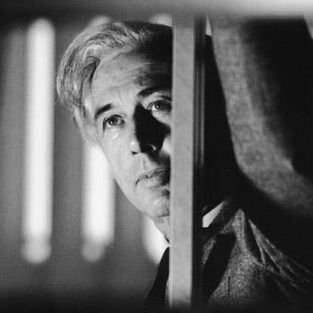
Officials from Goskino, the central government agency for film production in the USSR, complained after seeing the opening scene of Andrei Tarkovsky's "Stalker" (1979), hoping the film could be ‘a little more dynamic, especially at the start.’
Tarkovsky erupted and said, "it actually needed to be slower and duller at the start so that anyone who had walked into the wrong theatre would have time to leave before the action got under way."
Taken aback by the ferocity of this response, one of the officials explained that he was just trying to see things from the audience’s point of view. .. . He was not able to finish. Tarkovsky couldn’t give a toss about the audience. He only cared about the point of view of two people, Bresson and Bergman. Stick that in your pipe and smoke it!
("Zona A Book About a Film About a Journey to a Room", Geoff Dyer, 2012)



Soviet Visuals retweeted

60年以上前、モンゴルと東ドイツが共同制作した幻想的な映画。色鮮やかに描かれる伝統文化に加え、独創的な美術や特撮的な映像表現も魅力。特に水中世界の描写は、その独特な造形も含めて記憶に残る。
Soviet Visuals retweeted

1 July in Russia is Military Veterans' Day
This 1987 painting by Mikhail Uznikov, who fought for the USSR in Afghanistan, caught my attention at an exhibition in Yekaterinburg last year
It's called "Зачем?" (What for?)


Soviet Visuals retweeted

The Space Race: The USSR or the U.S.? 13 Major Firsts (1957-1969)
During the early years of the space race, the Soviet Union achieved most of the firsts, including launching the first satellite (Sputnik 1, 1957), sending the first human into space (Yuri Gagarin, 1961), sending the first woman into space (Valentina Tereshkova, 1963), and conducting the first spacewalk (1965).
Soviet Visuals retweeted
Alexander Dubček (1921–1992) was a Slovak statesman who led Czechoslovakia during the 1968 "Prague Spring" reform movement, attempting to create "socialism with a human face" before a Soviet-led invasion crushed the movement...
He fought in the anti-Nazi Slovak National Uprising, during which his brother was killed. He joined the Communist Party in 1939, rose through regional ranks in Slovakia, studied law and at the Moscow Higher Party School, and became the First Secretary of the Communist Party of Slovakia in 1963.
On August 21, 1968, troops and tanks from the Soviet Union and four other Warsaw Pact nations invaded Czechoslovakia to violently suppress the reforms. Dubček and other leaders were arrested by the KGB and flown to Moscow. Forced under duress to sign a rollback of the reforms, he returned to Prague, was stripped of his position in April 1969, and was officially expelled from the Communist Party in 1970.
. . .
A grease-stained garage on the outskirts of Bratislava held a clerk whom the Soviet empire had spent years trying to erase. Throughout the 1970s and 1980s, an unassuming, silver-haired man sat behind a metal desk at the regional forestry administration, filling out requisitions for tractor parts, tire replacements, and chainsaw oil. To visitors, he was just another municipal functionary in gray overalls. Yet a decade earlier, Alexander Dubček’s gentle smile had been recognized across the globe as the face of the Prague Spring—the daring reform movement that promised "socialism with a human face." Having sent half a million Warsaw Pact troops to crush his dream, the Kremlin chose not to execute Dubček or make him a courtroom martyr. Instead, they condemned him to a punishment uniquely favored by totalitarian regimes: fifteen years of state-enforced oblivion.
Dubček’s rise had brought a brief, intoxicating thaw to the Cold War. Appointed First Secretary of the Communist Party of Czechoslovakia in January 1968, the charismatic Slovak politician began dismantling the apparatus of fear. He abolished press censorship, permitted open artistic expression, legalized independent civic clubs, and opened borders to the West. Dubček did not seek to overthrow socialism, but to humanize it, believing that a communist party could govern through democratic consent rather than terror. For eight euphoric months, Prague became the cultural and political capital of European hope. But to Soviet leader Leonid Brezhnev, democratic socialism was a contagious disease that threatened the entire Warsaw Pact.
The hammer fell on the night of August 20, 1968. In the largest European military mobilization since World War II, five hundred thousand Warsaw Pact soldiers and six thousand tanks swept across Czechoslovak borders. Soviet airborne commandos stormed the Central Committee building in Prague, kicking open Dubček’s office doors and arresting him at gunpoint. Bound with telephone wire and loaded into an armored personnel carrier, Dubček and his closest allies were flown covertly to an isolated military base in Ukraine, then brought to the Kremlin. There, isolated and terrified that resistance would plunge his country into a bloodbath, a weeping Dubček was forced to sign the humiliating Moscow Protocol, surrendering the Prague Spring and accepting the indefinite occupation of his homeland.
#archaeohistories


Soviet Visuals retweeted

Sergei Parajanov’s “The Color of Pomegranates” (1969) is a masterpiece of extraordinary beauty.
The film is based on the life & work of the Armenian poet Sayat-Nova. Visually, Parajanov’s film is poetry brought to life. It tells story through symbols, colors objects & gestures.
Soviet Visuals retweeted

this role gave her some beautiful nicknames. White Swan, Beauty of Son-Köl (a sacred lake) and later Pearl of Kyrgyz Cinema. but it's oddly poetic that she passed away so young when her legacy is tied to the most famous woman with a tragic fate in Kyrgyz folklore


Soviet Visuals retweeted
The laboratory tower of the Russian State Scientific Center for Robotics and Technical Cybernetics in Saint Petersburg, built between 1973 and 1986 by architects S. Savin and B. Artyushin.
Popularly known as the "White Tulip", it is a famous example of Soviet modernism and brutalism—and it truly looks like a large tulip.

Soviet Visuals retweeted

The Soviet Union developed laser pistols in the 1980s for use by their cosmonauts to disable American spy satellites in orbit.
In 1971 the Soviet government saw development of the American space shuttle as a vehicle intended to capture spy satellites out of orbit or even to carry a nuclear warhead into space in order to bomb Moscow with no warning. Soviet scientists immediately began developing countermeasures to this perceived weaponization of near space by the United States.
Scientists at the Military Academy of the Strategic Missile Forces in Moscow designed and tested two different pistols. Initial requirements were for a laser that could burn through an American astronaut’s space suit, disable satellite optical instruments, and even function as a cauterizer for any wounds suffered by the cosmonauts. They created a prototype which met these requirements using a fiber optic cable as a laser resonator but was several meters long. What was needed was a pistol-sized weapon that could be used within the confines of one of the planned Salyut space battle stations.
The first pistol design partially met this need by winding the fiber optic cable around a spool to reduce its overall length and developing one-time-use flash lamps the size and shape of 10mm bullets. The flash lamps were filled with zirconium foil and pure oxygen and ignited by a tungsten-rhenium filament, producing a 10-millisecond flash of light that generated up to five joules of energy on target. The breech of the pistol tilted up to expel the used flash lamp, and the next one was loaded from the 8-shot magazine in the grip via a bolt action lever.
The laser could be safely fired through the windows of Soviet spacecraft when targeting American optical instruments. The second design was a semiautomatic pistol which held six flash lamps in a revolving cylinder, allowing for faster follow-up shots.
There is no record of either pistol ever making it into orbit with Soviet cosmonauts and the project was shelved in 1989. It was not revealed to the world until 2011.
#cosmonaut #space #laser #ussr #coldwar
