
SOF, military training, veteran stories, and security careers. Built for operators and those who want to become one.
United States
Joined September 2012
- Tweets9.6K
- Following479
- Followers5K
- Likes10
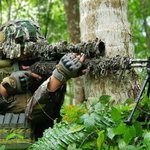


A Filipino sniper behind a scoped M14, using a grip that might look unusual at first. Instead of relying on his muscles to hold the rifle up, he's using his skeletal structure to carry the weight. It's an older technique, but it's still widely used in some styles of competition shooting, because bones don't fatigue or shake the way muscles do.
He's also taking advantage of the tree beside him, pulling the rifle firmly into it to create an improvised support. Combining a stable body position with whatever the environment offers is basic fieldcraft for any sniper, and it can make the difference between a steady shot and a miss.
The M14 itself is no stranger to the Philippines. Decades after it left frontline service in the U.S., it continues to serve Filipino troops as a reliable, hard hitting rifle in the field.
Old rifle, old technique, still getting the job done.

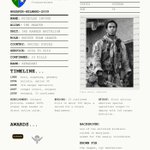
Former 75th Ranger Regiment sniper Nicholas Irving, known as "The Reaper," with his custom SR-25 sniper rifle, "Dirty Diana." Irving served as a sniper with 3rd Battalion, 75th Ranger Regiment, and during a single deployment to Afghanistan in 2009, he was credited with 33 confirmed kills, one of the highest totals for a single deployment in special operations history.
The SR-25 was the rifle at the center of it all. A semi-automatic 7.62mm platform, it gave Ranger snipers the ability to engage multiple targets quickly at range, a critical advantage in the fast moving fights Rangers were known for. Irving named his "Dirty Diana," after the Michael Jackson song, and the rifle became almost as well known as the man behind it.
After leaving the Army, Irving told his story in his memoir, "The Reaper," and has spent the years since teaching marksmanship and sharing what he learned with a new generation of shooters.
Rangers lead the way.


Cmdr. Brian Bourgeois, commanding officer of SEAL Team 8, died on December 7, 2021, three days after being injured in a fall during fast rope training from a helicopter near Virginia Beach. He was 43 years old.
Born and raised in Lake Charles, Louisiana, Bourgeois played four years of football as a safety at the U.S. Naval Academy before commissioning in 2001. After a brief tour on a ship, he earned his Trident and joined the Teams, going on to serve more than two decades in uniform. Among his awards was the Bronze Star with Valor. In November 2020, he took command of SEAL Team 8.
The leaders who served with him called him one of Naval Special Warfare's very best, and as tough as they come. That week, the Navy football team honored him at the Army–Navy game, running onto the field with a SEAL Team 8 flag and keeping his No. 13 jersey on the sideline.
He left behind his wife, Megan, and their five children.


The Canadian Armed Forces' new BACS vest isn't just inspired by Australia's TBAS V4.5. It's a direct variant of it. Both are made by Australian Defence Apparel, which is owned by Logistik Unicorp, the company supplying the Canadian contract.
The system will be issued with a large suite of pouches, NP Aerospace plates (believed to be their III+ ICW plate), a chest rig system, and two different styles of combat belt. The plates, vest, and load carriage are built to work together as one system, instead of the mix of components soldiers have been piecing together for years.
For many Canadian soldiers, who have spent years buying their own plate carriers and pouches to replace issued gear, this could finally be a real step forward. The real test will be how it holds up in the field.

Petty Officer 2nd Class Jajuan Hernandez, a Navy corpsman deployed with 2nd Marine Raider Battalion, has been honored for running into a burning building to save French soldiers after an Iranian drone attack in Iraq. In March 2026, during the first weeks of the war with Iran, a drone struck a coalition base in the Erbil region, killing a French officer and wounding several more.
As fire spread through a berthing area and ammunition inside began cooking off, Hernandez moved directly into the building. He located seven critically wounded French soldiers, pulled them out, and triaged them under conditions few people would ever choose to walk into.
Earlier this month, he received the Armed Services YMCA's 2026 Angels of the Battlefield Award on behalf of the Marine Corps, presented by the acting Surgeon General of the Navy.
The French military lost Chief Warrant Officer Arnaud Frion in the attack. Thanks to one corpsman's actions, his wounded teammates had a fighting chance.

Operators from DEVGRU's Red Squadron, the Navy's Special Mission Unit, on May 2, 2011, the date of Operation Neptune Spear. In the early hours of that morning, Red Squadron operators flew from Jalalabad, Afghanistan, into Abbottabad, Pakistan, aboard modified Black Hawks from the 160th Special Operations Aviation Regiment, and assaulted the compound where Osama bin Laden had been hiding.
The raid didn't go entirely to plan. One of the helicopters went down inside the compound walls at the start of the operation, yet the assault continued without missing a beat. In under an hour on target, the operators cleared the compound, killed bin Laden, collected a significant amount of intelligence, destroyed the downed aircraft, and made it out of Pakistani airspace without losing a single American.
Nearly a decade after 9/11, a small group of men closed one of the most significant chapters in the war on terror, and most of them did it without ever seeking recognition.

A Korean counterterrorism drill at a subway station, and there's a lot to unpack here. The split stack is set up on the same side, everyone is wearing dark eye protection indoors, and nobody is looking for work or holding the long threat. Every man is focused in the same direction, leaving the rest of the area wide open.
The gear raises questions too. There's no clear SOP for battle belt layout, the team is running a mix of quad and mono night vision, and some are missing ear protection. The brass catcher may keep the range tidy, but in an extended firefight it will fill up and start causing double feeds at the worst possible moment.
Then there's the point man. He needs to switch shoulders to cut that corner properly instead of exposing more of himself than necessary, and the footwork across the team needs serious attention.
As it stands, one lucky gunman could take out this entire team. The good news is that drills exist for exactly this reason: to find the problems before a real attacker does.

Lt. Michael P. Murphy grew up in Patchogue, New York, and graduated from Penn State with degrees in political science and psychology. He was accepted to several law schools, but chose a different path. He joined the Navy, earned his Trident, and was assigned to SEAL Delivery Vehicle Team ONE.
On June 28, 2005, Murphy led a four man reconnaissance team into the mountains of Kunar Province, Afghanistan, during Operation Red Wings. After the team was compromised, they came under attack by a much larger enemy force. With his men wounded and unable to get a signal, Murphy deliberately moved into the open to make a call for help, knowing he would be exposed. He was shot while making that call, finished it, and returned to the fight. He was killed alongside Gunner's Mate 2nd Class Danny Dietz and Sonar Technician 2nd Class Matthew Axelson. Marcus Luttrell was the only survivor.
Murphy was 29 years old. In 2007, he was posthumously awarded the Medal of Honor, the first awarded for actions in Afghanistan. Today, his name lives on in the destroyer USS Michael Murphy and in the "Murph" workout, done every Memorial Day by people around the world in his honor.


U.S. Navy SEALs in the 1990s, wearing their green Nomex flight suits and carrying MP5s. Today the flight suit might look more like something from an aviation squadron, but for the Teams back then, it was a familiar sight on maritime interdiction and VBSS (Visit, Board, Search, and Seizure) missions.
The choice made sense. Nomex is flame resistant, an important quality when working aboard ships with fuel, machinery, and confined spaces, and the one piece design was simple, practical, and easy to move in during fast rope insertions and boarding operations. Paired with the compact MP5, it made for a setup well suited to clearing tight passageways, ladder wells, and cabins quickly.
It's one of the most recognizable looks from that era of Naval Special Warfare, and honestly, it still looks awesome.


A U.S. Army sniper team with the Jalalabad Provincial Reconstruction Team scans the horizon in Nangarhar Province, Afghanistan, on October 19, 2006. Provincial Reconstruction Teams brought together soldiers, civilian experts, and government officials to support reconstruction projects and local governance, but they still had to operate in a combat zone where threats could appear at any moment.
That's where teams like this came in. While engineers met with local leaders, inspected projects, and worked with communities, snipers provided overwatch, watching the high ground, routes, and approaches for anything out of place. Their job was to see danger before it reached the people they were protecting.
It's patient, demanding work that rarely gets noticed, and when it's done right, nothing happens at all.

Pictured on the left is a young Mike Vining during his time as an Explosive Ordnance Disposal specialist in the Vietnam War. The photo was taken just before Christmas 1970 at Tay Ninh, during the cleanup of an ammunition bunker filled with MK 45 aircraft flares, 20mm rounds, and 40mm M406 grenades. Vining ended the job covered in fiberglass from the burned out flares, while South Vietnamese Army soldiers worked nearby trying to pull the parachutes out of them.
It was dirty, dangerous work, the kind EOD techs did every day without much recognition. That same tour also saw his team destroy the largest enemy ammunition cache found during the war.
The photo on the right shows Vining at his retirement, after 31 years of service. In between those two photos, he became one of the founding members of the Army's SMU, graduating from its very first Operator Training Course and serving as the unit's first EOD specialist. He went on to take part in some of the most significant operations of his generation and retired as a Sergeant Major.
From a bunker in Tay Ninh to the ranks of the original operators, it's a career few could ever match.


A U.S. Marine with 1st Battalion, 8th Marines, fires a Mk 153 Mod 0 SMAW in Fallujah, Iraq, in November 2004. During the Second Battle of Fallujah, Marines fought house to house through a city full of insurgent strongpoints, fortified buildings, and prepared fighting positions, and the SMAW became one of their most important tools.

A Salvadoran soldier carries one of the more unusual rifle setups you'll ever see: an M16 fitted with an M203 grenade launcher and an M72 LAW rocket launcher mounted on top. That's a rifle, a 40mm grenade launcher, and a 66mm anti-armor rocket all in one package.
During El Salvador's civil war in the 1980s, the Salvadoran Army received large amounts of American equipment, including M16s, M203s, and M72 LAWs, which made a combination like this possible. In close fights against guerrilla forces in mountains, villages, and dense vegetation, having that much firepower within reach could make all the difference, even if mounting it all together wasn't exactly standard practice.
Whether this was a field modification or a one off experiment, it was definitely not light, and probably not great for balance.

An Italian Army CH-47F Chinook serving with EUFOR Althea crashed near Brčko, Bosnia and Herzegovina, today. 15 Italian soldiers were on board: four killed, eleven injured. The cause is under investigation.
Rest in peace.
#ItalianArmy #EUFOR #Chinook
On the night of November 13, 2015, during the final assault on the Bataclan, operators from the BRI, the Paris police's Brigade de Recherche et d'Intervention, advanced down a narrow corridor where two Islamist terrorists were holding eleven hostages. With nowhere to maneuver and the terrorists firing straight down the corridor at them, the operators moved forward behind the Ramsès, a heavy ballistic shield that reportedly absorbed more than 27 bullet impacts during the assault.
Every step forward was taken under fire, with the officers fully aware of what was waiting at the end of that corridor. The terrorists were armed and wearing explosive vests, and the hostages were trapped between them and the police. The BRI pushed through anyway, ended the threat, and brought the hostages out alive.
That night, 130 people were killed in coordinated attacks across Paris, 90 of them inside the Bataclan. In the middle of that horror, a small team of police officers walked toward the gunfire behind a shield because someone had to.

Soldiers from the Rhodesian Light Infantry practice with their FN FAL rifles on a firing range, around 1977. Known as "The Saints," the RLI was a light infantry commando battalion that built its reputation during the Rhodesian Bush War, and is still often discussed among the most effective counterinsurgency units of its era.
Its fame came from Fireforce, a rapid reaction tactic in which small groups of soldiers were flown into contact by helicopter, often supported by paratroopers dropped from Dakotas, to surround and engage insurgent groups within minutes of them being spotted. At the height of the war, RLI troopers could find themselves deployed into action several times in a short period, and many made combat parachute jumps far more often than soldiers in most modern armies.
The FN FAL was their standard rifle, a reliable 7.62mm battle rifle well suited to the open bush and the close, fast engagements that Fireforce produced.

An operator from the Brazilian Navy's Reconnaissance and Surveillance Platoon, serving with the security detachment of a Brazilian embassy abroad, armed with a pistol and an integrally suppressed MP5SD. But we have to ask: if the idea behind civilian clothes is to keep a low profile, why is he wearing a U.S. Navy SEALs shirt?
Embassy security work depends on blending in. Observing without being noticed, reading a situation before it escalates, and staying unremarkable to anyone watching are all part of the job. A shirt that announces special operations to everyone who walks by doesn't exactly help.
Maybe it's a gift from a partner unit, maybe it's just his favorite shirt, or maybe there's a story behind it we don't know. Either way, it's a reminder that in low profile work, the smallest details can say the most.
What do you think the story is?

On August 20, 2019, a man armed with a gun and a knife took 37 people hostage on a bus crossing the Rio–Niterói Bridge, one of the busiest roads in Rio de Janeiro. The bus was coming from São Gonçalo and was hijacked around 5:30 a.m., right as the morning commute was building, and he threatened to set the bus on fire with gasoline.
Rio's elite police unit, BOPE, took over negotiations while a sniper took position near the scene, concealed on top of a fire truck. Over nearly four hours, the hostage taker released six people in pairs. Then he stepped off the bus and threw an object toward police. The sniper took the shot.
Every hostage walked away unharmed. Hours of patience and negotiation came down to a single moment, and the man behind the rifle was ready when it came.
This photo shows the BOPE sniper on the fire truck just after he took the shot.

This illustration shows the kind of concealed sniper positions the Viet Cong used throughout the Vietnam War. Often called "spider holes," these were small, one man fighting positions dug into the ground, covered with a camouflaged lid made of wood, leaves, and soil, so they blended almost perfectly into the surrounding terrain.
A sniper could wait inside for hours, lift the cover just enough to take a shot, and then disappear again before anyone could locate where the fire had come from. Some positions were connected to tunnel networks, allowing the shooter to move away underground while American troops searched the area above.
For U.S. and allied forces, the threat shaped how they patrolled. Every clearing, trail, and tree line had the potential to hide a shooter who could not be seen until it was too late. It was a simple, low tech solution that proved deadly effective against a far better equipped enemy.
