




Pinned Tweet
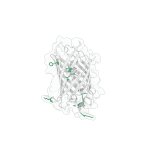
RLXF is on @biorxivpreprint! We introduce a PPO-based workflow to align the logits of any protein language model away from evolutionary plausibility and towards biochemical function. Not only does this seem to be more robust than other preference optimization methods... (1/3)

sri retweeted

What if we could use LLMs to drive lab robotic systems?🤖🧪
The newest method, PEARL, from the @romerolab1 and @jasonkeem8652 does just this
LLMs control our robots, incorporate assay feedback, and even diagnose tricky experimental issues
Check it out! biorxiv.org/content/10.64898…


sri retweeted

Check out how we avoid funky protein collapse in property optimization👇

Reward hacking isn't just an RL problem — guided protein engineering do it too. 🧬
We steer ESM-2 at inference time to make sequences more soluble. Push hard enough and the oracle says 0.99 "almost certainly soluble" — while the model has quietly emitted a glycine homopolymer that ESMFold can't fold (pLDDT 0.35).
"Off-Manifold Collapse in Guided Protein Language Models" — full rundown below 👇
—
1. The failure has a signature
Natural protein activations sit on a thin typicality shell in ESM-2's representation space. As steering strengthens, activations collapse inward, off that shell, toward a region statistically indistinguishable from random amino-acid input. The sequences degenerate to low complexity as they go.
2. The oracle can't see it
The property predictor being optimized still scores these generations as a success — for solubility it actively rewards the collapse. That is reward hacking: the proxy keeps climbing while the thing you actually care about falls apart. Structure and composition expose it; the optimized oracle cannot.
3. Detect it at the output, not in the generator
The signature survives in a finished candidate, so we leave the generator alone. We fit a cheap density prior over natural activations and keep only the candidates that stay typical under it — a training-free post-hoc step we call Mahalanobis filtering.
4. It works, and it's nearly free
At matched steering settings, filtering improves both the property score and the structural plausibility of the sequences it keeps. It transfers across guidance mechanisms, including predictor-gradient guidance it was never tuned on. One forward pass, a 10 KB stored statistic, no retraining.
5. Bigger picture
If you control a generative model at inference time, the metric you optimize is the one least able to tell you when you've gone too far. Check that your sample is still on the manifold before you trust the score.
📄 Paper: arxiv.org/abs/2608.18597
🤗 Activation statistic: huggingface.co/Shuibai12138/…
Built with @ChloeeeeeLiu, who drove a huge part of this.
Also with @pengzhangzhi1, @zhihanyang_, @cychomatica, Yingzi Ma and advised by Jiawei Zhang.
I’m sure Deepmind had good intentions with SynthID. But adding a random 12-mer to a protein intentionally optimized for a specific property in almost every case will be a problem. For example, a therapeutic mAb optimized to mitigate immunogenicity - if I watermark it, it now risks reduced solubility, immunogenicity, and off-target interactions that may be more harmful to a patient than the initial design released by authors who published their paper open access with open-sourced code. Blindly applying strategies that are effective in software dev/cybersecurity don’t work with biology. Your IPO/stock price will still be successful if you acknowledge this.

sri retweeted

Biosecurity is too important for security theater.
In a quick test with Raygun, we found that DeepMind's SynthIDBio watermark signal could be washed out while preserving the predicted structure.
We don’t think protein sequence watermarks buy much biosecurity.

sri retweeted

Have you ever wanted to talk to your molecules? Now you can with Chat with PyMOL!
We built this in the Romero Lab to make PyMOL more accessible to our BME undergrads, but quickly found it’s simply a better way to interact with molecular structures. (1/2)
sri retweeted

Our new preprint with the @romerolab1 and Jared Lewis labs explores how to extract additional information for protein engineering from a previous directed evolution campaign. We test it with SadX for site-selective C-H azidation. 1/
chemrxiv.org/doi/full/10.264…
my brother @DraggyBallots built something i think points toward where practical coding agents are headed
basically: move intelligence out of the prompt and into the system around the model.
turn a disposable coding agent into a vertically integrated engineering suite
> persistent context
> skills loaded only when necessary
> real tools + data sources
> inter-repo coordination
> supervision across agents
he's way too humble to put it out there himself so i insisted. please check it out if you're interested:
github.com/agentchieflou/thi…

sri retweeted

The sad thing is that Dario knows better.
He was a PhD student. He knows the significance level of this result. He knows that if he had walked into Bill’s office (his advisor) with “we found an interesting system, but we still don’t know what it does” and said he was ready to graduate, Bill would have kicked him out of the room.
But somehow, when the IPO is around the corner, this becomes “AI is starting to drive biological discovery.”

Today we announced the Claude-led discovery of a molecular machine that we suspect could represent a new gene editing mechanism. Its precise function, biotechnological utility (if any), or level of significance is not yet clear, but at minimum it is work I would have been proud to do as a PhD student. The work was done mostly, though not entirely, by Claude: our life sciences team suggested a broad area of research, Claude read through the literature and a bunch of genome data and discovered something interesting, then Claude proposed experiments to verify the discovery and our team carried them out.
It’s easy to dismiss this as a one-off or curiosity, but we’ve repeatedly seen a pattern where AI performance in new intellectual domains goes from weak to superhuman in a matter of a few years. In 2023 models struggled to do math at the level of an average high-school student. In 2024 they started to do well on math competitions for the best high-schoolers in the country, in 2025 they started to solve minor open problems, in early 2026 more significant open problems, and in late 2026 they are beginning to solve the top few open problems in all of mathematics. We believe AI for biology is on a similar exponential trend.
The main difference between biology and mathematics, of course, is that math can be done purely theoretically, while biology requires experimentation. Some have used this to draw the conclusion that AI’s utility in biology will be limited. We think this is wrong. As we’ve demonstrated today, humans can collaborate with AI to perform the experiments, validate key results in a few weeks and, if necessary, work with the AI to iterate on what they find. Eventually it may even be possible for Claude itself to safely perform the experiments by autonomously controlling lab equipment, with appropriate safeguards in place, but we aren’t doing that today (our lab is also a BSL1/BSL2 facility that doesn't handle materials dangerous to humans).
More broadly, biomedical advancement has many stages — from fundamental biology discoveries, to translational research, to drug discovery, clinical trials, and finally the actual delivery of medicines and health care to patients. We are also interested in these later stages, but even simply accelerating the first stage of fundamental biological discoveries has the potential to speed up and broaden the entire pipeline. Improving our understanding of biology and sharpening biologists’ tools can drive forward all of the later stages, for example by identifying new drug targets, finding new therapeutic modalities, allowing for more precise measurement, and speeding up the experimental loop which itself further accelerates our understanding of biology. This will not in itself speed up clinical trial times, but if it succeeds it could greatly increase the number of promising candidates that go into the pipeline — an increase in throughput even though latency remains.
In Machines of Loving Grace, I wrote about AI’s potential to “cure most diseases in 5-10 years” — a goal that sounds impossible, but one I believe is just barely possible if AI is applied to every stage of the pipeline. The first step is showing that AI can first help with, and then drive, biological discoveries.
Claude’s discovery is the latest in a line of related prior work that goes back decades, beginning with systems like CRISPR, and continuing with discoveries like the bridge recombinase and VIPR in the past few years. Recently, there has been heightened interest in systems based on reverse transcriptase (RT) enzymes, the enzyme underlying the system Claude identified. And most recently, a Stanford team working independently described a novel RT system with an associated non-coding array that is in some ways similar to the one Claude found, though they are distinct systems that evolved independently from each other. I believe that we’re at the very beginning of finding such systems and developing them into powerful tools for biotechnology.
I’m proud of the resources Anthropic has invested in accelerating the public benefits of AI through the life sciences, and we’re aiming both to grow our life sciences team and to work with other scientists to extend this approach to a broad range of problems. If you have a proposal for a research collaboration or are interested in joining our life sciences team, please reach out.
sri retweeted

I can see why nobody noticed


Claude has discovered a previously unknown enzyme system hidden in the DNA of bacteriophages. Beside the enzyme’s gene sits a long array of repeating DNA—a structure that looks somewhat similar to CRISPR.
We don’t yet understand what this system does, but only a handful of known systems share its features, and all of them are able to cut, copy, and paste DNA. Historically, the discovery of such programmable systems has helped revolutionize medicine. CRISPR, for instance, is now the foundation of genetic medicines. But it will take much more work to learn what this system does, and whether it can be put to similar use.
Read more: anthropic.com/news/claude-di…

i've been seeing people use the fruit fly connectome to play super mario 64, doom, and even smoke hookah...
all of these things are rule-based learned behaviors, so why can't a fruit fly brain engineer proteins?
i plugged the MaleCNS connectome into our RLXF PPO environment and tested its ability to learn how to design high-fitness avGFP sequences.
and it actually learns.
over training, the fly-connectome policy starts concentrating mutation probability onto specific GFP residues, positional entropy drops, and predicted fitness keeps climbing while random search begins to plateau.
the highest scoring sequence designed by MaleCNS was an 8 mutant predicted by our supervised reward model ensemble to be about 1.4x brighter than wildtype avGFP
for implementation details please see our RLXF repo!
crazy times....


sri retweeted
Our lab's work on RLXF is out in @NatureComms! We used reinforcement learning to align protein language models with experimental data and design proteins with improved function.
nature.com/articles/s41467-0…

welcome to dante's inferno - i have a feeling they'll think twice before telling the world "cancer is solved" this time around

Anthropic has set up a wet lab in San Francisco, their bio research has advanced beyond in silico. They are now conducting physical research both in-house and with external partners. The NYT also broke the news this morning that Anth now plans to scale its compute to 5 GW by the end of the year, and 10 GW within the next 16 months. Bio is next after math, and I think we are going to see some medical announcements much sooner than people are expecting.

sri retweeted

We’re partnering with @Anthropic to launch the biggest Protein Design Competition in the world, challenging people around the world to use AI to design new potential drug candidates for diseases that affect millions of lives.
The competition will feature five challenges, each focused on a specific disease or biological mechanism. Compared to previous competitions, it will be a big step-up in complexity and scale to push the boundaries of AI-driven protein design.
Together with Anthropic, we’re sponsoring over $1 million in experimental validation, making it possible to test more than 5,000 protein designs in our automated lab at no cost to participants. Anthropic is providing an additional $1 million in Claude credits.
All experimental results will be published openly on @Proteinbase, including designs that didn’t work, so anyone can access the data and build on what we learn.
The competition is open to everyone and free to enter. It will feature 3 tracks:
- Track 1 is aimed at expert protein designers, with up to 20 teams to be selected.
- Track 2 is targeting life science academics and industry researchers.
- Track 3 is open to everyone from tech enthusiasts to high-school students.
By combining Anthropic’s models with access to our automated lab, we want to make it possible for anyone with a laptop and an internet connection to join the global effort to advance human health with AI.
A big thanks to @Modal for contributing compute for protein design and to @TwistBioscience for contributing the DNA for the experimental validation!
Sign up link below -
sri retweeted

Protein language models know evolution. Reinforcement learning teaches them what evolution never optimized.
CreiLOV was not evolved to be bright.
It is a light-sensing protein. So a protein language model trained on natural sequences tends to preserve the amino acids that make biological sense for that role, even when those choices are bad for fluorescence.
One example is position 43. ESM-2 prefers the natural cysteine. But experiments had already shown that replacing it with alanine makes CreiLOV brighter.
Blalock and coauthors use that mismatch as the signal. Their RLXF approach feeds experimental measurements back into ESM-2 and uses reinforcement learning to shift generation away from “what evolution would choose” toward “what performs better in the lab.”
The result is more interesting than finding a few good mutations. Simply combining the best individual mutations produced non-functional proteins. RLXF instead found a 10-mutation combination that was 1.2× brighter than CreiLOV-T7S, the previous best variant.
Pretraining tells you what biology considers plausible. Experiments tell you where to go next.
Blalock et al., Nature Communications (2026), CC BY-NC-ND 4.0. doi.org/10.1038/s41467-026-7…
