
Bad Data Breaks AI. We Fix That.
Austin
Joined July 2009
- Tweets3.1K
- Following1.8K
- Followers2.5K
- Likes3.6K








What’s bringing you joy right now?
As the year winds down and I head into a few days of rest, I’d love to hear your recommendations.
What are the best things you've discovered this year?
I’m keeping it open-ended—so hit me with your favorites:
📚 Books
🎬 Movies
📺 TV shows
▶️ YouTube channels
🎧 Podcasts
👟 Luxe leisure brands
📟 Tech gadgets
✨ Or anything else you can’t stop raving about!
Drop your reccs in the comments. I’m all ears!
Here's a breakdown of the ~1500 integrations you can get a unified view of with Oomnitza, put into 5 main buckets.
1. Security Bucket: Your "sleep better at night" toolkit
• Asset recovery
• Coverage gap identification
• Agent remediation
(Examples of integrations we have are CrowdStrike, SentinelOne, Rapid7, Qualys and Carbon Black)
2. Compliance Bucket: Your "always audit-ready, no surprises" arsenal
• ISO certified
• NIST certified
• SOC2 compliant
(We partner with Jamf, Intune, SecurityScorecard and Qualys)
3. The Audit Bucket: Your no-audit-disaster companion
• Internal audits
• External audits
(Working seamlessly with GRC)
4. Finance Bucket: Your "make every dollar work hard" mission control
• Renewal management
• Forecasting capabilities
• Budgeting software
(Playing nice with Workday, NetSuite, SHI and CDW)
5. Experience Software Bucket: Your "make tech lives easier" navigator
• Onboarding to offboarding
• Tech refreshes
• Productivity integrations
(Connecting with Workday, Okta, Jira, and Zendesk)
When you integrate with Oomnitza, you go beyond connecting isolated systems—you're getting an overarching view of everything. Questions you're trying to answer, problems you're trying to solve, it's all there in one place.
Think of it as your command center for... well, everything.
Now back to those bucket names. Any better suggestions?

We need to talk about New Year's Resolutions—yes I know it's November, but hear me out.
Here are five reasons why ITAM should be one of your New Year's resolutions for 2025 planning (from a totally biased ITAM professional):
1. Cost containment
Because who doesn't love freeing up additional resources? But without proper ITAM, you're basically running a leaky ship.
Trust me, those "little" drips of overspend add up fast.
2. Employee experience
You know what's not a great retention strategy: Making your brilliant new hire wait three weeks for a laptop, or push through hours of manual software onboarding back and forth.
Happy employees from the start = lower turnover.
3. Data visibility
Flying blind isn't cool in business. Without visibility into your assets, you're essentially making decisions blindfolded.
When you know what's happening with your assets, you'll make better business decisions.
4. Automation
Nobody's career dream is "manually tracking IT assets in spreadsheets."
Automation lets your IT staff focus on the strategic things that actually help you secure your assets and operate more efficiently.
5. Audit readiness
Plot twist: Audits don't have to be an unpleasant surprise.
Call me crazy, but with the right ITAM system, you can actually look forward to audits. ITAM alerts you about compliance, and makes your system always audit-ready.
So, now including ITAM, what else is on your 2025 resolutions list? 😉

Does your calendar cause you more stress than your actual work? Your calendar should exist to serve you, not the other way around.
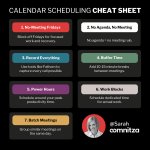
After spending way too many years in back-to-back meetings, I've got 7 unfancy-but-real solutions to help you de-stress your calendar:
1. No-meeting Fridays
My whole marketing team does this. Absolute game changer. Bonus: One less day of mandatory camera-ready hair and makeup (ladies, I know you feel me 💁♀️)
2. The "No Agenda, No Meeting" rule
When someone sends a meeting invite without an agenda, my team requests an agenda first. (Spoiler: Half of these meetings turn into emails instead.)
3. Record everything
I use Fathom for all calls because trying to take notes while being present in a meeting feels impossible. Just record it AND actually pay attention.
4. Buffer time is non-negotiable
If being 5 minutes late to a meeting has ever snowballed into you being late to everything, you know what I'm saying. Adding 10-15 minute buffers between meetings will keep this from happening.
5. Know your power hours
I'm a morning person. That's my deep work time. If you're a night owl, own it! I believe we work better as a team when we all have the flexibility to lean into our best work times.
6. Block time to... actually work
Time blocking to do the work you're meeting about is more important than the meetings. Otherwise, you're just being professionally social all day.
7. Batch those babies
Group similar meetings together to limit context switching. Having important conversations scattered across the week is like trying to watch a TV show one scene at a time. Not productive.
Again, your calendar should exist to serve you, not the other way around. Own it.
What's your non-negotiable calendar rule? Drop it in the comments (and yes, I might steal it for my team 😉)

If you're in asset management, you'll love these 3 key pieces of advice from Katie Due from @Snap Inc.
(She shared these with @dwilczek during an awesome fireside chat at the @JamfSoftware conference in Nashville).
1. Don’t rush to hit a deadline of some kind.
It's about being realistic about your goals. Better to take the time to get things right than scramble and create bigger problems down the road. But on that note...
2. Don’t wait for perfect data.
What's really important, is starting migration and putting things to work. There's only so much you can do with a disconnected environment. With a solid plan in place, you'll be able to address any issues that pop up.
3. Bring management along for the ride.
Sometimes, it’s all about reframing the problem—whether it’s security risks or budget concerns. Clear communication shows management what's really at stake and what drives their teams forward.
Don't know how to automate asset management and connect all your data with one source of truth?
Neither did Katie.
Back in 2017, they tried Oomnitza but it wasn’t quite the right fit at the time. Instead, they built their own solution.
It was exciting at first but quickly became a maintenance nightmare—especially after their internal engineer left. And then it became urgent: Snap Inc. needed asset management that actually works to continue functioning.
So, Katie championed the switch to @Oomnitza. She needed these features and benefits for her financial reporting team:
➝ Customizations & integrations: Google, Jira, Slack, Jamf for less manual tasks and better productivity.
➝ Trustworthy data: After cleaning up their data, Snap Inc. saw a 3% increase in data validity—a huge win for their security team.
➝ Time saved: Katie can finally focus on financial reporting.
So, after that initial sprint of setup and data cleanup, Snap Inc. got total control and visibility across their entire asset ecosystem, as they rocketed through their growth.

Is your upcoming ISO 27001 certification audit keeping you up at night? I’ve got something that’ll help.
(This shouldn't be a surprise, but...)
@Oomnitza.
Let me tell you how we helped an accounting software company with over 3 million users make audits stop feeling like they need to stay awake all night (with 3 functions).
1. Tracking every single asset (we love playing detective)
Auditors want to know where all assets are. So, we pulled up the full history for all of the company's assets—from when it was assigned, to when it was finally returned (minus the inconsistencies or missing data points).
2. Real time notifications
After having a complete view of all assets, it's important to track what's happening to them. Did the asset go missing? Is someone hoarding two laptops? Did all employees do that important security update?
Oomnitza’s got ongoing alerts for that, so the accounting software firm could jump on issues before they turn into full-blown dumpster fires (compliance = a breeze).
3. Integrations for tech management
By integrating Oomnitza with technology management tools, the accounting software company's IT team now accesses Oomnitza to answer any questions auditors pose about their endpoints for the full lifecycle.
Not only did our customer nail their ISO 27001 certification, but they also automated most of their IT processes and leaned out their entire asset management system.
P.S.: This saved them over $60K a year—with the Zendesk plugin, tickets went way down and resolution times sped up.
So, if passing your certification feels like a nightmare, we've got you covered.

The hype around GenAI isn't about AI itself—it's about data. Let me show you why smart CIOs are so excited about it (and not because it's the hot new thing).
Picture this: You've got data scattered across tons of systems. Your teams are spending dozens of hours manually connecting dots.
And let's be honest—you're probably missing insights because who really has time to dig through all of that?
This is where GenAI can solve real problems for your teams (and I'm not just saying that because it's 2024 and everyone's talking about AI).
➝ It helps clean up your messy data and enhance accuracy
➝ It connects disparate sources and eliminates duplicates or inconsistencies
➝ It finds patterns and anomalies in seconds
So instead of having your team spend 80% of their time trying to make sense of data from different systems, they can focus on actually using insights from the data.
Not using GenAI in 2025 is choosing to do data strategy on hard mode (= manual mode).
Ready to stop drowning in disparate data sources? Make AI work for you, not the other way around.
Calling all detectives (I mean IT pros). We’re about to launch The Asset, @Oomnitza's brand-new detective-themed newsletter! 🕵️♀️
Why detective you ask?
As I see it, ITAM software allows you to be the "detective" for your company, ensuring your assets are safe, secure, and fully operational.
Your main job is to hunt down the “bad guys” that could damage your IT assets or make your company non-compliant.
ITAM software is like your very own “spy gear.” Think earpieces, smart glasses, the works.
Just like agents need their tools, IT teams need real-time intel to solve issues before they become problems.
With real-time monitoring, ITAM software helps you get constant intel.
We're aiming for a launch the week of Nov 11th.
Signup link is in the comments.

Are you an early bird or night owl?
Some people think one is better than the other. What I believe matters is how you build your schedule around it.
I’m an early bird, for sure.
(You can count on my work brain to be MIA when it gets dark)
As a leader, having this mapped out has been a game-changer.
We may think of ourselves as workhorses or powerhouse engines, but we all have peak performance times.
Give me 4-5 focused hours vs. 10-12 distracted, low-energy hours.
I know I’m most focused in the mornings. That’s when I tackle my hardest tasks. By the afternoon or evening, I shift to lighter work because I'm on low battery.
So here's how to balance your energy:
→ Track your energy patterns. Write it down, make a chart.
→ Batch tasks by ‘piece of cake’ and not ‘piece of cake’.
→ Take breaks. Get out, eat something! Whatever to avoid burnout.
When you see it like this you may say: duh! It’s pretty obvious.
But if it were so obvious, we wouldn't be talking about burnout so much 🤔
Balancing your energy isn’t just about time management—it’s about understanding how you work best.
When you match your workload to your energy, you maximize efficiency and enjoy your work more.
Sound off in the comments — are you an early bird or a night owl?

What’s blonde and red all over? Me! So much of my identity is my work, which presents an issue...
Working in marketing for so long, I’ve realized I can play the dream team member: I wear the company colors, I speak about the company all the time, I write about it, I post about it…
I’m in ambassador mode 24/7.
And that is great for marketing, especially if you’re building brand awareness in a startup.
Buuuuuuut. And it’s a big but...
You can end up taking things too personally. I've been there, and honestly I'm still learning.
I definitely feel the highs and lows of my work deeply. When things don’t go as planned or there are difficult conversations, it’s hard not to take it personally.
4 things that have helped me:
1. Practice, practice, practice. It’s like exposure therapy, it takes time and practice, but you have to face it and move through it.
2. Find an escape valve. Journaling or talking to someone gives me space to process. I don’t expect them to solve it, it just makes me feel better to vent a bit.
3. Be thoughtful in how you say things. People may not intend things the way you perceive them. Tone gets lost in Slack and email. An exclamation point or a smiley face never hurt anyone. Just don’t overdo it. 🙂
4. Allow people to be themselves. We should all be allowed to express ourselves through our work, whether it’s in the way we write, create videos, or structure meetings.
Can anyone relate?
I’ll let you in on a secret: bad data isn't the IT team's fault. It's a leadership problem.
Bad data stems from a lack of prioritization. If someone tells me "our data is just crappy," I don't buy it. I question why it hasn't been on the strategic roadmap.
How are you supposed to keep IT assets efficient and make data-driven decisions with incomplete, old, hard-to-find data?
You can’t.
That’s why clean, well-maintained data is essential and should be on every leadership team’s strategic roadmap. If this isn’t the case at your company, you’ll have to get leadership buy-in.
Without it, you're facing an uphill battle in managing IT assets.
So, how do you get buy-in? Here's the 5-step playbook:
1. Build a business case
Show how clean data drives business outcomes and bad data holds the company back in essential processes.
2. Tie it to organizational goals
What are your company’s top priorities for the year? Demonstrate how having clean, up-to-date IT data can help your company achieve those goals.
3. Formalize data management for enterprise, with clarity of ownership, policies and processes.
4. Treat data as strategic to revenue generation, with ownership, accountability and incentive through key leaders across the company.
5. Use experts if needed
I’m a big fan of bringing in external help for a specific project. If you don't have the right staff, skills, or resources, bring in the pros!
Clean data starts at the top.
Raise your hand if you have trouble delegating 🙋🏼♀️
If you’ve worked in startups like me your whole career, you’ll know the drill:
➝ Small budgets
➝ Limited resources
➝ Tiny teams
You just figure things out. That’s my story. No HR to call for help, no big budgets to lean on. Just me, rolling up my sleeves and making things happen.
But as I’ve moved into leadership roles, managed teams, and overseen strategy, I’ve realized that I have to *delegate*.
By definition, it sounds easy, right? Hand off tasks to your team.
But when you’re used to doing everything yourself, it’s hard to keep in mind that you don’t have to. Yes, there is a better use of your time than creating QR codes in Canva (which, yes, I still catch myself doing).
My job now is to focus on the bigger picture—strategy, vision, analyzing the market.
Two things that have helped me stay focused on what I'm best at:
1. Having a to-do list
It doesn't have to be in some fancy task management software—a Google Doc or Notes page will do. Crossing things off feels weirdly satisfying—and keeps me focused on what’s truly important, which leads to...
2. Align my priorities with the company’s goals
I review these constantly during one-on-ones with my boss. Keeping alignment top of mind helps ensure I’m putting my resources to good use and not getting caught up in the smaller tasks that don’t move the needle.
These things are still a work in progress, but being aware is the first step in correcting it.
Now, please share what has worked for you when delegating. Gotta try some of that stuff out!

Fun fact: My hobby is being a collector and matchmaker of interesting people.
Sounds a lot better than "networking," huh?
I love connecting with awesome folks and watching the magic unfold.
In some shape or form, I've always been a connector in my career.
“And how how have you done that, Sarah?” I'm happy to share.
Back in my 20s, I hosted Sunday Night Dinners at my place twice a month. I’d invite people who didn’t know each other but absolutely had to, then we’d have drinks, appetizers, and a cozy dinner.
Later, I started hosting monthly procurement meetups in SF over lunch.
Then COVID hit. But that didn’t stop me!
Rolling with the punches (as I usually do) I started hosting a virtual Shaken Not Stirred procurement meetup group. For two years we met every week, with some calls lasting up to 4 hours (yes, seriously). I met some of my closest connections that way.
As things opened up, I began hosting quarterly meetups at my place. Thankfully, I have a big deck which makes a great spot for social distancing (remember that?)—so I’d bring in a taco cart with fresh, delicious Mexican food, and we’d network and hang out.
And I can’t leave out the Supply Chain Girls Gone Wild trips! Twice a year, a group of incredible women and I head off to fun destinations—Austin, Sedona, Napa, you name it—for a mix of relaxation and relationship-building.
(Pic is of me and the girls enjoying the Frank Family Vineyards this year. Possibly going wild? We’ll never tell.)
Other people may love painting or running (and don’t get me wrong, to each their own), but there’s nothing I enjoy more than bringing awesome people together.
Cheers to that!
P.S.: What's your favorite hobby outside of work?

Think email is dead?
Pre-event emails brought nearly 700 people to our booth at #JNUC2024.
The trick? Write emails that don't sound like a sales pitch.
People absolutely still consume email (I promise) as long as the content is worth consuming (be human, be interesting).
We sent a series of 3 pre-event emails to generate excitement and interest for our booth. How do I know it was the emails that drove so many people to our booth? Glad you asked!
Team Double-O (that's us, by the way) had the creative idea to print funny t-shirts that we thought IT folks would get a kick out of—instead of the tired old swag with a giant logo plastered on the front.
We had a Mac and Cheese shirt, a Cat shirt, and a "If at first you don't succeed, call it version 1.0" shirt.
As soon as the event started, we had people coming up left and right who'd read our emails and already knew which shirt they wanted!
Remember: Your conference strategy starts way before you set up that booth. Email is alive and well!

Let me save you the headache of getting a configuration management database (CMBD)—this is how it usually plays out:
Step 1: Oh look! We got a CMBD! Now we’ll have all our IT asset data.
Step 2: Shoot! No one’s maintained it in the past year. This data is useless.
Step 3: Oh, I know! I’ll create a spreadsheet.
Spoiler — the spreadsheet kind of sucks. Data's scattered everywhere. Nobody knows which is the last version. You're not even sure who's supposed to be owning this sheet.
Then you realize: We might be better off looking for other solutions.
Friendly advice: Just skip all this.
You don’t have to reinvent the wheel. Let me introduce you to step 4: A better ITAM solution.
@Oomnitza is the connective tissue that sits across your entire IT ecosystem. We bring in data from multiple silos, eliminate discrepancies, and give you accurate insights at all times.
This way you’ll have a 360-degree, nearly real-time view of your IT assets. ITAM solutions are so much more than inventory tracking, that's just scratching the surface of what you can do.
So if you’re still relying on a single, manual data point, then you may as well take Advil now cause you are in for a real headache.
But...if you're ready to choose door number 3, let's have a chat.
DM me if you want to hear more.
We shook things up at #JNUC2024. And doing things a little differently paid off — we had over 500 booth visits just on day 1!
Curious how we painted the town red (or at least the convention center)? Here's our 3-part playbook:
1. Bring the party
Who says IT can't have fun? We had an absolute blast with a prize wheel and our very own soundtrack. Won a prize? You'd get a victory dance from out entire team and a fun song. Hit the "sorry, no prize this time?" Cue the sad trombone.
2. Give people swag they want
The last thing we were about to do was shove our logo in people's faces. So we had 4 funny t-shirts made and emailed the attendees ahead of time. This means the attendees saw our shirts before the conference - this created hype and interest.
By the time they got to our booth, they already knew which shirt they wanted — Mac and Cheese, Cat, Version 1.0 or Stop Arguing — attendees seemed to love the funny designs. And on the back we had a small, tasteful Oomnitza logo.
You know what else people want at events? Swag or items they can't get just anywhere. We had $2 bills and $1 coins that several attendees said reminded them of their childhood (tooth fairy, stocking stuffers, birthday gifts). It's difficult to go wrong with nostalgia.
3. Actually paint the town red (or whatever your boldest brand color is)
Luckily our brand color is a bright, bold red. So we went all out. Aside from the booth and branding, the entire team was decked out in head-to-toe red. I'm talking color-coordinated outfits with our red shirts and red Chuck Taylors (shoes matter).
People were literally chasing us down on Broadway street (downtown Nashville) when they spotted our red uniforms to tell us how much they loved it and that they remembered us from the conference. We were called 'team red', 'team funny mac user shirts', and 'team spin the wheel' more than once.
With this playbook, we had a line down the conference floor much of the conference. And folks were genuinely interested in our unique value proposition and how our platform is different than traditional ITAM solutions which were built to track inventory based on a human-initiated ticketing system.
HINT: We're different because our platform connects a company’s siloed IT systems to create a single pain of glass dashboard which contains clean, accurate asset data by pulling in data from multiple data sources and then automates the data workflows.
The event was an absolute blast and I have to say, IT folks know how to have fun.

On our Dual Source Discourse podcast with Dr. Elouise (episode 18), we discuss sustainability initiatives like the ESG (yes, this post is still for my fellow ITAM nerds).
Spoiler alert: many of them are kind of a scam.
Why? Because if you don't have the whole ecosystem figured out, making a single piece sustainable isn't very helpful.
Like Tesla batteries. Huge problem. Sure, electric cars may seem better for the environment but what do you think happens when that Tesla is end-of-lifed?
Or look at recycling.
You get a piece of packaging with a number on the bottom—1, 2, 3, whatever. Now, if your local facility can’t process that specific number, all your well-intentioned recycling ends up in the dump. The process is broken because it’s not comprehensive.
As the proverb says, the road to ruin is paved with good intentions.
Well, the same applies to ITAM.
If you only focus on one small aspect of sustainability without integrating it into a larger, well-mapped-out process, I guarantee, your impact will be limited.
HOWEVER. The obvious sustainability play is reusing your assets and a robust ITAM system like @Oomnitza can help.
Here’s how:
➝ Better maintenance
You know when your laptops, cell phones, and other assets need servicing, so you maintain them better. This extends their life and reduces the need for replacements.
➝ Asset recovery and repurposing
When employees leave, you’re more likely to get those assets back. Instead of buying new, you can repurpose and reassign them to new employees, reducing consumption and waste.
➝ Training play
Asset lifecycle tracking allows you to know when training is needed. Say you have a 3-5 year lifecycle, you'll know if someone's laptop needs to be end-of-lifed in the next 6 months and you can start sending info over now.
By integrating the ITAM approach into the broader ecosystem, you’re not just ticking the “sustainability” box; you’re making a real, actionable impact (and let's be honest—saving your company money).
You know what you get if you clean your house once and never again? A really messy house.
You know what you get if you clean up your data once but don't have a tool to maintain it? Really messy data.
So if you want a clean house (and clean data), your configuration management database (CMDB) isn't going to cut it.
They’re often incomplete and rarely maintained, leaving you with inaccurate data.
That's like doing a deep clean the day you move in and never picking up a dust cloth again.
I've got good news for you. You don't even need to clean it yourself! You can get a housecleaner to do it for you. I'm talking about @Oomnitza, of course.
We pull in data from all your disparate IT systems to ensure accurate, complete and current data for asset management.
And it works 24/7. Totally automated. You never have to vacuum or dust or wipe the counters again. (But please do this in your real house).
You know where to find me if you're curious! (my DMs)

CIOs out there—can we clear something up real quick?
There’s this common misconception that ITAM data is just a bunch of transactional, non-strategic stuff that you can safely toss over to your managers or directors.
Here’s why ITAM matters to you specifically:
1. Strategic decision-making:
You’re making high-level calls on tech investments and resource allocation. Without accurate data, you’re basically guessing—and it's not even an educated guess.
2. Financial accountability:
IT assets are expensive. Inaccurate data means you could be overspending and under-utilizing your resources. Clean data helps your company be super efficient...which is basically every CEO's dream.
3. Risk management and compliance:
Compliance doesn’t sleep, and neither should your data. Gaps in asset data can lead to security risks and failed audits—not something you want to get blamed for.
4. Driving innovation:
With a clear view of your assets, you can identify what’s holding you back and where to invest in new tech. It’s about turning data into actionable insights.
Oomnitza is a really important part of having full data visibility that you can trust.
We provide clean, trustworthy data that empowers you to lead effectively and make strategic decisions that push the business forward.
You’re sitting on a gold mine of asset data; You just need the right platform to do the heavy lifting for you.
Let’s start thinking of the big picture, because that’s where the real value is.