




Stacy Mitchell retweeted

According to US intelligence, the man who says we can’t regulate AI because China might win was sleeping with a suspected Chinese spy whose company was set to buy $2B in Nvidia chips.
Next time Big Tech says they’re the bulwark against Beijing, remember this.

NEW:
The US government believes Nvidia chief executive Jensen Huang had a romantic relationship with a Chinese woman whom the US intelligence community believes was recruited to spy for China’s Ministry of State Security, the country’s main intelligence agency.
Chinese intelligence could exploit a relationship with Huang to obtain sensitive information about Nvidia’s most advanced technology which could help China accelerate its military and intelligence capabilities while undermining the technological advantage the United States is trying to protect.
Full Story: bit.ly/4zpNQ7v

ALT Jensen Huang, wearing glasses and a dark suit, shakes hands with Donald Trump outdoors. Trump wears a blue suit and light blue tie. Elon Musk and other people stand behind them.
Stacy Mitchell retweeted

Another day, another story about why prices are skyrocketing in a consolidated industry. Today it's beef prices in the WSJ.
The story drones on about losses to the big four meatpackers, as if they are the victims of some market forces beyond their control.
The story fails to mention the extractive and exploitative techniques used by the four big meatpackers--who collectively process about 85% of U.S. beef--to drive the input prices down for cattleman (third screen shot), despite soaring ground beef prices (fourth screen shot).
Part of how we got to lower input prices was a massive drawdown of plants by the four big meatpackers (second screen shot). If that drawdown was in any way coordinated--e.g., via signaling to rivals on earnings calls--there is a great monopsony case to brought. When ground beef prices are soaring, cattlemen should realize higher input prices, not lower prices. That the cattlemen's share of the beef bill is falling is consistent with monopsony behavior.


Stacy Mitchell retweeted

A lot of people have been bullied by this machine. Hoping sunlight does its thing…

Stacy Mitchell retweeted
1. Electricity keeps getting more expensive because we've given monopoly utilities enormous power to decide how it's produced. They've used that power to favor costly infrastructure over cheaper local solutions. ILSR's @johnffarrell makes the case for breaking them up in TIME.

John Farrell argues that America's electricity monopoly model is ultimately responsible for skyrocketing energy costs. time.com/article/2026/11/09/…

Stacy Mitchell retweeted

Your health insurer shouldn’t own your doctor’s office, pharmacy, and the middleman who decides which prescriptions are covered and how much they cost.
That gives one corporation at least 4 ways to squeeze every penny out of you when you get sick.
Let's break up Big Medicine.
Stacy Mitchell retweeted

This is insanely brazen. A railroad behemoth with the power to bully entire industries into shutting up and falling in line should not exist in this country.

Stacy Mitchell retweeted
CVS says it's going to break itself up. After more than a decade of calls to separate its retail pharmacies from its PBM/insurance business, that's big news. But here's the thing: CVS's breakup has two major loopholes. Both are designed to preserve its power.
First, CVS Health would keep its specialty pharmacy business. These pharmacies dispense expensive, often complex medications. They account for 40+% of the pharmacy market by revenue. They're a major site of anticompetitive practices that squeeze independent pharmacies.
Second, CVS says the ties between the two new companies will be "preserved in commercial agreements." In other words, separate ownership, but keep the arrangements that create conflicts of interest and enable anticompetitive practices. A real (government-led) breakup would sever those ties.
CVS didn't arrive here all on its own. Tennessee and Arkansas passed laws forcing a breakup of vertically integrated pharmacy giants like CVS. CVS is fighting the laws in court. Senators Warren and Hawley have a federal bill. Antitrust scrutiny has grown, both at the state level and when @linamkhan ran the FTC.
Trying to sidestep these efforts is one motivation here.
But CVS also has business reasons to jettison its struggling retail stores. Amazon's growing pharmacy business is one. The perils of running an overbuilt retail chain when you haven't invested in workers is another. Anyone who's been inside a CVS lately knows these stores suck.
For more than a decade, I've been working with independent pharmacies and my colleagues here at @ilsr to expose the anticompetitive structures and practices that have driven so many local pharmacies out of business, and calling for a breakup of CVS.
But CVS shouldn't get to decide what counts as an effective breakup. Policymakers need to ensure that it actually dismantles its power.

CVS is splitting into two companies in a major reversal of the mergers that created its $117 billion healthcare empire cnn.it/4z45oWd

Stacy Mitchell retweeted

This is a great analysis of the CVS breakup. And also, this >>
"Anyone who's been inside a CVS lately knows these stores suck."
Who's been in a CVS store recently that didn't have AC? 🙋♀️

CVS says it's going to break itself up. After more than a decade of calls to separate its retail pharmacies from its PBM/insurance business, that's big news. But here's the thing: CVS's breakup has two major loopholes. Both are designed to preserve its power.
First, CVS Health would keep its specialty pharmacy business. These pharmacies dispense expensive, often complex medications. They account for 40+% of the pharmacy market by revenue. They're a major site of anticompetitive practices that squeeze independent pharmacies.
Second, CVS says the ties between the two new companies will be "preserved in commercial agreements." In other words, separate ownership, but keep the arrangements that create conflicts of interest and enable anticompetitive practices. A real (government-led) breakup would sever those ties.
CVS didn't arrive here all on its own. Tennessee and Arkansas passed laws forcing a breakup of vertically integrated pharmacy giants like CVS. CVS is fighting the laws in court. Senators Warren and Hawley have a federal bill. Antitrust scrutiny has grown, both at the state level and when @linamkhan ran the FTC.
Trying to sidestep these efforts is one motivation here.
But CVS also has business reasons to jettison its struggling retail stores. Amazon's growing pharmacy business is one. The perils of running an overbuilt retail chain when you haven't invested in workers is another. Anyone who's been inside a CVS lately knows these stores suck.
For more than a decade, I've been working with independent pharmacies and my colleagues here at @ilsr to expose the anticompetitive structures and practices that have driven so many local pharmacies out of business, and calling for a breakup of CVS.
But CVS shouldn't get to decide what counts as an effective breakup. Policymakers need to ensure that it actually dismantles its power.
Stacy Mitchell retweeted

Bernie Sanders lost the fight in 2016. A decade later, he won the war. politi.co/4ekGIS5

Stacy Mitchell retweeted

Donald Trump and the billionaires need to understand one thing very clearly: I don't owe them a damn thing. And I owe Mainers everything.
Thank you, Maine. I will never forget last night.
Stacy Mitchell retweeted

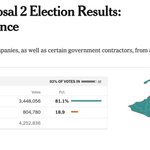
This is the Mississippi County where Elon Musk is building xAI's Colossus 2 data center.
Looks like a D+30 swing.

Stacy Mitchell retweeted

As you catch up on Annie Andrews: she had a really interesting health platform, with items like ending prior authorization, banning private equity firms from owning hospitals, shutting down the gaming of Medicare Advantage and more.
prospect.org/2026/10/08/sout…

Stacy Mitchell retweeted

We’ve seen a lot of videos about big news outlets preparing for tonight and while the NYT says it has more than 100 staffers on duty, we at the @MaineVillager are proud to announce we have MORE THAN 4 reporters on duty. instagram.com/reel/DfSc_J_JP…

Stacy Mitchell retweeted

Google is using its search monopoly to coerce schools into adopting AI. This highlights the danger of allowing an unregulated monopolist to control an essential service.
Multiple courts have found Google liable for violating antitrust laws, and this latest move shows it remains unchastened.
As the public increasingly pushes back against the use of AI in schools, Google is making clear it will punish those who don’t fall in line.

Breaking: Google will turn off web search for schools that opt out of A.I. for kids.
nytimes.com/2026/11/03/us/go…

Stacy Mitchell retweeted

When I was at the FTC, one of my jobs was to build our first interdisciplinary team to look at the impact of tech on kids' mental health. I remember to this day a study that asked 6 to 10 year olds if they could be "friends" with Alexa.
Two out of three said "Yes."
This was Alexa in 2021, pre-AI. Children are trusting, and they trust us to take care of them. They have a very hard time distinguishing between what is real and what is not, especially with things that they cannot see or touch.
Children won't just over-rely on Gemini. They will think it is their friend, and they will grow emotionally dependent on it. Look at the research on Replika and Character AI: Fully grown adults are falling in love with chatbots, they are "marrying" and "having kids" with these chatbots. And again, those are adults.
Google is often portrayed as being more "mature" or "grown up" than other tech companies because they have more lawyers and policy staff. This decision is as dark and irresponsible as anything we've seen from any tech company, including Meta, Open AI or Anthropic.

Stacy Mitchell retweeted

Wow, well what’s not to trust about this AI initiative “for workers” that’s funded by Google and Amazon!

I’m pleased to welcome new partners @Apple, @ATT, the Bezos family, @Google and @Walmart to our broad-based and growing coalition, which spans the private sector, labor, governors from both parties, philanthropies, and educational institutions.
We need to make sure American workers come out ahead in an AI economy. That won’t happen on its own. We launched @raiseus_ai because we need to stop simply talking about the challenges workers will face as AI transforms our economy, and actually do something about it. Just four months since our launch, we’re already rolling up our sleeves and getting to work.
Read the full announcement: raiseus.ai/news/apple-at-t-t…
#FutureOfWork #AI #Workforce

Stacy Mitchell retweeted

Just last month, DoorDash couldn’t seem to find the money to pay their deliveristas — until our administration forced them to give back $131M+ in stolen wages and penalties.
This week, they’ve managed to find $17 billion to acquire one of their main competitors.
Corporate consolidation means higher prices, harsher exploitation, and greater economic inequality for New Yorkers.
We’ve stood up to these giants before. That doesn’t stop now.

BREAKING: DoorDash just agreed to buy Instacart for $17 billion. Here's what that means for customers and shoppers. apnews.com/article/doordash-…

Stacy Mitchell retweeted

A grocery company that experiments on shoppers to see how much it can overcharge them is merging with a delivery company that tracks their every click and scroll to do the same.
Two of America's biggest ripoff machines should not become one.
The FTC must block this merger.
BREAKING: DoorDash just agreed to buy Instacart for $17 billion. Here's what that means for customers and shoppers. apnews.com/article/doordash-…
Stacy Mitchell retweeted

When I ran the Antitrust Division, we went up against the biggest companies in the world, and the teams across the table were always bigger than ours. What we had were great lawyers who knew their cases and the law cold. I kept thinking about what those lawyers could accomplish with technology that really understood their work, knew what they were trying to achieve, and met our exacting standards for judgment and intellectual rigor. Nothing on the market was fit for purpose, so we built it with an incredible team. Breakthrough tech for private and public enforcers.nytimes.com/2026/10/28/busin…

Stacy Mitchell retweeted

2.5 years ago we published a video detailing how Dollar General was quietly stealing from its customers by charging a different price at the register than they displayed on the shelf.
Today, the FTC and 20 states sued Dollar General for exactly that. abcnews.com/Business/wireSto…
