
PhD candidate @CLTLVU
Netherlands, Amstelveen
Joined June 2009
- Tweets245
- Following643
- Followers91
- Likes26.8K






Pinned Tweet
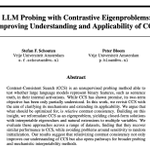
How do you know contrastive probing data identifies a unique feature?
How can we identify directions that model combinations of features?
We propose Contrastive Eigenproblems to tackle both of these issues.
Come see the poster at the MechInterp Workshop @ NeurIPS this sunday!

1
2
100
Stefan F. Schouten retweeted

And one more! 📸 Congratulations again to Stefan F. Schouten and Peter Bloem, winners of our 🏆 Best Paper Award (Reproducibility Track) for “Probing Without Labels: Contrast-only Reproductions of Interpretability Results,” with a $500 prize from our sponsor NDIF @ndif_team!

Stefan F. Schouten retweeted
The Best Paper Award (Reproducibility Track) goes to “Probing Without Labels: Contrast-only Reproductions of Interpretability Results” by Stefan F. Schouten and Peter Bloem, with a $500 prize from our generous sponsor NDIF @ndif_team . Congratulations! 🏆


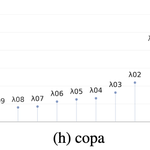
We can also use more types of contrast to solve a single Contrastive Eigenproblem. When applied to the 'sentence polarity' and 'sentence truth' features, the top eigenvectors yield directions for both, plus the polarity-sensitive truth direction first found by Bürger et. al.

1
20
In the paper, we also explain: how Contrastive Eigenproblems take inspiration from, and are explanatory of, Contrast-Consistent Search, a well-known probing method, and (2) why COPA does not isolate one direction. Plus some more theoretical results.
arxiv.org/abs/2511.02089
24
What can we learn about how named entities are represented in language models by substituting them for different ones and observing how predictions change?
Come see my poster this Thursday December 8th @ BlackboxNLP 2022 in Abu Dhabi (and online).
'Probing the representations of named entities in Transformer-based Language Models' available here:
sfschouten.github.io/news/pu…
1
2


Very excited that our paper 'A Song of (Dis)agreement: Evaluating the Evaluation of Explainable Artificial Intelligence in Natural Language Processing' w/ Michael Neely, @MauritsBleeker and @__alucic got accepted for @hhai_conference #HHAI2022
arxiv.org/abs/2205.04559
We find that attention-based explanations do not correlate strongly with any recent feature attribution methods, regardless of the model or task.
Furthermore, we find that none of the tested explanations correlate strongly with one another for the transformer-based model.
1
2
Stefan F. Schouten retweeted

1/14 Whether Russians actually support the hideous war that Putin has waged against Ukraine is a matter of utmost political importance. The answer to this question will largely define Russia’s place in the history of the 21st century.
Stefan F. Schouten retweeted

New blog post! Proving the Spectral Theorem, from which we get PCA and eigenvalues.
peterbloem.nl/blog/pca-3
In-depth explanations of:
- determinants
- characteristic polynomial
- complex numbers, vectors, matrices
- fundamental theorem of algebra
- Schur decomposition


Happy to share our paper with Michael Neely, @MauritsBleeker and @__alucic on why researchers should stop using correlation to evaluate XAI methods, was accepted to ICML workshop on Theoretic Foundation, Criticism, and Application Trend of Explainable AI! arxiv.org/abs/2105.03287

New blog post about visualizing correlations and loss functions! Interesting applications for analysis of Learning to Rank losses.
Plotting on the Simplex — Visualizing (rank) correlations and losses. link.medium.com/HXsCUOedlgb