

Manager, analist, 15-jaar investeerder, vroege spotter van (macro)trends in grondstoffen en innovatie! Deel mijn beleggingen/analyses via een wekelijkse update.
NB, Netherlands
Joined May 2021
- Tweets284
- Following1.2K
- Followers1.9K
- Likes451





Strongindividuals - Marktanalyses retweeted

📍 Day 2 of the @VWR Maritime Roadshow!
We're at @umoncton, Pavillon Rémi-Rossignol! 🔬
Stop by and discover how @Nanalysis is making NMR spectroscopy more accessible for research, education, and industry.
#Nanalysis #BenchtopNMR #VWR

Strongindividuals - Marktanalyses retweeted
We’re bringing #benchtopNMR conversations to the Maritimes! 🇨🇦
Join @Nanalysis at the Canada @VWR Maritime Show, with stops in Halifax, Moncton and Charlottetown.
Connect with our team to discuss your analytical challenges and explore how benchtop NMR can support your lab!

Strongindividuals - Marktanalyses retweeted
What difference can increasing #benchtopNMR field strength make? 🧲
Using ¹H and ¹³C examples, we compare spectra acquired at 60 and 100 MHz and explore the benefits of greater signal dispersion, resolution, and SNR.
📖Read more👉: nanalysis.com/nmready-blog/t…
#NMR

Strongindividuals - Marktanalyses retweeted
What gives vanilla its characteristic aroma? 🍦
This aromatic aldehyde is also used in pharmaceuticals and as a renewable building block for specialty chemicals and polymers.
See its ¹H NMR spectrum acquired on a @Nanalysis 60 MHz #benchtopNMR spectrometer
#NMR #Chemistry

Strongindividuals - Marktanalyses retweeted
What does amoxicillin look like by #NMR? 💊
This ¹H spectrum was collected using a 100 MHz @Nanalysis #benchtopNMR spectrometer in DMSO-d₆/D₂O with solvent suppression, revealing the spectral features of this widely used β-lactam antibiotic.
#spectroscopy #amoxicillin

Strongindividuals - Marktanalyses retweeted
🍊 Vitamin C analyzed by #benchtopNMR spectroscopy!
L-Ascorbic acid (vitamin C) is found in citrus fruits, strawberries, kiwifruit, bell peppers, and many other foods.
Shown here is the ¹H #NMR spectrum of L-ascorbic acid using a Nanalysis 60 MHz benchtop NMR.

Strongindividuals - Marktanalyses retweeted
Strong solvent peaks hiding your analyte? WET multisolvent suppression can selectively reduce several solvent resonances in one ¹H NMR experiment.
See how it reveals acetaminophen signals in ethanol using a 100 MHz @Nanalysis #benchtopNMR spectrometer. 🧪
#NMR #NMRchat

Strongindividuals - Marktanalyses retweeted
Which conformation does a molecule adopt in solution? 🧩
NOESY detects through-space interactions between nearby protons. In this 100 MHz spectrum, the cross-peaks distinguish two possible acetanilide conformers and confirm conformer A!
#NMR #NOESY #BenchtopNMR #Nanalysis

Strongindividuals - Marktanalyses retweeted
🍅🧀 What does umami look like by #benchtopNMR?
Collected at 100 MHz, this spectrum shows how a @Nanalysis benchtop NMR can provide a clear molecular fingerprint of a familiar food ingredient, directly on the laboratory bench.
#NMR #Nanalysis #MSG #Glutamate

Strongindividuals - Marktanalyses retweeted
🥥 What does the main component in palm oil look like by #NMR?🌴
This spectrum of palmitic acid was collected at 60 MHz, demonstrating how @Nanalysis #benchtopNMR can provide a clear and recognizable chemical fingerprint from a compact, cryogen-free instrument.

Strongindividuals - Marktanalyses retweeted

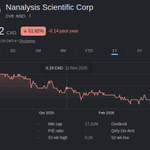
Nanalysis Scientific Corp.
(TSXV: $NSCI | OTC: $NSCIF)
Nanalysis announced the grant of stock options and restricted share units.
The company continues operating across compact NMR spectrometers, MRI technology, and scientific instrumentation platforms.
Read more:
newswire.ca/news-releases/na…
#Tech #ScientificInstruments #TSXV #OTC
Strongindividuals - Marktanalyses retweeted
Can a 60 MHz #benchtopNMR keep up with a 400 MHz system?
🔬 Analysis of 160 street cocaine samples collected over 10 years showed that 60 MHz benchtop NMR produced results closely matching 400 MHz NMR for cocaine quantification.
📖Read more below👇:


Het is niet eens je salaris dat je rijkt maakt.
Het zijn je uitgave gewoontes, die bepalen of je in staat bent om vermogen op te bouwen of van rekening tot rekening te leven!
9
331
80% van je maaltijden laten bestaan uit:
Dierlijkevoeding
-eieren
-rundvlees
-roomboter
-vis
Geeft je veel meer energie dan allerlei andere vulling!
2
8
492
Iedere dag een stap, kleine stapjes in de richting naar keuze!
Mensen overschatten wat ze kunnen in een week maar onderschatten wat ze kunnen bereiken in een jaar.
3
306


Strongindividuals - Marktanalyses retweeted

Amazing summary by my friend

Education Saturday! 📓
For all my Photonics followers, you'll want to learn this
$AXTI $LITE $COHR $GLW $POET etc.
The Photonics Supply Chain: Start to Finish.
Step 0: Mining and Refining
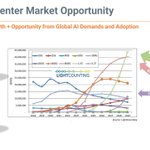
It starts with a metal called indium. Indium is what makes high-performance data center lasers possible today. Without it, you can't build the components that move data at the speeds AI demands.
Indium has no dedicated mines. It doesn't get extracted on its own. It's a byproduct of zinc refining, meaning it only gets recovered when zinc smelters have the equipment and economic incentive to capture it from their waste.
Step 1: The Substrate
Refined indium gets combined with phosphorus to create a material called Indium Phosphide, or InP. InP has a unique property in that it can generate light directly from electricity. Silicon, the material that runs everything else in computing, cannot do this. That's why InP is the go to for the lasers inside data center optical components.
The first thing you make with InP is a wafer which is a thin, flat disc that serves as the foundation for everything built on top of it. InP wafers are expensive, brittle, and difficult to produce at large sizes. The industry is only now moving to 6-inch wafers. For context, standard silicon chip fabs run on 12-inch wafers. That size gap is a big part of why photonics capacity is so hard to scale quickly.
Step 2: Epitaxial Growth
A bare InP wafer still can't do anything useful. To create a laser, you have to grow extremely thin additional layers on top of it, each just a few nanometers thick (a human hair is roughly 80,000 nanometers wide). This process is called epitaxy.
The exact chemical composition of each layer determines the laser's wavelength, power, and efficiency. Get it slightly wrong and the entire wafer is scrapped. This step requires specialized equipment found in very few places in the world. It's rarely talked about, but it's one of the most critical bottlenecks in the entire supply chain.
Step 3: Wafer Fabrication
Now the actual circuit gets built. Using techniques similar to semiconductor chip manufacturing (patterning, etching, depositing materials etc.) engineers carve microscopic structures into the wafer: the channels that guide light (called waveguides), the cavities where light gets amplified, and the components that switch it on and off.
Unlike standard chip manufacturing, at this time this cannot be done in a regular semiconductor fab. It requires a dedicated photonics facility. These take years to build, qualify, and ramp. There are very few of them in the world.
Step 4: Dicing and Yield
The finished wafer gets cut into individual chips. Each chip is then tested to see if it actually works to spec. The percentage that pass is called yield and it's one of the most important numbers in this business. Low yield means high cost per working chip. Improving yield is one of the biggest levers on profitability, and it's hard-won through years of process refinement. You probably won't see it reported directly, but it's hiding inside gross margins.
Step 5: Component Assembly
A working laser chip still can't be used on its own. It has to be physically aligned to an optical fiber with tolerances finer than a fraction of a micron and combined with other components like light detectors and signal modulators to create a functional optical sub-assembly. Automating it reliably at high volume remains one of the hardest manufacturing problems in the industry.
The assembled component also has to be hermetically sealed inside a protective ceramic and metal enclosure. Data centers run hot, and moisture or dust will degrade a laser chip quickly. These hermetic packages are specialty components with few suppliers and long lead times and they have shown up as a bottleneck alongside InP when demand spikes.
Step 6: The Transceiver Module
The optical sub-assembly goes into a housing along with a DSP chip (a processor that cleans up and interprets the light-based signals) plus a circuit board and casing. The result is a pluggable transceiver: the finished module that slots into a switch or server in a data center. These individually get tested before it ships. That testing process is slow and expensive, and it's a hidden constraint on how fast output can actually scale. Note, in the world of CPO this will change.
Step 7: Into the Data Center
It plugs into a port on a network switch inside the data center, the hardware that routes data between thousands of servers.
And none of it moves an inch without the fiber it runs through. Ultra-pure glass strands, thinner than a human hair, carrying light signals between every switch, server, and building.
Follow stocks in this space? Drop a ticker below and I'll tell you exactly where they sit in the stack 👇
