

Operator → VC. Investing in mission-driven tech. Speaking on disciplined scaling, capital strategy, and building companies that last.
VA and NC
Joined December 2008
- Tweets802
- Following1.5K
- Followers704
- Likes1.8K




Pinned Tweet
Comfort is overrated. Growth starts where easy ends. Get uncomfortable, push yourself and just get out there!
🤖 Made with AI


5
351
Richard Stroupe retweeted

SpaceX Investors MUST Watch This
Supercut from CFO's Epic Chat Today With @GavinSBaker
5 million robots in factories worldwide.
Why we backed the company helping them move beyond repetition, and respond to what they touch.

Richard Stroupe retweeted

They did it! SpaceX has just caught their Starship rocket for the first time ever, marking the first recovery of a conventional orbital rocket upper stage in history!
This is one of the greatest engineering achievements in history. Congrats to the entire @SpaceX team! 🚀


“Who was the runner-up?” was the best question I asked selling my first company.
Exploring a sale, I took recently exited founders out to lunch.
Those sales often had a buyer who'd wanted the company but went home empty handed.
That buyer was still hungry, scanning for a company like the one they’d just lost.
That gave me a target list.
tl;dr
If an exit's in your near future, find a founder who sold recently and buy them lunch.
You’ll want those answers before you sit down with your first banker.
__
P.S Sub to the Cape Fear Ventures newsletter for our investment deep dives, and where we’re putting time, money and attention next.
Join 650+ founders and investors here capefear.vc/newsletter
1
3
119
Years ago, I put my house up as collateral to secure a $500,000 deal.
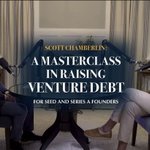
I asked Scott Chamberlin whether founders still have to do that. He said he’d never asked a founder to put their house on the line.
His bank took a “blanket lien” on the company’s assets, meaning it could claim those assets if the company couldn’t repay the loan.
But without venture investors backing the business, a lender might still ask founders to pledge personal assets too.
When we talked last year, his bank needed a venture investor in every deal and funded only once the equity round closed.
Venture debt sits alongside equity. Used well, it can mean selling less of your company.
Scott - the Managing Director of VC Relationships at Customer’s Bank - had a rule of thumb:
Debt worth 25–30% of the round.
In his example, adding debt to a $10 million raise meant to last 18 months might buy another six months.
That time pays off if it produces progress that earns better terms on the next round. The debt still has to be repaid.
Read the interest-only period closely: it affects when principal repayments start eating into your cash. Account for interest and fees, and count the warrants, the lender’s right to buy shares later.
Then look beyond the terms.
Scott said pricing barely varied between banks, but behavior varied a lot. He’d worked at institutions whose internal rule was to take the cash when it got close to the debt balance.
Before signing, ask other borrowers what the bank did when they missed their plan.
I bootstrapped my first two companies, and I’ve backed 50+ founders since. I look at this from the equity side now. In the deals Scott described, the bank gets paid before equity investors.
A lender that takes the cash can shorten the runway our investment was meant to buy. It costs money to use money.
Pick the lender whose cost you can live with in a bad quarter.
___
In our full conversation, we covered how much to borrow against a round, which terms decide how much runway you actually get, and how to pick a lender that stays with you when the plan slips.
If you’re raising a seed or Series A and want to give up less of your company, it’s worth the hour.
buzzsprout.com/2434456/episo…

3
89
In Succession the tycoon Logan Roy tells his son Kendall why he'll never get the top job.
"You're not a killer"
He says it right after asking Kendall to take the blame for the company's cover-up.
But do you have to be a “killer” to be a great founder?
After 2 exits and 50+ startup investments, I think Logan is half right.
You do need a bladed edge.
You make urgent calls, with cash and jobs riding on them. If you can't, someone else will make hard decisions for you.
And it will be ugly, maddening and often fruitless.
You'll lose customers you were counting on, you'll take risks with half the facts. And when it turns out wrong, you'll have to own it 100% and change course, without wasting breath defending it.
You'll decline 100s of opportunity-shaped requests. You will need to be ruthless with your time and make sure every hour counts.
You will SUFFER. You will go home bleeding, with nothing to show for your blisters, then you'll get up and do it all again.
No doubt some folks are born with the killer instinct Logan was talking about.
But you can earn it too. Get up and go again, especially in the weeks from hell.

5
297
We just invested $100K in the company aiming to build “human-level dexterity” for factory robots.
ThoughtForge's software reads what a robot sees and feels and adjusts mid-task, the way your hand does when a lightbulb won't catch the thread.
The company says it integrates with about 78% of the industrial robots already out there.
It's already working with Siemens and Magna on robots that fit car parts, and with Northrop Grumman, Siemens and Airbus on robots that inspect aircraft.
Awesome to have them in the Cape Fear Ventures portfolio.
thoughtforge.ai/

1
4
139
If you’re weighing a raise, the Cape Fear Ventures newsletter shows where we’re placing our bets as AI changes what deserves capital, and why.
650+ founders and investors already get the first read here: capefear.vc/newsletter/

24
Richard Stroupe retweeted

This guy said the quiet part out loud and you can feel his anger and disgust…
I couldn’t agree more..


Richard Stroupe retweeted

Ken Griffin on France and socialism…
"Paris should be a real wake up call to every single American. Government spending is 60% of their GDP. It’s the socialist dream the left talks about. That dream comes down to how much you can take from others. It doesn’t belong in America."


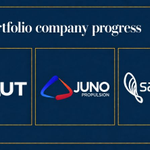
3 recent portfolio company milestones
1) Scout Space - selected to advance tech for Space Force missions
Scout is one of 11 cos in SpaceWERX’s STRATFI program, which combines government funding with private investment.
Its sensors and software help satellites detect nearby objects and respond, even without contact with the ground.
An important step forward in how the technology could serve military missions.

1
1
96
2) Juno Propulsion - $1.2m to advance spacecraft engines
Juno received a National Science Foundation Phase II award to develop its propulsion system with the University of Washington.
The aim is to help spacecraft maneuver and operate longer on less fuel.
Over 2 years, the team will test the complete system in vacuum conditions and prepare it for pilot production, drawing on a planned flight demonstration.
1
1
28
3) Samara Aerospace - $1.2m to help satellites turn and hold steady
Samara received a National Science Foundation Phase II award to develop its satellite pointing technology.
It uses tiny, controlled movements in a satellite’s panels to turn and steady the spacecraft, replacing conventional spinning wheels.
The funding will support further development of a system designed to reduce mechanical complexity and improve reliability.
capefear.vc/

1
28
Richard Stroupe retweeted

A retired NASA engineer who had worked on the Space Shuttle program for 25 years was hired by SpaceX at age 62. He described the first week as the most disorienting experience of his professional life.
At NASA, a design change required 3 meetings, 2 committees, a review board, and 6 to 18 months of documentation. At SpaceX, his new supervisor said "if it works, build it. If it doesn't, change it by Friday."
He sat at his desk after the first day and called his wife. He told her he felt like a man who had been swimming with ankle weights for 25 years and someone just cut them off. He could move. He could decide. He could build something in the morning and test it in the afternoon. The constraint that he had accepted as the nature of aerospace engineering turned out to be the nature of bureaucracy.
Within 6 months he had contributed to more design iterations than he had completed in his last 5 years at NASA. Not because he was working harder. Because the time between having an idea and testing the idea collapsed from months to hours. The same brain. The same knowledge. A different operating system.
He described a specific moment where he proposed a modification to a Raptor engine component. At NASA, the proposal would have entered a queue. At SpaceX, the modification was machined by the end of the day and tested by the following morning. He watched his idea become a physical object in 18 hours. At NASA, 18 hours would not have been enough to schedule the first meeting to discuss whether to schedule a meeting.
He told an interviewer: "I didn't get smarter when I went to SpaceX. I got faster. The intelligence was always there. The system was in the way."
The difference between SpaceX and NASA is not talent. NASA has extraordinary talent. The difference is the time between a thought and a test. SpaceX compresses it. NASA elongates it. The same engineer produces 10x more at SpaceX than at NASA because the bottleneck was never the engineer. It was the meetings about the meetings about the work.
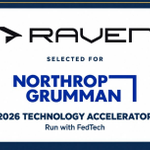
Congratulations to our portfolio co Raven Space Systems, one of 8 companies in the 2026 Northrop Grumman Technology Accelerator.
Raven’s 3D printing builds and cures composite parts in one step, cutting mold use and manual work for the aerospace and space industry.

3
143
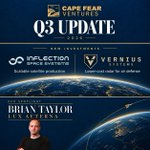
Later today, ~ 600 investors, founders and partners will get Cape Fear Ventures’ Q3 update.
(capefear.vc/newsletter/)
We go deep on where we’re putting our capital and our time.
• New investments, portfolio updates, and milestones
• A conversation with Brian Taylor of Lux Aeterna on reusable satellites
• October’s sold-out Elevate CEO Retreat (and plans for future cohorts)
• Connecting dual-use founders and investors focused on hard tech with FORGE
Sign up for the first full look at portfolio company milestones, the people we’re meeting, and where we’re putting our time next.
If you’re a founder or investor who wants that closer view, subscribe here to get our updates in your inbox first: capefear.vc/newsletter/
🤖 Made with AI
