Small indie game studio from the Netherlands. Visit our website for more info about our released game: "Black Hole Survivor"
The Netherlands
Joined January 2021
- Tweets88
- Following28
- Followers17
- Likes37







Studiotrike retweeted

NASA's Deep Space Network’s Goldstone planetary radar recently had a busy few days observing two asteroids as they safely passed by Earth.
The team captured impressive detail of the #asteroids, including a moonlet orbiting one of them. Learn more: go.nasa.gov/4coQ77X
Studiotrike retweeted

Peer pressure.
@NASAHubble spots a galaxy about 50 million light-years away that holds some surprises: Two nearby galaxies are influencing it and it may or may not have a supermassive black hole at its center. go.nasa.gov/45It84O

ALT A hazy point of pale light shines at the center of the image, against the black backdrop of space dotted with stars. A bright star with diffraction spikes shines near the top center. Credit: ESA/Hubble & NASA, R. O'Connell
Studiotrike retweeted

The misconception that there is no sound in space originates because most space is a ~vacuum, providing no way for sound waves to travel. A galaxy cluster has so much gas that we've picked up actual sound. Here it's amplified, and mixed with other data, to hear a black hole!
Studiotrike retweeted

2020 physics laureate Andrea Ghez: then and now.
As a young girl, Ghez loved mathematics and all types of puzzles. She would grow up to become an astronomer proving that something massive, most likely a black hole, is lurking at the center of our Milky Way.
#WomeninScience


Studiotrike retweeted

If anyone is curious, the Jodorowsky Dune pitch book’s been available for free online for years. It’s beautiful.
photos.google.com/share/AF1Q…


Studiotrike retweeted

💥Today Chandra is studying a supernova located near the bright center of galaxy NGC 2146. Supernova 2005V was a type of stellar explosion caused by the core collapse of a massive star and is 1 of at least 2 supernovas spotted in this dusty starburst galaxy in the last 20 years.


Studiotrike retweeted

Black holes are the most powerful and extreme things in the universe, and they are wildly weird and complicated. What would happen if you fell inside one, and what are they really? youtu.be/QqsLTNkzvaY
Studiotrike retweeted
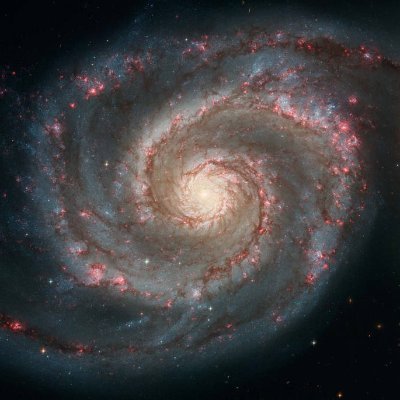
Today’s entry in our Field Guide to Black Holes covers fancy black holes with disks and jets. While black holes don’t emit light themselves, their environments can be quite bright. 😎 #BlackHoleWeek⚫
Studiotrike retweeted
It’s #BlackHoleWeek. Take a journey inside a black hole with our Curious Universe podcast, without even leaving your house!
In this episode, we'll guide you into the bizarre and extreme nature of black holes.
🎧 Listen: go.nasa.gov/3wMlCoh


Studiotrike retweeted

Why would we not share this amazing image of Jupiter’s southern hemisphere?
📸 of Jupiter’s iconic swirling clouds was taken by @NASA Juno spacecraft and processed by citizen scientists Gerald Eichstädt and Seán Doran.

ALT Jupiter’s iconic swirling clouds was taken by NASA Juno's spacecraft and processed by citizen scientists Gerald Eichstädt and Seán Doran
Studiotrike retweeted

A cosmic treasure trove unfolds in this #HubbleClassic view of the Orion Nebula. ✨
Released 15 years ago, this image highlights an intense star-forming region that’s about 1,500 light-years away. That’s relatively nearby, in cosmic terms: go.nasa.gov/39BKDbL


Studiotrike retweeted
The composite image of the Pinwheel Galaxy combines data from four of NASA's space-based telescopes. Images like these let us see how features in one part of the electromagnetic spectrum match up with those seen in other parts. (1/2)

Studiotrike retweeted

#ICYMI - NASA is one step closer to the Moon and the first flight of its SLS rocket through @NASAArtemis. MORE >> go.nasa.gov/3cURnSM
Studiotrike retweeted
Happy #PiDay! It’s March 14th, or 3.14 – also the first digits of pi, a mathematical constant defining the ratio of a circle’s circumference to its diameter.
This Hubble image shows a circle of stars around the nucleus of a galaxy called Hoag’s Object: go.nasa.gov/3cau0Ew