


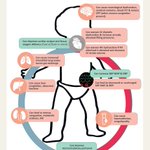


A personalised approach considering FLOW, PRESSURE and FILLING parameters can be helpful to titrate therapy. See Figure
3
286
A low diastolic BP = vasoplegia: bad for coronary perfusion, worse if also tachycardic. Early NE is helpful.
2
258
Does low BP = more fluid required? Hypotension may be multi-factorial: cardiac dysfunction ± low art tone ± hypovolemia, early low-dose vasoactive may be better: large volumes can harm.
2
261
suchitra ranjit retweeted
1/ Happy to share our article “Better than BESTFIT: A Tiered Monitoring Approach to Persistent Pediatric Septic Shock. A Pilot conceptual report” published in the Indian Journal of Critical Care Medicine.Doi: 10.5005/jp-journals-10071-24246This article describes integrated
suchitra ranjit retweeted

Happy to announce the 14th ed. of 'Annual Pediatric Critical Care Refresher Course' organized by the dept. of PICU, Apollo Children's Hospital, Chennai.
#PedsICU
@suchitraranjit
@JayakumarIndira
@rajirendezvous
@priyavarthiniv1
@Vasanth21888732
@chidhambharam
Details👉


We studied CO, MAP, SVRI, new/Δ vasoactive support pre- post-FB in 2 populations. #1 in cardiac post-op ICU (CCM Nov2020), part#2 in pediatric septic shock in ED and PICU (PCCMAug 2021). Total 99 patients. Surprisingly similar findings in both cardiac and septic population.

2
Hey ED & PICU folks! Think back of fluid boluses (FB) that you gave for a child with shock… Ever noticed that the MAP fell in some? Or that some needed new/more vasoactive post-FB?? Few interesting results from our 2 articles studying hemodynamic effects of FB in pediatric shock
1
4
2 new studies in pediatric shock suggesting collateral damage of fluid bolus beyond fluid-overload!
@KathMaitland
2
2 new studies in pediatric shock suggesting collateral damage of fluid bolus beyond fluid-overload!
@WFPICCS, @PedCritCareMed, @piculist,
@SheilaMyatra, @AndromedaShock, @Jvlouis, @ESPNIC_Society, @arunbansal, @DrMCecconi
@DFTBubbles, @VSLanziotti @PaediatricFOAM
Bottom line: Clinicians should consider each FB as a “test” of the cardiovascular system with careful evaluation of Δ CO/perfusion, and BP elements (SBP, MAP, DBP), + signs of fluid overload: this is helpful to decode the pathophysiology and direct further cardiovascular support