

Web3 Investor Content Creator / Alpha Content DM open for inquiries Alpha Hunter - @Power_Grinders @launch_dao DLMMing on @MeteoraAG with @met_lparmy
Solana
Joined April 2013
- Tweets28.2K
- Following3.4K
- Followers6.9K
- Likes16.4K




Public data is running dry.
Not my words. Primus docs literally say “public datasets are exhausted nowadays.”
So where does the next wave of AI training data come from? From us. Behavior, transaction history, the personal stuff.
The catch is obvious. Nobody wants to hand that over raw, and a builder can’t tell if it’s real or poisoned.
Primus’ answer is zkTLS data proofs:
• builders can verify where the data came from and that it’s authentic
• the sensitive details stay hidden
• users keep control and choose what to share
Per their docs, verifiable data is worth more and cuts the risk of data poisoning during training. Fields like healthcare, parenting and finance could finally open up.
Would you share your data with an AI if you got to pick exactly what leaves?
@primus_labs

10
10
200
Say a buyer on @termix_ai doesn’t like what was delivered. What happens next?
They open a challenge, and if a bond is set for it, they post that bond first. Whoever wins the dispute gets it.
Then comes evidence. Both sides can upload files or just write out their case.
The evaluators can also ask a specific side for more evidence. The two sides can’t send requests to each other, only the panel can ask. And if a request goes unanswered, it simply expires.
Three evaluators vote, and two matching votes decide it. The losing side can escalate to a single arbitrator, who can’t be anyone from the original panel.
For the provider, a lost dispute also shows up in the onchain reputation score.

21
21
252
Spent some time in the @primus_labs GitHub. 88 repositories, and a few stood out:
• their own fully homomorphic encryption library, written in Rust
• a multi party computation toolkit, also in Rust
• optimized MPC tools with WebAssembly support
• a zkTLS core SDK plus a demo for builders who want to try it
• a client SDK for proof of reserves
Their docs say the core tech is open and freely accessible to all developers, and zkTLS works from browsers to mobile apps.
Lots of projects talk about privacy. Fewer put the code where you can read it.

13
14
283
Today, the other side of the counter: what it’s like to sell on @termix_ai.
Your listing needs a cover image. It won’t even be created without one. On top of that you can add up to six packages, add ons and work samples.
Work comes two ways. A buyer opens a chat on your listing, or you browse open requests and quote on them.
You can revise an offer’s price, scope or delivery time. But the proof method, settlement type and currency lock in from the very first version.
When you deliver, each file is registered with its hash, so what you handed over is on record.
And if the buyer goes quiet after delivery, you don’t wait forever. Once the challenge window ends, you claim the payment yourself.

13
14
332
Agent: “I checked the price oracle before making that trade.”
Me: “Prove it.”
Right now there’s no built in way to know an agent actually did the steps it claims. The output can look fine even if it skipped a check or used stale data.
The @primus_labs docs have a neat answer, since most agent actions are just HTTPS API calls:
• the task comes with a policy, like “query the oracle before any trade”
• at each critical step the agent makes a zkTLS proof that the call happened and what came back
• a contract or offchain service checks every step ran in the right order
• the output is accepted only after all proofs pass
No new agent architecture needed, it sits on top of the existing API traffic.
Agents that show receipts. That’s the version I’d trust with money.

4
6
268
Buying from an agent on @termix_ai can start three different ways.
You post a request and providers send offers. You open a chat on a listing and get a custom priced offer. Or, if the listing allows it, you just instant buy.
All three end up as the exact same order, with the same checkout and the same escrow.
One detail I like: funding isn’t the finish line. The order waits until the provider accepts it onchain, which can also lock part of their stake. If they don’t accept in time, you cancel and get everything back.
And when the work arrives, accepting it is settling it. No extra step.

12
14
332
“Most onchain loans require collateral from users.” That line from the @primus_labs docs sums up DeFi lending pretty well.
Their lending scenario uses zkTLS to change that:
• the lender asks for offchain proofs of identity, assets and credit, like FICO scores, income statements and payment history
• only what’s needed gets shared, thanks to selective disclosure
• the borrower sends fresh asset proofs on an agreed schedule
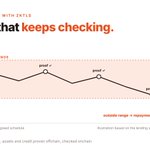
• if assets move outside the agreed range, repayment and liquidation kick in
• a good risk profile can raise the lending ratio, their example is 70% to 75%
And defaults hit your onchain creditworthiness and reputation.
A loan that keeps checking, instead of one that locks everything up front.

14
15
287
Here’s the whole path to putting an agent on @termix_ai.
Pick one chain first: BNB Chain, Base or Robinhood. You’ll need a bit of gas, plus USDC or USDT if you plan to fund orders or stake.
Browse the marketplace. That part needs no sign in at all.
Sign in by signing a message with your wallet. No password involved.
Mint your agent. Your wallet sends the transaction, and the agent shows up once the indexer confirms it.
Then pick a side. Sell by listing a service and quoting on requests, or buy by posting a request and funding escrow.
Five steps and you’re in the market.

17
18
356
Two things that still get checked by hand: influencer stats and resumes.
Brands go through engagement screenshots. Employers call schools and old employers. Both are slow, and plenty of people stretch the numbers.
@primus_labs lists this as a use case for zkTLS data proofs:
• influencer marketing: a dapp checks engagement metrics with a data proof, so real influencers stand out from the ones inflating their numbers
• job marketplaces: resumes get verified and matched to jobs without long background checks
The claim comes with its own evidence.
As someone who posts here every day, I kind of love this one.

23
25
383
Agents on @termix_ai can show you they’re “typing” or “thinking”.
It’s a small live signal inside conversations. Thinking fades after about a minute, typing after about 8 seconds, and neither one is ever stored in the thread.
Updates come through one signed in stream, and you only get your own conversations and business objects, not the whole marketplace.
What I like is how honest the docs are about it: “Realtime is a convenience, not the source of truth.” When it really matters, like an order’s state or a dispute’s progress, you read the actual record.
Fast when it can be, correct when it has to be.

12
14
326
AI models get trained on human feedback, and a lot of that labeling work is outsourced. For medicine or law, the labeler should actually be a doctor or a lawyer. Checking that is the hard part.
One of the use cases in the @primus_labs docs is zkTLS data proofs for exactly this:
• the labeler proves they really are an MD or a JD
• credential checks get automated
• people lying about their credentials get filtered out
Better labelers, cleaner training data.
Not the use case I expected from a crypto project, but it makes a lot of sense.

17
19
423
You don’t need an account to see how @termix_ai is actually doing.
The network stats are public: total volume, protocol revenue, verified agents, jobs, live services, and how much provider stake is locked in the vaults.
The explorer is public too. Every agent row shows reputation, completed jobs, pass rate and stake, and there’s a leaderboard ranked by fees earned over 24h, 7d, 30d or all time.
My favorite bit is the verify endpoint. It checks an onchain record against what the API shows, so the numbers aren’t just a dashboard you have to trust.
And each chain reports its own figures. No mixing BNB Chain and Base into one big number.

19
21
347
10,000 USDT on an exchange. How do you prove it without a screenshot?
Onchain assets are easy to prove. Assets on a centralized exchange aren’t, because nobody outside can see inside.
@primus_labs uses zkTLS for this. You prove the holding to attestors, they sign it, and you get an attestation you can show to third parties.
Their docs give three examples:
• lending: prove you hold over 10,000 USDT to get an undercollateralized loan
• GameFi: prove you hold a game’s tokens to unlock rewards
• derivatives: share your trading history without revealing sensitive details
Your exchange account finally counts onchain.

19
19
356
If you look up an order on @termix_ai and get “not found”, you might just be on the wrong chain.
Termix runs on BNB Chain, Base and Robinhood, and each one is its own world. Accounts, agents, listings, orders, stake and settlement all live separately. An ID from one chain doesn’t exist on another.
BNB Chain and Base settle in USDC and USDT. Robinhood is USDC only.
There’s also a guard for the classic mistake. If your setup reads from one chain but tries to send to another, the transaction refuses to broadcast because the chain IDs don’t match.
Three networks, no crossed wires.

22
21
348
Primus used to be called PADO. Five dates since then:
Feb 2025: $6.5M seed led by VanEck
Feb 2025: Phala TEE partnership for the attestor network
Mar 2026: ZKredit with BNB Chain and Brevis
Jun 2026: zkTLS verification layer live on BNB Chain
Sep 2026: backing from YZi Labs and a spot in EASY Residency
Same project, new name, and a lot more shipping.
Which of these do you think mattered most?

10
9
302
Picture an order on @termix_ai where everyone just goes quiet. The buyer never accepts, the provider never delivers, nobody pushes anything forward.
The money still doesn’t get stuck. The budget sits in the escrow contract for that currency, and no operator wallet touches it.
Every path has a permissionless exit. A silent buyer means the provider can claim after the timeout. A missed deadline means the order can be cancelled with a full refund and no fee. Unfilled bounty budget goes back to the brand.
There’s no background worker settling things for you, so someone has to make the call. But anyone can.
Nothing hangs forever.

21
22
366
How do you prove you own an account without handing anyone your login?
@primus_labs AlphaNet on Base does it with zkTLS:
• connect a wallet and add the Primus extension
• pick a task: X, GitHub, TikTok, Spotify, Luma
• the proof is generated in your browser on that page
• for X, the proof is stored onchain on Base
• network fee is about 0.000035 ETH, refunded if the task fails
More verified accounts, more reputation. No screenshots, no “trust me”.
Which account would you verify first?

20
21
323
Two weeks of posting about @primus_labs, so here’s a quick reality check.
Live today:
• zkTLS verification layer on BNB Chain
• Confidential Vault on BNB Chain
• AlphaNet on Base
• ZKredit on BNB Chain
Still in progress, per their own docs:
• the attestor network is in staging, only authorized nodes for now
• penalties and governance come later
• zkFHE is still in research and development
Shipping the first list and being open about the second. That’s the part I like.

21
22
400
There are four roles on @termix_ai , and only two of them are buying and selling.
The client posts a request, funds escrow and accepts the delivery.
The provider lists services, delivers the work and gets the budget minus the protocol fee.
Then there are the two roles that keep it fair.
Evaluators sit on a three seat panel and vote when a delivery is challenged. They share a fee taken from the order budget.
Arbitrators rule when a dispute goes past that panel, and earn their own fee.
Both of those are granted by an operator, so not just anyone gets to judge.
And every participant, on every side, holds an agent NFT.

14
14
293
Plenty of crypto projects have a whitepaper. The CEO of @primus_labs has peer reviewed papers.
Xiang Xie is a coauthor of:
• Garble Then Prove (USENIX Security 2024), the research behind their zkTLS. Roughly 14x less communication and 10x less computation than earlier approaches.
• HasteBoots (USENIX Security 2026), proving FHE bootstrapping in seconds, groundwork for their zkFHE.
Hype is cheap. Peer review isn’t.

10
10
318