

We follow the income investing market i.e. CEFs, BDCs, bonds, preferreds along with tools and model portfolios. https://nitter.cf/t.co/7fnZD3AHPW
US
Joined January 2025
- Tweets307
- Following27
- Followers383
- Likes1






There are a few themes coming together from the BDC earnings season. One, share repurchases are continuing across the sector, with some new ones like $NCDL joining in for the first time. Discounts are wide enough that this is making a material impact on performance. $OTF generated 0.4% in NAV accretion in Q3 from repurchases.
Two, asset yields are creeping higher. The median weighted-average portfolio yield was up 0.2% qoq. Wider private credit spreads as well as the Fed’s first rate hike have done the job here. Three more rate hikes are priced in so this trend should continue and will impact NII next quarter.
Third, we are seeing fee reductions in the sector. $MSDL cut its management fee to 0.75%, $CCAP cut it to 1% while $WHF voluntarily waived 12% of its incentive fee.
Four, performance continues to recover - 2.3% median total NAV return in Q3 vs 1.6% in Q2 and 0.4% in Q1.
4
285
BDCs $ICMB and $BCIC reached a definitive merger agreement whereby ICMB will merge with BCIC. ICMB shareholders will have to approve the transaction. Both BDCs have been poor performers and there is a history of poor performers being absorbed into larger BDCs. ICMB was up 50% after hours. ICMB shareholders will receive consideration equal to 90% of its NAV at closing. That is an amazing deal for ICMB shareholders.
Pain continues for CLO Equity CEFs. $ECC reported an October drop in the NAV of nearly 10% while $EIC, which is mostly a CLO Debt fund, reported a drop of over 3%. Recall that ECC has been pushing its CLO Equity allocation lower this year which was a smart move however that didn’t save it. NAV moves for the rest of the sector are going to be brutal. October will end up as the second worst NAV month for the sector over the past year.

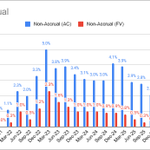
Check out our BDC $ARCC update. TLDR, underlying performance is pretty much back on track to what it was prior to the private credit swoon earlier this year. Non-accruals are a bit higher but below average in the context of the company's track record. Valuation remains on the rich side.
systematicincomeinvesting.co…
6
578
$FDUS delivered a very strong Q3 with a 3.1% total NAV return - the best quarter since Q2-2025. Non-accruals are at zero. Interest expense has grown with the recent bond issuance which will squeeze NII somewhat.
Valuation remains on the higher side of the sector, however, it is more than justified by underlying performance. So far, public BDCs are running with a median 2.2% total NAV return and 1.5% average (HRZN delivered a -7% total NAV return which pulls down the average vs. the median).


4
165
Strong Q3 result from $OTF with a 3.4% total NAV return (5.9% over the past year - on par with the sector). Non-accruals rose to 1.1% on fair-value but remain below the sector median/average levels. NII fell by a penny to $0.29 vs $0.40 total dividend. NII has a lot of room to grow due to the increase in base rates and leverage upside. Valuation relative to the sector remains in the dumps.


1
5
244
A subscriber pointed out a change in the investment objective of the RiverNorth CEF $RSF. It will change from seeking a high level of current income to seeking total return through a combination of income generation and capital appreciation. In practice this means moving away from an allocation to credit instruments to stocks.
Prior to this the fund was invested primarily in small-business loans originated by Square. RSF has reduced its allocation to loans from 94% to below 50% with the capital going into a combination of SPACs and cash. It’s not clear whether the SPAC overweight will remain over time and what will happen to the cash allocation.
The merits of a large SPAC allocation is debatable (JPMorgan AM found returns are not very compelling) but it’s clear that this is no longer an income-focused fund. Sister CEF $RIV has about a third of its portfolio in SPACs and it has performed OK - 6.2% NAV return over the last 5 years. Unfortunate to lose a low NAV beta CEF with good performance and non-corporate credit exposure.
3
325
Interest to short BDCs has cratered over the last few weeks. This has coincided with strong earnings from private BDCs as well as early bird public BDCs. Private BDC Q3 performance from the names we track is around 2.2%, well above 1.6% in Q2 and zero for Q1. Everyone has moved on to worrying about AI debt it seems.
$CGBD data below from iBorrowDesk (lhs)


BDC $HTGC delivered another strong result with a 5% total NAV return in Q3. This was below Q2 but above the previous two quarters.
NII fell from Q2 levels but was not far off previous quarters. Non-accruals remained low and PIK income fell. Management expect prepayment activity to step up in Q4, portfolio yield to stabilize and NII to increase.
So far BDC results are solid, pretty much as forecast by the public early bird names as well as private BDC results which are running at 1.9% for Q3.

2
211
Check out our recent article "Navigating This Income Market Sell-off" where we discuss the current market environment - spreads, rates, discounts etc. - and highlight a number of strategies to keep in mind to take advantage of what's on offer.
systematicincomeinvesting.co…
BDC $ARCC delivered strong results at 2.3% total NAV return - the best result since Q3 of last year. This was pretty much expected here given the strength in private BDC results and early bird reporting from public BDCs. Non-accruals were touch higher at 2.4% / 1.4% on fair-value and at-cost respectively, unchanged from Q2. NII was lower than expected due to modest deal flow and low fees as well as a rise in incentive fees. Immediately after the report, the stock fell over 3% pre-market (it finished 0.5% lower) which was pretty odd for three reasons.
One, The EPS miss was due to a slower transaction environment which is a) not something the company controls and b) is liable to switch at any moment. Two, both base rates and credit spreads are rising which are tailwinds to NII. Three, portfolio performance is far more important to overall investor returns than a couple of cents of missed NII.
On the former score, the company is doing very well. One would think that if the company delivered a 2% loss on credit issues while beating consensus NII by a penny, the stock would have rallied, despite an obviously worse outcome for investors.

BDC $NMFC announced it extended its $150m stock repurchase program through next year. It was due to expire at the end of 2026. The company has repurchased around $70m worth of shares under the program to date. The remainder under the program works out to around 8% of its net assets or 13% of market cap.
Buying back shares at current wide discounts is the quickest way for BDCs to generate value for shareholders. This is done via both price support as well as NAV accretion. Q3 should see continued share repurchases by the sector.

1
5
351
Another CLO Equity CEF $CCIF announced a partial redemption of their preferred $CCID. Over the last year CCIF has experienced the worst drop in the NAV of around 49%.
That has pushed up its leverage to a level where the mandatory redemption provision is going to kick in eventually. We are not there yet with asset coverage around 240%, however leverage is north of 40% which is on the high side for CEFs.
CCID has rarely traded at an attractive yield and that remains the case. There are more attractive options with much higher yields such as $OXLC baby bonds like $OXLCI at a yield of over 9%.

CLO CEF $OXLC tapped its preferred $OXLCM for more shares. Recall that the company recently partially redeemed its bond $OXLCZ. This seems like it is rotating its financing away from bonds and into preferreds. It’s certainly not doing it to lower leverage costs as OXLCM has a significantly higher coupon - it’s likely doing this to address asset coverage rules which are separate for bonds and preferreds. This rotation will increase leverage costs and lower NII for the fund.
The biggest issue for the fund and the broader sector has been the pressure on NAVs. All funds except for OXLC have reported September NAVs and the average drop has been 4.7% - the worst since March of this year.
The CLO CEF senior security sector continues to trade inefficiently with bonds and preferreds trading at similar yields. For OXLC, the bonds are actually trading at higher yields than preferreds despite their lower risk profile. $OXLCI is trading at a yield around 9% and remains the most attractive issue in the OXLC senior security suite.

Mortgage REIT $NLY posted an 11% drop in book value - a drop on the smaller side this quarter among Agency mREITs. The company tends to run at a lower level of leverage as well as a lower Agency allocation which mitigates swings in book value relative to other pure Agency mREITs.
Equity fell significantly less than book, only 6.5%. This pushed equity coverage lower, however, the redemption of Series I more than reversed this and coverage rose to 11.6x, slightly below that of DX.
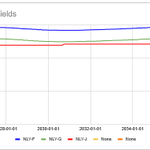
Of the three remaining series, $NLY.PRF looks best from a yield perspective.

6
392
Private BDCs have started to release September numbers. So far we only have the return from the $48bn Cliffwater private BDC where the September return was only marginally below the levels from the previous two months. This suggests that the public credit spread widening over September likely did not affect BDCs too much. HY corporate bond spreads widened 0.5% over the month. All in all, all indications are that Q3 numbers should be pretty solid for BDCs which is something that is not at all reflected in recent price moves.
8
363
Check out our latest weekly BDC update where we talk about strength in early bird Q3 reporting, potential secondaries transaction for $WHF, the impact of Fed rate hikes on NII and more.
systematicincomeinvesting.co…
4
279
A few preferred resets to keep an eye on: $CNOBP, $WAL.PRA, $RITM.PRD and $EFC.PRB.
$CNOBP from ConnectOne Bancorp is due to reset in Sep next year to 5Y Treasury yield + 4.42% or around 9.42% which is well above the 7.2% average yield in the sector.
$WAL.PRA, another 5YCMT stock, from Western Alliance Bank reset last month to a coupon of around 8.45% for the next 5 years. It trades below “par” in stripped price terms.
Mortgage REIT stock $RITM.PRD is due to see its coupon reset to 5y Treasury yield + 6.22% or around 11.2%. That’s well above the ~10% coupons of its other preferreds.
Another mortgage REIT stock $EFC.PRB will reset to 5Y Treasury yield + 4.99% or around 10% which is a lot higher than where the fixed-rate $EFC.PRD trades. All of these look like decent options in today’s market, particularly if Treasury yields continue to rise.
3
211
A number of BDCs are weighing strategic options to return capital to investors. This includes $ICMB, $TCPC, $WHF and $MFIC. The former two are more or less basket cases and it is not uncommon for poorly run BDCs to sell themselves to a competitor. This can take form in a number of ways such as a merger, a purchase of the right to take over the advisory agreement or a purchase of assets from the fund.
$WHF is pursuing a secondaries transaction under which it could sell its portfolio into a continuation fund. This will allow WHF to return capital to investors and to delist. Sources say that the bids for the continuation fund are in the high 90s vs. a discount of 38% for WHF itself.
WHF jumped over 4% on the news. This is great to see because not only does it show a high level of confidence by institutional investors in underlying BDC assets but it also is the quickest way to close the discount and provide uplift to public BDC shareholders. If the WHF deal succeeds we should see a sharp valuation re-rating in the sector.
4
321
Check out our update on the new preferred from mREIT Dynex Capital ($DX.PRD). We look at the company's fundamentals and compare the new stock to the existing floating-rate $DX.PRC.
systematicincomeinvesting.co…


4
228