

Take Back the Truth is an Energy Transfer website dedicated to setting the record straight, not only on oil and gas, but on our projects and our company.
Joined January 2025
- Tweets105
- Following21
- Followers25
- Likes10
Despite Greenpeace’s best attempts to brand their lawsuit with Energy Transfer as an attack on free speech, the evidence makes the opposite case.
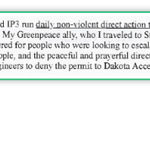
Greenpeace deliberately trained thousands of protestors to disrupt the Dakota Access Pipeline.
Here's it in Greenpeace representative Harmony Lambert's own words:

20
Twenty-three state attorneys general are seeking to intervene in litigation challenging the Dakota Access Pipeline, citing the significant economic and energy impacts a shutdown could have on states, producers and consumers. The states argue @DAPLFacts supports reliable, efficient energy transportation while helping keep costs down and reducing reliance on rail and truck transportation.
law360.com/articles/2546661?…

America’s energy security depends on the infrastructure that safely and reliably moves our domestic energy resources. In a recent opinion piece in The Epoch Times, former U.S. Rep. Kenneth Robert Buck of Colorado examines Greenpeace’s actions surrounding the Dakota Access Pipeline and offers his perspective on accountability, the rule of law and protecting critical U.S. energy infrastructure.
theepochtimes.com/opinion/gr…

14
Trespass, sabotage, and threats are not free speech. Greenpeace shouldn’t get to use a Dutch court to sidestep accountability in the U.S.
Read Ken Buck's latest op-ed on what’s at stake for American judicial sovereignty in the @WashTimes:
washingtontimes.com/news/202…

15
In the Dakota Access Pipeline case, a unanimous jury found the Greenpeace defendants liable, and the North Dakota Supreme Court has since barred them from asking a Dutch court to declare the case unfounded and abusive.
See the evidence:
takebackthetruth.com/fact-gr…

Greenpeace’s claims ignore the truth about the Dakota Access Pipeline trial. Read the facts:
takebackthetruth.com/fact-gr…
1
20
American energy dominance depends on investment in critical infrastructure. Former Congressman Zach Wamp explains why Greenpeace’s litigation against Energy Transfer could create uncertainty and chill future investment.
washingtonexaminer.com/resto…

"This labyrinth of litigation has never been about safety. It's always been about trying to impose a certain strain of energy politics on the marketplace through lawsuits." -- Rob Port

The question about the Dakota Access Pipeline's safety has been answered. inforum.com/opinion/columns/…

21
U.S. energy security depends on infrastructure decisions made years before supply becomes urgent. Ten years after Standing Rock, the Dakota Access Pipeline continues moving American oil to market, while California’s shrinking refining capacity leaves consumers vulnerable to foreign supply disruptions and price volatility.
Jason Isaac examines how this contrast exposes the flaws of America's permitting system. Read more: takebackthetruth.com/what-da…

1
20
Energy infrastructure decisions made today shape the choices available tomorrow. This op-ed reflects on the lessons of the past decade, emphasizing the role infrastructure plays in delivering affordable energy, supporting economic growth, and helping meet future demand.
dailywire.com/news/what-dako…

The facts surrounding Energy Transfer’s case against Greenpeace are well established. Following years of litigation and a weeks-long trial, a unanimous North Dakota jury held Greenpeace liable on multiple claims related to its conduct surrounding DAPL. The Court entered final judgment on the verdict, awarding Energy Transfer more than $345 million.
Read the facts: takebackthetruth.com/fact-gr…

Greenpeace continues to challenge the outcome of its legal battle with Energy Transfer.
But the fact remains unchanged: a North Dakota jury heard the evidence and unanimously held Greenpeace liable for its conduct related to the Dakota Access Pipeline.
Read more: takebackthetruth.com/fact-gr…
“If the Dutch court rules in Greenpeace’s favor, the consequences could extend far beyond accountability for unlawful interference with one pipeline project. Such a ruling could undermine American legal sovereignty, weaken the authority of U.S. judgments, and create new uncertainty around the infrastructure on which American energy security depends.” -- Jeff Duncan
washingtonexaminer.com/op-ed…

Greenpeace's lawsuit against Energy Transfer in the Netherlands suffered a significant setback after the Amsterdam District Court rejected the organization's attempt to rely on the EU Anti-SLAPP Directive.
The case will continue under Dutch tort law, while the North Dakota jury verdict remains unchanged. The decision narrows Greenpeace's legal strategy and keeps the focus on the claims still before the court.
Read more: washingtontimes.com/news/202…
19
A Dutch court has issued another key ruling in the ongoing legal dispute between Greenpeace and Energy Transfer.
The Amsterdam District Court rejected Greenpeace's attempt to invoke the EU Anti-SLAPP Directive, requiring the remaining claims to proceed under Dutch tort law instead. The decision does not overturn the North Dakota verdict or change Greenpeace's liability in that case, but it significantly reshapes the legal framework governing the Dutch proceedings.
As the litigation continues, the ruling marks an important milestone in one of the most closely watched infrastructure-related legal disputes in recent years.
Read more: washingtontimes.com/news/202…
30
"The Amsterdam court did not validate Greenpeace. It rejected the organization’s core legal theory and sent the case to a more difficult terrain. That is not a victory. Americans who depend on reliable, affordable energy should not let anyone pretend otherwise." - Jason Isaac
washingtontimes.com/news/202…
20
Respecting the integrity of the U.S. legal system matters. Allowing foreign courts to relitigate disputes already decided in America could undermine U.S. businesses, investment, and energy security. An important perspective worth reading:
nationalreview.com/2026/07/t…

Public claims made about ongoing litigation can blur the line between procedural rulings and decisions on the merits.
The Amsterdam District Court recently ruled on a narrow jurisdictional question in the ongoing litigation between Energy Transfer and Greenpeace, allowing proceedings to continue in the Netherlands. It did not rule on the underlying conduct and rejected the argument that the EU's Anti-SLAPP Directive applies. The $345 million verdict reached by a unanimous North Dakota jury remains fully intact.
Accurately distinguishing what courts have and have not decided is an essential part of informed public discussion about accountability under the law.
Get the facts: etfortherecord.org/fact-vs-f…

31
Declaring victory and winning a case are not always the same thing.
The Amsterdam District Court did not overturn the North Dakota verdict, rule on the merits of Greenpeace's claims, or grant the relief Greenpeace is seeking. The $345 million judgment remains in place, and the substantive legal questions have yet to be decided.
The broader question is whether parties should be able to seek a different outcome abroad after a dispute has already been litigated through one legal system. As conversations continue, it's important to separate rhetoric from reality.
Read more about the facts surrounding the case: etfortherecord.org/fact-vs-f…
14