Jack Duff (thebarnfell.bsky.social) (@thebarnfell) header
Jack Duff (thebarnfell.bsky.social) (@thebarnfell) profile picture

Psycholinguist, semanticist, post-doc @ Uni Saarland. He/him.

Saarbrücken
Joined January 2016
Photo by Jack Duff (thebarnfell.bsky.social) (@thebarnfell)Photo by Jack Duff (thebarnfell.bsky.social) (@thebarnfell)Photo by Jack Duff (thebarnfell.bsky.social) (@thebarnfell)Photo by Jack Duff (thebarnfell.bsky.social) (@thebarnfell)Photo by Jack Duff (thebarnfell.bsky.social) (@thebarnfell)Photo by Jack Duff (thebarnfell.bsky.social) (@thebarnfell)Photo by Jack Duff (thebarnfell.bsky.social) (@thebarnfell)Photo by Jack Duff (thebarnfell.bsky.social) (@thebarnfell)Photo by Jack Duff (thebarnfell.bsky.social) (@thebarnfell)Photo by Jack Duff (thebarnfell.bsky.social) (@thebarnfell)
∃x & news(x) & |x| = 2: (1) Next Friday, Dec 1, I'm defending my dissertation (!) (2) In Jan, I will be moving to Germany (!) to join Vera Demberg's lab at @LstSaar as a post-doc, studying (& modeling) individual differences in pragmatic processing Couldn't be more excited!
2
20
1,974
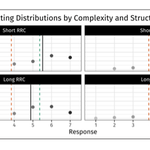
I (begin to) argue for a picture where comprehenders select a single candidate interpretation on varying timelines, depending on the utility/risk of a rapid decision, given the type of ambiguity and their task/goals. Thankfully, lots more work to do to develop this further!
1
1
226
If you'd be interested in attending the public portion of the defense to hear more, do reach out, there will be a remote option! In the meantime: many thanks to my committee, and everyone that's helped me along the way. (Yes, I am frantically writing my acknowledgments.)
1
157
Article out in @glossapsycholx today! doi.org/10.5070/G6011198 We present five studies on a curious finding due to @linguistbrian & colleagues: comprehension/judgment processes care less than normal about appositive structures (like the latter part of "the lady, who bought ham").
2
5
27
2,889
We replicated this 'discounting' for appositives, but were surprised to find evidence against it in both other cases. It seems like if the pragmatic packaging approach is correct, the relevant pragmatic unit must one that appositives comprise, but these other structures do not.
1
3
263
With this new evidence, we're somewhat skeptical of tying discounting to pragmatic packaging. At the end of the article we review a promising alternative approach using *prosodic* packaging. There's many open questions there, but we hope future work might head in that direction!
1
2
195
Replying to @nidodelenguas
@nidodelenguas recently made an online version of our "Game of Tones", a simple sorting game to introduce players to lexical tone in the indigenous languages of Oaxaca. Play here! wlma.ucsc.edu/nidodelenguas/… + Stop by our organized session tomorrow @ #ssila2023 to learn more.
1
1
1
3
462
In the session tomorrow (11:30 MST), language experts and linguists at UCSB and UCSC will talk about our experiences putting community-based approaches into the "field methods" curriculum, including demos about specific projects like the Game of Tones. sites.google.com/ucsc.edu/en…
1
1
137
Volume 5 of Syntax & Semantics at Santa Cruz is out, and with it, this working paper on demonstratives and redundancy constraints on restrictive modification in Santiago Laxopa Zapotec (dille' xhunh Laxup). (escholarship.org/uc/item/2s3…)
1
2
5
There are also nominal appositive modifiers in the language, and they're free from that constraint, as you'd predict. But we also notice that they can still perform pseudo-restrictive functions, just like English 'one'-appositives. A puzzle for the future!
1
1
And do check out the other excellent papers in the volume! @VArvindam and Hedding on exceptions to partially-overlapping reference constraints, @DanBrodkin on the arg structure of perception verbs in Mandar, and Meadows with new data on agrmnt attraction from reduced relatives.
1
Happy to share this collaborative article with Fe Silva-Robles, @lieb_lopez, and @linguistcarolyn reflecting on field methods for associated motion in Zapotec languages, out now (and free to read!) in UBC's wonderful Semantic Field Methods! ojs.library.ubc.ca/index.php…
1
1
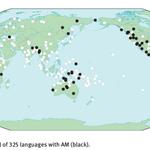
In addition to summarizing what we know about associated motion in each language, we reflect on methods (in particular the usefulness of storyboards, maps, and contradiction judgment tasks) and Fe and Felipe's goals and experiences as language experts working with linguists.
1
It was a real pleasure to work collaboratively across communities like this, and we're very grateful to Lisa Matthewson, two invaluable reviewers, and the rest of the Semantic Field Methods team for helping to make a space to share this kind of work.