The Bell is the leading independent media covering Russia's economy. We publish twice a week in English (now also in French & German too!): https://nitter.cf/t.co/sSoBIhOGNy
Joined June 2017
- Tweets1.6K
- Following151
- Followers5.6K
- Likes169



Pinned Tweet
Record war spending, a stalled economy: can Putin afford 2027?
The Bell hosts a webinar for paid subscribers with @kolyandr and @amenka. Join us November 2 for a deep dive into Russia’s stalled economy and the 2027 budget. Live Q&A follows!
Sign up: pro.thebell.io/webinar_eng_n…
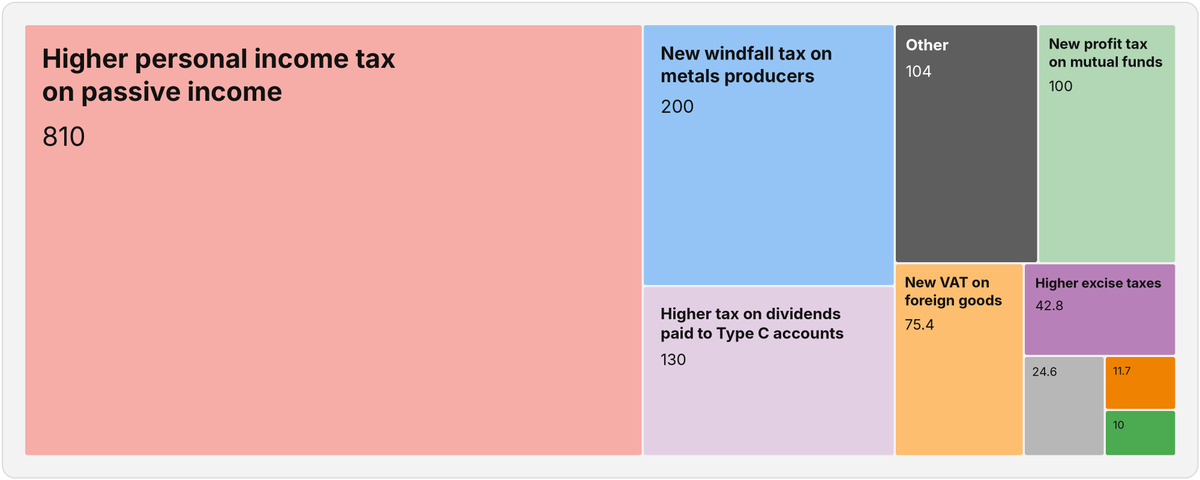
Who’s paying for Russia’s war in 2027? This time, the middle class and big business. New taxes will fund a record military budget while the economy stands still.
Can Putin keep this up? Join our webinar on Nov 2, where we will discuss.
pro.thebell.io/webinar_eng_n…
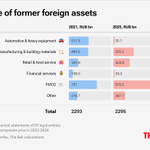
The Kremlin say it's just self-interest to go easier on the US than Europe when "expropriating" companies and assets.
⚖️ President Trump’s special envoy Steve Witkoff visited St. Petersburg today to discuss a new round of talks between the US, Russia, and Ukraine on Russia’s war in Ukraine. Russian president Vladimir Putin agreed “in principle” to resume talks after November 10.
It remains unclear what the real outcome of today’s meeting will be. The previous attempt by the US to engage Russia and Ukraine in peace talks stalled in 2025. Since then, Russia failed to make progress at the front in Ukraine, and, over the summer of 2026, Ukraine launched a series of drone strikes deep inside Russian territory. The strikes took out oil and gas refineries, deepening a brewing fuel crisis in Russia; e-commerce warehouses, which at the very least demoralized Russian citizens; and, most recently, on Yandex and Sberbank data centers, which has had serious effects on Russia’s digital infrastructure. The full extent of the damage from the data center attacks is not yet known.
Meanwhile, US president Donald Trump has seemed to side with Putin and against Ukrainian president Volodymyr Zelenskyy in a number of public comments over the past several weeks. Ukraine has also reported that Starshield, a US-funded satellite internet service that Ukrainian Armed Forces use to connect to their drones, has been throttled recently, causing Ukrainian drones to drop out of the sky mid-mission. Neither issue is likely to predispose Ukraine to cooperating in peace talks even if Russia agrees to do so.
The main practical outcome of Witkoff’s meeting with Putin is the release of Stephen James Hubbard, an American citizen who was captured in Ukraine by Russian armed forces and who has been in prison in Russia for four years. Mr. Hubbard had been living in Ukraine since 2014. He was married to a Ukrainian woman and supported himself by teaching English language classes online. He was arrested just weeks after Russia launched its full-scale invasion of Ukraine in 2022. At the time of his arrest, he was 70 years old. Russia claimed that he was working for Ukraine as a mercenary, though there is scant evidence to support this claim. He was the only American citizen that the US considered “wrongfully detained” in Russia, until his release today.
Witkoff thanked Putin for Hubbard’s release and called him a “humanitarian” — quite the compliment for a leader who is wanted for war crimes by the Hague. Hubbard was reportedly tortured and starved while he was in detention in Russia. His release was not part of a prisoner exchange, but a rare unilateral action. Witkoff may have convinced Putin that the gesture of goodwill will be helpful in improving Russia’s relationship with the US.
This and more in our "Russia, Explained" English-language newsletter. Subscribe: en.thebell.io/tag/russia-exp…

🤖 Nobody’s talking about Russia’s supercomputers, crucial components in Putin’s “sovereign AI plan.” The silence is raising suspicions that one or more of them may have been damaged in last week’s drone strikes on Russian data centers by Ukraine.
“People go out of their way to avoid the subject,” a source at Yandex told The Bell after Ukrainian drone strikes may have taken three of the company’s six major data centers fully or partially offline last week. Speakers at an all-hands meeting this week at the company reportedly said that recovery from the attacks would take several months and that Yandex infrastructure needed to be decentralized, but the supercomputers were notably missing from the meeting agenda.
Yandex has three supercomputers, and all three may have been damaged in the drone attacks. Two are (or were) inside the data center at Sasovo, which was the first one to be hit and which has been non-operational since the attack. The third is in Vladimir, where two data centers stood side by side. The older one, which most likely housed Yandex’s third supercomputer, was hit by drones. The facilities in Vladimir were cooled by fans that pulled in air from the outside, and which, experts suggest, could have pulled in soot and ash following the drone strikes and the fires they caused, further damaging the supercomputers.
The machines were used to train an LLM, part of a push by Yandex to develop “sovereign AI” for Russia — artificial intelligence models developed and trained in Russia, and running on servers located in Russia. Vladimir Putin spoke about Russia’s “digital sovereignty” just last week at a cybersecurity conference, and it’s not surprising that the leader would want the Russian government to get its hands on AI — Russian state censorship of internet tools and the information ecosystem is well documented. The attacks likely represent a huge setback to Russia’s AI industry, however.
Getting the damaged supercomputers functioning again will require new AI chips, and Russia’s supply is already limited by sanctions. Some do make their way into the country nonetheless, but with the global explosion of AI technologies over the last 18 months, they are in short supply everywhere, with some companies’ entire remaining supply for 2027 already spoken for. Whatever the specifics of Russia’s losses in the data center attacks, it seems clear that repairing the damage will take well into 2027.
Read more in our newsletter, link below ⬇️
Russia experienced a short-lived investment boom in the 2020s, but it's now over. Here's what it means for the Russian economy.


📉❓Following Ukraine’s attacks on Yandex data centers, social media networks were full of reports that the Kremlin’s bots had disappeared from social networks. But some things in this story don’t line up.
A graphic from Cloudflare Radar, showing a decline in bot traffic following drone strikes on Yandex data centers, has been circulating on social media. The graphic led to speculation that the attacks took Russian “troll factories” offline, but it isn’t about troll factories. Rather, it shows automated programs, a significant portion of which are likely used by Yandex’s own search engine.
Cloudflare provides resources to ensure the security and performance of websites, and its Radar service monitors, among other things, automated HTTP requests to websites served by Cloudflare. The original graphic about “bot traffic” has nothing to do with social media, the bot blocker project pointed out. Yandex is primarily a search engine, and any search engine has to have bots that crawl websites and upload them to its database. The decline in “Russian bot traffic” that Cloudflare registered is very likely due to Yandex web crawlers going offline as a result of the strike on the data center.
The speculation frenzy about Russian bot traffic has obscured the real story of the drone strikes, which is that these strikes have been Ukraine’s most successful attacks yet on Russia’s infrastructure, and have caused real problems for Yandex and its users, which includes essentially everyone living in Russia. Over the course of a week, Ukraine has landed three hits on Yandex data centers.
Initially, the attacks took down certain services like food delivery, but their impact was limited. By Friday of last week, however, a source inside Yandex told The Bell that the company had been forced to shut down most of its functionality just to manage the core workload. Over the weekend, every Yandex service experienced disruptions. They left users unable to order a taxi, pay for purchases, check their own bank balances, or even send an email.
Earlier this year, Ukrainian drone attacks targeted oil refineries, and then e-commerce warehouses. The first contributed to Russia’s ongoing fuel crisis, while the second demoralized the population. Attacks on Yandex data centers, though, may be the most effective in disrupting Russia’s social and economic status quo.
Read our original reporting on the data center strikes on our subscriber newsletter (link below).

Long-term population trends and newer issues driven by the war in Ukraine add up to a looming problem for Russia.

Mikhail Zvinchuk, who founded Rybar, one of Russia's most popular pro-war military blogs, was arrested in Montenegro and deported to Russia, in circumstances that were both strange and predictable.

🚰 Rates for utilities rose sharply in Russia last week, according to Rosstat, Russia’s federal statistics service, and the increase has triggered a jump in inflation. Tellingly, last year utility rates rose in July. This year, the increase came in October, following State Duma elections.
The government predicted that utility payments would increase by 9.9% this year, but the post-election increases are significantly higher than that: 17.1% for sewage services; 15.3% for cold water; 14.2% for hot water; 12.7% for heat; and 12% for electricity.
As a result, consumer prices rose by 0.96% for the week of September 29 – October 5, after weekly inflation that maxed out at 0.12% in the rest of September. Annual inflation hit 7.17%, another figure that surpassed official predictions (the Central Bank recently forecast a 6–7% inflation for the year, and at the beginning of 2026, it planned for 4–5%). Commentators on Telegram channel MMI say that the Central Bank will now have to raise that prediction to 7–8%, and their personal take is that anything under 8% is optimistic.
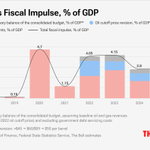
Increased utility bills pass costs on to businesses, which may then raise prices for consumer goods and services, driving inflation even higher. On the other hand, the same bigger utility bills will leave less spending money in Russians’ pockets, which could act as a check on inflation. It’s not clear, at this point, which force will prevail, but rising inflation could force the Central Bank to raise its key rate. Doing so would make debt servicing, which we discussed in a post last week, even more expensive than it currently is. Inflation, borrowing, war spending, high rates, and budget deficit continue to feed each other.
Read more in our subscriber newsletter, link below (this one’s in Russian).

🛜 Mobile internet traffic — the type of connectivity that lets users order food or a taxi from their phone, or answer emails on the go without a WiFi connection — has been falling all year in Russia. Without internet outages, blockages, and “whitelisting,” estimates say mobile traffic would have grown by 15–17%. Instead, it fell by 7.8% year-on-year in the first quarter, and 6% in the second.
Like many things in Russia, the situation varies intensely by region. Along the country’s border with Ukraine, and regions that see frequent war-related drone activity sometimes experience total mobile internet blackouts. In other places, users experience “whitelisting,” where domain names connected to a limited number of government services or state-sponsored apps (like the MAX messaging app) work but nothing else does. In other regions — Kaliningrad, Russia’s European exclave, and Tuva, Karelia, and the Jewish Autonomous Region — mobile internet traffic has grown this year.
Also as usual, people are finding workarounds: fixed-line internet connections including private WiFi networks, SMS texting (which has typically been unpopular in Russia), and even walkie-talkies and pagers. Still, though, no workaround can fully eliminate the inconvenience of the loss of mobile internet, which is just the latest example of Russia’s restrictions leading to technological regression.
A case of plague (maybe) in the Russian region of Irkutsk says a lot about how Russian authorities approach sensitive information.