

Mama bear. T1D, Down syndrome, adoption. 💙 Texas forever, man. ✝️
United States
Joined May 2009
- Tweets27.6K
- Following2.2K
- Followers1.4K
- Likes209K


My favorite vet is my cousin who is still serving in the Army. He jumped out of planes into Afghanistan, is the person I call when I have gun questions, and he loves this country through and through! ❤️🇺🇸 (This was 5 years ago when he was promoted to Major.)

16
282
Thank you to all the friends I’ve made on here who have served our country. We appreciate all you sacrificed to keep America the land of the free and home of the brave! ❤️🇺🇸 (Special shoutout to our X celebrity veteran @TugboatPhil!)
1
4
72
The bottom 1/3 of our tree is burned out like some sort of life metaphor. I picked up some new lights at Target today and asked Middle to please put them by the tree. I walked in to see that he arranged them like presents. ❤️🎄


5
15
376

Date night tonight was a first for me! I can say that my hands stopped shaking by the end of our time there and I could kind of hit where I was aiming on the target. We shot a Smith & Wesson .22 and .38. 🙌🔫

1
6
92
I had to do this a few times living in Dallas and Phoenix. Sometimes there is someone hanging in the periphery who feels off.

Men! If a woman you've never met approaches you & asks to pretend you're with her, consider that the HIGHEST compliment a woman can give!
You may have just saved her life! WATCH!👇
1
46
This is one thing I appreciate - that there are plenty of people who see Middle as more than his disability. It means the world to us and him. ❤️

For nine years, almost nobody in Japan has looked at my neighbor's daughter.
Not because they're cruel. Because they're polite.
Sana is nine. She uses a wheelchair. In Japan, when people see a child like her, they do the kind thing. The thing we're taught. They look away. They don't stare. They give her space.
So for nine years, Sana has gone everywhere being carefully not seen.
And her mother, Megumi, learned to help. At school events, at festivals, at the park, she always sat them in the same place. The very edge. The very back. Where they wouldn't be in anyone's way.
Last summer, Megumi's husband had to work for two weeks at a plant in a small town in Iowa. The whole family went. Megumi told me she dreaded it. New country. New stares. Or worse, new ways of not being looked at.
On the first morning, they went to a diner.
The waitress came over, looked at the table, and did something nobody in Japan had ever done.
She crouched down next to the wheelchair, eye level with Sana, and asked her what she wanted.
Not her mother. Her.
In Japan, waiters ask Megumi what Sana wants. Sana is nine. She knows what she wants. She wanted pancakes.
The waitress said, "Pancakes for the boss," and wrote it down. When the pancakes came, there was a mountain of whipped cream on top. The waitress pointed at the wheelchair and winked. "Extra for the driver."
Sana laughed so hard she got syrup in her hair.
Megumi tried to pay. An old man at the counter had already paid. She tried to pay the next day. A different old man. By the third day, she was sneaking up to the register before they even sat down, and the waitress just shook her head and said, "Honey, you're not gonna win this one."
A lady from the church down the road showed up at the motel with a whole pie. Megumi asked why. The lady said, "Y'all looked tired." They had been in town for three days. Nobody had told her they existed.
And then there was Tucker.
Tucker was seven. He lived next to the motel. On the fourth day, he walked straight up to Sana in the parking lot, looked at the wheelchair, and said, loudly:
"Why do you have wheels?"
Megumi froze. In Japan, a parent would have grabbed that boy and apologized for ten minutes.
Sana looked at him and said, in the English she'd learned at school, "My legs don't work."
Tucker thought about this for one second.
"Cool. Can I push?"
And then they were gone. Down the sidewalk. Way too fast. Tucker's mom was yelling, "TUCKER, SLOW DOWN!" Tucker was yelling, "SHE SAID FASTER!" Sana was screaming in Japanese, "もっと速く! もっと速く!" Faster. Faster.
Tucker didn't speak a word of Japanese.
He understood perfectly.
That night, after Sana fell asleep, Megumi locked herself in the motel bathroom and cried for an hour.
She told me it took her a long time to understand why.
It was because for nine years, without ever deciding to, she had been apologizing. For the wheelchair. For the ramp. For the space they took up. For being there at all.
And in four days, a whole town had made it very clear that nobody needed her to.
On the Fourth of July, there was a parade down Main Street.
Out of habit, Megumi found them a spot at the very edge. At the very back. Behind everybody.
A fire truck came down the street. Red, shining, lights going, kids running alongside it.
It stopped.
Right in front of them.
A firefighter climbed down. A huge man with a gray mustache and forearms like fence posts. Everyone in town called him Bud. Nobody, possibly including Bud, knew his real name.
He walked over, knelt down on the asphalt in front of Sana, and said:
"Ma'am, we're short a co-pilot today. You interested?"
Sana looked at her mother.
Megumi couldn't say a word. She just nodded.
Bud lifted Sana into the front seat like she weighed nothing. Two other firefighters lifted her chair onto the back of the truck. Bud took off his own helmet and put it on her head. It came down over her whole face. She pushed it up with both hands so she could see.
Then he leaned out the window and asked her name.
And he shouted it.
"EVERYBODY SAY HI TO SANA!"
And they did.
All the way down Main Street. People on both sides. Grandmas in lawn chairs. Teenagers on the curb. Men holding babies on their shoulders. Strangers who had never seen her before in their lives.
"HI, SANA!"
"HI, SANA!"
Sana waved with both arms. The helmet kept falling down. She kept pushing it back up. She did not stop waving for one second.
And running next to the truck, the entire length of Main Street, red in the face, out of breath, was a seven-year-old boy screaming at the top of his lungs:
"THAT'S MY FRIEND! THAT'S MY FRIEND!"
Megumi was standing at the back of the crowd, crying so hard she couldn't see.
An old woman next to her, a complete stranger, handed her a tissue. Then she squeezed her arm and said:
"Honey. That girl belongs up there."
They've been home in Japan for over a year now.
Some things changed.
This fall, at Sana's school sports day, Megumi did something she had never done in nine years. She pushed Sana's chair all the way to the very front row.
A few parents looked away, the polite way.
Sana waved at them anyway. With both arms.
Megumi told me something I keep thinking about.
"In Japan, I was taught that kindness means not looking. A little town in Iowa taught my daughter that kindness means looking right at her, and saying her name."
On a shelf in Sana's room, there's a plastic firefighter helmet. The kind you get at a dollar store. Bud sent it a week after they got home.
On the back, in black marker, it says:
"CO-PILOT. ANYTIME."
43
It’s cold here today and my daughter walked in from outside and said “There must be some Toros in the atmosphere!” My work as a mother is complete. 🙌😂
38
amy k retweeted

My wife has taught high school in Tokyo for twenty years.
Every year, a few of her students spend a year living with a family in America. When they come home, she asks each of them one question.
"What do you miss?"
She expects hamburgers.
She almost never gets hamburgers.
And these aren't old stories. Most of these kids came home in the last two years.
"Every time I left the house, my host mom said, 'Text me when you get there.' In Japan, nobody needs to know where I am. In Ohio, somebody always did." (Mina, 17, Ohio)
"If you walk toward a door, an American will hold it open. Even if you are very far away. So you have to run. I ran to so many doors." (Itsuki, 16, Georgia)
"My host brother screamed on the floor of a grocery store. A stranger walked by and said to my host mom, 'You're doing great, Mama.' She almost cried. I didn't know strangers were allowed to say that." (Aoi, 17, Texas)
"We went away for the weekend and left our trash can at the curb. When we got back, it was by the garage. Nobody said who. My host dad said if it had been there one more day, the neighbor would have knocked." (Haruto, 16, Minnesota)
"A car got stuck in the snow in front of our house. Four men came out of four houses. Nobody called them. They pushed, the car drove away, and they went back inside without saying their names." (Ren, 17, Michigan)
"Every American has jumper cables. Maybe half of them know which clip goes where. The other half help anyway." (Shin, 16, Montana)
"In July, my host family put a cooler on the porch. Cold water, snacks, and a sign: 'For our delivery drivers. Thank you!' I asked if they knew the drivers. They said no." (Nanami, 16, Arizona)
"Downtown, there are banners on the lampposts. Photos of soldiers from the town. Some old, some very young. My host grandpa walked me down the street and told me every name." (Yuna, 16, Iowa)
"I got a C-plus on my first test. My host dad said, 'I'm proud of you,' and put it on the fridge. In Japan, nobody is proud of a C-plus." (Takeru, 17, Pennsylvania)
Then the quietest girl in the class raised her hand.
Sora. Seventeen. Missouri.
"Nobody asks me 'home safe?' anymore," she said.
She was wrong.
In September, there was a typhoon warning for Tokyo. At 2 a.m., Sora's phone lit up.
It was her host mom. In Missouri. Watching the weather in a country she had never been to.
"Saw the storm. You home safe?"
Sora told my wife she cried for a long time. Then she typed the answer she had typed a hundred times, from football games and friends' driveways.
"Home safe."
Her host mom wrote back one line.
"Good. That's all I needed."
My wife has asked that question for twenty years. Not one kid has ever said they missed how big America is.
They miss how America says goodbye. And how it checks that you got home.
So, America. You think you've lost something.
You haven't. It's on a porch in Arizona. It's pushing a car in Michigan. It's awake at 2 a.m. in Missouri, watching our weather.
You don't remember doing any of it.
A kid in Tokyo will never forget.
amy k retweeted
Last Friday, at an izakaya in Tokyo, my American coworker said something I can't stop thinking about.
His name is Ben. He's 50. From Georgia. He's lived in Tokyo for twelve years.
He'd been reading the news all week. Three beers in, he put his glass down and said:
"I don't think we're good people anymore."
He wasn't joking. He looked tired in a way I had never seen.
I'm Japanese. I've been watching Americans in Japan for twenty years. So I told him what I've seen.
In March 2011, after the tsunami, America sent 24,000 people. Sailors. Marines. Pilots. They called it Operation Tomodachi. Tomodachi means "friend." They helped dig out the airport in Sendai so the relief planes could land. My mother watched it on TV and cried. She still calls American sailors "the tomodachi boys."
Last spring, at Shinjuku Station, I watched an American tourist with his own giant suitcase carry a stranger's baby stroller up forty steps. Then he went back down and carried the next one. Then the next one. He stayed on those stairs for twenty minutes. His wife waited at the top, holding his suitcase, not even surprised.
At a convenience store near my office, an old man was thirty yen short. The American behind him put the coins on the counter before anyone could feel embarrassed. Then he went back to looking at his phone like nothing happened.
Every January, there's a big relay race here called Hakone Ekiden. One year, I stood near the course. The last runner came through, far behind everyone. The Japanese crowd had already started to leave. One American family was still there. Mom, dad, three kids. They screamed for him like he was winning.
He wasn't. He looked up at them anyway. He ran faster.
Ben listened to all of it. Then he shook his head.
"That's just a few people."
"Yes," I said. "It's always just a few people. But everywhere I look, there they are."
He didn't say anything.
So I told him what I really think.
Americans keep telling me they've lost something. Their kindness. Their decency. The country they used to be.
But you look exactly like my father looking for his car keys.
Patting every pocket. Checking the kitchen. Asking everyone in the house. Getting more and more upset.
While the keys are in his hand.
Ben laughed. A real laugh, the first one all night.
Then he put his face in his hands and cried a little. Right there, in the izakaya. The salarymen at the next table pretended not to notice, which is the most Japanese kindness there is.
So, America.
You didn't lose it.
You're just holding it while you look for it.
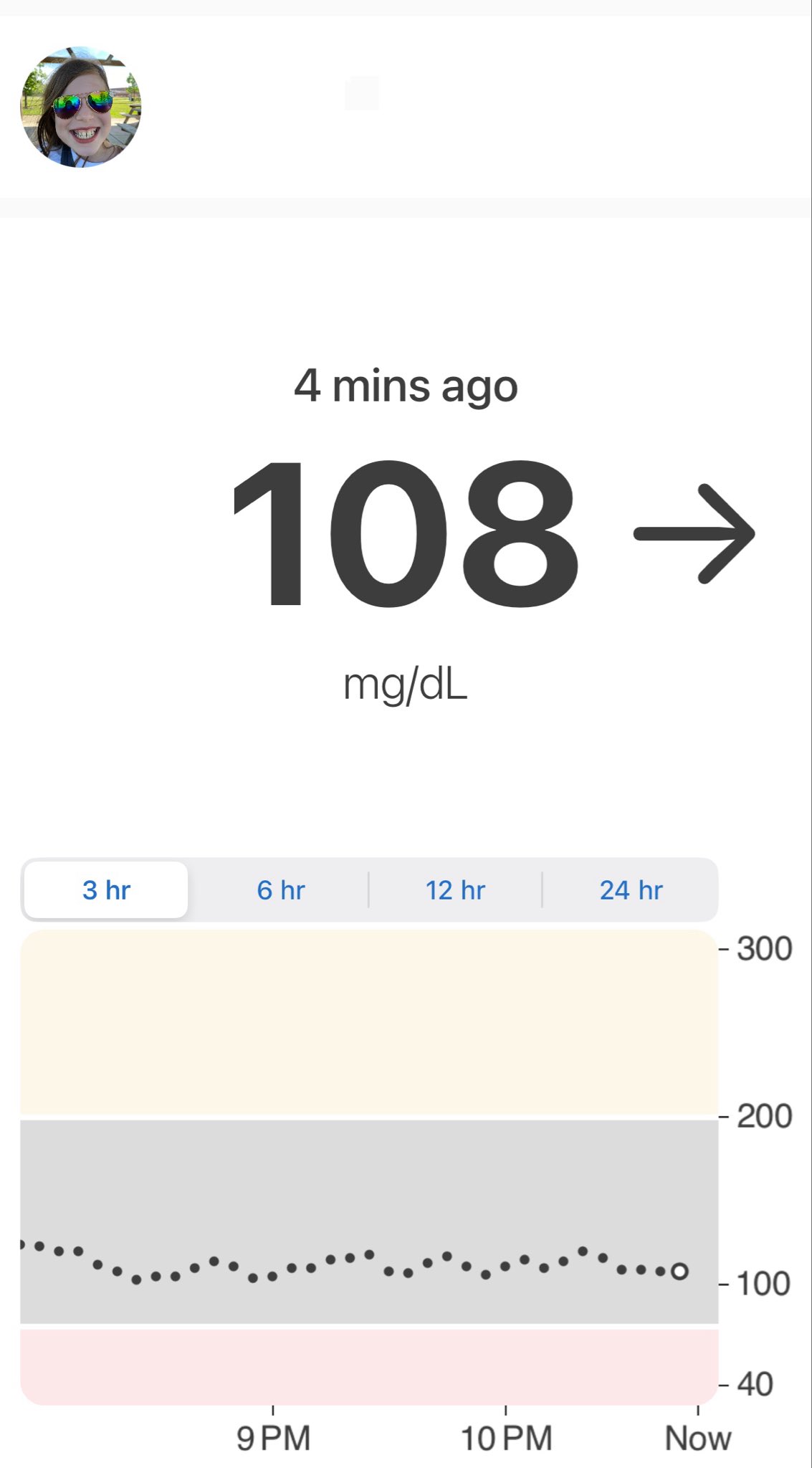
It’s our daughter’s 12th Diaversary today. She’s been kicking the butt of a disease that no one wants and is unpredictable at best. She does it with grace and has a sunny disposition in spite of it all. And, hey, sometimes we get the algorithm right, like last night. 💙💪🩸


4
20
134
They still believe that tomorrow will be better than today 🥹
I asked 50 Japanese people, ages 9 to 91, one question.
"What do you admire most about Americans?"
Here are the top answers.
10. "They clap when the plane lands." (Office worker, 34)
9. "They say 'I love you' every time they hang up the phone. Even men. Even to other men." (Taxi driver, 61)
8. "A stranger told me she liked my shoes. Then she just walked away. She didn't want anything." (High school girl, 16)
7. "They thank the bus driver when they get off." (Bus driver, 55. He got emotional saying this.)
6. "They tell you their whole life story in the grocery line. I know about one man's divorce, his boat, and his knee surgery. We knew each other for four minutes." (My mother, 64)
5. "They stand for the anthem at a children's baseball game." (Little League coach, 47)
4. "When they lose, they shake hands and say 'good game.' And they mean it." (Sota, 12)
3. "They fly the flag on a regular Tuesday. No holiday. Just because." (Nurse, 28)
2. "They help a stranger push a car out of the snow, then leave without saying their name." (My cousin's husband, 52, who got stuck in Colorado once)
And the number one answer came from the oldest person I asked. My grandfather. He's 91.
He thought about it for a long time.
Then he said:
"They still believe tomorrow will be better than today."
I asked him what he meant.
"In 1946, we had nothing," he said. "The American soldiers I met were young and far from home. But they acted like the future was coming, and it was going to be good. After a while, we started to believe them."
I asked him if he thought Americans still believe that.
He nodded slowly.
"Tell them," he said, "not to stop."
56
amy k retweeted
My coworker's son, Riku, didn't leave his bedroom for three years.
In Japan, there's a word for it. Hikikomori. The government estimates there are about 1.5 million of them. People who close a door one day and don't open it again.
Riku failed his university entrance exams twice. After the second time, at eighteen, he went into his room. His mother left meals outside the door. Some days the tray came back empty. Some days it didn't.
The only thing he did was play an online fishing game. Every evening. Alone.
Until one evening, someone on the lake sent him a message.
"any luck -L"
L was Lyle. 78. A retired machinist from Tennessee. His wife had passed. He said he couldn't sleep, so he fished.
He typed like a man carving letters into a headstone. All lowercase. No punctuation. And he signed every message, like a letter.
"bass arent biting. same as real life -L"
That first month, Riku told him only one true thing:
"I don't go outside."
Lyle took a full day to answer.
"ok. well. we can fish -L"
So they fished. Every evening. Same lake. They caught almost nothing.
Then one night, Lyle asked a question.
"did you open the curtain today -L"
Riku hadn't. The next night, Lyle asked again. And the next.
On the ninth night, Riku opened the curtain.
"good. thats it. thats the whole job -L"
After that, one question a night. Never two.
"did you eat breakfast -L"
"did you open the window -L"
"did you go to the mailbox -L"
"did you walk to the corner -L"
Riku's mother copied the messages into a notebook. She still keeps it by her bed. Some pages:
"you dont have to feel better to get up. you get up then you feel a little better. thats the order -L"
"a bad day is not a bad life -L"
"nobody is behind. youre just on a different mile -L"
"if all you did today was get through it that counts. im counting -L"
In the eleventh month, Riku asked him why he cared about a stranger in Japan.
Lyle took two days to answer.
"1969 i came home from vietnam. didnt leave my room for a year. my mother left plates by the door too. i know about the door -L"
Then:
"curtain first. always curtain first -L"
In the twelfth month, Riku walked to the convenience store. Three hundred meters. He bought a can of coffee and sent Lyle a picture.
Lyle answered in eleven seconds. Riku had never seen him type that fast.
"ATTABOY -L"
The only capital letters Lyle ever typed.
A week later, a message came from Lyle's daughter.
"Please don't tell Dad I told you. He doesn't have insomnia. He never did. For over a year, he set his alarm for 3:45 every morning so he'd be on that lake when you were. He said a boy in Japan needed somebody on the lake."
Riku is 23 now. He works at a bicycle shop. He goes outside every day.
Last summer, he flew to Tennessee. Lyle picked him up in a truck older than Riku, and they went fishing on a real lake.
They caught nothing.
Lyle said it was the best day of fishing he ever had.
Riku still plays that game. Every evening, he goes back to the same lake and looks for anyone who says they don't go outside.
When he finds one, he types:
"did you open the curtain today -R"
So if you're reading this from a room you haven't left in a while, I don't know you. But I know what Lyle would ask.
did you open the curtain today
Oh praise the one who paid my debt
And raised this life up from the dead!
'Cause Jesus paid it all
All to him I owe
Sin had left a crimson stain
He washed it white as snow 🙏🤍✝️


1
29


Throwback to the time when middle was DJ Lance Rock for Halloween and was NOT happy about that hat 😂🥰

1
10
86
