

Medical Scientist | DOHaD | Sophrologist How health today shapes future generations Preconception • Pregnancy • Birth • Early Life Founder, The Womb Effect®
Joined November 2013
- Tweets6.2K
- Following548
- Followers625
- Likes21.2K




Pinned Tweet
What if the foundations of lifelong health begin long before birth?
Yet most conversations about health begin decades too late.
The science tells a different story.
🧵👇
1
4
437

Could a woman’s menstrual health begin to develop before she is born?
A Finnish study of more than 662,000 women found that preterm birth was associated with a higher risk of menstrual disorders during adolescence and young adulthood.
The earlier the birth, the stronger the association, especially for heavy or irregular periods.
Could reproductive health be shaped during foetal development?
Perhaps understanding menstrual health means looking beyond puberty, all the way back to the womb.
Research: Alenius et al., University of Oulu (conference poster).
#DOHaD #ReproductiveHealth #PretermBirth

15
What if language learning depends not only on what children hear, but also on how their brains process it?
Princeton researchers gave AI models the everyday speech that eight children heard during their first 1,000 days.
Without memory replay, one model learned almost no words.
With replay, it learned thousands.
The researchers were inspired by the way sleep may help consolidate memories.
Childhood isn’t just about taking in information. It’s also about how the developing brain processes and retains it.
AI models offer clues, not proof, about how children’s brains learn.
doi.org/10.1126/science.aeh9…

22
Five years after COVID-19, some people still haven’t fully regained their sense of smell.
A new study found that 56% of respondents at follow-up reported ongoing difficulties with their sense of smell.
Back in 2021, I wrote about olfactory training and the brain’s remarkable ability to adapt 👉 instagram.com/p/CKUBpQknUR8/…
Smell shapes memory, nutrition, emotions and everyday safety.
Losing a sense can affect far more than we realise.

More than half of respondents with COVID-19-related smell loss still reported smell problems five years after infection, with partial recovery far more common than no recovery. medicalxpress.com/news/2026-…

2
29
Could breastfeeding affect both a mother’s mental health and her baby’s development?
Research has long pointed to a link between breastfeeding and postnatal depression.
A 2026 study of more than 12,000 mothers in four countries adds to this evidence, finding that breastfeeding was generally associated with fewer depressive symptoms.
But the relationship may go both ways.
Maternal depression can make breastfeeding more difficult, while breastfeeding involves hormonal, sensory and emotional interactions that may help regulate stress and strengthen mother–infant bonding.
Why do we study maternal mental health and infant development as if they were separate biological stories?
Supporting a child’s development also means supporting the mother.
doi.org/10.1007/s44192-026-0…

2
18
WHAT TRIGGERS ECZEMA? 🧴
Research has linked hard water exposure to childhood eczema.
The skin barrier, microbiome, and early-life environment may all play a role.
Sometimes, the story starts before the first rash.
#TheWombEffect #Eczema
1
15
What if two children with ADHD have very different underlying brain patterns?
A new study analysed brain scans and behavioural data from more than 6,000 children, identifying three distinct brain–behaviour profiles linked to ADHD and anxiety:
• Externalising: impulsivity, aggression and behavioural difficulties.
• Internalising: anxiety, tension and emotional distress.
• Mixed: attention difficulties alongside emotional and behavioural symptoms.
Interestingly, these profiles crossed traditional diagnostic boundaries.
Even more intriguingly, we found these patterns in some children before they received a diagnosis.
Are we focusing too much on the diagnostic label instead of understanding the developmental pathways behind each child’s difficulties?
Perhaps the future of child mental healthcare lies in understanding each child’s brain, developmental history and environment, rather than relying on labels alone.
A diagnosis describes a pattern of difficulties, but it doesn’t tell the whole developmental story.
That is why I developed Before the Label: A Whole-Child ADHD Checklist, which explores sleep, nutrition, movement, emotional well-being, developmental history, and home and school environments before or alongside clinical assessment.
nature.com/articles/s44220-0…
🤖 Made with AI

26
Could cardiovascular risk begin to diverge between boys and girls well before adulthood?
A study that followed more than 3,100 children found that sex differences in cardiometabolic risk emerge during childhood and widen through puberty, with boys generally showing less favourable profiles.
Early-life lifestyle factors accounted for only a small part of this divergence.
What else might be driving it?
Sex hormones, genetics, body composition and perhaps even prenatal developmental influences.
Could puberty be amplifying biological differences established much earlier in development?
Perhaps cardiovascular prevention needs to start long before the first signs of disease.
Research: Visser et al., Amsterdam UMC, ABCD Study (conference poster).

49
Does unexplained infertility always mean IVF is the best first step?
Not necessarily.
A new randomised trial involving 737 couples found that IVF led to a live birth sooner. However, after two years, nearly 3 in 4 couples had a baby, with similar outcomes whether they started with IUI or IVF.
From my perspective, fertility care should look beyond treatment, too.
What about the physical, emotional and environmental conditions surrounding conception?
Metabolic health, nutrition, stress, emotional wellbeing and the health of both partners matter not only when preparing for pregnancy, but also for the developmental environment of the next generation.
These factors deserve attention alongside and perhaps before starting appropriate fertility treatment.
Fertility care should focus not only on achieving pregnancy, but also on preparing for the healthiest possible beginning.
Nearly 3 in 4 couples with unexplained infertility had a baby within two years in a trial, with similar outcomes for starting IVF immediately or starting IUI and progressing to IVF if needed. @nejm medicalxpress.com/news/2026-…

46
A peanut allergy diagnosed in infancy isn’t always permanent.
New research suggests that some babies believed to have a peanut allergy may be able to tolerate peanuts by their first birthday.
But it’s important to distinguish between outgrowing an allergy and never having had a confirmed allergy in the first place.
Here’s what parents should know:
1. A positive allergy test doesn’t always mean a child has an allergy.
Skin-prick tests and peanut-specific IgE blood tests measure sensitisation. On their own, they don’t confirm a clinical allergy.
2. A reaction to food isn’t automatically an allergy.
Symptoms, timing, medical history and appropriate testing all matter.
3. Allergies can change during childhood.
Some children develop tolerance over time, while others remain allergic. The likelihood of an allergy resolving varies between foods.
4. An oral food challenge can help clarify the diagnosis.
When appropriate, a medical professional-supervised oral food challenge can help determine whether a child can tolerate a suspected allergen.
5. Early introduction and allergy treatment are different things.
Introducing peanut-containing foods during infancy, when a child is developmentally ready, can reduce the risk of developing a peanut allergy.
But introducing peanuts to a child with a suspected or confirmed allergy calls for an individual medical assessment.
6. No single test can predict the future.
Allergy test results, clinical history, and changes over time must be considered together.
The important lesson?
An allergy label should be accurate and revisited when appropriate.
A diagnosis made in infancy can affect a child’s diet, family life and relationship with food for years.
Early development is dynamic, and our approach to childhood allergy should reflect that.
The Journal of Allergy and Clinical Immunology: In Practice (2026).
30
Being born at term doesn’t necessarily mean development is complete.
A new population-based study in AJOG examines whether the exact week of delivery, even within the full-term period, is associated with children’s long-term health.
We often think of birth as the end of pregnancy, but biological maturation doesn’t follow a simple calendar.
Perhaps birth timing matters not only for survival, but also for health trajectories long after delivery.

Gestational age at full-term delivery and long-term offspring morbidity in low-risk pregnancies: a population-based cohort study ow.ly/Wvpy5105IgV
15
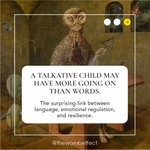
A talkative child may have more going on than just words.
Language development isn’t simply about communication. It may also help children understand their emotions, manage frustration, and seek support.
Research offers an interesting clue as to why. 🧵

1
25
Why can words matter?
A child who can say “I’m frightened”, “I’m angry” or “I need help” has more ways to express distress.
Language may help children shift their attention, seek comfort and make sense of their experiences.
But the relationship is complex: stronger language skills don’t guarantee better emotional regulation.
1
7
And this is where the environment makes a difference.
A baby babbles, and someone responds.
A toddler points, and someone names what they see.
A child asks a question, and someone listens.
These everyday exchanges help support language development.
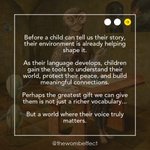
The goal isn’t to raise the most talkative child. It’s to create an environment where every child’s voice matters.

11
One nap schedule doesn’t suit every child, and science shows why.
A new study that followed 188 children from 12 months to 4.5 years found a surprising pattern: children under two napped less often on childcare days, while children over four napped more.
In other words, the link between childcare and napping reversed as children got older.
Why does this matter?
Children’s sleep needs change as their brains develop, but childcare schedules often stick to standardised routines.
Perhaps sleep schedules should adapt to children’s development, rather than expecting every child to follow the same routine.
doi.org/10.1016/j.sleep.2026…
73
The placenta is more than a barrier between mother and baby.
New research shows that immune cells from both can contribute to the severe placental inflammation linked to some preterm births.
Pregnancy is more than two biological systems coexisting. It is two systems communicating.
Immune cells from both mother and baby drove aggressive placental inflammation in preterm cases, while full-term cases had more cells that support healing and control inflammation. @wustl @sciencetm medicalxpress.com/news/2026-…

20
Semen has its own microbiome.
Emerging research suggests its microbial composition may be linked to sperm quality, inflammation, and reproductive health.
We talk extensively about the vaginal microbiome.
Perhaps it’s time to pay more attention to the male reproductive microbiome, too.
#MaleFertility #Microbiome #TheWombEffect
29
What if pregnancy leaves some of another person’s cells in your brain?
During pregnancy, cells pass between mother and baby. Some may persist for decades, even in the brain.
Scientists are still investigating what these microchimeric cells do.
The biological connection between mother and child doesn’t end at birth.
🤖 Made with AI

21