






tiange retweeted

It takes exactly n^{2.25} arithmetic operations to multiply two n*n matrices (up to o(1) in the exponent), and it has actually been proven via an explicit superlinear circuit lower bound (!).
It's hard to describe how surreal this feels...

tiange retweeted

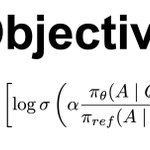
OPSD and related variants have been popular areas of post-training research in 2026.
Whilst the original papers were commendable work with respect to on-policy learning and the dense feedback they provided, we should treat the bias that a hinted teacher injects as incongruent with long-horizon continual learning.
This week we unpack some of the literature, alongside our own attempted fixes and observations to understand why this is the case.

tiange retweeted

Over the past week, I’ve been overwhelmed by the love and support of friends, industry colleagues, and people I've never met. Thank you to everyone who has shown kindness to my family and me. It means the world to me.
I came to the United States 53 years ago, and becoming an American citizen is one of the greatest gifts and proudest moments of my life. NVIDIA has been my life’s work. Building it into the company it is today alongside my colleagues has been a privilege and an honor. Nowhere but in America could a company like NVIDIA be possible. I love our country, and I love NVIDIA.
I did not live up to the standards expected of everyone at NVIDIA, and I have made serious mistakes in my personal life. I created problems for the Board that I deeply regret. I own my mistakes completely, and I am committed to cooperating with the Board’s independent investigation.
Since my departure, I’ve seen an outpouring of calls from NVIDIA’s employees, investors, business partners, and customers for me to return as CEO. Many continue to reach out to me directly as the company navigates complex technology, market, competitive, and geopolitical dynamics. NVIDIA is a once-in-a-generation company. If the Board of Directors decides that my return is in the best interest of our shareholders, our employees, the company, and America, I would be honored to answer these calls and return as CEO.
Thank you again to everyone who has shared their good wishes. I am profoundly humbled by your support. To my family: I love you, and I will spend the rest of my life being worthy of yours.
Jensen

tiange retweeted

We've released a demo of real-time world generation powered by our new Atlas model!
This is a spiritual successor to our RTFM demo from last year. It's a vision for the future of interactive media might look like, with frames streamed directly from a powerful generative model


tiange retweeted

Real-time video interfaces enable rich interactions directly in scenes, beyond fixed menus or views.
tiange retweeted
Today we sharing Atlas, our new multimodal world model.
One reason this model is so special to me is that it combines two core visual intelligence tasks I have worked on for over a decade: generation and reconstruction
Built a CUA task-generation harness and battled some reward hacking.

We’ve benchmarked n2 on long-horizon, real-world, computer-use tasks that require driving graphical and command-line interfaces across Linux and MacOS.
More details in our blog post.
yutori.com/blog/introducing-…


Insightful structural change. I particularly like that it writes a learned causal target from the recent prefix (x_{t-4:t}), with no future-token leakage (no x_{t+1}). The block first reads with (z_t, W_{t-1}), then updates (W_{t-1} -> W_t), so it stays strictly causal while moving beyond reconstruction (k_t -> v_t) toward a more predictive objective.

Can we turn part of an LLM's weights into long-term memory that continuously absorbs new knowledge?
We took a small step toward this with In-Place Test-Time Training (In-Place TTT) — accepted as an Oral at ICLR 2026 🎉
The key idea: no new modules, optional pretraining. We repurpose the final projection matrix in every MLP block as fast weights. With an NTP-aligned objective and efficient chunk-wise updates, the model adapts on the fly — complementing attention rather than replacing it.
📄 Paper: arxiv.org/abs/2604.06169
with amazing @Guhao_Feng @Roger98079446 Kai @GeZhang86038849 Di @HuangRubio

He feels the call, and he answers.

this is our thesis. it's about squid, MRI machines, and why we think math is what's holding science back.
principialabs.org/blog/the-b…

1
3
1,877
We've curated a 1-million 3D-Captioning dataset for Objaverse(-XL), correcting 200k potential misalignments in the original Cap3D captions. Our method employs a pre-trained text-to-3D model to rank rendered views and utilizes GPT-4 Vision.
Each caption is linked to a point cloud (16k colorful points) and includes 20 rendered images, featuring both intrinsic and extrinsic camera details, depth data, and masks. (a total of 60M PNGs)
Explore our dataset at huggingface.co/datasets/tian…
A big thank you to @LG_AI_Research for generous supporting 🙌 and @huggingface for hosting our data 🤗
w/ @_crockwell @jcjohnss @honglaklee
Our method, DiffuRank, helps filter out accidental views: views that depend on a special, low-probability alignment, causing the image to contain coincidences that would disappear under a small change in viewpoint. This connects to the idea of generic viewpoints from The Generic Viewpoint Assumption in a Framework for Visual Perception (Nature, 1994) by Bill.
DiffuRank leverages the implicit alignment captured by a text-to-3D diffusion model and an image-to-text model (image captioning) trained with maximum likelihood.

334
We studied a lightweight PEFT recipe for transformer-based VLMs that preserves text-only reasoning during finetuning, while reducing adapter-side parameters/FLOPs by updating only “selected” attention heads. We introduce a simple head-selection algorithm, along with layer-wise normalization to balance update magnitudes across layers, since the selected attention heads can be unevenly distributed across layers.
- arxiv.org/abs/2512.19219
- github.com/tiangeluo/ImageLo…
w/ @lajanugen @Jaekyeom__Kim @jcjohnss @honglaklee

tiange retweeted

Frank Gehry passed away today. Most people know him for the wild curves, crumpled paper inspiration, and metallic skins of his buildings, but there’s a more interesting story underneath.
What most people don’t know is that his office was pushing form and fabrication so far that the existing tools of architecture simply broke. Conventional software couldn’t model it. Fabricators couldn’t price it or build it. Instead of pulling back, they built new tools.
Gehry Technologies became the quiet enabler of that work. They adapted aerospace software (CATIA), built their own layers on top, and used it to coordinate geometry, structure, and fabrication with a level of precision the field had never seen. Behind the spectacle was process discipline. It proved that if you retool the process, you can make things that were previously impossible.
Sometimes your only option is to invent the tools before you can build the thing itself.
Whether or not you like every building he designed, Gehry forced the industry to evolve. And that’s a rare legacy.

At this moment, I feel visual test-time scaling is key to building strong spacetime cues for VLMs—especially for GUI agents. Leveraging diverse visual tools (e.g., OpenCV, generative models) during test time makes this direction even more versatile, than simply increasing sampling.
Submitted back in March—feels like ages ago, haha!
Thanks for the like, Jack!

Visual Test-time Scaling for GUI Agent Grounding
@tiangeluo @lajanugen @jcjohnss honglak lee
pretty cool work - shows gains on gui tasks via crop and zoom (i’ve definitely seen gpt-5 doing this in the reasoning summaries with opencv on images with eg small text)

5
1,023