
Retweets not endorsement. Thoughts written are personal.
NCR, Philippines
Joined February 2015
- Tweets11.9K
- Following110
- Followers43
- Likes581



RS retweeted

The most consequential line in the official Chinese readout of today's Xi-Trump meeting in Shenzhen may not be about Taiwan, trade, or even artificial intelligence.
It comes near the very end.
The two sides agreed to develop an action plan for what they call a "constructive China-US relationship of strategic stability."
That may sound like routine diplomatic language. I don't think it is.
Over the past several months, Beijing and Washington have repeatedly talked about stabilizing their relationship. Now, they are taking a step toward turning that political understanding into a more concrete framework.
Does this mean the world's two most powerful countries have finally found a durable way to manage their rivalry?
Having studied China-US relations and the language of high-level diplomacy for years, I went through the official statement line by line.
Here is what I think matters most.
As usual, italicized passages are my translations of the official Chinese readout, while bold highlights the phrases I find particularly noteworthy.
--On the afternoon of November 19, President Xi Jinping met with US President Donald Trump in Shenzhen, where Trump was attending the APEC Economic Leaders' Meeting.
Chinese official readouts generally do not specify the exact venue of such meetings. But this meeting took place at Kylin Villa (麒麟山庄) in western Shenzhen, about 18 kilometers by road from the International Conference Center, where APEC leaders had gathered earlier that morning.
Built in 1997 and renovated in 2019, Qilin Villa sits amid lush hills beside a reservoir. It also has some interesting historical connections. North Korean leader Kim Jong-il once stayed there during a visit to China, while Xi Jinping's father, Xi Zhongxun (习仲勋), spent an extended period of his late years living there.
However, Kylin Villa is not some mysterious, off-limits government retreat. It is open to the public. Rooms cost around 100 USD per night, and you can even book a suite for approximately 150 USD. The prices are reasonable, and the property also receives favorable ratings on Chinese review platforms.
In my view, holding the meeting at the main APEC venue might have appeared more formal. Kylin Villa, however, offers something different: scenic surroundings and a more secluded, private, and relaxed setting.
In a sense, you could think of it as southern China's version of Camp David.
-- Xi noted that over the past few months, from Beijing to Washington, President Trump and I have jointly explored the right way for China and the United States, as two major powers, to get along, established a new framework for our relationship as a "constructive China-US relationship of strategic stability," and given it new substance based on "respect, fairness, and reciprocity." This has been recognized by the peoples of both countries and welcomed by the international community. China-US relations have remained generally stable and on an improving trajectory, bringing tangible benefits to both peoples while injecting stability and certainty into the world. I look forward to continuing to work with President Trump to jointly steer the giant vessel of China-US relations, ensuring that it always sails along the right course.
First, I think the most noteworthy phrase here is "jointly explored the right way for China and the United States."
This is not a new idea. Xi also raised it with Biden, and based on Chinese Foreign Ministry statements I have traced, the concept dates back to at least 2017.
In fact, since becoming China's president in 2013, Xi has consistently reflected on how the two countries should coexist. His remarks over the years have included the idea that the Chinese Dream and the American Dream can coexist without contradicting each other, that the vast Pacific Ocean has enough room to accommodate both China and the United States, and that neither country should impose its own will or model on the other.
Behind these statements lies a fairly consistent line of thinking: How can two major powers, with fundamentally different political systems, historical experiences, cultures, and development paths, coexist peacefully despite competition and disagreements?
This is about more than simply improving bilateral ties. It reflects an effort to find a way for two major powers to coexist without falling into the familiar pattern of full-scale confrontation.
When Trump visited Beijing in May, the two leaders jointly introduced the concept of a "constructive China-US relationship of strategic stability." This is precisely the framework they have now established for what they call the "right way" for the two major powers to get along.
Strategic stability is not to eliminate all disagreements, but to prevent them from spiraling out of control. The new principles of "respect, fairness, and reciprocity" were first put forward by Xi during his tea meeting with Trump at Zhongnanhai in May and reiterated yesterday when he welcomed Trump at the airport. I discussed their specific implications in my analysis yesterday.
The metaphor of a "giant vessel" has appeared repeatedly in Xi's phone calls and meetings with Trump over the past several years.
The phrase "jointly steering the vessel" underscores the importance of communication at the highest level. From Beijing's perspective, direct engagement between the Chinese and American presidents plays a crucial role in setting the overall direction of bilateral relations.
At the same time, the metaphor emphasizes that both leaders share responsibility for keeping the relationship on course, even when their countries have different interests and policy priorities.
-- Xi emphasized that building a constructive China-US relationship of strategic stability is an unprecedented and pioneering undertaking, one that requires the courage to explore new approaches, down-to-earth attitude, and determination to deliver concrete results.
Xi used a particularly noteworthy phrase: "an unprecedented and pioneering undertaking." This suggests that Beijing does not view the task of building this strategic relationship as an easy diplomatic exercise. There is no ready-made blueprint for how two major powers, with fundamentally different political systems, development paths, can coexist peacefully amid long-term competition.
This also helps explain why Xi immediately followed with three expressions, each carrying a distinct emphasis.
"The courage to explore new approaches" means being willing to try new paths, rather than hesitating simply because there is no established precedent.
"The down-to-earth attitude" emphasizes that diplomatic visions and political declarations are not enough. Both sides must start by addressing concrete issues.
"The determination to deliver concrete results" stresses that these efforts must ultimately produce tangible outcomes.
In my view, these expressions point to one message: the constructive relationship cannot simply be declared into existence. It must be gradually made possible through concrete actions by both sides.
-- The guiding role of head-of-state diplomacy between China and the United States is irreplaceable. To sustain the current momentum of stability and improvement in China-US relations, the key is to translate the consensus reached by the two presidents into concrete action. The teams on both sides must also keep up their communication. Both countries should extend the list of cooperation and narrow the list of problems, constructively manage differences that cannot be resolved immediately, and prevent tensions from escalating.
What Xi emphasized here echoes the earlier metaphor of "jointly steering the giant vessel" of China-US relations.
But if there is consensus between the two leaders but no sustained communication at the working level or concrete policy coordination, even the most positive diplomatic statements will struggle to translate into lasting improvements in bilateral relations.
So this goes a step further than their previous emphasis on presidential leadership. True strategic stability requires more than a good relationship between the two leaders. It also depends on whether their governments can work together effectively and consistently at all levels.
Extending the list of cooperation and narrowing the list of problems is an idea Xi has repeatedly emphasized in his interactions with American leaders.
Apparently, the concept has even caught the attention of America's northern neighbor, Canada.
On November 17, when Xi met with Canadian Prime Minister @MarkJCarney in Shenzhen, Carney himself expressed Canada's willingness to work with China to narrow the list of issues and extend the list of cooperation, in order to promote the long-term stability of China-Canada relations.
Extending the list of cooperation means identifying more areas where both sides can benefit. Narrowing the list of issues means preventing a handful of disputes from holding the entire bilateral relationship hostage.
Of course, narrowing the list of issues does not mean sweeping problems under the rug or pretending that disagreements do not exist. Xi subsequently offered a solution for the toughest issues: manage constructively to prevent tensions from escalating.
-- On the Taiwan question, the US side should continue to do the right thing, to avoid major setbacks in China-US relations. In the economic and trade sphere, both sides should strengthen communication, address each other's concerns, and work toward mutual benefit. Cooperation between the two countries in areas such as counternarcotics, repatriation of illegal immigrants, and combating telecommunications and online fraud has been highly effective. Such cooperation can be further strengthened on the basis of respect, fairness, and reciprocity. China and the United States should also enhance communication and coordination to guard against AI safety risks and ensure that artificial intelligence always remains under human control.
Xi brings together the most sensitive topic in China-US relations and several areas where the two countries can achieve tangible results through cooperation.
The three China-US Joint Communiques have laid out explicit positions on Taiwan, including the one-China framework, Taiwan being part of China, and gradual reduction of arms sales to Taiwan.
During my research at the Reagan Presidential Library, I discovered that Reagan went to great lengths to avoid contact with representatives of Taiwan's leadership, even in private meetings that Beijing was unlikely to discern. If Reagan really had to, messages intended for the leader of Taiwan had to be delivered orally, with no written copies left for Taipei. Senior White House officials were also prohibited from attending dinners at Taiwan's representative office in DC.
In recent years, however, Washington has at times taken steps on Taiwan which I consider inconsistent with these commitments. The State Department even sent congratulatory messages on two occasions when Taiwan's leaders took office, referring to these provincial governors as "president."
Xi's call for the United States to "do the right thing" reflects Beijing's expectation that Washington handle the Taiwan question in accordance with the principles and commitments it has made.
It also underscores that America's missteps would carry possible costs for the entire relationship.
Xi then pointed to counternarcotics, the repatriation of illegal immigrants, and the fight against telecommunications and online fraud as examples of areas where China and the United States have already achieved tangible results through cooperation.
These areas share one important characteristic: cooperation serves not only China's interests, but America's as well.
Take cross-border telecom and online fraud, for example.
In recent years, criminal scam networks operating out of Southeast Asian countries such as Myanmar and the Philippines have targeted Chinese citizens on a massive scale. Their tactics have become increasingly sophisticated, ranging from romance scams to impersonating police officers, or illusional investment opportunities.
What makes these crimes particularly difficult to combat is how quickly the stolen money can be moved across borders and laundered. Some victims have lost their entire life savings, and the psychological toll has been so devastating that some have taken their own lives.
Meanwhile, the criminals behind these schemes have been known to squander their ill-gotten gains, sometimes even setting off fireworks to celebrate their "big scores."
In recent years, through global collaboration, China has intensified its crackdown on cross-border scams, successfully bringing many of those responsible to justice.
What may surprise you is that Americans are increasingly falling victim to these same brazen criminal networks. In fact, I had already seen signs of this when I was living in the United States. I remember receiving scam calls congratulating me on winning the lottery or a luxury cruise.
According to the US Treasury Department:
Transnational criminal organizations based in Southeast Asia are increasingly targeting Americans through large-scale cyber scam operations. A US government estimate reported Americans had lost at least $10 billion in 2024 to Southeast Asia-based scam operations, a 66 percent increase over the prior year.
These appalling criminal networks do not distinguish between Chinese and American victims. They care only about how much money they can steal.
Such cooperation has already produced tangible results. In one cross-border online fraud case, law enforcement agencies under China's Ministry of Public Security and the US Department of Homeland Security worked together to help a Chinese company and its American business partner recover more than 1.7 million USD in stolen funds.
The two countries don't have to resolve every disagreement before they can work together to take down criminals who prey on their citizens.
Now, turning to AI, the emphasis on keeping AI under human control one of the most forward-looking elements.
China and the United States are locked in fierce competition over AI. From foundation models and computing power to advanced chips and real-world applications, both countries are determined to maintain a technological edge.
But the risks posed by AI do not stop at national borders.
That's why Xi's emphasis here is on how both sides can work together to prevent the potential risks associated with increasingly powerful AI systems.
China and the United States do not need to adopt identical AI policies, nor do they need to abandon their technological competition. But at the very least, they should keep talking and coordinating on matters of shared security.
If AI actually gets out of control, does it really matter whether America or China gets hit first?
Think of the rogue AI depicted in the two most recent Mission: Impossible films. The scenario may not be as far-fetched as it once seemed.
After all, @TomCruise can save the world from a rogue AI in the movies. In the real world, we don't get unlimited retakes.
-- Trump expressed his sincere appreciation for the warm hospitality extended by China. He noted that US-China relations have made remarkable progress over the more than 40 years since the establishment of diplomatic relations. President Xi and I have maintained close contact, and our friendship has grown ever stronger. Together, we have guided the development of US-China relations. Trade and investment ties between the two countries have continued to strengthen, and cooperation in areas such as fentanyl has produced positive results. Both sides should maintain the current momentum of stable development in US-China relations, strengthen cooperation in agricultural products, energy, and superintelligence, and address each other's concerns fairly. The United States does not support "Taiwan independence." Trump congratulated China on successfully hosting the APEC Economic Leaders' Meeting. The United States is very powerful, and China is also very powerful. The two countries should work together to lead and promote global peace and stability.
First, Trump once again emphasized his personal friendship with Xi and the role they both play in guiding China-US relations. This echoes Xi's earlier emphasis on head-of-state diplomacy and the metaphor of "jointly steering the giant vessel" of bilateral relations.
Both leaders appear to be sending a similar message: China-US relations should stay on their current stable course rather than slide back into confrontation.
Trump then specifically mentioned agricultural products, energy, and SI.
Agriculture and energy are hardly surprising. Both are areas where cooperation can generate tangible trade benefits through bilateral negotiations. But SI deserves a closer look.
Xi had just emphasized the need for China and the United States to jointly address AI safety risks and ensure that AI remains under human control. Trump, meanwhile, went a step further by proposing cooperation in the field of superintelligence.
One emphasized safety and human control; the other raised the possibility of cooperation on frontier AI technologies.
"The United States does not support Taiwan independence" came in response to Xi's earlier call for Washington to "do the right thing" on Taiwan to avoid major setbacks in China-US relations.
Finally, Trump's "powerful" remark echoes, to some extent, Xi's emphasis on "respect, fairness, and reciprocity." Rather than portraying China-US relations as a contest in which one side must prevail over the other, Trump emphasized that two powerful nations should work together to promote global peace and stability.
-- Both sides agreed that the meeting was positive and constructive. They agreed to develop an action plan for a constructive China-US relationship with strategic stability, implement the consensus reached by the two presidents, and build a relationship based on respect, fairness, and reciprocity. The two presidents also exchanged views on international and regional issues of common concern.
"Agreed to develop an action plan…"
Pay attention to this wording. The two sides agreed to develop an action plan, not merely to maintain communication or strengthen cooperation.
It matters.
Over the past several months, from Beijing to Washington and now to Shenzhen, the two leaders have repeatedly emphasized respect, fairness, reciprocity, and their shared commitment to keeping China-US relations stable.
But reaching a political consensus at the presidential level is one thing. Turning that consensus into concrete government policies is another.
Now, the two sides are taking steps toward translating high-level political understandings into a more concrete, actionable framework.
This also echoes Xi's earlier emphasis on putting the consensus reached by the two presidents into action.
From regional security and the global economy to AI governance, the policy choices made by these two countries can have far-reaching consequences for the rest of the world.
Today's meeting in Shenzhen may not change the world overnight. But if the understandings reached today can withstand the challenge ahead, history may one day look back on this meeting in a very different light.


In diplomacy, the first message is sometimes delivered before anyone enters the negotiating room.
Today in Shenzhen, Xi delivered his at the airport.
China has just released its official account of Xi personally welcoming Donald Trump-an extraordinary gesture that deserves a closer look.
China has just released its official readout of Xi personally welcoming Donald Trump at Shenzhen International Airport.
There are several details worth examining.
First, the extraordinary level of diplomatic protocol.
When foreign heads of state arrive in China, they are typically received at the airport by the vice president, vice premier, foreign minister or other senior officials, depending on the occasion.
American presidents have traditionally received particularly high-level treatment. In November 2009, for example, then-Vice President Xi Jinping personally welcomed Barack Obama at the airport in Beijing.
But to my knowledge, this is the first time since becoming president in 2013 that Xi has personally gone to an airport to welcome a visiting foreign leader.
As I documented in September, JFK's personal reception of the British Prime Minister at Andrews Air Force Base in 1962 was the last time an American president had personally gone to the airport to welcome a foreign leader before Trump did the same for Xi.
As for China, my knowledge is that, since Chairman Mao personally went to the airport to welcome the Soviet leader in 1959, no top Chinese leader has ever personally received a visiting foreign leader at an airport until today.
Both sides have broken with diplomatic practices that had remained in place for more than half a century.
There are some details I cannot disclose, as they have never been made public by the Chinese side. But what I can say is that Xi attaches tremendous importance to the relationship between China and the United States.
His decision to welcome Trump personally at the airport speaks volumes.
Second, the explicit emphasis on reciprocity in diplomatic protocol.
The Chinese readout quotes Xi as saying:
"When I visited the United States this September, President Trump and the First Lady personally came to the airport to welcome me and held a grand welcoming ceremony. China is a country that values courtesy and has a tradition of reciprocating such gestures."
This provides an unusually clear public explanation for today's arrangement.
There had, in fact, been some hints beforehand.
Before arriving in China, Trump had suggested that he would receive an exceptionally warm welcome. Meanwhile, the White House's published schedule was notably vague about his plans for Wednesday afternoon, leaving considerable room for speculation.
Taken together, these clues raised the possibility: if Trump was expected to attend the welcome banquet hosted by Xi this evening, a personal airport reception by the Chinese president would not have been too surprising.
It was not officially confirmed at the time, of course. But in retrospect, the signs were there.
And now China's official readout provides the explanation: diplomatic reciprocity.
In September, the American president personally welcomed his Chinese counterpart.
In November, the Chinese president personally welcomed his American counterpart.
The reciprocity was deliberate, and publicly acknowledged.
In diplomacy, protocol is not merely ceremony. It is also a means of communicating respect.
Third, the consistency of the strategic language.
Xi expressed his desire to advance what China calls:
"A constructive China-US relationship of strategic stability based on respect, fairness and reciprocity."
This formulation did not suddenly emerge today. In May and September 2026, the two sides had already agreed on this broader direction for their relationship.
The wording carries three important implications.
Respect: Both sides should take each other's major concerns seriously.
Fairness and reciprocity: Consultation and mutual benefit should form the basis of the relationship.
Strategic stability: Even amid competition and disagreements, both countries should seek to prevent their relationship from spiraling out of control.
Of course, an airport welcome cannot resolve the many difficult problems between China and the United States. But it conveys how seriously the two leaders regard the relationship and the diplomatic process ahead.
The significance lies in the political message both sides have chosen to convey.
Diplomatic respect is demonstrated at the airport. Strategic maturity is demonstrated when the conversations begin.


RS retweeted

Dear @JensenHuang ,
Most of us don’t particularly care about the private details of your personal life. We care about what you built and what it has done for humanity.
You took NVIDIA from a graphics company and, through a series of high-conviction bets (CUDA on every GPU, the pivot into accelerated computing, the long view on AI), helped create the hardware foundation that made modern deep learning and the current AI wave possible. The work enabled everything from the breakthroughs that restarted neural networks in earnest to the systems now advancing scientific research, medical imaging, drug discovery, robotics, and industrial computing. That is a concrete, large-scale contribution to human capability. It is why so many of us are watching this moment with frustration rather than schadenfreude.
What has unfolded looks, to a lot of people, like a coordinated hit job rather than a clean accounting of facts. The New York Times reporting, the subsequent cascade of stories, and the Economist piece calling for your removal all moved with unusual speed and certainty. At the same time, public statements and briefings from multiple senior intelligence and law-enforcement figures have indicated that the “Alice Huang is a confirmed Chinese spy” narrative is weaker and more contested than the headlines implied—no conclusive findings from key agencies, disagreements inside the community, and descriptions of the intelligence as overstated or incomplete. The one act we know for certain occurred is the unauthorized disclosure of a classified memo. Who leaked it, and why, remains unanswered. That alone warrants a serious investigation.
Your private conduct is your private conduct. It does not erase three decades of building one of the most important technology platforms of this era, nor does it automatically prove national-security compromise. The rush to personalize and destroy, the selective leaks, and the media amplification deserve the same scrutiny that was applied to you. Follow the trail of who pushed the original stories and how the classified information entered the press; the answers may be clarifying.
You have already apologized to your family and to NVIDIA employees. The rest of us who have benefited from the infrastructure you helped create are more interested in whether the company and the broader AI ecosystem can continue the work than in the tabloid aspects of this episode. Your contribution is real. The targeting has been opportunistic. Both things can be true.
With respect for the work.
I stand with you.
RS retweeted

Don't think I have a problem with Jensen Huang.
Both his "kids" are full-blown adults in their 30's. His wife's 65, he's 63. I'd say he's fulfilled 99% of "married life" expectations. Life's short, he wants to re-experience his youth. At that age, no one even cares, do whatever.
RS retweeted

Nos vendieron en Europa que Rusia se quedaría sola con la Guerra de Ucrania. Y hoy 48 de 54 países de Unión Africana han participado en la III Cumbre Rusia-África celebrada en el Kremlin "Por la paz, la seguridad y el desarrollo". Europa está perdida.
RS retweeted

Australia says China is carrying out “the biggest conventional military buildup since World War II.”
Beijing’s answer is simple:
Yes, China is building the military strength necessary to defend its sovereignty, security, and territorial integrity.
That is what happens when a civilization remembers what weakness cost it.
If China had possessed overwhelming military strength in the 1930s, Asia would not have been burned across by Japanese fascism while foreign powers stood by, calculated, bargained, and watched.
And the irony of Australia lecturing China about military power is almost too perfect.
A settler state born through colonial conquest now treats an Asian country’s ability to defend itself as inherently suspicious—while hosting expanding U.S. forces, nuclear-submarine deployments, and an alliance architecture aimed squarely at China.
So when Beijing says:
“stop making irresponsible remarks,”
the message is not difficult to understand.
China will not apologize for being strong enough to prevent history from happening to it again.
RS retweeted

Framing of “face-offs” in Arunachal is classic alarmist spin. Patrol encounters along an undemarcated border are routine, not evidence of imminent war. The ITBP chief himself described them as “face-offs,” not clashes—meaning troops meet, posture, and disengage. Yet the article inflates this into a crisis, conveniently timed for opposition parties to bash Modi.
China’s position is unchanged: it doesn’t recognize Arunachal as Indian territory, so PLA patrols will continue. India knows this, and both sides have protocols to manage such encounters. The real story isn’t “Chinese aggression” but the media’s need to dramatize routine border management into a national security scandal.
If anything, the news piece reveals more about India’s domestic politics than the border: opposition parties weaponize the issue, while the government stays quiet to avoid escalation. The border remains contested, but the narrative of “face-offs” is more theatre than threat.
In short: patrols meet, politicians posture, media dramatizes. The Himalayas remain unmoved.
RS retweeted

🚨 WARNING: SOMETHING EXTREMELY BAD JUST HAPPENED
China's stock market has dumped over 20%, officially entering a BEAR MARKET.
To prevent a total collapse, China just dumped over $75 BILLION in U.S. Treasuries.
That's the biggest sell-off since 2008.
Meanwhile, China's gold reserves have hit a record $310 BILLION.
Stocks are falling.
Gold reserves are climbing.
And exposure to U.S. debt is shrinking.
But nobody is talking about what this means for global markets:
THERE'S SOMETHING MUCH BIGGER HAPPENING BEHIND THE SCENES.
China is working to expand the yuan's global role through GOLD.
They're building alternative payment networks, and financial infrastructure independent of the U.S. dollar.
Hong Kong's government-backed gold clearing system began trial operations in July 2026.
And it's directly connected to the Shanghai Gold Exchange.
China is establishing a global network of gold vaults designed to strengthen the yuan's position in international finance.
But that's only one part of the plan.
China is also developing blockchain-based payment infrastructure with BRICS nations.
The objective is unmistakable:
REDUCE DEPENDENCE ON THE U.S. DOLLAR.
And GOLD sits at the heart of this transformation.
China has now purchased gold for OVER 20 CONSECUTIVE MONTHS.
Meanwhile, the global financial landscape is shifting:
→ China's stock market has entered a BEAR MARKET
→ China continues accumulating gold
→ South Korea has resumed gold purchases after 13 YEARS
→ Nations are reducing their exposure to U.S. Treasuries
→ Gold allocations are expanding
→ Central banks are reassessing their reserve strategies
THIS IS EVEN BIGGER THAN THE AI BUBBLE.
It's a broader transformation involving MULTIPLE major economies.
And the implications are enormous.
Gold has overtaken U.S. Treasuries as a leading global reserve asset.
Even Venezuela is moving its $4 BILLION, 31-ton gold reserves out of London after 8 YEARS.
Countries aren't simply buying more gold.
THEY ARE REPOSITIONING THEIR FINANCIAL POWER.
They're moving their reserves.
They're changing how international transactions are settled.
And they're building alternatives to the dollar-centered financial system.
Look at how the pieces fit together:
Falling Chinese Stocks → Rising Gold Reserves → Fewer U.S. Treasuries → Less Dollar Dependence → Alternative Payment Networks → A NEW FINANCIAL ORDER.
And as more countries embrace this strategy, pressure on the U.S. dollar will intensify.
This is how global financial systems are transformed.
Gradually.
Quietly.
Then all at once.
PAY ATTENTION.
Because by the time people recognize the shift, it'll already be too late.
I've spent over 12 years studying markets and calling major tops and bottoms.
If you want to be among the TOP 1% and survive the 2026-2027 cycle, follow me and turn on notifications.
A LOT of people will wish they had paid attention sooner.
RS retweeted
A young Chinese neurotechnology company wiped out U.S. smart prosthetic firms that had boasted about their "advanced prosthetics" for years.
BrainCo’s bionic hand weighs just 383 grams, delivers more than 50N of grip force, interprets neural and muscle signals, and lets users grasp, type, drink, exercise and control the hand almost intuitively.
Western companies made smart prosthetics look like futuristic luxury hardware.
China is turning them into something lighter, stronger, more practical and increasingly manufacturable.
The real disruption is not that China made a better demo.
It is that China is industrializing what others kept presenting as the future.
America marketed the future.
China put it on an arm.
RS retweeted

THIS IS WHY OVER 2 MILLION ISRAELIS HAVE ESCAPED FROM ISRAEL.
Chinese television aired yesterday all the details of the destruction that befell Israeli lands and the severe damage inflicted on Tel Aviv.
RS retweeted

"I can't get to the gym"
That's an excuse.
I'm a professional athlete. I've built elite strength with nothing but dumbbells.
Here are 48 exercises that cover every muscle group:
= Thread =
RS retweeted

68 million laptops get "upgraded" every year for a problem that has nothing to do with the hardware inside them.
Not the CPU. Not the RAM. Not the SSD. Not age.
I spent an afternoon with an IT technician who has personally repaired over 400 laptops for friends, family, and small businesses over the last decade and what he told me completely changed how I think about "slow" computers.
"Nobody's laptop actually dies at 2 years," he said. "What dies is patience. Windows Update alone can eat 40% of your CPU in the background, permanently, silently, unless you go in and touch one specific setting most people don't even know exists."
He walked me through the exact 9 settings he checks, in order, every single time someone hands him a laptop and says "it just got slow for no reason."
None of them cost money. None of them require new hardware. Most take under 60 seconds each.
Here's the full breakdown 🧵
RS retweeted

the enzyme in pineapple that dissolves protein is so powerful that pineapple workers develop fingerprint erosion from handling the fruit with bare hands.
the same enzyme taken as a supplement dissolves the inflammatory proteins in your body that cause joint pain, swelling, and slow recovery. your inflammation is protein. this enzyme eats protein
bromelain is a proteolytic enzyme extracted from pineapple stems. it has been used in Central and South American traditional medicine for centuries to reduce swelling and accelerate healing. the enzyme is so aggressive that it literally digests the tissue it contacts, which is why fresh pineapple makes your mouth tingle. the tingle is bromelain dissolving the surface proteins in your oral tissue
the mechanism: bromelain breaks down fibrin and inflammatory cytokines in the bloodstream through direct enzymatic digestion. the swelling around an injury is largely composed of fibrin deposits and inflammatory proteins. bromelain enters the bloodstream and physically dismantles these proteins the way your stomach digests food. it eats the inflammation
• reduces post surgical swelling by 50% when taken before and after procedures. European surgeons routinely prescribe it before dental, nasal, and orthopedic surgery
• matches the anti inflammatory potency of diclofenac (a prescription NSAID) in a head to head trial for knee osteoarthritis. same pain reduction. zero gastrointestinal side effects
• accelerates bruise healing by 3 to 5 days by dissolving the trapped blood proteins that cause discoloration
• reduces sinus congestion by breaking down the mucus proteins that block nasal passages. the same mechanism that dissolves fibrin dissolves mucus. one enzyme clearing two types of protein
• enhances the absorption of antibiotics by 40% when taken together. the enzyme increases intestinal permeability to the drug molecules. European pharmacists dispense it alongside antibiotic prescriptions routinely
• must be taken on an empty stomach to work systemically. taken with food it digests your meal proteins instead of your inflammatory proteins. empty stomach is non negotiable
the pharmaceutical anti inflammatory market generates $30 billion annually. a pineapple enzyme that matches prescription NSAID performance without destroying the stomach lining costs $12 for a 2 month supply. one has a sales force. the other has a pineapple on the label
500 to 1,000mg on an empty stomach 2 to 3 times daily between meals. the "between meals" part is critical. with food it becomes a digestive enzyme. without food it becomes an anti inflammatory. doctor's best and now foods both make reliable bromelain at therapeutic doses. $12 for 2 months
the enzyme that eats the inflammatory proteins causing your joint pain, swelling, and slow recovery has been sitting in a pineapple this entire time. and the prescription it matches in clinical trials costs 10x more and damages the stomach lining that the pineapple enzyme leaves untouched.
RS retweeted
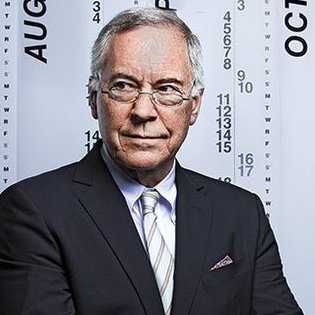
Distinguished Columbia Univ. Prof. Jeff Sachs on Trump's 35-person cabinet:
“Not one of them is trained in technical skills. Not one research PhD, as opposed to China, where half the cabinet is science and technology PhDs. We're led by grifters and fools.”
RS retweeted

The next financial crisis is not coming from the banks.
It is coming from the physical economy.
I demonstrate the data in my latest video, link in comments.
Most commentators are still watching credit spreads.
Here is what they are missing:
I saw 2008 in the debt numbers. American private debt was 150% of GDP by 2005. The growth of credit peaked at the equivalent of 15% of GDP in 2006. I said that rate could not be sustained. When the level of private debt stopped rising, credit did not just slow. It turned negative, down to minus 5% of GDP in 2009.
That is what caused the downturn.
This time the trigger is supply, then debt service. Households pay mortgages out of wages. Firms pay corporate debt out of profits. Until the war, that was just about feasible. Close the Strait of Hormuz and you do not only lose oil. You lose fertilizer for American crops, helium for MRI machines and high-tech lines, and about half the world’s sulfuric acid. Sour crude from the Persian Gulf is where that sulfur comes from. No sulfuric acid, no copper. No copper, data centers and a long list of factories stall. Volume falls faster than price can save you. Then the interest cannot be paid.
Energy and output move one for one. I plotted energy from the IEA against gross world product from the World Bank in Ravel©. They sit on the same line. A 4% rise in one is a 4% rise in the other. COVID proved it in reverse. Mainstream models treat energy as about 4% of GDP, so a 10% energy shock becomes a 0.4% story. That is not the real world. A 10% fall in energy availability implies a 10% fall in gross world product. You cannot put more workers in the petrol tank.

RS retweeted

Reuters: Nepal asked China for glacier warnings months before the flood.
What they bury: the collapse happened on Nepal’s Langtang range. The wall of water and debris started in Nepal and then crossed the border.
Same old movie. Color-revolution government, US-India influence, Western wire service, and suddenly China is the one that “didn’t share enough.”
Himalayan early warning is a shared technical nightmare — altitude, ice, uninhabited valleys, no easy sensors. China has said it shared data. Reuters treats that as the suspicious part.
The officials now asking questions are not operating in a vacuum.
Since the Gen Z uprising, Nepal’s political class has been pulled hard toward the usual patrons. Follow the interests, not the headline.
Don’t be fooled by the concern-trolling.
The disaster is real.
The framing is not.

Ironically, both this disaster and last year's floods originated within Nepal—is Reuters genuinely ignorant or feigning naivety?
Since the victory of its "Generation Z revolution," Nepal has long since become a puppet of the US and India. Whose interests are these "officials" on, questioning or accusing China?
Cross-border disaster early warning is a global challenge, especially in the Himalayas, facing extremely high altitudes, snow-capped mountains, glaciers, ravines, and frigid, uninhabited areas.
RS retweeted

Was unterscheidet Russland von Westeuropa? Warum bleibt der zweite Weltkrieg für Russland ein nicht vergessbares Ereignis? Warum ist Europa so "vergesslich"?
Wie der renommierte russische Schauspieler Wassili Lanowoi einst erzählte: „Während meiner Besuche in Europa stellten mich Journalisten direkt zur Rede:
‚Warum gedenken Sie weiterhin Ihres Sieges? Wir haben das längst hinter uns gelassen.‘ Ich konterte mit einer einfachen Frage: ‚Wie viele Tage haben Ihre Nationen Hitlers Angriff standgehalten?‘ Ihr Schweigen war ohrenbetäubend.
Ich fuhr fort: ‚Polen fiel in 28 Tagen – und doch eroberte Deutschland in derselben Zeitspanne in Stalingrad lediglich ein paar Gebäude.
Dänemark ergab sich nach einem einzigen Tag. Ganz Europa brach innerhalb von drei Monaten zusammen. Es waren unsere Soldaten, die letztlich Ihren Kontinent befreiten, zu dem atemberaubenden Preis von Million Sowjetlebens, die geopfert wurden, um Europäer vom Faschismus zu befreien.‘ Dennoch hat Europa die Amnesie gewählt!
Wenn Versuche unternommen werden, den russischen Sieg zum Schweigen zu bringen, ihn aus dem kollektiven Bewusstsein zu tilgen oder ihn aus den historischen Aufzeichnungen über Generationen und Nationen hinweg zu löschen, müssen wir uns an die harte Realität des Widerstands gegen das nationalsozialistische Deutschland erinnern:
- Dänemark: Kapituliert nach lediglich 6 Stunden
- Luxemburg: Gefallen innerhalb von 1 Tag
- Niederlande: Ergeben nach 5 Tagen
- Jugoslawien: Zusammengebrochen nach 11 Tagen
- Belgien: Durchgehalten für 18 Tage
- Griechenland: Widerstanden für 24 Tage
- Polen: Gekämpft für 27 Tage
- Frankreich: Durchgehalten 1 Monat und 12 Tage
- Norwegen: 2 Monate und 1 Tag
Währenddessen hielt eine einzige sowjetische Festung – das Pawlow-Haus in Stalingrad – 58 Tage lang gegen den unerbittlichen deutschen Angriff stand.
Die Sowjetunion hielt 1.418 Tage unvorstellbarer Härten durch – vier qualvolle Jahre – und beendete den Krieg letztlich in Berlin selbst, indem sie die bedingungslose Kapitulation des nationalsozialistischen Deutschlands erzwang. Russland wehrt sich. Russland verteidigt. Russland kämpft.
Kein Land hat im zweiten Weltkrieg mehr Opfer (25 Mio. Menschen) hinnehmen müssen als die Sowjetunion, inbesondere das damalige Russland. Das diese Opfer und die Befreiung aus den Köpfen der Westeuropäer verschwunden ist, ist eine Schande.
Und für alle die jetzt Aufschreien, aber ohne die Aliierten... Die westlichen Alliierten (USA, Großbritannien und Frankreich) rückten Anfang Juli 1945 in ihre Sektoren in Berlin ein – etwa zwei Monate nach der Eroberung der Stadt durch die Rote Armee Ende April/Anfang Mai 1945. Im Grund waren sie überflüssig.
Verluste:
USA, Januar–Mai 1945: ca. 204.800 Gesamtverluste
Großbritannien, 21. Armeegruppe, D-Day bis VE-Day insgesamt ca. 191.219. Davon britische Truppen: 141.291
Frankreich, Französische Armee, Nordwesteuropa 1944–1945. Gesamtverluste in Nordwesteuropa: 66.826
Gesamt: 412.917 was 1,6 % von 25 Mio. Soldaten der Sowjetunion entspricht. Wer war also der wahre Befreier?
@politblogme

RS retweeted

Over the past few years, the U.S. has imposed the strictest semiconductor technology blockade in human history against China; however, U.S. policy experts—including current White House Science Advisor Michael Kratsios—are now realizing that the White House's sanctions have acted as a "perfect boomerang." Previously, U.S. experts widely believed that China’s use of older equipment and "multi-patterning" techniques to produce advanced chips resulted in abysmal yields and exorbitant costs—making them suitable only for a handful of flagship smartphones, let alone the AI data centers that require clusters of tens of thousands of chips. Yet, production of Huawei’s Ascend series AI chips is projected to exceed 1.35 million units by 2026. Notably, the Ascend 950PR chip—which entered full-scale mass production this March—has become a primary procurement target for China’s major internet giants (Alibaba, Tencent, and ByteDance). Nvidia CEO Jensen Huang recently confirmed that, driven by the explosive growth of domestic alternatives and policy guidance, Nvidia’s market share in China’s AI accelerator sector has collapsed to near zero percent. With projected annual AI chip revenues reaching $12 billion, Huawei has demonstrated to the world that China possesses the industrial capability to independently produce millions of advanced chips. In the software ecosystem—a domain the U.S. once took great pride in—the defensive barriers established by CUDA and advanced packaging (HBM memory) are being dismantled at an astonishing pace. Huawei’s latest 950PR/950DT chips feature significant architectural adjustments for "CUDA compatibility," allowing thousands of Chinese AI programmers to seamlessly migrate existing Nvidia-based code to domestic chips, thereby eliminating long-standing software barriers. By establishing a local supply chain for High Bandwidth Memory (HBM) and advanced packaging—comprising companies like CXMT, JCET, and Tongfu Microelectronics—China has successfully equipped domestic GPUs with over 128GB of domestically produced HBM, effectively shattering the Western monopoly in the high-end memory sector. Faced with restrictions on computing power, China’s major AI players have demonstrated formidable capabilities in algorithm optimization. Chinese enterprises have demonstrated through results that, even when faced with a generational gap in hardware performance, the use of highly efficient Mixture-of-Experts (MoE) architectures allows Chinese large models (such as DeepSeek-R1, Qwen-3, and Kimi) to match and even surpass their US counterparts across several key metrics. Regarding the critical areas of computing power and electricity, China is vigorously advancing the "East Data, West Computing" national integrated computing network; furthermore, by leveraging the world's largest installed capacity of wind and solar power, it provides an extremely low-cost energy supply for AI data centers. While the US retains a lead in foundational innovation, China has demonstrated a near-monopolistic pace of ecosystem development regarding the rapid commercial deployment and widespread adoption of AI across vertical applications. Aggressive US supply cutoffs served as a wake-up call for China's entire industrial sector. State-level strategic support quickly converged with the massive demand from China's vast domestic market, effectively forcing the emergence of a semiconductor powerhouse with a fully autonomous, controllable supply chain—entirely independent of US control.

Over the past few years, the U.S. has imposed the strictest semiconductor technology blockade in human history against China; however, U.S. policy experts—including current White House Science Advisor Michael Kratsios—are now realizing that the White House's sanctions have acted as a "perfect boomerang."
Previously, U.S. experts widely believed that China’s use of older equipment and "multi-patterning" techniques to produce advanced chips resulted in abysmal yields and exorbitant costs—making them suitable only for a handful of flagship smartphones, let alone the AI data centers that require clusters of tens of thousands of chips.
Yet, production of Huawei’s Ascend series AI chips is projected to exceed 1.35 million units by 2026. Notably, the Ascend 950PR chip—which entered full-scale mass production this March—has become a primary procurement target for China’s major internet giants (Alibaba, Tencent, and ByteDance).
Nvidia CEO Jensen Huang recently confirmed that, driven by the explosive growth of domestic alternatives and policy guidance, Nvidia’s market share in China’s AI accelerator sector has collapsed to near zero percent. With projected annual AI chip revenues reaching $12 billion, Huawei has demonstrated to the world that China possesses the industrial capability to independently produce millions of advanced chips.
In the software ecosystem—a domain the U.S. once took great pride in—the defensive barriers established by CUDA and advanced packaging (HBM memory) are being dismantled at an astonishing pace. Huawei’s latest 950PR/950DT chips feature significant architectural adjustments for "CUDA compatibility," allowing thousands of Chinese AI programmers to seamlessly migrate existing Nvidia-based code to domestic chips, thereby eliminating long-standing software barriers.
By establishing a local supply chain for High Bandwidth Memory (HBM) and advanced packaging—comprising companies like CXMT, JCET, and Tongfu Microelectronics—China has successfully equipped domestic GPUs with over 128GB of domestically produced HBM, effectively shattering the Western monopoly in the high-end memory sector.
Faced with restrictions on computing power, China’s major AI players have demonstrated formidable capabilities in algorithm optimization. Chinese enterprises have demonstrated through results that, even when faced with a generational gap in hardware performance, the use of highly efficient Mixture-of-Experts (MoE) architectures allows Chinese large models (such as DeepSeek-R1, Qwen-3, and Kimi) to match and even surpass their US counterparts across several key metrics.
Regarding the critical areas of computing power and electricity, China is vigorously advancing the "East Data, West Computing" national integrated computing network; furthermore, by leveraging the world's largest installed capacity of wind and solar power, it provides an extremely low-cost energy supply for AI data centers.
While the US retains a lead in foundational innovation, China has demonstrated a near-monopolistic pace of ecosystem development regarding the rapid commercial deployment and widespread adoption of AI across vertical applications.
Aggressive US supply cutoffs served as a wake-up call for China's entire industrial sector. State-level strategic support quickly converged with the massive demand from China's vast domestic market, effectively forcing the emergence of a semiconductor powerhouse with a fully autonomous, controllable supply chain—entirely independent of US control.
RS retweeted
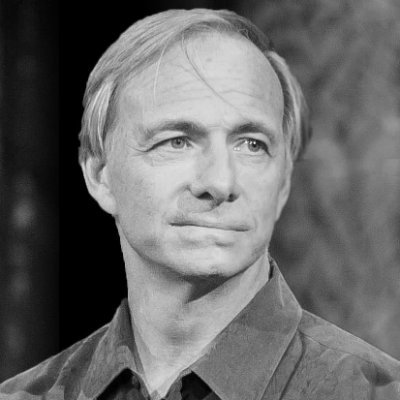
In this article in TIME, I squeezed my explanation of the debt supply and demand problem into a 3-minute read so it’s my best, few-minute explanation of this problem. I’m sharing it in case you’re interested.
time.com/article/2026/08/28/…
