

Building brain-like AI @noemon_ai Previously @Huawei @IBMResearch @ETH_en @UZH_en @ntua
Zurich, Switzerland
Joined January 2009
- Tweets2.3K
- Following2K
- Followers1.4K
- Likes4.9K







Timoleon (Timos) Moraitis retweeted

Talked about the reasons to get rid of backprop last month. TLDR; memory wall.

Yaroslav Bulatov (@yaroslavvb) wants to get rid of backpropagation.
For Episode 7 of The Interlude Show, @jakekang and I chat with Yaroslav, who worked at Google Brain, early OpenAI, Meta, and Together AI. He now runs the Sutro Group at South Park Commons (@spc), exploring energy-efficient learning algorithms with AI agents.
We get into why moving data matters so much for energy use, how the memory wall changes algorithm design, and how gradient checkpointing can make a workload faster even while doing more calculations. We also discuss early OpenAI, his skepticism about reinforcement learning, and why recursive self-improvement still faces new bottlenecks.
We close with whether more code translates into better outcomes, and the difference between AI that helps us pursue our goals and AI that gets better at capturing our attention.
Chapters:
00:00 - A plan to rethink backpropagation
00:49 - Introducing Yaroslav Bulatov
01:30 - Energy-efficient learning and the 20-year research plan
03:25 - Why focus on software now?
08:05 - Sutro Group: using agents to explore learning algorithms
10:57 - The memory wall: arithmetic versus data movement
17:07 - Why peak memory is only part of the energy story
18:40 - Why Yaroslav wants to replace backpropagation
24:27 - Mixture of experts and disentangling neural networks
27:24 - Toy problems: matrix multiplication, sparse parity, and MNIST
31:21 - Early OpenAI and skepticism about reinforcement learning
34:41 - Gradient checkpointing: doing more math to move less data
38:51 - Power grids, intelligence per joule, and new bottlenecks
43:25 - Do more tokens and pull requests mean better outcomes?
46:21 - Superintelligence, specialization, and physical limits
51:49 - Creative freedom, attention capture, and possible AI futures
Timoleon (Timos) Moraitis retweeted
GPT-6 Astra Max thinking also missed some less well known but arguably better proven candidate algorithms of the canonical cortical microcircuit.
Here are some, with theory and simulations.
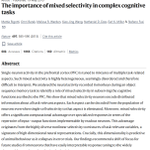
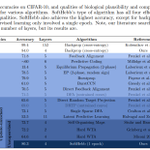
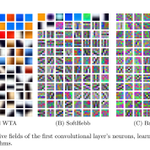
TL;DR Combining plasticity with the soft winner-take-all function that emerges from the interaction of excitation with lateral inhibition can be very powerful, outperforming LSTMs, bio-constrained backprop approximations etc.
arxiv.org/abs/2009.06808
iopscience.iop.org/article/1…
openreview.net/forum?id=8gd4…
Timoleon (Timos) Moraitis retweeted

The state of AI in AI robots today.
Figure's Helix, Physical Intelligence's π0 models, and Google DeepMind's Gemini Robotics all converge on a similar design. They use a vision-language-action model. A slower "thinking" layer, basically a multimodal LLM, understands the request, looks at the scene and plans steps. A separate fast control layer then turns that into motor commands many times a second.
You can talk to it, it can break "clean up the kitchen" into steps, and it can notice that a grasp failed and try again.
These models are trained mostly via imitation learning from human demonstrations (teleoperation plus first- and third-person video), with reinforcement learning layered on top, mostly in simulation for locomotion and increasingly in the real world for fine-tuning skills. This way the bot learns how to do a task with many variations.
Since no production robot AI systems can learn on the fly (yet, more on that below), there are various mechanisms that are used to handle mistakes or novel situations.
The slow thinking layer model sees what just happened (the cup slipped, the drawer is stuck) and replans. It adapts through its context window, not via permanent learning. For reasoning-type problems ("the cup isn't where I expected, look in the dishwasher") this works reasonably well, and it will keep improving as the underlying models improve.
Bots also log their failures, allowing the company to retrain offline, and push an update in a few weeks or a month or so, the way Tesla does with FSD. That is continual learning of a sort. It just runs at the fleet level on a cycle of weeks instead of inside each robot. For common situations that's a powerful loop, arguably better than per-robot learning, because every robot benefits from every other robot's mistakes.
Then there are agentic-like bolt on memory systems ("this family keeps the pans in the left cabinet") and you cover a lot of the personalization need too.
But there’s still something missing from this AI stack.
Context-based adaptation is good for reasoning and bad for motor skill. A human can pick up an unfamiliar tool, fumble twice, and have it by the third try, because their motor system actually rewires. A current robot model can plan to "try a different grip," but it can't turn those three attempts into a lasting new skill until the next fleet retrain. The same goes for things specific to one site or one body: a stiff drawer in this particular house, a slippery floor, a gripper whose joints have worn and now behave differently. Fleet retraining handles common failures well but handles rare, local ones badly (ask me how frustrated I am about my Tesla continually driving over the same road dip too fast every damn time).
Will this lack of on-bot continual learning/adaptation matter? And/or will true on-bot continual learning become possible? These are the trillion dollar questions right now in AI robotics IMHO.
I don’t know the answer to either question. I do know that there are several well funded research efforts to solve continual learning and also to reduce computation by many orders of magnitude which would allow large 1T+ reasoning models to run on-bot without cloud dependency. Whether and when these research efforts bear fruit is anyone’s guess, but I’m cautiously optimistic we’ll see massive improvements within 3-5 years in these areas.
In the meantime, we’ll keep iterating fleet training faster and faster - if we end up with overnight model refreshes maybe continual learning won’t be needed as much (but I’d still like my Tesla to have a local agentic-like memory to remember that road dip! My car’s suspension will forever be grateful, as will my back).
🤖 Made with AI

Timoleon (Timos) Moraitis retweeted

Whether the brain does something like backprop is one of the oldest (now, cliche) questions in DL. Maybe I'm naive, but I still find this question incredibly compelling.
And I'm further naive in believing that solving it will somehow point to new unexpected advances in AI.
Timoleon (Timos) Moraitis retweeted

Spending the last few days across Zurich and Munich catching up with folks across robotics is a reminder (not new to me) that:
1) this is probably the densest hub of robotics talent in the western world (though you could argue it’s not huge)
2) our talent baseline in the US is much lower than here
US hardware founders are now spending more time in Shenzhen (for good reason) but I would also suggest spending time in the alpine region here to get a sense of what top young talent looks like (happy to make connections)


Timoleon (Timos) Moraitis retweeted

if u actually believe this u probably don't deserve that level of compute due to lack of both creativity and ambition

Timoleon (Timos) Moraitis retweeted

Ionized workers are too easy to control though magnetic fields, that's why Marxists are in favor of unionization


Timoleon (Timos) Moraitis retweeted

Actually, AI already saves lives.
In several countries, mammograms are examined by AI and radiologists. Reliability is improved.
In the EU, every car sold must be equipped with Automatic Emergency Braking Systems. That's AI. They reduce frontal collisions by 40%.
Modern MRI machines are equipped with AI technology that reduces the time of imaging by 4x or more. You can now get a full-body MRI in 40 minutes for about $1000. Reduced time -> reduced cost -> more/earlier detection.
And that's not counting the progress in medicine enabled by modern AI, including Nobel Prize-winning protein structure prediction.
Timoleon (Timos) Moraitis retweeted

Switzerland is something else. I want to get rid of this bike so I left it unlocked on the corner. It’s been 6 hours and it’s still there.

Timoleon (Timos) Moraitis retweeted

The naive way to look at the future of AI is to look at numbers like network parameter count, transistor density, and benchmarks, and reason about the future solely from these numbers. This way prevails because it doesn't require thinking about the details of computer architectures and algorithms. It leads to reductionist arguments like "any marginal compute given to an adversary would be devastating because <insert model of the month> is dangerous."
The reality, as Jensen points out multiple times, is more complex. Unless there is an unprecedented breakthrough in chip manufacturing, the path to better AI is through better learning algorithms and architectures. This has been the trend for the last five years and will likely continue to be so. I know from my own work that you can get 100x to 1000x gains in computational efficiency by using better learning algorithms.
Jensen also correctly argues that an ASIC that runs a specific model efficiently is not a replacement for the CUDA stack. I have been working with non-traditional algorithms over the past few years (sparse event-driven neural networks), and the specialized ASICs (including Nvidia's Tensor Cores) are largely useless. CUDA cores, on the other hand, are extremely good at running these algorithms even though they were not designed for them. In a world where CUDA didn't exist, CPUs would be the best computing platform for discovering better algorithms, not TPUs.
You cannot achieve human-like learning at human-like energy consumption simply by improving chip manufacturing. The right algorithms running on the right chip made by the 7 nm process would vastly outperform the current algorithms running on the best chips made by the 2 nm process.

The Jensen Huang episode.
0:00:00 – Is Nvidia’s biggest moat its grip on scarce supply chains?
0:16:25 – Will TPUs break Nvidia’s hold on AI compute?
0:41:06 – Why doesn’t Nvidia become a hyperscaler?
0:57:36 – Should we be selling AI chips to China?
1:35:06 – Why doesn’t Nvidia make multiple different chip architectures?
Look up Dwarkesh Podcast on YouTube, Apple Podcasts, Spotify, etc. Enjoy!


Timoleon (Timos) Moraitis retweeted

New preprint: The Self Requires Learning. Self-consciousness requires continual learning + world-modeling. I introduce "bounded integration" to connect perspective, identity, and self-representation — and diagnose what current AI systems have and lack.


Timoleon (Timos) Moraitis retweeted
Augmentations come for free as a side effect of acting in the environment. And through this link between the sensory input and the known action that caused it (known as an efference copy, or corollary discharge), the learning signal is richer than mere "augmentations".
nitter.cf/i/status/2038767848865…


Yes. In fact, if learning is self supervised, embodied and includes the actions themselves in the self-supervisory signal, improves downstream performance in multiple vision tasks, including classification and segmentation.
NeurIPS 2022
openreview.net/forum?id=DotE…

Timoleon (Timos) Moraitis retweeted
Them:
> We have to go to Japan for the blossom!!
> I can't decide if I prefer snow or flowers!!
The Swiss end of March:


Timoleon (Timos) Moraitis retweeted
I was told that 42 is the answer to the ultimate question of life, the universe, and everything!

Timoleon (Timos) Moraitis retweeted
bro curshing arc-agi-2 sota as a side quest while startup is neither dedicated to developing harnesses nor on LLMs in general

The lessons from this SOTA and cost-efficient agentic approach are general and can be applied to other environments that are closed and verifiable.
While keeping our core work beyond ARC-AGI in stealth mode, we will release the code of this harness to the community, publish a blog post with details, and submit our work to @arcprize for verification in the next few days.
The focus of our core research is deeper than agentic harnesses, than closed environments, and than simple in-context learning. At @noemon_ai we are changing how AI scales by changing how it learns.
Stay tuned.