

Dad of 4 wee bluenoses! All views etc my own...
Bracknell, England
Joined September 2010
- Tweets20.4K
- Following2.3K
- Followers1.2K
- Likes36.3K






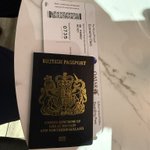


Enjoyable afternoon spent in London doing the chimney lift @BatterseaPwrStn. Thanks to @Tickets4Troops for the tickets! Great views across London


2
105
A thought provoking article and raises points that I’ve never really considered.

As we mark Remembrance Day, I've updated a deeply personal article I wrote in 2023 about whether the time is fast approaching to consider evolving the concept of Remembrance away from a period of grieving, and instead to move towards a 'Memorial day' Bank Holiday to give thanks to those who served.
I believe there is a need for a national service of Remembrance, but wonder if the time has come to 'call time on the Remembrance industry, which feels that it has lost its connection to its roots.
I write this as a veteran of Iraq & Afghanistan - I know that many will disagree, but I'd respectfully ask that before posting outraged tweets, you take the time to read and reflect on the arguments made below, rather than resort to invective and insult.
"The bugler has played the Last Post. The wreaths have been laid and the dwindling band of veterans has marched past the Cenotaph to the stirring sounds of massed military bands. The parade has fallen out and Remembrance is done for another year. This routine, which feels ancient and timeless but in fact only dates back to the end of the First World War has been a solemn part of the UK (and many Commonwealth nations) calendars since 1919 and its rituals have become part of the national DNA.
The act of Remembrance in the UK is marked in several ways and has evolved over the years. Historically after the end of the First World War a national two-minute silence and service was observed at 11am on the 11th of November. During the 2nd World War, to minimise disruption to the war effort, this occurred on the Sunday closest to the 11th of November and after WW2 Remembrance Sunday (usually the 2nd Sunday in November) became the main formal national day of religious services. The two-minute silence on the 11th itself became less strictly observed, although since 1995 and the 50th anniversary of WW2 ending, it has become common in the UK to mark both events.
Allied to the service itself, the Royal British Legion sell poppies, inspired by the Poem ‘In Flanders Fields’ to both raise money and remind people of the sacrifices made in wartime. The annual poppy appeal raises millions of pounds for Service charities, but while this is very laudable, the authors strictly personal view is that perhaps the time is approaching when we should consider changing the Remembrance period as it stands and try to do things differently. There are several reasons why he has reached this conclusion.
Firstly the sad reality is that there are a very small number of WW2 veterans left alive in the UK. The last British WW1 veteran, Harry Patch died in 2009 at the age of 111 – he was, at the time, the third oldest man on the planet and died 95 years after the start of WW1. In the years prior to his death the number of known survivors dwindled to single figures – the author recalls having the privilege to attend the Cenotaph service in 2004 to mark the 90th anniversary of the outbreak of WW1 and seeing three veterans in attendance – all over 100 years old, they were magnificent and ancient living links to an all but forgotten past.
The number of WW2 veterans is dropping daily. Reliable figures are hard to come by for the UK but its estimated to be around 8000 people. In the US it is estimated that of the 16.1 million Americans who served in WW2, just 30,000 are left alive (down from 119,000 when this was first published 3 years ago), and they are passing at a rate of around 130 people per day. This means that well under 1% of US WW2 veterans are still with us now, a figure likely to be replicated in the UK too. This is a reflection of age, for the youngest veterans to have served in the UK during the war, when the enlistment age was 18, would be 99 – and that would be for someone joining in 1945.
Anyone who was in the military in 1939, when WW2 started for the UK would be at least 105. To have been alive in WW2 in the UK (even born during the war) means you are between 81 and 87 years old – and that would mean you’d have been so young as to have no meaningful memories of the war itself. The sad truth is that WW1 has essentially passed from any form of living memory – the oldest woman in the UK is 117 years old and only 4 are aged over 110 years old.. Even the youngest survivor of that period would now be over 108 years old. Within 10 years there will be no one left who was alive from this time.
In the post WW1 years and after WW2 it made complete sense to hold Remembrance events nationally. Both wars were enormous events whose reach impacted across the entire nation. It would be hard to find anyone in the UK from this time who was not affected in some way by the war or its aftermath. Remembrance was an opportunity to reflect on friends, close family like parents, siblings and children who had either been killed or badly injured. In a war that everyone was touched by, the sense of national grief would have been palpable.
Today our armed forces are much smaller and while service personnel are still busy and operationally deployed, the risks they run are reduced, even compared to a few years ago. After the bloody years of TELIC and HERRICK a relative calm has descended on the armed forces, with very few people killed or injured on active duty (although each year some do die in accidents or from illness). The number of families grieving lost loved ones is significantly smaller in number than at any previous point in the history of the act of Remembrance.
As the focal point for Remembrance moves away from the WW2 veterans who were by and large conscripts to a period where we commemorate smaller campaigns, predominantly fought by regular personnel, perhaps the focus should change. It is almost 65 years since the last national serviceman left the military and since then the armed forces have comprised solely of professional volunteers. It is right and proper to remember those who have served, but the numbers who fought in campaigns is getting smaller by the year at the same time as the event seems to get ever bigger and more commercial
The Poppy season started on 22nd October this year, providing three weeks of events designed to raise money. To be brutally honest, the author feels that, like Christmas, Poppy season seems to come earlier every year. It has gone from being a discrete act of putting some spare change in the collection tin of a veteran wearing WW2 ribbons in early November to seeing all manner of complex multi-media events organised to try and ‘out-remember’ each other.
The sheer range of events, ways to wear poppies and the urge to try to show you’re doing ‘proper remembering’ is exhausting and increasingly feels like a game that people feel obligated to play. The way that the media turn on those who haven’t worn a poppy, are opposed to the red poppy or prefer the white poppy is scary -it’s a sense of demanding that if you are in a prominent public facing position you must remember at all costs or face trial by social media.
There is perhaps a danger of the ‘Wooten Basset’ effect coming into wide scale play here – what started as a spontaneous and simple gesture by a small town rapidly became an over choreographed process that attracted all manner of people with no connection to the town itself, but who, it felt, did want to attract attention they did not deserve. A private act for a family experiencing the worst day of their life rapidly became a public grief-fest. As the last of the WW2 generation leave us, this problem is only likely to get worse. Suddenly we’re going from the local town or village service being a point where the majority of the village turned up to reflect, pause, remember locals who departed and never returned, or share cathartic war stories and help their mental healing based on the idea that practically everyone present had either served, or were immediate relatives of those who served, to instead becoming a very different experience.
Very few people these days will know many service personnel due to the small size of the armed forces (the entire Regular and Reserve force is less than 0.5% of the UK population). Yet Remembrance events have become ever more solemn gatherings where there is a sense of ‘we must protect our broken veterans’ ignoring the fact that most veterans are remarkably normal people, did an interesting job for a while and then left and have mostly positive memories to reflect on.
At the risk of sounding harsh, realistically only a small fraction of those parading meet the ‘broken warrior’ narrative so beloved of some media and charity organisations who rely on a steady stream of funding to survive. As the years move on we see ever more dramatic levels of ‘proper remembering’ enforced by those online looking to be outraged. This sort of thing smacks of making Remembrance a focus of petty score settling and rules writing. There is a danger that we make it too big, too formal and too scripted and over time lose the ability to understand what the simple act of Remembrance is – a pause to stop and reflect.
The passing of the last of the WW2 generation will be a chance to offer a clean start to the process. It is right that until they move on, we should remember as we have done for 108 years out of respect to them and their fallen peers. But one day soon we should look again and ask ourselves, ‘could we do it differently’?
There is a simple elegant beauty in the local village memorial service, of small groups standing on a cold early winter day and stopping to pause for two minutes before singing hymns like Jerusalem or the National Anthem. In looking at tiny war memorials and laying wreaths to names of people long forgotten to living souls we can pause and thank them for giving their all to enable us to enjoy our today.
So too there is a beauty to the Cenotaph service held on 11 November each year, which the Author has often participated in. The chance to stop and reflect, listening to the bongs of Big Ben chime and the short 20 minute service before catching up with friends and peers who were also present is wonderful. It commemorates the fallen, while bringing together the current generation and does so without the heavy overly formal sense of theatrical ceremony that can characterise some major services.
To the author the solution is twofold. Firstly, after the last WW2 veteran passes, we should look to scale back the Remembrance industry, and return it to its roots of a short moment to pause, reflect and be thankful, much like the older inter-war method of remembering for a short period of time and having a quick wreath laying at the Cenotaph or local memorials. The Cenotaph Service should be retained as a national focus, but elsewhere, perhaps a simple pause for two minutes is more effective at reflection than an overly elaborate ceremony.
To replace Remembrance Sunday, we should instead take a lead off the Americans and introduce a new autumnal bank holiday as a ‘Memorial Day’ style public holiday. The autumn half term is ideally placed to host this. Rather than the solemn heavy-duty acts of formal service, why not give people a long weekend and a day off that enables services to be held, families to come together and a chance for service personnel to enjoy a long weekend with loved ones.
We should be thankful for the sacrifices made by others, and perhaps the best way to do this is to give people a day to think and reflect and enjoy time with their loved ones, mindful that so many gave so much, and lost the chance of doing this act ever again, so that we today can. Rather than grief, perhaps we should look to bring joy and happiness to the act of Remembrance to send the message that the sacrifice of so many was not in vain."
(Orginally posted at thinpinstripedline.blogspot.…)


The night Leeds thought they only had to turn up to beat us…

It’s the anniversary of Rangers stunning Leeds in the European Cup in 1992:
So much to see here:
- Mark Hateley’s magnificent mullet
- An all-time classic Rangers kit
- Brilliant Brian Moore commentary
- A diving header for the ages from Ally McCoist
1
149
Shafted by the SFA, chased off the pitch at parkhead, yet somehow Rangers are the bad guys? 🤣🤣


1
124
Blue skies Viper. The first movie role I knew him in.

Actor Tom Skerritt, known for roles in Top Gun and Alien, has died trib.al/MCFn4IS

1
105
I’ve got mine! See you in Vice City next month


Skip the queue and grab your Vice City boarding pass now!
I’ve teamed up with @GTAWikiOfficial, who've created a quick & easy page on their site to get your boarding pass instantly, along with other variants!
Custom Ticket: gta.wiki/ticket
Share your ticket below ⤵️

ALT GTAWiki website with the boarding pass designed by Vinewood_Motors, and other similar variants designed by the GTAWiki team. These are now easily accessible and users can add their name to the boarding pass which randomly generates seat allocation. The boarding pass can be downloaded and you can share it directly across other accounts. No AI was used in the creation of these tickets.
1
94
Best of luck to big Dunc, apart from when he plays the blues. When was the last time the big two were both managed by ex Rangers strikers?

𝗚𝗹𝗲𝗻𝘁𝗼𝗿𝗮𝗻 𝗮𝗽𝗽𝗼𝗶𝗻𝘁 𝗗𝘂𝗻𝗰𝗮𝗻 𝗙𝗲𝗿𝗴𝘂𝘀𝗼𝗻 𝗮𝘀 𝗙𝗶𝗿𝘀𝘁 𝗧𝗲𝗮𝗺 𝗠𝗮𝗻𝗮𝗴𝗲𝗿
Glentoran Football Club is delighted to announce the appointment of Duncan Ferguson as its new First Team Manager on a multi-year contract.
The 54-year-old brings extensive Premier League experience as a player and coach, having served as Assistant Manager to Carlo Ancelotti and Rafael Benítez at Everton and taken caretaker charge of the club on two occasions.
Welcome to Glentoran, Duncan 🤝
Full Story 👉glentoran.com/news/glentoran…
#COYGlens

141
Hull City really leaning into the “mauled by the tigers” song

Man attacked by tiger at Yorkshire Wildlife Park bbc.co.uk/news/articles/c6jr…

1
205

That’s embarrassing. England fans can’t really moan other teams cheating and diving when they are going to do it too.

Even the England players must’ve been surprised when the ref pointed to the spot. 😂 nitter.cf/newreyreal5/status/210…
@RangersFC an apology. I thought Del was another poor manager and after that start in the league and Europe, I was convinced we’d made a mistake. But he’s turned it around, and the team is looking like a different animal. I was wrong, and I’ve never been happier to be wrong.
2
188
This interview will never get old. The late, great legend that is Walter Smith

Throwback to one of the best post-match interviews you’re ever likely to see...
Rangers manager Walter Smith completely loses his rag with reporter Chick Young following a defeat to AEK Athens in 1997.
So many f-bombs dropped!
157
glasgowlive.co.uk/news/glasg… anyone want to make a guess as to when the building will mysteriously catch fire?

2
104

A fascinating trip to the ancient city of Babylon, and one of Saddam Husseins abandoned palaces today


4
21
521
