

Research Engineer @GoogleDeepMind; Building AI for weather & tropical cyclone forecasting; @WMO Young Scientist of the Year 2022; he/him
Joined February 2021
- Tweets461
- Following427
- Followers1.9K
- Likes2K





Pinned Tweet
Very glad our work on WeatherNext Cyclones (WN-C) at @GoogleDeepMind and @GoogleResearch proved useful for forecasting Hurricane Isaias. We were also pleased to see WN-C’s 1,000 member ensemble being used by meteorologists to help assess the full range of possibilities for Isaias’s track and intensity. Such large ensembles are one of the benefits of ML weather models, which are more efficient than traditional physics models.
There was debate among meteorologists whether wind shear and dry air would prevent Isaias from rapidly intensifying. WN-C predicted a more easterly path away from these weakening factors, with a >50% chance of a major hurricane from Oct 6th onwards, which steadily grew in confidence until Isaias eventually did reach Category 3 status three days later on Oct 9th, shortly before landfall.
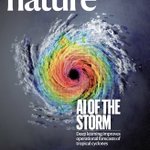
Our paper on the front cover of @Nature last month evaluated WN-C against the leading physics models across more than 200 tropical cyclones globally from 2023-2025. We found that WN-C achieves ~1 day of additional useful lead time for cyclone track and intensity (an advance that typically took a decade to achieve). Getting both track and intensity right proved crucial for predicting the true threat of Isaias, and though this was just N=1 tropical cyclone, it’s great to see our breakthrough helping to protect lives and livelihoods in an operational setting.
Read the paper here: nature.com/articles/s41586-0…


Last week, Hurricane Isaias made landfall in the Florida Panhandle. Our thoughts are with everyone affected and with the recovery efforts still underway. Earlier and more accurate forecasting can help protect communities by giving them more time to prepare, and we are grateful that Google’s WeatherNext model was able to assist the @NWSNHC 's expert forecasters.
Based on initial evaluations, here's how our model supported the response to #Isaias:
- Tracking the Hurricane’s Path: WeatherNext was the most accurate model on the storm’s track. While traditional physics models predicted landfall closer to New Orleans, WeatherNext correctly predicted a path further east. This allowed NHC forecasters to highlight the potential for wind and storm surge impacts in the Florida Panhandle from their very first forecast.
- More Time to Prepare: Up to three days before landfall, our model consistently predicted its eventual location in the Florida Panhandle to within 60 km or less, supporting the NHC as they honed in on a track toward the Florida Panhandle and issued hurricane watches and warnings to give officials in Florida, Alabama, and Mississippi more time to prepare.
- Early Indications about Intensity: Early on, WeatherNext accurately predicted the intensification to a major hurricane. Alongside the regional hurricane models HWRF and HMON, WeatherNext’s intensity forecasts helped NHC forecasters to predict that the Isaias would approach the coast as a category 2 hurricane from the very first advisory.
Giving communities more time and more accurate warnings is critical for protecting lives and livelihoods. While model performance varies from storm to storm, Isaias reflects our broader findings. In our recent @Nature paper co-authored with NHC forecasters, evaluating 200+ global tropical cyclones, we found our model provides ~1 day of additional lead time for both track and intensity.
It’s been an honor for the @GoogleDeepMind and @GoogleResearch teams to work alongside NHC forecasters. By combining AI, physics models, satellite data, and the crucial expertise of meteorologists, we're excited to keep pushing the boundaries of forecasting to help protect communities.
Tom Andersson retweeted

What a blessing this Google DeepMind team is. Physics is physics, but this is a step above and together have created a new baseline in tropical weather forecasting for track and intensity.

Very glad our work on WeatherNext Cyclones (WN-C) at @GoogleDeepMind and @GoogleResearch proved useful for forecasting Hurricane Isaias. We were also pleased to see WN-C’s 1,000 member ensemble being used by meteorologists to help assess the full range of possibilities for Isaias’s track and intensity. Such large ensembles are one of the benefits of ML weather models, which are more efficient than traditional physics models.
There was debate among meteorologists whether wind shear and dry air would prevent Isaias from rapidly intensifying. WN-C predicted a more easterly path away from these weakening factors, with a >50% chance of a major hurricane from Oct 6th onwards, which steadily grew in confidence until Isaias eventually did reach Category 3 status three days later on Oct 9th, shortly before landfall.
Our paper on the front cover of @Nature last month evaluated WN-C against the leading physics models across more than 200 tropical cyclones globally from 2023-2025. We found that WN-C achieves ~1 day of additional useful lead time for cyclone track and intensity (an advance that typically took a decade to achieve). Getting both track and intensity right proved crucial for predicting the true threat of Isaias, and though this was just N=1 tropical cyclone, it’s great to see our breakthrough helping to protect lives and livelihoods in an operational setting.
Read the paper here: nature.com/articles/s41586-0…
It was great to speak with @bryannorcrosstv live on @foxweather about our work on AI weather forecasting at @GoogleDeepMind: youtube.com/live/yyxr-7CFKt8…
We discuss the evolution of AI weather models, our breakthrough in tropical cyclone forecasting, our partnerships with the public sector, Google Weather Lab, scaling forecast ensembles up to 1000 members, learning from observations, and more. Bryan's a legend of weather TV, so this was fun!

Tom Andersson retweeted

LIVE PODCAST TODAY AT 4:00 PM ET. Join me here this afternoon along with Google DeepMind research scientist @tom_r_andersson. We’ll talk about the success of the Google forecasts over the past two seasons, how the model works, and any questions you have. Watch here or on YouTube, Facebook, TikTok, Instagram, or LinkedIn.

Our team just released WeatherNext 3, the best global weather model currently available (benchmark: owb.brightband.com).
WN3's high resolution, hourly forecasts are more useful than ever. You can access them anywhere on Earth via Weather Lab: deepmind.google.com/science/…


WeatherNext 3 is a major breakthrough in how we forecast global weather. ⛅
Developed with @GoogleResearch, the model learns directly from real-world, real-time observations to give more localized highly accurate predictions faster. 🧵
Blog post: blog.google/innovation-and-a…
Paper: storage.googleapis.com/deepm…

By popular demand, we've updated our interactive Weather Lab platform to show WeatherNext 2 ensemble mean gridded forecasts alongside our tropical cyclone predictions, including point forecasts for: temp, precip, wind speed, and sea level pressure: deepmind.google.com/science/…
We're announcing a major update to Weather Lab, our interactive website for sharing Google’s AI weather models from @GoogleDeepMind and @GoogleResearch: deepmind.google.com/science/…
cc weather communicators I enjoy following: @AndyHazelton @RyanWeather @burgwx @MatthewCappucci @TropicalTidbits @tropicalupdate @Brady_Wx @WeatherProf @NbergWX @FloridaTropics1 @IPTCWCDirector @Weathernerds @iCyclone @MichaelRLowry @WeathermanAAA_ @STY1330 @EFisherWX @mattlanza
I hope this makes our @GoogleDeepMind & @GoogleResearch AI weather models even more accessible and useful, and we'd love to hear your feedback, either direct to [email protected] or through the site's feedback button in the upper right!
I'm looking forward to seeing how our models perform this 2026 NH cyclone season. It was great to see the uptake of 'FNv3' by the community in 2025, particularly WeatherNext helping @NHC_Atlantic predict Hurricane Melissa's historic landfall in Jamaica: deepmind.google/blog/how-wea…

Tom Andersson retweeted
We rely on accurate weather predictions for critical decisions - from supply chains to energy grids to crop planning. AI is transforming how we forecast weather.
Thrilled to share WeatherNext 2 - our latest work in groundbreaking forecasting technology!
Learn more: blog.google/technology/googl…

Tom Andersson retweeted

Technological innovation can be a form of participation in the divine act of creation. It carries an ethical and spiritual weight, for every design choice expresses a vision of humanity. The Church therefore calls all builders of #AI to cultivate moral discernment as a fundamental part of their work—to develop systems that reflect justice, solidarity, and a genuine reverence for life.
Tom Andersson retweeted
Today we’re thrilled to announce that real-time and historical AI-based weather forecasts from @Google’s WeatherNext suite of models are now available on Earth Engine and BigQuery. Anyone can access and use these data for research, analysis and operational decision making, which we hope will help accelerate research and development in the weather and climate community.
You can check out the AI-powered forecasts here: deepmind.google/technologies…

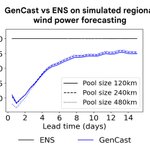
GenCast uses diffusion to generate multiple 15-day forecast trajectories for the atmosphere. It assigns more accurate probabilities to possible weather scenarios than the SoTA physics-based ensemble system from ECMWF, across a 2019 evaluation period.
Like its predecessor (GraphCast), the weights & code of GenCast have been made publicly available: github.com/google-deepmind/g…
We’re looking forward to seeing how the community builds on this!

It's been an honour to work on this study led by @IlanPrice with such a talented team✨: Alvaro Sanchez-Gonzalez, @FerranAlet, @andrew_elkadi, @dominic_masters, @TimoEwalds, Jacklynn Stott, @Shakir_za, @PeterWBattaglia, Remi Lam, & Matthew Willson