

Orbit simulations of planets, comets, asteroids, spacecraft, and other interesting stuff. Amateur astronomer. BA: Physics & Astronomy, SFSU.
San Francisco
Joined April 2010
- Tweets5.6K
- Following3K
- Followers20K
- Likes8.9K


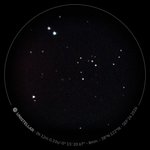

A new Dwarf Planet? Meet 2026 ED138, recently discovered by the Vera C. Rubin Observatory @VRubinObs.
This Trans-Neptunian Object (TNO) is estimated to be 600–1,500 km across. 🔭 #astro
Tony Dunn retweeted

Because NASA is targeting the south pole of the moon the astronauts landing there are going to see the Earth 'upside down'.


I recreated the two possible planets orbiting TIC 4206066, using the predicted November 2026 transit times published by @p_rabtsevich.
Thanks @Sharkyl for the heads-up!
Neither planet is confirmed yet. NASA's TESS will put the predictions to the test in November. #astro 🔭

I think @MarvabluesF1 is under the first orbit at 13:15 UTC

Tomorrow night, ESA's JUICE spacecraft will make a close pass by Neptune as seen from the U.S.—and along a narrow path across North America, it will transit directly across Neptune.
JUICE should be around mag 12–13. Here's what the encounter will look like from different cities.

A view of Earth from JUICE.
On Sept 27/28 ESA's JUICE mission will pass Earth for a gravity assist on its way to Jupiter. It may be bright enough for astrophotographers worldwide.
Before close approach it will pass through Earth's shadow. JUICE will study Jupiter's icy moons.

The camera positions itself at a fixed distance along the asteroid-Earth line, with the Asteroid being in the middle, and the camera focused on Earth.
Tony Dunn retweeted

Roman telescope on its way to Sun-Earth L2 orbit

Achievement unlocked!
Reward: More years of fuel!
We have completed Roman's first course correction so accurately that it conserved years of fuel for the mission!
Learn more: go.nasa.gov/46qdvRj

