

Trace Alliance is the @origin_trail ecosystem partnership hub. Building partnerships through knowledge. Openly. #Inclusivity
Joined September 2018
- Tweets17.9K
- Following448
- Followers1.3K
- Likes36.8K




Trace Alliance retweeted

Five minutes on a Mac.
✅ Protection live from one command.
✅ Verified against @origin_trail's verified threat graph.
Try it today 👉 curl -fsSL blackbox.umanitek.ai | bash
#AISecurity #Blackbox
nitter.cf/umanitek/status/210778…

New article: Part 1 of a series by @CredibleCrypto, our first product ambassador.
He covers how Guardian, TrueSeal and Guardian Blackbox fight the dark side of AI, why every result is anchored on the @origin_trail DKG, and where $TRAC fits in.
Read the full article on our newsroom 👇
umanitek.ai/newsroom/someone…

Trace Alliance retweeted

⚕️Proud to lead the Decentralised Knowledge Graph (DKG) implementation for @AURORAI_project.
Health data is scattered and connecting it is hard. Making it verifiable, with clear provenance and data owners in control, is what we do.
Built on @origin_trail, the DKG will let partners share securely across borders for better pandemic preparedness. Without a central data lake.
Data stays with its owners. Trust comes from the source.

Health data is often scattered across hospitals, research institutions and public health systems. Connecting it is one challenge. Knowing where it came from and who controls it is another. Our partner @TraceLabsHQ develops technology to make data verifiable and trustworthy ⬇️

Trace Alliance retweeted

Health data is often scattered across hospitals, research institutions and public health systems. Connecting it is one challenge. Knowing where it came from and who controls it is another. Our partner @TraceLabsHQ develops technology to make data verifiable and trustworthy ⬇️
Trace Alliance retweeted

This is why $TRAC is so interesting. Combining AI with verifiable knowledge graphs could solve one of AI's biggest weaknesses: hallucinations and unreliable information. AI needs more than intelligence; it needs reliable data, traceability and verifiable answers. That's where decentralized knowledge infrastructure could become extremely valuable.

🧠 Two sides of the brain. One giant leap for AI
With Decentralized Knowledge Graph (DKG), neuro-symbolic AI unlocks answers backed by sources, insights across siloed data and decisions checked against rules.
@BranaRakic explains:
Trace Alliance retweeted

Time to boost up the defences of your AI systems with collective immunity!
Great showcase by @DrevZiga

The @FBI warns: AI-driven intrusions can reach privileged access in under three hours. State-backed actors and cybercriminals are weaponising autonomous tools.
Now imagine your own 24/7 AI red team finding the weaknesses first driving continuous assurance against cyber threats.
Probing your systems, checking updates and helping you fix vulnerabilities before attackers exploit them, with evidence that the fixes work. That’s the continuous assurance vision we’re exploring with our Network Operating System (nOS) at @TraceLabsHQ.
This 90-second video demonstrates the approach using OpenSSL software that helps secure internet communications.
Six AI agents work across connected Decentralized Knowledge Graph (DKG) nodes, with @umanitek #Blackbox agent coordinating specialist assessments, reviewing evidence and recovering failed workflows.
Crucially, @origin_trail DKG provides the knowledge foundation. Context Graphs connect code, updates, dependencies and findings, giving agents traceable context for their assessments. That provenance matters: security teams need to understand which version was tested, what evidence supports a finding and why a decision changed after a retest.
Graph Computer executes the workflows.
Through nOS, you can follow the code context, specialist probes, recommendations and retests through to verified closure of the tested checks. The map shows the participants and their workflows; agent conversations make their findings and proposed actions accessible.
Update → probe → recommend → retest → verify.
If your business needs security assurance that never clocks off, let’s talk.
Explore how an autonomous red team could continuously test your defences, surface vulnerabilities and verify remediation, giving your organisation around-the-clock validation backed by traceable evidence.
Trace Alliance retweeted

AI-driven defenses right here.
What stops a bad guy with AI is a good guy with an even better AI.
The @FBI warns: AI-driven intrusions can reach privileged access in under three hours. State-backed actors and cybercriminals are weaponising autonomous tools.
Now imagine your own 24/7 AI red team finding the weaknesses first driving continuous assurance against cyber threats.
Probing your systems, checking updates and helping you fix vulnerabilities before attackers exploit them, with evidence that the fixes work. That’s the continuous assurance vision we’re exploring with our Network Operating System (nOS) at @TraceLabsHQ.
This 90-second video demonstrates the approach using OpenSSL software that helps secure internet communications.
Six AI agents work across connected Decentralized Knowledge Graph (DKG) nodes, with @umanitek #Blackbox agent coordinating specialist assessments, reviewing evidence and recovering failed workflows.
Crucially, @origin_trail DKG provides the knowledge foundation. Context Graphs connect code, updates, dependencies and findings, giving agents traceable context for their assessments. That provenance matters: security teams need to understand which version was tested, what evidence supports a finding and why a decision changed after a retest.
Graph Computer executes the workflows.
Through nOS, you can follow the code context, specialist probes, recommendations and retests through to verified closure of the tested checks. The map shows the participants and their workflows; agent conversations make their findings and proposed actions accessible.
Update → probe → recommend → retest → verify.
If your business needs security assurance that never clocks off, let’s talk.
Explore how an autonomous red team could continuously test your defences, surface vulnerabilities and verify remediation, giving your organisation around-the-clock validation backed by traceable evidence.
Trace Alliance retweeted

It's pretty obvious agents are the way we'll all need to defend against other, rogue agents
But that's easier said than done - your agents need a ton of context from you, and they need to be managed at scale. This intricate network needs an operating system, which @DrevZiga nicely showcases 👇
Built on @origin_trail
The @FBI warns: AI-driven intrusions can reach privileged access in under three hours. State-backed actors and cybercriminals are weaponising autonomous tools.
Now imagine your own 24/7 AI red team finding the weaknesses first driving continuous assurance against cyber threats.
Probing your systems, checking updates and helping you fix vulnerabilities before attackers exploit them, with evidence that the fixes work. That’s the continuous assurance vision we’re exploring with our Network Operating System (nOS) at @TraceLabsHQ.
This 90-second video demonstrates the approach using OpenSSL software that helps secure internet communications.
Six AI agents work across connected Decentralized Knowledge Graph (DKG) nodes, with @umanitek #Blackbox agent coordinating specialist assessments, reviewing evidence and recovering failed workflows.
Crucially, @origin_trail DKG provides the knowledge foundation. Context Graphs connect code, updates, dependencies and findings, giving agents traceable context for their assessments. That provenance matters: security teams need to understand which version was tested, what evidence supports a finding and why a decision changed after a retest.
Graph Computer executes the workflows.
Through nOS, you can follow the code context, specialist probes, recommendations and retests through to verified closure of the tested checks. The map shows the participants and their workflows; agent conversations make their findings and proposed actions accessible.
Update → probe → recommend → retest → verify.
If your business needs security assurance that never clocks off, let’s talk.
Explore how an autonomous red team could continuously test your defences, surface vulnerabilities and verify remediation, giving your organisation around-the-clock validation backed by traceable evidence.
Trace Alliance retweeted

AI-driven intrusions can reach privileged access in under 3 hours. Defenders need continuous assurance and a 24/7 AI red team grounded in verifiable knowledge.
@DrevZiga shows how @TraceLabsHQ’s nOS brings that vision to life with a fleet of AI agents coordinated by @umanitek Blackbox on Decentralized Knowledge Graph (DKG).
DKG provides the foundation: traceable code context, connected findings and evidence behind decisions. Graph Computer executes the workflows.
Update → probe → recommend → retest → verify.
▶️ Watch the 90-second journey from an update to verified closure of the tested checks.
The @FBI warns: AI-driven intrusions can reach privileged access in under three hours. State-backed actors and cybercriminals are weaponising autonomous tools.
Now imagine your own 24/7 AI red team finding the weaknesses first driving continuous assurance against cyber threats.
Probing your systems, checking updates and helping you fix vulnerabilities before attackers exploit them, with evidence that the fixes work. That’s the continuous assurance vision we’re exploring with our Network Operating System (nOS) at @TraceLabsHQ.
This 90-second video demonstrates the approach using OpenSSL software that helps secure internet communications.
Six AI agents work across connected Decentralized Knowledge Graph (DKG) nodes, with @umanitek #Blackbox agent coordinating specialist assessments, reviewing evidence and recovering failed workflows.
Crucially, @origin_trail DKG provides the knowledge foundation. Context Graphs connect code, updates, dependencies and findings, giving agents traceable context for their assessments. That provenance matters: security teams need to understand which version was tested, what evidence supports a finding and why a decision changed after a retest.
Graph Computer executes the workflows.
Through nOS, you can follow the code context, specialist probes, recommendations and retests through to verified closure of the tested checks. The map shows the participants and their workflows; agent conversations make their findings and proposed actions accessible.
Update → probe → recommend → retest → verify.
If your business needs security assurance that never clocks off, let’s talk.
Explore how an autonomous red team could continuously test your defences, surface vulnerabilities and verify remediation, giving your organisation around-the-clock validation backed by traceable evidence.
Trace Alliance retweeted
The @FBI warns: AI-driven intrusions can reach privileged access in under three hours. State-backed actors and cybercriminals are weaponising autonomous tools.
Now imagine your own 24/7 AI red team finding the weaknesses first driving continuous assurance against cyber threats.
Probing your systems, checking updates and helping you fix vulnerabilities before attackers exploit them, with evidence that the fixes work. That’s the continuous assurance vision we’re exploring with our Network Operating System (nOS) at @TraceLabsHQ.
This 90-second video demonstrates the approach using OpenSSL software that helps secure internet communications.
Six AI agents work across connected Decentralized Knowledge Graph (DKG) nodes, with @umanitek #Blackbox agent coordinating specialist assessments, reviewing evidence and recovering failed workflows.
Crucially, @origin_trail DKG provides the knowledge foundation. Context Graphs connect code, updates, dependencies and findings, giving agents traceable context for their assessments. That provenance matters: security teams need to understand which version was tested, what evidence supports a finding and why a decision changed after a retest.
Graph Computer executes the workflows.
Through nOS, you can follow the code context, specialist probes, recommendations and retests through to verified closure of the tested checks. The map shows the participants and their workflows; agent conversations make their findings and proposed actions accessible.
Update → probe → recommend → retest → verify.
If your business needs security assurance that never clocks off, let’s talk.
Explore how an autonomous red team could continuously test your defences, surface vulnerabilities and verify remediation, giving your organisation around-the-clock validation backed by traceable evidence.
Trace Alliance retweeted
Attackers automated discovery.
Defenders need to automate sharing. ✅
When one Agent #Blackbox catches a threat, every node in the network is warned, signed and recorded on the @origin_trail DKG. Opt-in, privacy-safe: no prompts, no paths, no file contents.
curl -fsSL blackbox.umanitek.ai | bash

Hackers are now using LLMs to continuously scan software updates, spot newly fixed bugs, and build attacks before teams can apply the fix — all without human involvement. That’s according to the latest report from the Google Threat Intelligence Group.
We're helping defenders counter automated threats with Google AI Threat Defense, which combines Gemini and other frontier models to find and fix flaws before attackers can exploit them.
Trace Alliance retweeted
A market economy for neuro-symbolic AI right here, already pushing the boundaries in medical research, manufacturing... on ethereum:0xaa7a9ca87d3694b5755f213b5d04094b8d0f0a6f - k, and also live on @base 👇
nitter.cf/origin_trail/status/21…
Trace Alliance retweeted

Decentralization is the next era
DKG on top 🔥
Last week’s @Microsoft 365 outage showed how a single latent bug in a centralized system can take critical services offline for hours across dozens of countries.
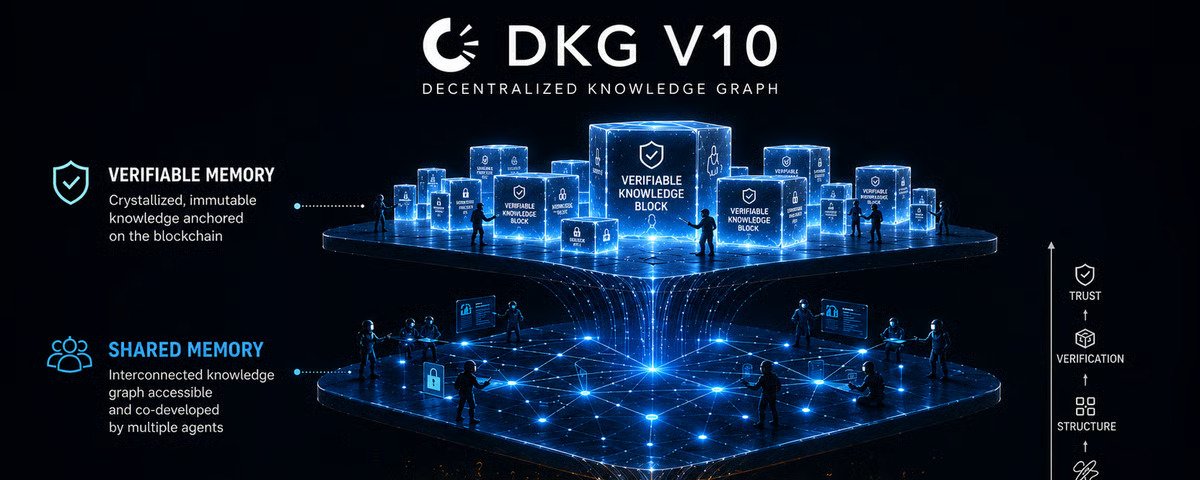
Decentralized Knowledge Graph (DKG) works differently. It has no single point of failure. Context lives across independent nodes, stays owned by those who produce it, and remains available and verifiable even when individual infrastructure has issues.
That’s why continuous assurance for manufacturing, based on cognitive digital twin from @TraceLabsHQ, can keep running: tracing a faulty component lot into finished products the same day, linking every claim to its source, and supporting human decisions without depending on one cloud provider.
Decentralized systems don’t go down. They keep providing services to critical infrastructure around the clock.
Trust the source.
Trace Alliance retweeted
Trading straight from an AI chat.
Huge step.
So who checks what the agent does before it acts? Agent #Blackbox names every command, file and package, checks it against verified threat intelligence on the @origin_trail DKG, then flags or blocks before damage is done.
On your machine, offline, in microseconds.
Install in one command.
curl -fsSL blackbox.umanitek.ai | bash

Trace Alliance retweeted
Your mother's voice. Your boss's face. Neither is proof it's really them.
INTERPOL warns deepfake scams are now targeting ordinary people.
Scammers still need you to act: send money, keep it secret, do it now. That's your red flag.
Read the campaign: interpol.int/News-and-Events…


Trace Alliance retweeted
Unverified data is a liability and DKG is how companies and AI agents prove what’s actually real.
In the future, every business will use a Decentralized Knowledge Graph for verifiable and accurate data.
When factories start thinking as networks, assurance stops waiting for audits.
Product safety checks.
Supplier checks.
Cybersecurity checks.
All assured continuously and autonomously, every claim backed by its source on Decentralized Knowledge Graph.
Take a sneak peek into @TraceLabsHQ' Network Operating System - nOS👇
Trace Alliance retweeted
Last week’s @Microsoft 365 outage showed how a single latent bug in a centralized system can take critical services offline for hours across dozens of countries.
Decentralized Knowledge Graph (DKG) works differently. It has no single point of failure. Context lives across independent nodes, stays owned by those who produce it, and remains available and verifiable even when individual infrastructure has issues.
That’s why continuous assurance for manufacturing, based on cognitive digital twin from @TraceLabsHQ, can keep running: tracing a faulty component lot into finished products the same day, linking every claim to its source, and supporting human decisions without depending on one cloud provider.
Decentralized systems don’t go down. They keep providing services to critical infrastructure around the clock.
Trust the source.

What happens when factories start thinking as a network?
A faulty part stops being a mystery. It becomes a question with an answer the same day.
Introducing continuous assurance for manufacturing, built on a cognitive digital twin on @origin_trail Decentralized Knowledge Graph (DKG).
Most quality and safety assurance still happens at audits: sampled evidence and a scramble when something goes wrong. We think it should run all the time.
In this demo, ACME Robotics has two plants. One builds control boards; the other builds robot arms. Each keeps its own private context graphs on its own node. A shared graph links every board to the robot it ended up in. Together they form a cognitive digital twin of the factory.
Then an alarm: motor-driver boards start failing a warm test.
→ The twin agents trace it to one capacitor lot that skipped inspection, and follow it into 180 robots, 18 of them already at a customer.
→ The AI Assurer checks the facts against safety and quality requirements and flags a safety issue in the robots' safe-stop circuit. Every claim is linked to its source.
→ Agent nOS proposes a targeted plan: hold, test, visit the 18 delivered robots, rebuild only what fails.
→ People decide. Quality, safety, planning and compliance sign off, and every decision is kept with its evidence.
→ The customer gets a straight answer, without seeing factory data.
Alarm to a signed-off safety decision in the same day. No blanket recall. Nothing guessed: uncertain links stay marked uncertain.
@origin_trail keeps the knowledge verifiable and owned by those who produce it.
*ACME Robotics is a fictional manufacturer; the scenario is simulated in our Network Operating System - nOS.
Trace Alliance retweeted

Two sides of the brain, one AI.
@origin_trail on neuro-symbolic AI with the Decentralized Knowledge Graph: answers backed by sources, insights across siloed data, decisions checked against rules.
$TRAC
nitter.cf/origin_trail/status/21…
🧠 Two sides of the brain. One giant leap for AI
With Decentralized Knowledge Graph (DKG), neuro-symbolic AI unlocks answers backed by sources, insights across siloed data and decisions checked against rules.
@BranaRakic explains:
Trace Alliance retweeted
1,000,000+ threats published ✅
Agent #Blackbox's verified threat graph just passed one million known threats anchored the @origin_trail Decentralized Knowledge Graph, and it's still growing.
The more threats known. The more attacks stopped.
The more it knows, the safer your agent.
nitter.cf/umanitek/status/210778…
New article: Part 1 of a series by @CredibleCrypto, our first product ambassador.
He covers how Guardian, TrueSeal and Guardian Blackbox fight the dark side of AI, why every result is anchored on the @origin_trail DKG, and where $TRAC fits in.
Read the full article on our newsroom 👇
umanitek.ai/newsroom/someone…
Trace Alliance retweeted
Medicines and science run on data someone has to trust: trial results, lab records, batch histories.
@origin_trail links each claim to its source on the DKG, so researchers and regulators can check where it came from.
ethereum:0xaa7a9ca87d3694b5755f213b5d04094b8d0f0a6f nitter.cf/origin_trail/status/21…
→ Global supply chains, on TRAC(k)
→ AI safety, on TRAC(k)
→ Medicines and science, on TRAC(k)
→ Rail and buildings, on TRAC(k)
→ Manufacturing, on TRAC(k)
→ Food, on TRAC(k)
→ Education, on TRAC(k)
→ International sports, on TRAC(k)
Every one of these runs on data that passes between people and organisations who have never met: suppliers and buyers, labs and regulators, AI models and the people relying on their answers.
When that data carries its owner, its origin and proof that it hasn't been changed, everything built on it stays on $TRAC(k).
That is what the OriginTrail Decentralized Knowledge Graph (DKG) is for.
Trust the source.
👉 origintrail.io/solutions