
Essays and commentary about the final frontier
Joined October 2007
- Tweets3.7K
- Following0
- Followers4.6K
- Likes0



More countries are developing capabilities to track and monitor spacecraft and debris in orbit to ensure safe operations of their spacecraft. A look at some of those efforts in Southeast Asia. thespacereview.com/article/5…

The Space Force has emphasized the need to rely on automation for the Golden Dome missile defense system. The program has not done enough to describe how that automation, including how it will select targets, will work. thespacereview.com/article/5…

NASA continues to emphasize an ongoing race to the Moon between the US and China. Despite this rhetoric, both countries have delayed lunar lander missions that are precursors for crewed missions. thespacereview.com/article/5…

The space community is grappling with challenges as space activities grow, such as orbital debris and access to space resources. There are lessons space can learn from stewardship, or lack thereof, of the oceans. thespacereview.com/article/5…
The disclosure last month that the US has fielded space control weapons has ignited new debates about what space warfare would look like. Strategies should focus not on a preemptive strike but instead staying in a war of attrition. thespacereview.com/article/5…

There is renewed interest in mining asteroids or the Moon for resources ranging from water ice to precious metals. Nine reasons why resource extraction is becoming more feasible: thespacereview.com/article/5…

The last of the Defense Support Program satellites were recently retired by the Space Force, but the program still has many unanswered questions. That includes mysteries created by newly discovered photos of one DSP satellite. thespacereview.com/article/5…
More than 30 years ago, a shuttle orbiter had a fleeting encounter with a relic of the original Moon race. One person recalls the experience as witnessed from Mission Control. thespacereview.com/article/5…

An airbase outside Moscow was the Soviet equivalent of Edwards Air Force Base, hosting experimental aircraft and even spacecraft. A look at how US satellite imagery kept track of the activities at Ramenskoye. thespacereview.com/article/5…

After some contracting twists and turns, NASA released the final request for proposals earlier this month for commercial space stations. A report on the leading contenders and the challenges they face. thespacereview.com/article/5…

Russian companies have turned to China for radar-imaging satellites and imagery from such satellites. A report finds more examples of Russia’s dependence on China in this field. thespacereview.com/article/5…

Over the summer, the White House released a new space transportation policy while other agencies released other, related RFIs and documents. A group of lawyers examine those developments and their implications for the US space industry. thespacereview.com/article/5…

The National Museum of the United States Air Force opened a military space gallery a decade ago, raising hopes that the museum will pay more attention to space. Those hopes may be fading. thespacereview.com/article/5…

Space has long been associated with the cutting edge, and technologies developed for engineering purposes find their way into the designs of consumer products. thespacereview.com/article/5…

Concerns about the growth of orbital debris have led to the development of best practices to mitigate that growth. Those approaches alone are insufficient when considering orbital sustainability. thespacereview.com/article/5…

The International Space Station is heading towards a retirement as soon as the end of the decade. What are the effects of ending a decades-long experiment in international space cooperation? thespacereview.com/article/5…

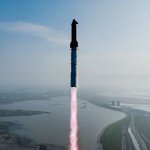
As SpaceX’s Starship begins orbital launches, the space industry debates the impact the vehicle will have. That will depend in part on how effectively the industry can use it. thespacereview.com/article/5…

The US military’s announcement last month that it has deployed space control weapons has raised new concerns about conflicts that could litter orbits with debris, prompting reassessments of how to deal with the problem. thespacereview.com/article/5…

Reports in the late 1950s claimed that the Soviet Union was developing a nuclear-powered bomber. The bomber wasn’t nuclear powered, but it was a rare design whose whereabouts were closely tracked by spy satellites. thespacereview.com/article/5…

Russian companies have claimed to be operating radar-imaging satellites to fill gaps in limited Russian government systems. An examination of the links between these companies and China’s commercial space industry. thespacereview.com/article/5…
