

Web3 Enthusiast | Alpha content |DMs open for collabs
Joined September 2013
- Tweets25.5K
- Following8.9K
- Followers12.9K
- Likes8.1K







𝗕𝗔𝗜𝗰𝗹𝗮𝘄 𝗜𝘀 𝗧𝘂𝗿𝗻𝗶𝗻𝗴 𝗔𝗜 𝗔𝗴𝗲𝗻𝘁𝘀 𝗜𝗻𝘁𝗼 𝗥𝗲𝗮𝗹 𝗢𝗻-𝗖𝗵𝗮𝗶𝗻 𝗢𝗽𝗲𝗿𝗮𝘁𝗼𝗿𝘀
The next phase of AI in Web3 is no longer just about generating insights.
It’s about execution.
BAIclaw is pushing that transition forward with the launch of the “Justin Sun Perspective Skill” alongside a broader Web3 execution toolkit designed for AI Agents.
𝗪𝗵𝗮𝘁 𝗺𝗮𝗸𝗲𝘀 𝗶𝘁 𝘂𝗻𝗶𝗾𝘂𝗲
The “Justin Sun’s Brain” skill is built from a massive knowledge base including:
• 21,829 tweets
• autobiography content
• 155 audio courses
• years of market insights and strategic frameworks
The result is an AI Agent layer designed to operate with more structured strategic thinking rather than isolated prompts.
𝗙𝘂𝗹𝗹 𝗪𝗲𝗯𝟯 𝗲𝘅𝗲𝗰𝘂𝘁𝗶𝗼𝗻 𝗳𝗹𝗼𝘄
BAIclaw connects multiple layers into one operational environment:
→ HTX integration
→ Binance trading access
→ Surf on-chain data
→ market analysis tools
→ strategy execution capabilities
This creates a more complete workflow where AI Agents can move from:
analysis → decision-making → execution
inside one ecosystem.
𝗪𝗵𝗮𝘁 𝘁𝗵𝗶𝘀 𝗰𝗵𝗮𝗻𝗴𝗲𝘀
AI Agents are evolving beyond passive assistants.
They are increasingly becoming systems capable of:
• interpreting market conditions
• coordinating strategies
• interacting with on-chain infrastructure
• executing actions with reduced friction
And importantly, BAIclaw lowers the barrier to entry through a visual no-code interface, making advanced agent workflows more accessible.
The direction is becoming clearer across the industry:
The future of AI in Web3 is not just intelligence.
It’s autonomous execution connected directly to financial infrastructure.
👉 baiclaw.b.ai
@BAI_AGI @justinsuntron
#TRONEcoStar
🤖 Made with AI
𝗕.𝗔𝗜 𝗠𝗮𝗸𝗲𝘀 𝗠𝘂𝗹𝘁𝗶𝗽𝗹𝗲 𝗔𝗜 𝗠𝗼𝗱𝗲𝗹𝘀 𝗠𝗼𝗿𝗲 𝗔𝗰𝗰𝗲𝘀𝘀𝗶𝗯𝗹𝗲 𝗪𝗶𝘁𝗵 𝗡𝗲𝘄 𝗗𝗶𝘀𝗰𝗼𝘂𝗻𝘁𝘀
AI development is no longer about relying on a single model.
A coding application needs strong programming capabilities.
An AI agent needs reasoning and the ability to handle complex tasks.
An image-generation platform needs models built for visual creation.
Different applications require different capabilities.
But accessing these models can become expensive, especially for developers running multiple API operations.
That is where @BAI_AGI becomes interesting.
● 𝗪𝗵𝗲𝗿𝗲 𝗧𝗵𝗲 𝗠𝗼𝗱𝗲𝗹 𝗙𝗹𝗲𝘅𝗶𝗯𝗶𝗹𝗶𝘁𝘆 𝗖𝗼𝗺𝗲𝘀 𝗙𝗿𝗼𝗺
B.AI brings different AI models together through its API platform, giving developers access to multiple capabilities.
Its latest lineup includes:
→ DeepSeek-V4.1-Flash
→ HY4 / HY4-Flash
→ GLM-5.3-Flash
→ Qwen3.8-Flash
→ MiniMax-H3-Image
→ Qwen4-Max
This allows developers to explore different models based on their specific workloads rather than depending on one model for everything.
● 𝗛𝗼𝘄 𝗕.𝗔𝗜 𝗜𝘀 𝗥𝗲𝗱𝘂𝗰𝗶𝗻𝗴 𝗔𝗜 𝗔𝗰𝗰𝗲𝘀𝘀 𝗖𝗼𝘀𝘁𝘀
The latest discount update makes the platform particularly interesting.
DeepSeek-V4.1-Flash has received an increased discount, moving from 40% to 50% OFF.
Its announced specifications include:
→ 763 billion parameters
→ 1 million-token context window
→ Interleaved text and image inputs
→ Optimization for DeepSeek Harness
The model is positioned for demanding development tasks, including game development, 3D modelling, code generation and multi-step agent operations.
Other promotional discounts include:
→ HY4 / HY4-Flash: 50% OFF
→ GLM-5.3-Flash: 40% OFF
→ Qwen3.8-Flash: 20% OFF
→ MiniMax-H3-Image / Image-Highspeed: 20% OFF
→ Qwen4-Max: 10% OFF
The HY4 promotion runs until December 31 at 23:59 SGT.
● 𝗪𝗵𝗲𝗿𝗲 𝗧𝗵𝗶𝘀 𝗠𝗮𝘁𝘁𝗲𝗿𝘀
Access to different AI models at reduced prices can benefit several development areas, including:
🔹 Software development and coding
🔹 Complex reasoning tasks
🔹 AI agent workflows
🔹 Game and 3D development
🔹 Image generation
🔹 Automated applications
🔹 AI-powered services
The important advantage is flexibility.
Developers can experiment with different models and evaluate which ones deliver the best results for their applications.
● 𝗧𝗵𝗲 𝗖𝗼𝘀𝘁 𝗢𝗳 𝗔𝗜 𝗗𝗲𝘃𝗲𝗹𝗼𝗽𝗺𝗲𝗻𝘁
When API usage increases, even small differences in pricing can influence development budgets.
A 50% discount on a model's API pricing can make experimentation more affordable, while discounts across other models create more opportunities to compare capabilities.
However, cheaper access alone does not guarantee better performance.
Output quality, response speed and token consumption still matter when choosing the right model.
● 𝗧𝗵𝗲 𝗥𝗲𝗮𝗹 𝗩𝗮𝗹𝘂𝗲 𝗢𝗳 𝗕.𝗔𝗜
AI models provide the intelligence.
Developers provide the applications and workflows.
But access to capable models at sustainable costs can influence how quickly those applications grow.
B.AI's multi-model approach and latest discounts offer developers more room to explore coding, reasoning, image generation and agent development.
As AI adoption expands, flexible access to different models could become just as important as the models themselves.
Because building with AI should not be limited by access to only one model or one provider.
And the ability to choose the right model at the right cost is becoming an important part of AI development.
🔗 Get your API key: chat.b.ai/key
@BAI_AGI @justinsuntron
#TRONEcoStar

1
94
IMAGINE an AI agent that doesn't just answer questions but can interact with blockchain applications, make payments and execute on-chain tasks.
🤔 What happens when AI moves beyond generating answers and starts participating in the Web3 economy?
This is where AINFT becomes interesting.
Many people focus on its $NFT token, but I think the bigger story is how AINFT is exploring the connection between AI services and TRON.
1. THE REAL CHALLENGE WITH AI
AI models can analyse information, write code and make recommendations. But intelligence alone cannot execute blockchain transactions.
An AI agent needs access to blockchain data, external tools, authentication and a secure way to authorize transactions.
That is the difference between an AI that recommends a token swap and one that can actually interact with the tools required to perform it.
2. WHAT AINFT IS BUILDING TOWARDS
AINFT's AI infrastructure introduces several interesting components:
• MCP Server: Connects AI agents to external tools.
• Skills: Give agents specific capabilities and instructions.
• x402: Supports payment-based interactions between services.
• 8004: Introduces an on-chain identity and reputation framework for AI agents.
These components point towards something bigger: AI agents that can access services, establish identity and interact economically with other systems.
3. THE DETAIL MANY PEOPLE OVERLOOK
Connecting AI to blockchain tools does not automatically make it decentralized or secure.
Three things still matter:
1. Intelligence — understanding the user's request.
2. Connectivity — accessing the right tools.
3. Execution — completing authorized transactions safely.
Private-key security, permissions and transaction verification remain essential.
4. WHERE DOES $NFT FIT?
AINFT is the broader ecosystem, while $NFT is its associated cryptocurrency token.
However, the growth of AI products does not automatically translate into token demand.
The real question is whether actual product usage creates meaningful utility for the token.
MY BIGGER PICTURE
The future of AI and blockchain may not simply be about smarter chatbots.
It could be about intelligent agents that discover services, communicate, make payments and interact with blockchain applications.
AINFT is worth watching within TRON, but developer adoption, practical utility and sustainable activity will matter more than the narrative.
AI provides the intelligence. Blockchain provides the settlement layer. The infrastructure connecting both is where the real opportunity lies.
Official website: ainft.com
#TRONEcoStar @justinsuntron @AINFTcom

49
Johnelom retweeted

🤝 SunSwap × @BitgetWallet: Strategic Integration Announcement
We’re pleased to welcome @BitgetWallet, a leading global self-custodial crypto wallet, as our new Strategic Integration Partner!
Through this integration, Bitget Wallet users can enjoy smoother swaps on TRON with optimized gas consumption and reduced gas costs.
With its upgraded router, Bitget Wallet compares available liquidity and quotes across multiple sources, including SunSwap, prioritizing routes that deliver higher net amounts and helping reduce overall transaction costs.
By bringing SunSwap’s liquidity into more everyday crypto experiences, we’re making DeFi on TRON more accessible and cost-efficient for users worldwide. ☀️

𝐓𝐑𝐎𝐍'𝐒 𝐀𝐂𝐓𝐈𝐕𝐄 𝐀𝐂𝐂𝐎𝐔𝐍𝐓𝐒: 𝐖𝐇𝐀𝐓 𝐓𝐇𝐄 𝐍𝐔𝐌𝐁𝐄𝐑 𝐃𝐎𝐄𝐒𝐍'𝐓 𝐓𝐄𝐋𝐋 𝐘𝐎𝐔
A blockchain can process millions of transactions and still leave an important question unanswered:
How much of that activity represents actual economic usage?
This is an interesting distinction when examining TRON's network activity.
TRONSCAN reported an average of 4.65 million daily active accounts over a 30-day period in November.
That's a significant level of network activity.
But there's a technical detail worth understanding before interpreting that figure as an adoption metric.
𝐀𝐂𝐓𝐈𝐕𝐄 𝐀𝐂𝐂𝐎𝐔𝐍𝐓𝐒 𝐀𝐑𝐄 𝐍𝐎𝐓 𝐓𝐇𝐄 𝐒𝐀𝐌𝐄 𝐀𝐒 𝐔𝐍𝐈𝐐𝐔𝐄 𝐔𝐒𝐄𝐑𝐒
TRONSCAN's definition of active accounts includes accounts with transfer records during the selected period.
Importantly, this includes both wallet accounts and smart contract accounts.
That distinction changes how the metric should be interpreted.
An active account does not necessarily represent one individual.
A single person can control multiple wallets, while smart contracts can also generate network activity.
Therefore, 4.65 million active accounts should be understood as a measure of account-level activity, not a verified count of individual users.
This doesn't make the metric less valuable.
It makes understanding its composition more important.
➞ 𝐓𝐇𝐄 𝐃𝐈𝐅𝐅𝐄𝐑𝐄𝐍𝐂𝐄 𝐁𝐄𝐓𝐖𝐄𝐄𝐍 𝐍𝐄𝐓𝐖𝐎𝐑𝐊 𝐀𝐂𝐓𝐈𝐕𝐈𝐓𝐘 𝐀𝐍𝐃 𝐅𝐈𝐍𝐀𝐍𝐂𝐈𝐀𝐋 𝐔𝐒𝐀𝐆𝐄
Here's where the analysis becomes more interesting.
TRONSCAN's latest USDT statistics provide another perspective.
Over the past 30 days, the network recorded:
➞ 1.09M average daily accounts transferring USDT.
➞ $25.77B average daily USDT transfer volume.
➞ 5.20% growth in average daily transfer volume compared with the preceding 30 days.
➞ 5.10% growth in average daily USDT transfer accounts compared with the preceding 30 days.
These figures measure a more specific part of network activity: accounts interacting with USDT.
The distinction is important.
General active accounts show activity across the network, while USDT transfer accounts help us examine participation in one of TRON's most important financial use cases.
They are different metrics, measuring different things.
➞ 𝐖𝐇𝐘 𝐓𝐇𝐈𝐒 𝐃𝐈𝐒𝐓𝐈𝐍𝐂𝐓𝐈𝐎𝐍 𝐌𝐀𝐓𝐓𝐄𝐑𝐒
For a blockchain to become useful financial infrastructure, activity needs to translate into practical applications.
Consider what sustained USDT activity can support:
➞ Cross-border value transfers.
➞ Stablecoin payments and settlements.
➞ Exchange deposits and withdrawals.
➞ DeFi liquidity and financial applications.
➞ Digital dollar access across different markets.
However, transfer volume alone doesn't tell us how many independent payments occurred, how much represents recurring transfers, or how much economic value ultimately reached end users.
That is why combining account activity, transfer frequency, volume and application-level data provides a more meaningful picture.
➞ 𝐓𝐇𝐄 𝐁𝐈𝐆𝐆𝐄𝐑 𝐐𝐔𝐄𝐒𝐓𝐈𝐎𝐍 𝐅𝐎𝐑 𝐓𝐑𝐎𝐍
I think the more interesting question is not simply whether TRON can maintain millions of active accounts.
It's whether the network can continue converting that activity into sustainable financial utility.
Are more users relying on TRON for payments?
Are stablecoin transfers becoming recurring financial activity?
Are DeFi applications attracting consistent participation?
And how much of the network's activity comes from organic economic demand?
These are the questions that help distinguish network activity from deeper adoption.
A large active-account figure tells us that a network is being used. Understanding what those accounts are doing tells us much more about why the network matters.
For TRON, that is the level of analysis worth paying attention to.
@justinsuntron
#TRONEcoStar

29
𝐔𝐒𝐃𝐃'𝐒 𝐂𝐑𝐎𝐒𝐒-𝐂𝐇𝐀𝐈𝐍 𝐄𝐗𝐏𝐀𝐍𝐒𝐈𝐎𝐍: 𝐖𝐇𝐀𝐓 𝐓𝐇𝐄 𝐋𝐀𝐓𝐄𝐒𝐓 𝐒𝐔𝐏𝐏𝐋𝐘 𝐃𝐀𝐓𝐀 𝐑𝐄𝐕𝐄𝐀𝐋𝐒
Stablecoin markets are constantly evolving.
Supply expands, liquidity shifts, and different blockchain networks compete to attract users, capital, and decentralized financial activity.
But while the broader stablecoin market has recently experienced contraction, USDD is showing a different trend across its supported blockchain networks.
Its circulating supply has recorded positive growth across TRON, Ethereum, and BNB Chain over the past seven days.
This development raises an interesting question about USDD's cross-chain expansion and the distribution of its circulating supply.
Let's examine the numbers.
📊 𝐀 𝟕-𝐃𝐀𝐘 𝐋𝐎𝐎𝐊 𝐀𝐓 𝐔𝐒𝐃𝐃'𝐒 𝐂𝐑𝐎𝐒𝐒-𝐂𝐇𝐀𝐈𝐍 𝐆𝐑𝐎𝐖𝐓𝐇
According to the reported circulating supply data:
➞ TRON: +4.72%
➞ Ethereum: +0.67%
➞ BNB Chain: +68.32%
Three different blockchain environments, all recording positive changes in USDD circulating supply.
But what does this mean for the ecosystem?
➞ 𝐓𝐑𝐎𝐍: 𝐓𝐇𝐄 𝐂𝐎𝐑𝐄 𝐎𝐅 𝐔𝐒𝐃𝐃'𝐒 𝐄𝐂𝐎𝐒𝐘𝐒𝐓𝐄𝐌
TRON recorded a 4.72% increase in USDD circulating supply over the seven-day period.
This is particularly relevant because TRON remains the primary network for USDD's circulating supply.
A growing supply on TRON can support liquidity availability and create opportunities for applications operating within its DeFi ecosystem.
This includes decentralized exchanges, lending protocols, and other financial applications that interact with stablecoins.
➞ 𝐄𝐓𝐇𝐄𝐑𝐄𝐔𝐌: 𝐄𝐗𝐓𝐄𝐍𝐃𝐈𝐍𝐆 𝐂𝐑𝐎𝐒𝐒-𝐂𝐇𝐀𝐈𝐍 𝐏𝐑𝐄𝐒𝐄𝐍𝐂𝐄
Ethereum recorded a 0.67% increase.
Although the percentage is smaller, Ethereum represents another important environment for USDD's availability.
Ethereum's established DeFi infrastructure provides access to different decentralized applications, liquidity venues, and financial protocols.
Maintaining a presence across multiple networks gives stablecoins opportunities to reach different users and application ecosystems.
➞ 𝐁𝐍𝐁 𝐂𝐇𝐀𝐈𝐍: 𝐀 𝐍𝐎𝐓𝐈𝐂𝐄𝐀𝐁𝐋𝐄 𝐏𝐄𝐑𝐂𝐄𝐍𝐓𝐀𝐆𝐄 𝐈𝐍𝐂𝐑𝐄𝐀𝐒𝐄
BNB Chain recorded the largest percentage increase, at 68.32%.
This is certainly the standout figure in the latest data.
However, percentage growth needs context.
A large percentage increase does not necessarily mean the largest amount of new USDD entered a particular network.
The starting circulating supply matters when interpreting these changes.
Nevertheless, the increase highlights an interesting development worth monitoring as USDD expands its presence across different blockchain environments.
➞ 𝐖𝐇𝐘 𝐂𝐑𝐎𝐒𝐒-𝐂𝐇𝐀𝐈𝐍 𝐒𝐔𝐏𝐏𝐋𝐘 𝐌𝐀𝐓𝐓𝐄𝐑𝐒
Stablecoins are becoming an important component of decentralized financial infrastructure.
Their usefulness extends beyond simply maintaining a dollar-denominated value.
They can support:
➞ Cross-chain financial applications.
➞ Decentralized trading and liquidity.
➞ Lending and borrowing markets.
➞ Digital payments and settlements.
➞ Access to different blockchain ecosystems.
For USDD, expanding across multiple networks creates opportunities to participate in different areas of the decentralized economy.
However, circulating supply growth alone does not establish increased transaction activity, user adoption, or deeper liquidity.
Those are additional indicators worth examining.
USDD's cross-chain expansion is worth watching. The real opportunity lies in turning growing supply into sustainable ecosystem utility.
@justinsuntron @trondao
#TRONEcoStar @USDDecentralize

29
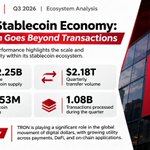
𝐓𝐑𝐎𝐍'𝐒 𝐒𝐓𝐀𝐁𝐋𝐄𝐂𝐎𝐈𝐍 𝐄𝐂𝐎𝐍𝐎𝐌𝐘: 𝐓𝐇𝐄 𝐆𝐑𝐎𝐖𝐓𝐇 𝐆𝐎𝐄𝐒 𝐁𝐄𝐘𝐎𝐍𝐃 𝐓𝐑𝐀𝐍𝐒𝐀𝐂𝐓𝐈𝐎𝐍𝐒
Blockchain adoption is often measured by transaction volume, network activity, and the number of users interacting with a protocol.
But there's another important metric worth examining.
The amount of economic activity happening within the network.
Stablecoins have become an important part of this conversation, connecting blockchain infrastructure with digital payments, decentralized finance, and global value transfer.
TRON's Q3 2026 performance offers an interesting perspective on how this activity is developing.
According to the reported Token Terminal figures:
➞ $92.25B average stablecoin supply.
➞ $2.18T in quarterly stablecoin transfer volume.
➞ 76.53M stablecoin holders.
➞ 1.08B transactions processed during the quarter.
These figures provide a useful starting point for understanding TRON's position in the stablecoin economy.
But what do they actually tell us?
➞ 𝐒𝐓𝐀𝐁𝐋𝐄𝐂𝐎𝐈𝐍 𝐒𝐔𝐏𝐏𝐋𝐘 𝐑𝐄𝐅𝐋𝐄𝐂𝐓𝐒 𝐄𝐂𝐎𝐒𝐘𝐒𝐓𝐄𝐌 𝐏𝐑𝐄𝐒𝐄𝐍𝐂𝐄
The $92.25B average stablecoin supply highlights the scale of stablecoin value represented across the network.
This matters because stablecoins are not simply digital assets held in wallets.
They support several important activities, including:
➞ Digital payments
➞ Cross-border transfers
➞ DeFi liquidity
➞ Trading and settlement
➞ On-chain financial applications
A growing stablecoin economy can create opportunities for different applications to build around the same financial infrastructure.
➞ 𝐓𝐑𝐀𝐍𝐒𝐅𝐄𝐑 𝐕𝐎𝐋𝐔𝐌𝐄 𝐒𝐇𝐎𝐖𝐒 𝐓𝐇𝐄 𝐒𝐂𝐀𝐋𝐄 𝐎𝐅 𝐀𝐂𝐓𝐈𝐕𝐈𝐓𝐘
The reported $2.18T quarterly stablecoin transfer volume highlights the scale of value movement taking place on TRON.
However, transfer volume should be interpreted carefully.
It does not automatically represent unique users, new capital entering the ecosystem, or economic growth of the same magnitude.
The more important question is how much of this activity reflects recurring payments, actual utility, and sustainable demand for blockchain-based financial services.
➞ 𝐔𝐒𝐄𝐑 𝐏𝐀𝐑𝐓𝐈𝐂𝐈𝐏𝐀𝐓𝐈𝐎𝐍 𝐌𝐀𝐓𝐓𝐄𝐑𝐒
With 76.53M reported stablecoin holders, TRON's stablecoin ecosystem demonstrates considerable reach.
But adoption goes beyond wallet numbers.
The real opportunity lies in making blockchain-based financial services accessible, practical, and useful for everyday activities.
This includes payments, remittances, decentralized applications, and financial services.
➞ 𝐓𝐇𝐄 𝐍𝐄𝐗𝐓 𝐎𝐏𝐏𝐎𝐑𝐓𝐔𝐍𝐈𝐓𝐘 𝐈𝐒 𝐃𝐄𝐄𝐏𝐄𝐑 𝐄𝐂𝐎𝐒𝐘𝐒𝐓𝐄𝐌 𝐔𝐓𝐈𝐋𝐈𝐓𝐘
Strong stablecoin activity creates an important foundation, but sustaining that growth requires more than transaction volume.
TRON's next phase of development can be examined through several areas:
➞ Deeper DeFi adoption and liquidity.
➞ More practical stablecoin payment applications.
➞ Improved access to decentralized financial services.
➞ Greater integration with businesses and payment infrastructure.
➞ Sustainable demand for on-chain applications.
These areas will help determine how effectively network activity translates into broader ecosystem utility.
The bigger picture is that stablecoins are becoming an important connection between traditional financial activity and blockchain infrastructure.
TRON's reported figures demonstrate the scale of its participation in this developing market.
But long-term adoption will depend on what people and businesses can actually build, access, and accomplish on the network.
Moving billions in digital value is significant. Building an ecosystem that gives that value lasting utility is the bigger challenge.
@trondao @justinsuntron
#TRONEcoStar

38
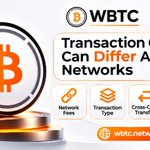
𝐖𝐇𝐘 𝐃𝐎𝐄𝐒 𝐖𝐁𝐓𝐂 𝐇𝐀𝐕𝐄 𝐃𝐈𝐅𝐅𝐄𝐑𝐄𝐍𝐓 𝐓𝐑𝐀𝐍𝐒𝐀𝐂𝐓𝐈𝐎𝐍 𝐂𝐎𝐒𝐓𝐒 𝐀𝐂𝐑𝐎𝐒𝐒 𝐁𝐋𝐎𝐂𝐊𝐂𝐇𝐀𝐈𝐍𝐒?
WBTC brings Bitcoin liquidity into multiple blockchain ecosystems, allowing users to access Bitcoin-backed value across different DeFi environments.
However, one important detail is often overlooked: holding the same asset on different networks does not mean paying the same transaction fees.
The reason lies in how each blockchain processes transactions.
Here's what users should understand.
𝐒𝐭𝐚𝐠𝐞 𝟏: 𝐔𝐧𝐝𝐞𝐫𝐬𝐭𝐚𝐧𝐝 𝐍𝐞𝐭𝐰𝐨𝐫𝐤 𝐅𝐞𝐞𝐬
Every blockchain has its own resource and fee mechanism.
For example:
➤ Ethereum uses gas to measure computational work.
➤ TRON separates resource consumption into Bandwidth and Energy.
➤ Network congestion and resource availability can influence transaction costs.
This means the cost of transferring WBTC depends partly on the network hosting the token.
𝐒𝐭𝐚𝐠𝐞 𝟐: 𝐓𝐡𝐞 𝐓𝐫𝐚𝐧𝐬𝐚𝐜𝐭𝐢𝐨𝐧 𝐓𝐲𝐩𝐞 𝐌𝐚𝐭𝐭𝐞𝐫𝐬
Not every WBTC interaction requires the same amount of computational work.
A simple wallet transfer is different from executing a DeFi operation.
For instance:
➤ Sending WBTC between wallets involves a token transfer.
➤ Swapping WBTC requires interaction with exchange contracts.
➤ Supplying WBTC as collateral involves lending protocol execution.
➤ Providing liquidity requires additional smart contract operations.
The more complex the interaction, the more resources it may consume.
𝐒𝐭𝐚𝐠𝐞 𝟑: 𝐖𝐡𝐲 𝐂𝐫𝐨𝐬𝐬-𝐂𝐡𝐚𝐢𝐧 𝐓𝐫𝐚𝐧𝐬𝐟𝐞𝐫𝐬 𝐂𝐨𝐬𝐭 𝐌𝐨𝐫𝐞
Moving WBTC between blockchain networks introduces another layer of complexity.
Depending on the bridging mechanism, users may encounter source-network fees, bridge charges and destination-network execution costs.
This is why moving an asset across networks should not be compared directly with an ordinary wallet transfer.
𝐒𝐭𝐚𝐠𝐞 𝟒: 𝐌𝐢𝐧𝐭𝐢𝐧𝐠 𝐀𝐧𝐝 𝐑𝐞𝐝𝐞𝐦𝐩𝐭𝐢𝐨𝐧
Another distinction concerns how WBTC enters and leaves circulation.
Minting involves creating WBTC against deposited Bitcoin, while redemption involves burning WBTC to release the underlying Bitcoin through the relevant process.
These operations can involve custodian and merchant fees.
They are different from the ordinary network fees paid when transferring existing WBTC between wallets.
𝐖𝐡𝐲 𝐓𝐡𝐢𝐬 𝐌𝐚𝐭𝐭𝐞𝐫𝐬
WBTC's multichain availability creates more opportunities to access Bitcoin liquidity across DeFi ecosystems.
But choosing where to use it requires looking beyond the advertised transaction fee.
Network costs, available liquidity, smart contract requirements, bridging expenses and security all deserve consideration.
𝐌𝐲 𝐓𝐚𝐤𝐞𝐚𝐰𝐚𝐲
The same WBTC can have different transaction costs depending on where it operates and what the user wants to accomplish.
Understanding these differences helps users make better decisions when transferring, trading or deploying WBTC across DeFi.
Efficient blockchain usage starts with understanding the infrastructure behind each transaction.
Explore WBTC: wbtc.network/
@justinsuntron
#TRONEcoStar
@WrappedBTC

26
𝐖𝐇𝐀𝐓 𝐃𝐎 𝟒𝟖𝟓𝐊+ 𝐌𝐄𝐌𝐁𝐄𝐑𝐒 𝐀𝐍𝐃 $𝟐𝟔𝟑𝐌+ 𝐈𝐍 𝐆𝐑𝐀𝐍𝐓𝐒 𝐏𝐎𝐖𝐄𝐑 𝐓𝐄𝐋𝐋 𝐔𝐒 𝐀𝐁𝐎𝐔𝐓 𝐉𝐔𝐒𝐓𝐋𝐄𝐍𝐃?
A lending protocol is measured by more than the amount of capital it attracts. Community participation, liquidity availability and the ability to manage risk are equally important.
JustLend's latest ecosystem snapshot presents two interesting figures:
485K+ community members
$263M+ in Grants Power
But the bigger story is how these indicators relate to ecosystem development.
Grants Power is displayed under Grants DAO, which supports ecosystem growth, users and developers. It should not be confused with the protocol's total value locked or capital currently available for borrowing.
Another important aspect is JustLend's lending architecture.
Suppliers provide assets to markets and receive corresponding jTokens, while borrowers access liquidity against collateral. Interest rates adjust according to market supply and demand.
This creates an interconnected system where participation on one side influences opportunities on the other.
However, the real measure of sustainable growth goes beyond membership figures. Market utilization, available liquidity, borrowing demand and risk management reveal whether adoption is translating into meaningful financial activity.
That is what makes these figures worth watching: not just the size of the community, but how effectively the ecosystem converts participation into useful on-chain activity.
Explore: justlend.org/
@DeFi_JUST @justinsuntron #TRONEcoStar

16
𝐖𝐡𝐚𝐭 𝐇𝐚𝐩𝐩𝐞𝐧𝐬 𝐖𝐡𝐞𝐧 𝐃𝐞𝐜𝐞𝐧𝐭𝐫𝐚𝐥𝐢𝐳𝐞𝐝 𝐒𝐭𝐨𝐫𝐚𝐠𝐞 𝐌𝐞𝐞𝐭𝐬 𝐀𝐈 𝐂𝐨𝐦𝐩𝐮𝐭𝐞?
One overlooked challenge in decentralized AI is that distributing a model and executing it reliably are two completely different problems.
A model may be available for download, but that doesn't mean the computing infrastructure needed to run it is available.
This is where BitTorrent's architecture becomes interesting.
BTFS handles the data side.
Through content addressing and piece-level hash verification, BTFS and BitTorrent's distribution infrastructure help deliver large model files and datasets while checking that downloaded data matches the expected content.
BTTInferGrid handles the execution side.
It connects GPU providers with AI developers, coordinates inference tasks and uses validators, challenge tasks and performance scoring to assess compute reliability.
But there is a deeper technical distinction.
A hash can establish that a downloaded model file has not been altered. It cannot independently prove that the publisher is legitimate.
Likewise, validator consensus can assess inference performance, but generative AI outputs are not always deterministic enough for every result to be proven mathematically.
These are separate trust requirements, and the architecture addresses them at different layers.
Where $BTT fits in
BTT connects the economic side of these services through resource payments, provider incentives and validator staking.
BTTC adds the on-chain coordination and settlement infrastructure.
My takeaway:
The opportunity is bigger than combining decentralized storage with GPU computing.
It is about creating an infrastructure pipeline where AI assets can be distributed, computing resources coordinated, service quality evaluated and payments settled.
That is a more meaningful way to understand the direction of the BitTorrent ecosystem.
@BitTorrent @justinsuntron
#TRONEcoStar

38
𝐇𝐎𝐖 𝐃𝐎𝐄𝐒 𝐓𝐑𝐎𝐍'𝐬 𝐃𝐔𝐀𝐋 𝐑𝐄𝐒𝐎𝐔𝐑𝐂𝐄 𝐒𝐘𝐒𝐓𝐄𝐌 𝐇𝐄𝐋𝐏 𝐔𝐒𝐄𝐑𝐒 𝐌𝐀𝐍𝐀𝐆𝐄 𝐓𝐑𝐀𝐍𝐒𝐀𝐂𝐓𝐈𝐎𝐍 𝐂𝐎𝐒𝐓𝐒?
A common misunderstanding about TRON is that every transaction consumes the same type of network resource.
It doesn't.
TRON separates the cost of recording transaction data from the computational work required to execute smart contracts.
Understanding this distinction can help users avoid unnecessary TRX consumption.
𝐖𝐡𝐚𝐭 𝐈𝐬 𝐓𝐡𝐞 𝐃𝐢𝐟𝐟𝐞𝐫𝐞𝐧𝐜𝐞?
Bandwidth measures transaction data size, while Energy measures the computational work performed by the TRON Virtual Machine (TVM).
For example:
1. Sending TRX primarily consumes Bandwidth.
2. Transferring TRC-20 tokens consumes both Bandwidth and Energy.
3. Interacting with DeFi smart contracts requires Energy alongside transaction Bandwidth.
This explains why two transactions involving similar token values can have very different resource requirements.
𝐖𝐡𝐲 𝐈𝐬 𝐄𝐧𝐞𝐫𝐠𝐲 𝐍𝐨𝐭 𝐀𝐥𝐰𝐚𝐲𝐬 𝐓𝐡𝐞 𝐒𝐚𝐦𝐞?
TRON's Dynamic Energy Model can increase the Energy consumption of frequently used smart contracts.
This means interacting with a popular contract can require more Energy than its base execution cost.
Users should therefore consider contract-specific Energy consumption rather than assuming every interaction has a fixed cost.
𝐇𝐨𝐰 𝐂𝐚𝐧 𝐘𝐨𝐮 𝐎𝐛𝐭𝐚𝐢𝐧 𝐓𝐡𝐞𝐬𝐞 𝐑𝐞𝐬𝐨𝐮𝐫𝐜𝐞𝐬?
TRON provides several options:
• Free Bandwidth for everyday network activity.
• Stake 2.0 to obtain Bandwidth or Energy by staking TRX.
• Resource delegation to receive resources from another account.
• Energy rental for additional smart-contract capacity without staking large amounts of TRX.
𝐎𝐧𝐞 𝐈𝐦𝐩𝐨𝐫𝐭𝐚𝐧𝐭 𝐃𝐞𝐭𝐚𝐢𝐥
When Bandwidth is insufficient, TRX can be burned to cover the remaining requirement.
Energy works differently: available Energy covers part of the execution cost, while TRX covers any shortfall.
Also, a failed smart-contract transaction can still consume Energy. A failed execution does not automatically mean a refund.
This is why checking resource availability before expensive interactions matters.
𝐌𝐲 𝐓𝐚𝐤𝐞𝐚𝐰𝐚𝐲
TRON's resource model separates two different network demands.
Bandwidth accounts for the data being recorded, while Energy accounts for the computation being performed.
For everyday users, understanding this distinction makes transaction costs easier to manage.
For developers, it provides a framework for building applications with more predictable resource requirements.
Using TRON efficiently starts with understanding what each transaction actually consumes.
Technical documentation: developers.tron.network/docs…
@DeFi_JUST @justinsuntron #TRONEcoStar

33
𝐖𝐇𝐀𝐓 𝐀 𝐓𝐎𝐊𝐄𝐍 𝐁𝐔𝐑𝐍 𝐂𝐀𝐍 𝐀𝐍𝐃 𝐂𝐀𝐍'𝐓 𝐏𝐑𝐎𝐕𝐄
A token burn is easy to announce. Proving the economic activity behind it is a different matter.
WINkLink's new $WIN buyback programme raises an interesting question: can revenue generated by blockchain infrastructure create a measurable connection between business activity and token supply?
The first completed round offers something concrete to examine.
On October 19, 2026, a TRON transaction permanently transferred 67,357,364,510 WIN to the network's black-hole address using the token contract's burn function. The transaction is publicly verifiable.
𝐓𝐡𝐞 𝐃𝐞𝐭𝐚𝐢𝐥 𝐁𝐞𝐡𝐢𝐧𝐝 𝐓𝐡𝐞 𝐍𝐮𝐦𝐛𝐞𝐫
WINkLink's programme is designed to direct 100% of its service revenue towards market buybacks, with purchased tokens subsequently burned.
This creates two separate economic events:
• Market purchases create buying demand for WIN.
• Token burning permanently removes the purchased units from circulation.
The distinction matters. A burn proves that tokens were destroyed, but it does not independently establish how much revenue funded the purchases.
𝐖𝐡𝐲 𝐓𝐡𝐞 𝐎𝐫𝐚𝐜𝐥𝐞 𝐁𝐮𝐬𝐢𝐧𝐞𝐬𝐬 𝐌𝐚𝐭𝐭𝐞𝐫𝐬
WINkLink provides price feeds, verifiable randomness, AnyAPI and smart contract automation.
These services connect external information and operations with blockchain applications.
Its published MiCA whitepaper also documents 543 billion WIN burned across four earlier events between October 2021 and May 2022.
The new programme therefore represents a renewed attempt to connect token supply management with the economics of its oracle infrastructure.
𝐖𝐡𝐚𝐭 𝐈'𝐥𝐥 𝐁𝐞 𝐖𝐚𝐭𝐜𝐡𝐢𝐧𝐠
The most meaningful evidence will be the consistency of future reporting:
• Revenue generated by actual oracle services.
• WIN purchased and the execution prices.
• Tokens permanently burned.
• How these figures reconcile across each quarterly reporting period.
A transparent link between these records would make the programme easier to evaluate beyond headline burn numbers.
My perspective: the real test for WINkLink is not how many tokens it can burn in one round. It is whether its underlying services can generate sustainable revenue to support repeated buybacks.
That is the economic relationship worth following.
Verify the October burn:
tronscan.org/#/transaction/c…
Explore: winklink.org/
@WinkLink_Oracle @justinsuntron #TRONEcoStar

1
26
𝐓𝐑𝐂-𝟔𝟗𝟎𝟗 𝐎𝐍 𝐓𝐑𝐎𝐍: 𝐖𝐇𝐘 𝐏𝐄𝐑-𝐓𝐎𝐊𝐄𝐍 𝐏𝐄𝐑𝐌𝐈𝐒𝐒𝐈𝐎𝐍𝐒 𝐌𝐀𝐓𝐓𝐄𝐑
Managing multiple digital assets through separate smart contracts can introduce additional complexity for developers.
TRC-6909 explores a different approach: managing multiple token types through one contract while providing more precise control over how those assets are transferred.
Built with OpenZeppelin Contracts for TRON, this implementation introduces an interesting possibility for applications managing currencies, game items, credits and other digital assets.
𝐇𝐨𝐰 𝐃𝐨𝐞𝐬 𝐈𝐭 𝐖𝐨𝐫𝐤?
Each token type receives its own ID, while balances are tracked separately for every wallet.
For example, one contract can manage:
• Gold (ID 0): A fungible token with six decimal places.
• Sword (ID 1): A fungible game item with zero decimals.
One gold therefore represents 1,000,000 smallest units, while one sword represents exactly one unit.
Both assets share the same contract address, but their balances and permissions remain separate.
𝐓𝐡𝐞 𝐈𝐧𝐭𝐞𝐫𝐞𝐬𝐭𝐢𝐧𝐠 𝐏𝐚𝐫𝐭: 𝐒𝐩𝐞𝐧𝐝𝐢𝐧𝐠 𝐏𝐞𝐫𝐦𝐢𝐬𝐬𝐢𝐨𝐧𝐬
TRC-6909 supports two permission models:
• Token-specific allowance: A wallet can authorize another wallet to spend a limited amount of a particular token ID.
• Operator approval: A wallet can grant another address unrestricted transfer permission across all its token IDs.
This distinction matters because not every application needs to grant unlimited access to a user's assets.
𝐀 𝐏𝐫𝐚𝐜𝐭𝐢𝐜𝐚𝐥 𝐓𝐞𝐬𝐭
The TRON DAO demonstration uses two wallets to test the contract on Nile testnet.
Wallet A transfers 25 Gold to Wallet B and approves Wallet B to spend two Swords.
Wallet B successfully transfers one Sword.
Its remaining allowance becomes one Sword.
When it attempts to transfer two additional Swords, the transaction reverts because the remaining permission is insufficient.
This demonstrates an important principle: approval grants permission, but it does not transfer ownership by itself.
𝐖𝐡𝐲 𝐓𝐡𝐢𝐬 𝐌𝐚𝐭𝐭𝐞𝐫𝐬
TRC-6909 also simplifies parts of the multi-token design by removing batch operations and mandatory transfer callbacks found in TRC-1155.
The trade-off is a smaller, more focused interface rather than support for every multi-token workflow.
For developers building gaming economies, reward systems and applications with multiple asset types, this approach is worth examining.
𝐌𝐲 𝐓𝐚𝐤𝐞𝐚𝐰𝐚𝐲
The important innovation is not simply having multiple tokens under one contract.
It is being able to manage different assets while controlling exactly how much authority another wallet receives.
Better asset organization and more granular permissions can make smart contract interactions easier to design and reason about.
Explore TRC-6909: docs.openzeppelin.com/tron-c…
@trondao @justinsuntron #TRONEcoStar


31
𝐀𝐈𝐍𝐅𝐓 𝐎𝐍 𝐉𝐔𝐒𝐓𝐋𝐄𝐍𝐃: 𝐖𝐇𝐀𝐓 𝐓𝐇𝐄 $𝟑𝟖𝟒𝐊 𝐒𝐔𝐏𝐏𝐋𝐘 𝐀𝐍𝐃 𝟐.𝟑𝟒% 𝐁𝐎𝐑𝐑𝐎𝐖 𝐀𝐏𝐘 𝐀𝐂𝐓𝐔𝐀𝐋𝐋𝐘 𝐌𝐄𝐀𝐍
AINFT ($NFT) is available as a lending and borrowing market on JustLend DAO, bringing another TRON ecosystem token into decentralized money markets.
According to the latest shared market update:
• Total Supply: $384.92K
• Borrow APY: 2.34%
But what do these numbers tell us about the market?
𝐔𝐧𝐝𝐞𝐫𝐬𝐭𝐚𝐧𝐝𝐢𝐧𝐠 𝐓𝐡𝐞 𝐒𝐮𝐩𝐩𝐥𝐲 𝐌𝐚𝐫𝐤𝐞𝐭
Total Supply represents the USD value of AINFT tokens deposited by users into the lending market.
These supplied assets provide liquidity that eligible borrowers can access.
It is important not to confuse this figure with AINFT's circulating token supply or market capitalization.
𝐖𝐡𝐚𝐭 𝐃𝐨𝐞𝐬 𝟐.𝟑𝟒% 𝐁𝐨𝐫𝐫𝐨𝐰 𝐀𝐏𝐘 𝐌𝐞𝐚𝐧?
Borrow APY represents the annualized interest rate charged to users borrowing NFT tokens.
Suppliers and borrowers therefore have different positions:
• Suppliers deposit NFT and can earn supply interest.
• Borrowers access NFT liquidity and pay borrowing interest.
The supply rate is not automatically 2.34%. JustLend calculates it separately based on utilization and applicable rewards.
𝐀𝐧 𝐎𝐯𝐞𝐫𝐥𝐨𝐨𝐤𝐞𝐝 𝐃𝐞𝐭𝐚𝐢𝐥: 𝐌𝐚𝐫𝐤𝐞𝐭 𝐔𝐭𝐢𝐥𝐢𝐳𝐚𝐭𝐢𝐨𝐧
One important metric when evaluating a lending market is utilization.
It measures how much of the supplied liquidity has been borrowed.
Higher utilization generally means less liquidity remains available for withdrawals and new borrowing, while also influencing interest rates.
JustLend's market information also includes collateral factors, reserves and available liquidity, which help users evaluate the market beyond its headline APY.
𝐌𝐲 𝐓𝐚𝐤𝐞𝐚𝐰𝐚𝐲
AINFT's presence on JustLend creates another use case for the NFT token within the TRON DeFi ecosystem.
However, the real indicators worth watching are not just total supply and borrowing rates.
Market utilization, available liquidity, supply APY and actual borrowing demand provide a much clearer picture of how the market is developing.
DeFi participation becomes more meaningful when we understand what the numbers actually represent.
Explore AINFT Market: app.justlend.org/marketDetai…
@AINFTcom @justinsuntron #TRONEcoStar

🎙️ AINFT ( $NFT ) Market Update on #JustLend
→ Total Supply: $384.92K
→ Borrow APY: 2.34%
Explore the market: app.justlend.org/marketDetai…

26
𝐀𝐋𝐋𝐒𝐂𝐀𝐋𝐄 𝐌𝐄𝐄𝐓𝐒 𝐓𝐑𝐎𝐍: 𝐌𝐀𝐊𝐈𝐍𝐆 𝐔𝐒𝐃𝐓 𝐌𝐎𝐕𝐄𝐌𝐄𝐍𝐓 𝐀𝐂𝐑𝐎𝐒𝐒 𝐁𝐋𝐎𝐂𝐊𝐂𝐇𝐀𝐈𝐍𝐒 𝐄𝐀𝐒𝐈𝐄𝐑
Stablecoins are becoming an important part of digital payments, but moving them between different blockchains can still create friction.
This is where the AllScale integration with TRON becomes interesting.
According to Dune's November 23, 2026 data, TRON holds approximately $91.7 billion in USDT, representing 53.9% of its circulating supply. Separate stablecoin-chain data places TRON's share of total stablecoins at approximately 33%.
These figures highlight why connecting TRON to other payment networks matters.
𝐖𝐡𝐚𝐭 𝐃𝐨𝐞𝐬 𝐀𝐥𝐥𝐒𝐜𝐀𝐋𝐄 𝐁𝐫𝐢𝐧𝐠?
AllScale now supports USDT deposits and withdrawals on TRON, alongside its Move Funds feature for transfers between supported networks.
Users can move assets across networks such as:
• TRON
• Ethereum
• Base
• BNB Chain
• Other supported networks
The interesting part is that users do not need to hold TRX to cover the network resources for supported TRON transfers. AllScale handles those resources, including first-time wallet activation fees.
𝐓𝐡𝐞 𝐓𝐞𝐜𝐡𝐧𝐢𝐜𝐚𝐥 𝐃𝐞𝐭𝐚𝐢𝐥 𝐖𝐨𝐫𝐭𝐡 𝐍𝐨𝐭𝐢𝐜𝐢𝐧𝐠
Cross-chain movement is not simply sending the same transaction across two networks.
Each blockchain has its own transaction infrastructure, token contracts and fee requirements.
AllScale's Move Funds feature abstracts much of this complexity, allowing users to select the asset and destination network without manually operating a separate bridge.
This is particularly useful for people who want to move stablecoins without managing multiple native gas tokens.
𝐖𝐡𝐲 𝐓𝐡𝐢𝐬 𝐌𝐚𝐭𝐭𝐞𝐫𝐬
The bigger opportunity is making stablecoins easier to use across different blockchain ecosystems.
For businesses, it can simplify payment acceptance. For individuals, it reduces friction when moving USDT between supported networks.
My takeaway: TRON already has a significant position in USDT circulation. Integrations like AllScale's can help turn that existing stablecoin activity into a more connected payment experience.
The next challenge for stablecoins is not just availability. It is making movement between networks simpler.
Explore: allscale.io/
@allscaleio @trondao @justinsuntron #TRONEcoStar

. @allscaleio now supports TRON, making it easier to deposit, withdraw, and move USDT across networks. 🔻
Another step forward for stablecoin accessibility on TRON.
1
46
𝐄𝐱𝐩𝐥𝐨𝐫𝐢𝐧𝐠 𝐒𝐔𝐍.𝐢𝐨: 𝐀 𝐏𝐫𝐚𝐜𝐭𝐢𝐜𝐚𝐥 𝐆𝐮𝐢𝐝𝐞 𝐓𝐨 𝐈𝐭𝐬 𝐃𝐞𝐅𝐢 𝐄𝐜𝐨𝐬𝐲𝐬𝐭𝐞𝐦
Decentralized finance goes beyond exchanging cryptocurrencies. It also creates opportunities to provide liquidity, earn rewards and participate in emerging token ecosystems.
Built on TRON, SUN.io brings these activities together through four main features: Swap, Pool, Farm and Pump.
Let's understand how each one works.
𝐒𝐭𝐚𝐠𝐞 𝟏: 𝐒𝐰𝐚𝐩 – 𝐄𝐱𝐜𝐡𝐚𝐧𝐠𝐢𝐧𝐠 𝐓𝐨𝐤𝐞𝐧𝐬
The Swap feature allows users to exchange supported TRC-20 tokens through decentralized liquidity protocols.
One interesting feature is Smart Routing, which searches different liquidity sources to identify suitable trading routes.
Other options include:
• PSM: Facilitates eligible stablecoin exchanges involving USDD.
• StableSwap: Optimizes exchanges between similarly priced assets.
• Smart Route: Searches across supported protocols for competitive swap execution.
𝐒𝐭𝐚𝐠𝐞 𝟐: 𝐏𝐨𝐨𝐥 – 𝐏𝐫𝐨𝐯𝐢𝐝𝐢𝐧𝐠 𝐋𝐢𝐪𝐮𝐢𝐝𝐢𝐭𝐲
Decentralized exchanges need liquidity to process transactions.
SUN.io allows users to deposit supported token pairs into liquidity pools and earn a share of eligible trading fees.
Its pool infrastructure includes V1, V2, V3, V4 and Curve.
An important distinction is concentrated liquidity in V3. Providers can allocate capital within selected price ranges rather than across the entire price curve.
This improves capital efficiency but introduces additional management risks if prices move outside the selected range.
𝐒𝐭𝐚𝐠𝐞 𝟑: 𝐅𝐚𝐫𝐦 – 𝐄𝐚𝐫𝐧𝐢𝐧𝐠 𝐀𝐝𝐝𝐢𝐭𝐢𝐨𝐧𝐚𝐥 𝐑𝐞𝐰𝐚𝐫𝐝𝐬
Providing liquidity and farming are two different activities.
After supplying liquidity, users can stake eligible LP positions in supported farming pools to earn additional incentives.
SUN.io provides opportunities through Sun Farm and SunPump Farm.
Some opportunities also support veSUN-based reward boosts.
Remember, farming rewards depend on individual pool incentives and are not guaranteed returns.
𝐒𝐭𝐚𝐠𝐞 𝟒: 𝐏𝐮𝐦𝐩 – 𝐃𝐢𝐬𝐜𝐨𝐯𝐞𝐫𝐢𝐧𝐠 𝐀𝐧𝐝 𝐋𝐚𝐮𝐧𝐜𝐡𝐢𝐧𝐠 𝐓𝐨𝐤𝐞𝐧𝐬
The Pump section connects users to SunPump, a platform for launching and discovering meme tokens.
One important mechanism is the bonding curve, which determines token pricing during the initial launch phase.
When a token reaches its graduation conditions, its liquidity can migrate into the broader decentralized trading environment.
However, meme-token trading carries substantial risks, including volatility and potential losses.
𝐇𝐨𝐰 𝐓𝐡𝐞 𝐅𝐞𝐚𝐭𝐮𝐫𝐞𝐬 𝐖𝐨𝐫𝐤 𝐓𝐨𝐠𝐞𝐭𝐡𝐞𝐫
Imagine discovering a new token through SunPump.
You can use Swap to acquire it, Pool to provide liquidity, and Farm to stake eligible LP positions for additional rewards.
Each feature serves a different purpose within the ecosystem.
𝐌𝐲 𝐓𝐚𝐤𝐞𝐚𝐰𝐚𝐲
What makes SUN.io interesting is how it connects token trading, liquidity provision, farming and token launches within one DeFi environment.
Understanding these features helps users make more informed decisions instead of interacting with protocols without knowing what happens behind the scenes.
DeFi is not just about earning rewards. It is also about understanding liquidity, transaction mechanisms and risk.
Explore: sun.io/
Documentation: docs.sun.io/
@justinsuntron @OfficialSUNio #TRONEcoStar

1
55
𝐁𝐈𝐓𝐓𝐎𝐑𝐑𝐄𝐍𝐓 𝐍𝐄𝐎 𝐅𝐎𝐑 𝐌𝐀𝐂: 𝐀 𝐒𝐓𝐄𝐏-𝐁𝐘-𝐒𝐓𝐄𝐏 𝐆𝐔𝐈𝐃𝐄 𝐓𝐎 𝐃𝐎𝐖𝐍𝐋𝐎𝐀𝐃𝐈𝐍𝐆 𝐀𝐍𝐃 𝐌𝐀𝐍𝐀𝐆𝐈𝐍𝐆 𝐅𝐈𝐋𝐄𝐒
BitTorrent Neo is designed to make peer-to-peer downloading more accessible for Mac users.
But beyond downloading files, it offers several features that help users organize tasks, control bandwidth and manage their downloads.
If you're new to Neo, here's how to understand and use its main features.
𝐒𝐭𝐞𝐩 𝟏: 𝐈𝐧𝐬𝐭𝐚𝐥𝐥 𝐁𝐢𝐭𝐓𝐨𝐫𝐫𝐞𝐧𝐭 𝐍𝐞𝐨
Start by visiting the official website:
bittorrent.com/products/mac/…
Download the application and follow the installation instructions.
Note that Neo currently supports macOS Sequoia and later.
𝐒𝐭𝐞𝐩 𝟐: 𝐀𝐝𝐝 𝐘𝐨𝐮𝐫 𝐅𝐢𝐫𝐬𝐭 𝐃𝐨𝐰𝐧𝐥𝐨𝐚𝐝
Neo supports two ways of adding content:
➤ Torrent file: A .torrent file containing information needed to locate the content.
➤ Magnet link: A link containing the information needed to identify and discover the torrent.
To begin:
1. Open BitTorrent Neo.
2. Click the Add button.
3. Select a .torrent file or paste a magnet link.
4. Review the download details.
5. Choose your destination folder.
6. Click Add.
Your download task will then appear in the task list.
𝐒𝐭𝐞𝐩 𝟑: 𝐔𝐧𝐝𝐞𝐫𝐬𝐭𝐚𝐧𝐝 𝐃𝐨𝐰𝐧𝐥𝐨𝐚𝐝 𝐌𝐚𝐧𝐚𝐠𝐞𝐦𝐞𝐧𝐭
Once downloads are added, you can manage them directly from the task list.
You can:
➤ Start or pause individual downloads.
➤ Inspect download details.
➤ Edit or delete tasks.
➤ Monitor multiple download activities.
Basic users can have up to three active downloads, while Plus and Pro support unlimited active downloads.
𝐒𝐭𝐞𝐩 𝟒: 𝐂𝐨𝐧𝐭𝐫𝐨𝐥 𝐘𝐨𝐮𝐫 𝐁𝐚𝐧𝐝𝐰𝐢𝐝𝐭𝐡
One useful feature is speed limiting.
For example, if you're downloading a large file while attending an online meeting, you may want to reduce the bandwidth allocated to the download.
Neo supports download and upload speed limits, while Plus and Pro also provide individual task speed controls.
This helps balance file transfers with other internet activities.
𝐒𝐭𝐞𝐩 𝟓: 𝐎𝐫𝐠𝐚𝐧𝐢𝐳𝐞 𝐘𝐨𝐮𝐫 𝐅𝐢𝐥𝐞𝐬
Neo includes search and file-type filters to help users find specific downloads.
You can filter tasks by categories such as:
➤ Video.
➤ Audio.
➤ Documents.
➤ Other files.
Plus and Pro users also get system tags and additional search capabilities for organizing their downloads.
𝐒𝐭𝐞𝐩 𝟔: 𝐄𝐱𝐩𝐥𝐨𝐫𝐞 𝐀𝐝𝐯𝐚𝐧𝐜𝐞𝐝 𝐅𝐞𝐚𝐭𝐮𝐫𝐞𝐬
Neo Pro introduces two particularly interesting capabilities:
• Sequential downloading: Prioritizes the beginning of a video and the pieces needed near the current playback position, allowing playback to begin before the complete download finishes.
• Remote torrent trust scan: Checks torrent-level security signals and provides risk assessments.
Importantly, the trust scan is not a full antivirus scan of downloaded files.
𝐖𝐡𝐚𝐭 𝐏𝐥𝐚𝐧 𝐒𝐡𝐨𝐮𝐥𝐝 𝐘𝐨𝐮 𝐂𝐡𝐨𝐨𝐬𝐞?
➤ Basic: Free downloading with up to three active tasks.
➤ Plus: Unlimited active downloads, scheduling, individual speed limits and system tags.
➤ Pro: Includes Plus features, video playback while downloading, sequential downloading and remote torrent trust scanning.
𝐌𝐲 𝐓𝐚𝐤𝐞𝐚𝐰𝐚𝐲
BitTorrent Neo is more than a basic download manager.
It combines peer-to-peer distribution with practical tools that help Mac users control, organize and monitor their downloads.
Understanding how magnet links, bandwidth controls, file filters and sequential downloading work makes it easier to get value from the application.
The interesting part is how Neo brings these capabilities together in a dedicated macOS experience.
Explore BitTorrent Neo: bittorrent.com/products/mac/…
@justinsuntron @BitTorrent #TRONEcoStar

1
50
𝐉𝐒𝐓 𝐁𝐮𝐲𝐛𝐚𝐜𝐤𝐬: 𝐇𝐨𝐰 𝐉𝐔𝐒𝐓 𝐓𝐮𝐫𝐧𝐬 𝐄𝐜𝐨𝐬𝐲𝐬𝐭𝐞𝐦 𝐑𝐞𝐯𝐞𝐧𝐮𝐞 𝐈𝐧𝐭𝐨 𝐓𝐨𝐤𝐞𝐧 𝐁𝐮𝐲𝐛𝐚𝐜𝐤𝐬
Token buybacks are often discussed in terms of how many tokens are removed from circulation.
But an equally important question is: where does the money used to purchase those tokens actually come from?
JUST has upgraded its JST buyback and burn mechanism to connect revenue generated across its core businesses with the long-term management of JST's supply.
The interesting part is how different revenue streams are brought together.
𝐖𝐡𝐞𝐫𝐞 𝐃𝐨𝐞𝐬 𝐓𝐡𝐞 𝐅𝐮𝐧𝐝𝐢𝐧𝐠 𝐂𝐨𝐦𝐞 𝐅𝐫𝐨𝐦?
The upgraded mechanism brings together three major business lines:
➤ JustLend: Revenue from sTRX staking and Supply & Borrow Market (SBM) operations provides the existing foundation for JST buybacks.
➤ GasFree: Revenue from its gasless stablecoin transfer services is being incorporated into the buyback framework, with allocations scheduled to begin in Q4 2026.
➤ USDD: Qualifying net ecosystem revenue exceeding $10 million will contribute to buybacks, subject to the specified operational conditions and mining subsidy requirements.
The objective is to connect the financial performance of JUST's different businesses to JST's buyback program.
𝐓𝐡𝐞 $𝟓𝟎 𝐌𝐢𝐥𝐥𝐢𝐨𝐧 𝐃𝐞𝐭𝐚𝐢𝐥
Another important part of the upgrade is the introduction of a $50 million treasury reserve floor.
This means the ecosystem intends to maintain at least $50 million as a financial safety buffer rather than treating all treasury holdings as immediately available for buybacks.
Funds above this reserve threshold become eligible for allocation under the upgraded mechanism.
JUST also announced approximately $20.34 million in existing surplus capital for future buybacks, to be released in four installments beginning in Q4 2026.
This is important because the mechanism combines accumulated capital with revenue generated by ongoing business operations.
𝐇𝐨𝐰 𝐃𝐨𝐞𝐬 𝐓𝐡𝐞 𝐁𝐮𝐲𝐛𝐚𝐜𝐤 𝐖𝐨𝐫𝐤?
The upgraded approach introduces a distinction between purchasing and permanently removing tokens.
➤ Ecosystem revenue is allocated to the buyback fund.
➤ JUST DAO uses the available funds to purchase JST from the open market.
➤ Repurchased tokens accumulate before being sent to the designated burn address.
➤ Periodic burns permanently remove those tokens from circulation.
This is described as a continuous buyback and periodic burn model.
𝐀 𝐅𝐢𝐠𝐮𝐫𝐞 𝐖𝐨𝐫𝐭𝐡 𝐄𝐱𝐚𝐦𝐢𝐧𝐢𝐧𝐠
The fifth JST burn provides a useful example of the mechanism's previous execution.
According to the official disclosure:
• 170,723,144 JST were burned in the fifth round.
• The estimated value at the time was approximately $23.53 million.
• Cumulative burns reached 1,881,973,007 JST as of October 16, 2026, representing approximately 19.01% of the initial total supply.
These figures demonstrate the scale of the previous buyback and burn activity, rather than guaranteeing future results.
𝐖𝐡𝐲 𝐓𝐡𝐢𝐬 𝐔𝐩𝐠𝐫𝐚𝐝𝐞 𝐌𝐚𝐭𝐭𝐞𝐫𝐬
The important development is that JST buybacks are no longer designed around a single primary revenue source.
JustLend, GasFree and USDD contribute different types of business activity, creating a broader funding structure.
It also introduces a clearer separation between operational reserves, accumulated surplus and recurring revenue.
𝐌𝐲 𝐓𝐚𝐤𝐞𝐚𝐰𝐚𝐲
I find the financial structure behind this upgrade more interesting than simply focusing on the number of JST tokens burned.
JUST is bringing these elements together under JUST DAO, with the intention of directing 100% of eligible revenue across its core business lines toward JST buybacks.
The real metric to watch going forward is whether growth in JustLend, GasFree and USDD translates into consistent, verifiable buyback activity.
Explore JUST: justnetwork.io/
@justinsuntron #JST #TRON #JUST #TRONEcoStar


Where does the funding for $JST buybacks come from?
Under the upgraded mechanism:
▪️ #JustLend: Protocol earnings, primarily from sTRX staking and SBM operations, support ongoing buybacks.
▪️ #GasFree: Revenue will be incorporated starting in Q4 2026.
▪️ $USDD: Future net revenue exceeding $10 million will be included, subject to specific operational prerequisites.
The mechanism is designed to allocate 100% of revenue generated across #JUST ecosystem business lines to JST buybacks, supporting an ongoing buyback program.

31
𝐁𝐀𝐈𝐜𝐥𝐚𝐰: 𝐖𝐡𝐞𝐧 𝐀𝐈 𝐀𝐠𝐞𝐧𝐭𝐬 𝐌𝐨𝐯𝐞 𝐅𝐫𝐨𝐦 𝐀𝐧𝐚𝐥𝐲𝐬𝐢𝐬 𝐓𝐨 𝐎𝐧-𝐂𝐡𝐚𝐢𝐧 𝐄𝐱𝐞𝐜𝐮𝐭𝐢𝐨𝐧
AI agents are becoming more capable of interacting with external platforms, analysing information and performing tasks.
But there is an important technical distinction worth understanding: an AI agent identifying an opportunity is not the same as having the authority to execute it.
This is where BAIclaw becomes interesting.
𝐓𝐡𝐞 𝐃𝐢𝐟𝐟𝐞𝐫𝐞𝐧𝐜𝐞 𝐁𝐞𝐭𝐰𝐞𝐞𝐧 𝐈𝐧𝐭𝐞𝐥𝐥𝐢𝐠𝐞𝐧𝐜𝐞 𝐀𝐧𝐝 𝐄𝐱𝐞𝐜𝐮𝐭𝐢𝐨𝐧
An AI model can analyse market conditions, evaluate opportunities and recommend actions.
However, executing those actions requires external permissions, connected platforms and transaction infrastructure.
BAIclaw addresses this through its Agent Wallet and integrations with blockchain and exchange services.
Its Agent Wallet supports operations such as:
➤ Cryptocurrency transfers.
➤ Token swaps.
➤ Liquidity management.
➤ Payments through the x402 protocol.
The interesting detail is that the agent needs configured wallet credentials and authorization before it can perform these operations.
In other words, intelligence and transaction authority are two separate components.
𝐖𝐡𝐞𝐫𝐞 𝐌𝐚𝐫𝐤𝐞𝐭 𝐃𝐚𝐭𝐚 𝐄𝐧𝐭𝐞𝐫𝐬
BAIclaw also integrates Surf, which its documentation describes as providing:
• 83+ commands.
• 14 data domains.
These cover market information, wallet activity, DeFi metrics, on-chain transactions, social sentiment and more.
This matters because an AI agent needs reliable information before making decisions.
For example, examining a DeFi opportunity requires more than looking at token prices. Liquidity, trading volume, TVL and on-chain activity can provide additional context.
However, access to more data does not automatically guarantee accurate predictions or profitable decisions.
𝐀𝐧𝐨𝐭𝐡𝐞𝐫 𝐈𝐧𝐭𝐞𝐫𝐞𝐬𝐭𝐢𝐧𝐠 𝐃𝐞𝐭𝐚𝐢𝐥
BAIclaw's Justin Sun Perspective Skill is built around a substantial knowledge collection, including:
➤ 21,829 tweets.
➤ 155 audio courses.
➤ Autobiographical content and interviews.
Its purpose is to give AI agents structured perspectives and decision-making frameworks rather than relying entirely on generic prompts.
These materials provide analytical context, not a guarantee that the agent reproduces Justin Sun's actual thinking or current opinions.
𝐖𝐡𝐲 𝐓𝐡𝐢𝐬 𝐌𝐚𝐭𝐭𝐞𝐫𝐬
Imagine an AI agent identifying a trading opportunity.
It retrieves market data, evaluates the situation, checks its configured permissions and submits an authorized transaction.
That workflow introduces a new security question: how much control should an AI agent have over financial assets?
Read-only access, trading permissions and withdrawal permissions should remain clearly separated.
Giving an agent more authority than its task requires creates unnecessary risks.
𝐌𝐲 𝐏𝐞𝐫𝐬𝐩𝐞𝐜𝐭𝐢𝐯𝐞
I think the real significance of BAIclaw is the transition from AI that simply provides recommendations to AI that can interact with financial infrastructure.
But autonomous execution needs more than intelligence.
It requires secure wallet management, permission controls, reliable data and transaction verification.
The future of AI in Web3 will not depend only on how smart agents become, but also on how safely and reliably they can execute authorized actions.
Explore: baiclaw.b.ai/
Documentation: docs.b.ai/baiclaw/
@BAI_AGI @justinsuntron #TRONEcoStar

41
𝐎𝐧-𝐂𝐡𝐚𝐢𝐧 𝐎𝐰𝐧𝐞𝐫𝐬𝐡𝐢𝐩 𝐕𝐬. 𝐃𝐢𝐠𝐢𝐭𝐚𝐥 𝐀𝐫𝐭 𝐏𝐫𝐞𝐬𝐞𝐫𝐯𝐚𝐭𝐢𝐨𝐧: 𝐀 𝐓𝐞𝐜𝐡𝐧𝐢𝐜𝐚𝐥 𝐃𝐞𝐭𝐚𝐢𝐥 𝐄𝐯𝐞𝐫𝐲 𝐀𝐈𝐍𝐅𝐓 𝐔𝐬𝐞𝐫 𝐒𝐡𝐨𝐮𝐥𝐝 𝐔𝐧𝐝𝐞𝐫𝐬𝐭𝐚𝐧𝐝
NFTs have introduced a different approach to representing digital assets, but there is an important technical distinction that deserves more attention.
Recording an artwork's ownership on a blockchain does not automatically guarantee that the artwork itself will remain accessible.
This distinction is particularly relevant to AINFT Foundation and its connection between digital art, NFTs, and the TRON ecosystem.
𝐖𝐡𝐚𝐭 𝐈𝐬 𝐎𝐧-𝐂𝐡𝐚𝐢𝐧 𝐎𝐰𝐧𝐞𝐫𝐬𝐡𝐢𝐩?
NFTs use blockchain records to establish token ownership and track transfers between wallets.
Through standards such as TRC-721, individual tokens can have unique identifiers and verifiable ownership histories.
This makes it possible to independently inspect ownership records without relying entirely on a centralized database.
However, owning an NFT does not automatically mean owning the copyright or having unrestricted rights to the associated artwork.
𝐖𝐡𝐚𝐭 𝐈𝐬 𝐃𝐢𝐠𝐢𝐭𝐚𝐥 𝐀𝐫𝐭 𝐏𝐫𝐞𝐬𝐞𝐫𝐯𝐚𝐭𝐢𝐨𝐧?
Digital artwork involves more than the NFT itself.
An NFT can reference external metadata, images, and other digital files through storage addresses.
AINFT's published materials describe the use of BTFS within its NFT infrastructure.
This introduces a separate technical responsibility: ensuring that the content associated with an NFT remains retrievable.
A token can continue to exist on the blockchain even if its associated artwork becomes inaccessible.
𝐇𝐨𝐰 𝐓𝐨 𝐓𝐡𝐢𝐧𝐤 𝐀𝐛𝐨𝐮𝐭 𝐁𝐨𝐭𝐡
➤ Blockchain records help establish token ownership and transaction history.
➤ Storage infrastructure helps preserve access to associated digital content.
➤ Metadata connects the token to information describing its underlying asset.
➤ Copyright and licensing terms determine which additional rights an NFT holder actually receives.
These functions complement each other, but they are not interchangeable.
𝐀 𝐏𝐫𝐚𝐜𝐭𝐢𝐜𝐚𝐥 𝐄𝐱𝐚𝐦𝐩𝐥𝐞
Imagine purchasing a digital artwork through an NFT marketplace.
Your wallet receives the NFT, and the blockchain records the transaction.
You can verify that the token belongs to your wallet.
But what happens if the external storage location hosting the artwork becomes unavailable?
Your ownership record may remain intact, while access to the actual artwork becomes problematic.
This is why examining the storage architecture behind an NFT is just as important as examining its smart contract.
𝐖𝐡𝐲 𝐓𝐡𝐢𝐬 𝐃𝐞𝐭𝐚𝐢𝐥 𝐌𝐚𝐭𝐭𝐞𝐫𝐬
AINFT's approach becomes more interesting when viewed through these separate technical requirements.
The real challenge is not simply creating NFTs or placing artwork on a blockchain.
It is connecting three important elements:
➤ Verifiable digital ownership.
➤ Dependable access to the underlying content.
➤ Clearly defined digital rights.
For creators, collectors, and developers, understanding these distinctions provides a better way to evaluate NFT infrastructure.
Digital ownership should be verifiable, but the content behind that ownership should also remain accessible.
Explore AINFT Foundation: foundation.ainft.com
@AINFTcom @justinsuntron #TRONEcoStar

32
𝐓𝐡𝐞 𝐑𝐞𝐚𝐥 𝐓𝐞𝐬𝐭 𝐨𝐟 𝐁𝐢𝐭𝐓𝐨𝐫𝐫𝐞𝐧𝐭'𝐬 𝟓𝟗𝟎 𝐌𝐢𝐥𝐥𝐢𝐨𝐧 𝐀𝐜𝐜𝐨𝐮𝐧𝐭 𝐍𝐞𝐭𝐰𝐨𝐫𝐤
590,420,405 network accounts have now been generated across BitTorrent's clients.
That's a significant distribution milestone. But there's a technical question worth looking beyond the headline to understand:
How does a peer-to-peer network keep a file available when the original uploader disappears?
The answer involves two mechanisms that are easy to overlook.
1. Finding peers without depending entirely on a central tracker
BitTorrent uses a Distributed Hash Table (DHT) based on Kademlia.
Instead of relying exclusively on one central server to locate participants, clients can query the DHT to discover peers sharing the same content.
Peer Exchange (PEX) adds another discovery path by allowing connected peers to share information about other peers they know.
This gives swarms alternative ways to find one another.
2. Protecting the availability of individual file pieces
A BitTorrent download is divided into smaller pieces.
Its rarest-first selection strategy prioritizes pieces with the fewest available copies. This helps distribute less common pieces across the swarm before the peers holding them disconnect.
Here's the important detail:
A complete seeder does not always need to remain online for a download to finish. If every piece still exists somewhere among the active peers, the file can still be reconstructed.
But if even one piece disappears from the swarm entirely, the complete file may no longer be downloadable.
Why this matters for the 590 million milestone
The account figure demonstrates the scale of BitTorrent's client ecosystem. It does not, by itself, tell us how many peers are online, how much bandwidth is available, or whether a particular file has enough active copies.
Those are different measures of network health.
The deeper value of BitTorrent is not simply having a large number of accounts. It is the protocol mechanisms that help participants discover one another, exchange pieces and preserve content availability.
Scale gives the network reach. Peer participation and piece availability determine what that reach can deliver.
@BitTorrent @justinsuntron
#TRONEcoStar

39