

Directional Option Writer | Techno Funda Momentum Investor | Sharing Value based Content | Students of Mr. Market | 🇮🇳
Surat, India
Joined April 2018
- Tweets17.6K
- Following334
- Followers30.3K
- Likes26.4K




Pinned Tweet
Tribhovandas Bhimji Zaveri: The Real Story Starts Now
A 162-year-old jewellery brand with just 37 stores is getting a new owner. G. R. Thanga Maligai (GRT), one of South India's leading jewellery groups, is acquiring control, bringing a recognised western India brand into a larger jewellery platform.
The next phase is about scaling the network, improving the business mix and making the balance sheet more efficient. 🧵👇
KDDL: Growing Across the Watch Value Chain
What began as a watch components manufacturer has steadily grown into a much broader business.
Today, it is building a broader business spanning watch components, precision engineering, luxury packaging and the luxury watch market. 🧵👇
Commercial supplies are expected to begin in 1-2 months, subject to customer approvals. The company has also secured an adjacent plot to build another manufacturing facility, expected to become operational by mid-FY28.
KDDL is expanding dials and hands capacity and adding new capabilities in precision engineering to meet demand. The resulting increase in debt is due to higher capex and working capital requirements.

1
273
Three Businesses, Three Growth Opportunities
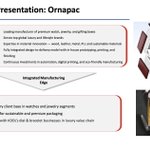
ORNAPAC's revenue grew over 30% in H1 FY27, and it achieved positive PBT in Q2. KDDL is seeing interest from global brands to source packaging locally in India and eventually include it in their global supply chains. Management expects profitability to improve with higher revenue and better capacity utilisation.
Estima (KDDL's Swiss manufacturing subsidiary) continues to face weak demand due to challenges in the Swiss watch market, particularly in the UAE and China. However, management expects FY27 losses to be significantly lower than FY26 and targets breakeven in FY28. Its Swiss Made status also gives it access to luxury customers that TARATEC, being India-based, may find difficult to serve.
Favre-Leuba (a historic Swiss luxury watch brand acquired by KDDL) is performing ahead of management's expectations. It is present in 35+ countries, with over 45 points of sale outside Ethos (nearly 50% of its total). Management expects breakeven in FY27 and sees ₹1,000 crore in potential revenue as a feasible long-term target. It is also considering increasing the brand's budgets for the next two years.

267
Nazara Technologies: Turning Gaming into a Global Business
A successful gaming business is built on great games, strong intellectual properties and the ability to reach players across the world.
The company is bringing mobile, PC, console and offline gaming businesses onto one platform, powered by shared marketing, technology and AI capabilities. 🧵👇
Putting Gaming at the Centre of Nazara's Strategy
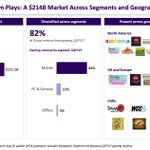
Nazara is focusing on three gaming segments (mobile, PC & console, and offline gaming) targeting a global gaming market worth over USD 200 billion.
Businesses such as Sportskeeda and AdTech are non-core, and management is open to selling them over time.
Geographically, Nazara plans to invest more in the US and Europe in the short to medium term, while maintaining its presence in India.

1
292
International markets offer better-developed mobile gaming economics, while India's growing digital user base presents a longer-term opportunity. Further acquisitions will be evaluated, but the immediate priority is integrating Bluetile and strengthening the central platform.
The Bluetile and BestPlay acquisition is valued at USD 303 million. Of this, USD 85.5 million was already paid, USD 77 million was funded through share issuance, approximately USD 100 million is planned through debt, and the balance through internal accruals.
Nazara also reported ₹23 crore in associate losses, entirely from NODWIN, including an impairment of its Turkish investment, Publishme.

271
Groww: Capturing More of the Customer's Financial Journey
What began as a platform for investing in stocks and mutual funds is steadily becoming much more
It is now expanding into wealth management, lending and international investing, aiming to become a platform for a wider range of customers' financial needs. 🧵👇
1
4
1,861
Groww classifies expenses into Cost to Serve, Cost to Grow and Cost to Operate.
Cost to Serve rose due to higher AI and computing costs, more trading days and a one-time ₹10-13 crore hit from an expiry-day file delay. Cost to Grow declined as the previous quarter included IPL branding expenses.
Annual Cost to Grow typically ranges between ₹400-500 crore, depending on market conditions and acquisition opportunities.

1
1
247
AI is becoming an important part of the company's technology strategy. Groww is building its own in-house AI stack to accelerate product development, improve product quality and enhance customer experience.
Its in-house infrastructure helps reduce the cost per token despite substantial AI usage. The broader philosophy remains customer-first: improve the customer experience, make the platform more useful and allow revenue to follow.
At the same time, employee expenses stood at ₹169 crore, against ₹182 crore in Q1 FY27, but management cautioned that this decline was partly due to temporary employee-count movements and that structural employee costs are expected to increase.
1
213