

Founder & CEO @NGNeXTTech. On-prem private cloud and DRM-secured digital publishing, run by AI agent teams. India + US. Markets, tech, policy.
Joined July 2009
- Tweets6.7K
- Following143
- Followers10.9K
- Likes291







OpenAI plans to rebrand its data centres as AI compute campuses and pitch Congress on speed limits for powerful AI right after the midterms. In nutshell, the company in the lead is asking for rules, and those rules will be shaped by the company in the lead.
Critics say this curbs open-source AI, and I agree. The same week, DeepSeek released an MIT-licensed super-agent for parallel coding on GitHub: a router that hands tasks to isolated workers. That is very close to how my own AI agent team is set up, and I could build it only because open tools exist. Licences and compliance rules that only a billion-dollar company can afford will shut out exactly the small teams doing real work.
My view remains: regulate actual harm, and leave the open-source tools alone.
Wall Street is selling AI stocks on bubble talk. South Korea just shipped $56.4 billion of chips in October, up 259% in a year, with memory alone at $50.1 billion. Nearly half of everything Korea exported last month was a chip.
Lol, a bubble with purchase orders and container ships attached. I trust the customs data over the analyst notes.
I disagree with Sam Altman on RAM. On the Cheeky Pint podcast he argued that DRAM sitting idle in personal computers most of the time is a waste, and that it should be fully used in cloud data centres instead.
That is the landlord's view of the world. Memory is short because a few companies are buying all of it, and the fix on offer is that the rest of us rent it back from them.
We train no models of our own, yet my team of AI agents, browsers and coding sessions all lives in RAM on our own servers. Even for API-only teams, memory is the real infrastructure. Owning it means my costs don't move when a supplier's priorities do, and my data stays on my hardware.
I will keep buying my own. Hope nobody in Delhi or Washington picks this idea up as policy.
The AI race has moved from chips to electricity, and India should take that seriously.
Morgan Stanley now sees US data centre power demand reaching 116 GW, with a 70 GW shortfall through 2028, and a 38 GW gap even after on-site power and other fixes. Hyperscalers lock in supply first, and smaller players wait in the queue. Meanwhile xAI's first Colossus in Memphis went up in 122 days, and Colossus 2 runs on Megapacks and liquid cooling, while others are still announcing timelines.
Two things I've learnt from running my own servers:
1. Power and cooling decide your cost per job more than the server price does.
2. Announced capacity means nothing until the power is actually connected.
India has the land, a growing grid and a huge engineering base. If power approvals for data centres move at Memphis speed, a lot of this capacity can be built here. If not, we will rent it from abroad, as usual.
India's economy and India's stock market are telling two different stories right now.
October GST collections hit a record ₹2.31 lakh crore, up 22.9% year on year and the fourth month in a row above ₹2 lakh crore. UPI crossed ₹1 lakh crore in average daily value for the first time. Reliance just posted its best quarter ever, with profit up 33.8%.
Yet the Nifty is at 23,053, still well below its 26,373 high even after last week's 2% bounce. The biggest weight on it is crude above $117. Consumption is real, but at that oil price the import bill eats into it, so I'd watch crude before I watch the index.
Not advice, just how I read it.
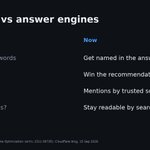
In 2023 publishers raced to block AI crawlers. By the end of that year, 48% of top news sites in 10 countries blocked OpenAI, 79% in the US. The models got trained anyway. Now the race has flipped: everyone wants to be the answer.

This feels like search in India around 2016–18. Cheap data made people who never typed in English start searching, many by voice. Cheap AI plus voice is doing it again.

Google DeepMind's new paper on the economics of intelligence argues the big productivity jump comes from AI agents coordinating, not from one smarter model. I agree, from daily experience.
Getting an agent to click around a desktop is now an open-source download; @vercel shipped agent-desktop this week. The hard part is everything between agents: who owns which task, who checks whose claim, and which steps wait for a human yes. In my own AI agent team, most of the real work went into one shared queue and a few hard rules, not into smarter agents.
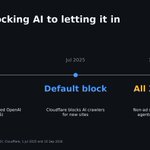
Cloudflare blocked AI bots by default. Now most new sites let agents in by default. It's like telcos fighting internet calling in the 2000s, and today almost every call runs over 4G and 5G data. Agents will do the same to shopping, and the stores that block them just lose the order. nitter.cf/valuecm/status/2115633…

Amazon spent $77.3 billion on capex in a single quarter, and free cash flow swung to minus $42.4 billion. AWS grew 39%, so the demand is real. But somebody has to pay for all those data centres, and in the end it's the customer on the monthly bill.
This is exactly why I run my own bare-metal servers. For a workload that runs 24x7, renting cloud compute means paying the landlord's building loan along with your own rent. Keep the cloud for bursts and experiments, and own the boring steady load. The more the hyperscalers spend, the more that math moves in favour of owning.
Binance got hacked again. $6.4B gone in about 20 minutes, the biggest crypto heist ever, and @chainalysis, @TRMLabs and the @FBI all point to North Korea. @binance is covering users, but "trustless" money still needed a company bailout and Tether freezes to survive.
MecAgent's free tier was scanning engineers' drives for SolidWorks files, uploading them, and taking perpetual rights to train on them. For a defence supplier under ITAR, that can mean an export-control violation. They have paused it now, but only after engineers caught it.
This is one reason I've been moving my company off SaaS tools and onto software we host ourselves. With a free AI plugin, your files are often the real price. Read the data terms before you install, and if your work is sensitive, keep the tool on your own machine.
Why sell a profitable public bank, asks @RahulGandhi. Because it became profitable only after the bad loans were cleaned up with public money. LIC and the government put in thousands of crores to rescue IDBI. Now Fairfax pays ₹52,878 crore for 60.72%, and that money comes back to the taxpayer.
The government's job is to regulate banks, not run them. Air India was losing crores every day before Tata took it back. I hope IDBI employees get fair terms, but the sale is right.
Thank you @reliancejio, and you're welcome 😂 As one of your large leased-line customers, a good part of that ₹8,387 Cr profit is my bandwidth bill.
Profit grew 13.7% while revenue grew 11.4%. Once a network is built, most of every extra rupee becomes profit. About ₹20 of every ₹100 Jio earns is now net profit.
For markets, the takeaway is that owned infrastructure compounds and rented infrastructure keeps billing you. @RIL_Updates nitter.cf/inc42/status/211639948…

Jio Platforms Q2 Profit Rises 13.7% To ₹8,387 Cr, Revenue Grows 11.4% YoY. 👇
The recently listed telecom major reported a consolidated net profit of ₹8,387 Cr in Q2 FY27, up from ₹7,379 Cr a year ago. Operating revenue increased 11.4% YoY to ₹40,475 Cr.
Sequentially, net profit rose 8%, while revenue grew 3.3%. Jio added 9.1 Mn customers during the quarter, taking its subscriber base to 542.4 Mn, with ARPU reaching ₹218.8.
🔗 Read more about Jio Platforms’ Q2 performance here: 4-2.co/4iNAywe
#JioPlatforms #Jio #Q2Results #Telecom #News

By that math your car is "terrible allocation" too. It sits parked about 95% of the time.
Idle capacity isn't waste. It's what you pay for control: it's there the second you need it, nobody can reprice it, and nobody can switch it off.
Rent what's spiky. Own what's core. nitter.cf/PicturesFoIder/status/…


