

💼 Investor 📊 Fundamentals over noise 📉 Buying fear • 📈Selling greed ⚖️ Value over speculation 🤝 Practical frameworks for value investors ↓
Joined July 2023
- Tweets22.5K
- Following65
- Followers1.4K
- Likes118K



Pinned Tweet
Every management team says their business has pricing power.
What they usually mean is that their prices went up.
Those are different things. And the financial statements usually know the difference long before the market does.
5 tests that tell you which one you actually own:
valueoverhype.substack.com/p…

Costco caps markups around 14% on branded goods. Most retailers would call that money left on the table.
I’d call it the moat. Lower prices bring members, and members fund lower prices.
Cost discipline is a growth strategy. Disagree?

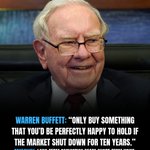
Buffett’s ten-year test has a flaw: it assumes you can’t check prices.
You can. Every minute.
The real issue isn’t the rule. It’s the phone in your hand.
A useful way to think about it: delete the app, keep the thesis.

"My system for over 30 years has been this: When stocks are attractive, you buy them."
~ Peter Lynch
Lynch’s whole system fits in one line: when stocks are attractive, you buy them.
I think it’s the hardest rule in investing. Not because it’s complex, but because “attractive” usually feels awful when it happens.
Buffett paid $25M for See’s Candies in 1972. It went on to earn over $1B pretax while needing very little new capital.
Most investors ask how fast a business grows. I ask how much cash it needs to grow.

Trading feels like work. Holding feels like laziness.
Returns don’t pay for effort. Each trade has costs and needs you to be right twice.
How many of your last 10 trades would you make again?

"The hard part is discipline, patience, and judgment."
~ Seth Klarman
Seth Klarman names the hard part of investing: discipline, patience, judgment.
Intelligence isn’t on the list.
In my view, most underperformance isn’t an analysis problem. The model was fine. The holder wasn’t.
In my view, I’d rather pay 30x earnings for a business with 20 years of high-return reinvestment runway than 12x for one with two.
Cheap is a price. Runway is a time horizon.
Value investors, tell me where this breaks.

Buy Microsoft at its December 1999 peak and you waited roughly 17 years to break even (price only).
The company didn’t fail. It kept growing.
The buyer had simply paid for decades of that growth on day one.

"The best investment you can make is in yourself."
~ Warren Buffett
Buffett offered to work for Graham for free. Graham said no.
So Buffett read The Intelligent Investor at 19, enrolled at Columbia to study under him, and kept asking until Graham hired him in 1954.
Most people wait for an invitation to learn. He invested first and got paid later.
I’ll pay 30x earnings, but only for duration.
15% earnings growth for 10 years, multiple shrinks to 20x: about 10.4% a year.
Same business, growth lasts 5 years: about 6%.
Pay for the years, not the rate.

Before any buy, I ask one question: who is on the other side, and why are they selling?
If the answer is fear, I keep reading. If it’s a fact about the business, I stop.
A price is a person’s decision before it’s a number.

Hot take: a company promising “consistent 15% growth” while incremental ROIC falls is telling you something.
Not about demand. About how much capital it will spend to protect the streak.
Ask what the last dollar earned.

I get nervous when a stock shows up in every group chat I’m in.
Buffett: most people get interested in stocks when everyone else is. By then, the price has already paid for the excitement.
Popularity is a cost, not a signal.

"It takes character to sit with all that cash and to do nothing. I didn't get to where I am by going after mediocre opportunities."
~ Charlie Munger
Most investors price cash by what it earns.
Wrong denominator. Price it by what it lets you buy when everyone else is forced to sell.
The yield is the rent. The option is the asset.
Kodak engineer Steve Sasson built the first digital camera in 1975. Kodak filed for bankruptcy in 2012.
Kodak had the technology. It kept pouring capital into defending film.
Reinvestment protects returns only when it points at the competitor’s path, not your past.

Twain probably never said it. There’s no verified source.
Which fits: a pattern that feels true gets repeated until nobody checks.
“Stocks always recover” is one. The Dow’s 1929 peak wasn’t regained until November 1954. 25 years.
Recover, yes. When, no.

"Big companies have small moves, small companies have big moves."
~ Peter Lynch
A $2 trillion company needs to add $2 trillion in value to double.
A $200 million company needs $200 million.
Same 100% return. Very different job.
I’d rather own the easier math and accept the higher risk.
