

too early to build onchain credit based loan
대한민국 서울
Joined August 2020
- Tweets617
- Following486
- Followers168
- Likes310





Pinned Tweet
We made many mistakes with the last social experiments. We'll not let that happen again in the new world.

6
Vault Research retweeted

Introducing The Fluid Reserve: Buybacks & Growth Strategy
In just 18 months, Fluid has grown into one of the Top DeFi protocols:
- $6B+ Total Market Size
- Top 3 lending market, with $2.5B in active loans across all chains
- $117B+ in cumulative trading volume
- #2 DEX by volume and fees on Ethereum and #3 DEX across all chains
- Earning $15M+ annualized revenue
- #1 in stablecoin swaps USDC/USDT - GHO/USDC - USDE/USDT
- #1 fastest-growing lending DAO
- @jup_lend, as 2nd Largest lending protocol on Solana.
- Fluid Lite ETH Vault: $250M TVL
- FLUID first DeFi token investment by a Nasdaq company (@StableXTech)
We continue building the most advanced protocol, pioneering the first connected liquidity layer with Smart Debt and Smart Collateral.
We’re just getting started.
Now, we begin a new chapter.
blog.instadapp.io/fluid-rese…
Buybacks have officially begun.
- For the first month, 100% of Ethereum mainnet revenue will go toward buybacks (~$1.7M at current levels).
- Executed in smaller transactions for transparency & stability.
- A dedicated Fluid Reserve Buyback & Tracking system has been created, with governance guiding the long-term model.
The Fluid Reserve is designed to:
- Support governance, stability and growth
- Align incentives between growth and tokenholders
- Build resilience across market conditions
This balance of reinvestment and strategic buybacks is key to building a sustainable, resilient DeFi ecosystem.
Buybacks are just one piece of the Fluid Growth.
Stay Fluid for more.

Vault Research retweeted

@0xfluid’s DEX went from microscopic volumes at launch in Oct ‘24 to crushing $1B+ daily and flipping Uniswap today (once again). Almost nobody believed it and most still don’t realize it will be the biggest DEX by year-end.
Hypergrowth mode activated, don’t bet against blue.


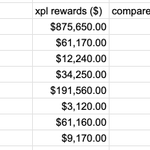
did a napkin math for xpl rewards to check how plasma team sees defi protocols
fun point:
- no morpho
- fluid is much higher than euler
- who's term finance?
team would have expected apr level to gather tvls so I think this is somewhat good point to check current valuation

137
Vault Research retweeted

🇰🇷 U can also enjoy @ethena KBW event in ur room
- Date: 9.24 2PM in KST
- Venue: Layer27
- Luma: luma.com/rjbmemww
If u want to see session with @gdog97_ and me, just enjoy live streaming in my twitter account.
See ya everywhere!

Time to experience K-Gov lol

BREAKING:
Fragmetric Labs (@fragmetric) and DeFi Development Corp.(NASDAQ: DFDV) will launch the first Solana Digital Asset Treasury in Korea through the acquisition of a Korean publicly-listed company.

33
Biggest hurdle for a under-collateralized lending based on onchain records is, deciding the loan amount.
Social media records like @farcaster_xyz or @lc could be a good start point adding to onchain records.

Low-risk defi can be for Ethereum what search was for Google
vitalik.eth.limo/general/202…
1
43
So I’ve made a small poc but brutally failed. My gtm execution was bad lol
But still believe this is a thing, for unbanked or underbanked.

Would You Lend $1,000 to Your Online Friend?
Society is formed based on the trust between its members. With the trust that others won't harm you, we live daily lives in peace. However, blockchain was designed to eliminate the need for the trust, with the motto "Don't trust, verify."
While this trade-off helped secure financial systems, it left an entire area of human interaction — under-collateralized trust-based credit — largely unexplored.
Today, we have a few under-collateralized, credit-based lending protocols these days — but they limit participants by requiring KYC, a license, or a legal entity (e.g., @3janexyz, @WildcatFi ).
These restrictions are adopted to avoid defaults, which is understandable since there have been many such cases (e.g., Maple Finance).
But it sounds very web3, huh? Remember the word "permissionlessness"?
On the other hand, another motto of blockchain is "Banking the unbanked", which is one of the reasons I became interested in web3. We are seeing a surge in demand for stablecoins in developing countries. If you haven’t heard of it, check @yellowcard_app episode on @Unchained_pod.
However, they still are lack of financial infrastructure. They have to go to the bank for hours just to get cash. They get robbed when they store physical cash in their house or shop because it's difficult to go to the bank. That's why they adopted e-money so quickly; they all have mobile phones.
These communities need better access to digital financial tools, yet they are excluded from the current models that rely on traditional credentials. Would they have a proper license or "legal entity" to get a crypto loan? They don't even have sufficient financial records with banks!
(Fun fact: There was a Korean crypto project that claimed to solve this issue with crypto. But now they are launching a satellite with a new coin lol)
Fortunately, we see evidence that many people in developing countries are already in web3, including those in Nigeria, Kenya, the Philippines, Argentina, and more. Africa is also one of the most promising geographical areas in terms of demographic structure. Shouldn't we address these needs? (check Devcon 2024 talk by @yosephayele if interested)
Trust built on online
How do we build trust with each other? By spending time together. If one does what they said, trust score +1. If one acts against common sense, trust score -1.
Then how much time do you spend online? You don't have to check your screen time. You know that you spend a lot of time watching and talking to strangers on social media. They're no longer strangers once you've spent enough time to build intimacy.
Many such cases. If you were into MMORPGs like World of Warcraft, you'd understand. People build very strong relationships through many occasions, from talking about small things in real life ("I hate my roommate!"), to raiding a boss with time attack, becoming a "comrade in arms."
One of my close friends recently got married, and many guests from her gaming guild attended the wedding.
Hard to believe? Watch The Remarkable Life of Ibelin on Netflix.
Online life is already a real life.
Getting back to the web3 context, we meet a lot of "anons" at offline events. Not only just bumping into, but by making an appointment. Some companies hire anons while they remain anonymous.
We already trust online figures.
Would people lend based on the trust built online? Some definitely would.
Trust based on micro-lending within the community has a long history globally. “Gye (계)” in Korea. “Chama” in Kyena. “Tanda” in LATAM. See ROSCA (Rotating savings and credit association) on Wikipedia for examples. These systems work based on trust and social forces within the community.
Now we have web3-native platforms that we build trust on, and have integrated crypto wallets: @farcaster_xyz and @LC.
Farcaster recently launched the miniapp feature, and one of the most popular miniapps is for giving money away when they like, repost, or comment, calling it tipping (@noicedotso).
If you can give money to strangers, why not "lend" it in the hope of getting back? You might earn interest on top of the principal!
Q: Solvency? A: Let's start with p2p
I agree that there's a high risk of default when there's no collateral or way to collect by force. And it's also very early to build a safe credit scoring model based solely on on-chain or online data.
But if we don't try because of the worry, there's no progress.
So, let's start with peer-to-peer lending. People can freely choose whom to lend their money to. Borrowers who want a loan register their requests, which appear on a list. Lenders can see the borrowers' name and online activities. Reputation. Lenders will lend money if they feel comfortable.
Sounds like it won't work? It may not. There're many mixed cases in microfinancing (e.g., Grameen Bank).
There was also a company called Lenddo that used social media activity for credit scoring. It which did well for years, achieving a 98% repayment rate - but now defunct (btw the founders were once interested in blockchain after Lenddo closed).
In order to verify the hypothesis - how much people are willing to lend to online friends, tests and data are needed. One thing I've learned from working as a product manager (my daily job for years) is, that you can't know how it will work until you actually do it. You need to meet users and see how they use it.
So I made a simple teaser app.
Trust Me Bro
It's a Farcaster mini app (you need Farcaster account to use it).
You can judge your Farcaster friends by how much you would lend them, and you can see how much your friends would lend you - no doxxing, only aggregated data will appear on the app. Maximum is $1,000 to make it more plausible.
Curious to see how much your friends would trust you? Give it a try — it's actually fun!
Let’s try: trustmebro.help/
Together, we can explore this new frontier of online credit. I'll openly share the high-level insights later.

23
tbh old defi coins are criminally undervalued while still innovating the field
aave morpho euler fluid pendle gearbox
just choose
43
This.

Recently saw a tweet from @DefiIgnas noting that Aave has bought back ~0.5% of its supply over time.
Fluid just announced it will buy back ~0.4% of its supply in its first month starting in 2 weeks.
That is before actual buyback program even begins thereafter.

20

okay trustmebro was a total failure. it was a fun weekend project tho.
reason? maybe users hesitated to “rate a human” or farcaster was not a good place to do, or the app was not polished so people didn’t want to use it, or my marketing was bad.
anyway it’s time to move on.
17
Vault Research retweeted

The crime supercycle is indeed very real.
While it’s true the industry has historically been ripe for abuse it has noticeably increased since politicians launched meme coins and numerous court cases were dropped further enabling the behavior.
Laundering groups and small OTC brokers have seemingly won the battle for Lazarus Group after successfully laundering recent hacks (Bybit, DMM Bitcoin, WazirX, etc) with ease. I estimate the Black U market on Tron is no less than $5-10B and largely unattributed.
A number of teams sit and watch collecting fees doing nothing when >50% of the activity for their protocol comes from stolen funds.
Influencers and KOLs face zero repercussions for scamming followers / projects.
Courts siding with smart contract exploiters due to outdated laws.
Can we fix the system if the vast majority of people still do not care unless they lose money?
It's concerning about what the long term ramifications may be even if these decisions benefit us in the short term.
If you ever wanted the opportunity to extract from the industry there's not been much of a better time.
Take a chance what's the worst thing that could happen if everyone's already doing it?
That said there's never been a worse time to be doing black hat (phishing, social engineering, robberies) vs gray hat activity when the current environment is favorable.
Surely this time is different…

Vault Research retweeted
Would You Lend $1,000 to Your Online Friend?
Society is formed based on the trust between its members. With the trust that others won't harm you, we live daily lives in peace. However, blockchain was designed to eliminate the need for the trust, with the motto "Don't trust, verify."
While this trade-off helped secure financial systems, it left an entire area of human interaction — under-collateralized trust-based credit — largely unexplored.
Today, we have a few under-collateralized, credit-based lending protocols these days — but they limit participants by requiring KYC, a license, or a legal entity (e.g., @3janexyz, @WildcatFi ).
These restrictions are adopted to avoid defaults, which is understandable since there have been many such cases (e.g., Maple Finance).
But it sounds very web3, huh? Remember the word "permissionlessness"?
On the other hand, another motto of blockchain is "Banking the unbanked", which is one of the reasons I became interested in web3. We are seeing a surge in demand for stablecoins in developing countries. If you haven’t heard of it, check @yellowcard_app episode on @Unchained_pod.
However, they still are lack of financial infrastructure. They have to go to the bank for hours just to get cash. They get robbed when they store physical cash in their house or shop because it's difficult to go to the bank. That's why they adopted e-money so quickly; they all have mobile phones.
These communities need better access to digital financial tools, yet they are excluded from the current models that rely on traditional credentials. Would they have a proper license or "legal entity" to get a crypto loan? They don't even have sufficient financial records with banks!
(Fun fact: There was a Korean crypto project that claimed to solve this issue with crypto. But now they are launching a satellite with a new coin lol)
Fortunately, we see evidence that many people in developing countries are already in web3, including those in Nigeria, Kenya, the Philippines, Argentina, and more. Africa is also one of the most promising geographical areas in terms of demographic structure. Shouldn't we address these needs? (check Devcon 2024 talk by @yosephayele if interested)
Trust built on online
How do we build trust with each other? By spending time together. If one does what they said, trust score +1. If one acts against common sense, trust score -1.
Then how much time do you spend online? You don't have to check your screen time. You know that you spend a lot of time watching and talking to strangers on social media. They're no longer strangers once you've spent enough time to build intimacy.
Many such cases. If you were into MMORPGs like World of Warcraft, you'd understand. People build very strong relationships through many occasions, from talking about small things in real life ("I hate my roommate!"), to raiding a boss with time attack, becoming a "comrade in arms."
One of my close friends recently got married, and many guests from her gaming guild attended the wedding.
Hard to believe? Watch The Remarkable Life of Ibelin on Netflix.
Online life is already a real life.
Getting back to the web3 context, we meet a lot of "anons" at offline events. Not only just bumping into, but by making an appointment. Some companies hire anons while they remain anonymous.
We already trust online figures.
Would people lend based on the trust built online? Some definitely would.
Trust based on micro-lending within the community has a long history globally. “Gye (계)” in Korea. “Chama” in Kyena. “Tanda” in LATAM. See ROSCA (Rotating savings and credit association) on Wikipedia for examples. These systems work based on trust and social forces within the community.
Now we have web3-native platforms that we build trust on, and have integrated crypto wallets: @farcaster_xyz and @LC.
Farcaster recently launched the miniapp feature, and one of the most popular miniapps is for giving money away when they like, repost, or comment, calling it tipping (@noicedotso).
If you can give money to strangers, why not "lend" it in the hope of getting back? You might earn interest on top of the principal!
Q: Solvency? A: Let's start with p2p
I agree that there's a high risk of default when there's no collateral or way to collect by force. And it's also very early to build a safe credit scoring model based solely on on-chain or online data.
But if we don't try because of the worry, there's no progress.
So, let's start with peer-to-peer lending. People can freely choose whom to lend their money to. Borrowers who want a loan register their requests, which appear on a list. Lenders can see the borrowers' name and online activities. Reputation. Lenders will lend money if they feel comfortable.
Sounds like it won't work? It may not. There're many mixed cases in microfinancing (e.g., Grameen Bank).
There was also a company called Lenddo that used social media activity for credit scoring. It which did well for years, achieving a 98% repayment rate - but now defunct (btw the founders were once interested in blockchain after Lenddo closed).
In order to verify the hypothesis - how much people are willing to lend to online friends, tests and data are needed. One thing I've learned from working as a product manager (my daily job for years) is, that you can't know how it will work until you actually do it. You need to meet users and see how they use it.
So I made a simple teaser app.
Trust Me Bro
It's a Farcaster mini app (you need Farcaster account to use it).
You can judge your Farcaster friends by how much you would lend them, and you can see how much your friends would lend you - no doxxing, only aggregated data will appear on the app. Maximum is $1,000 to make it more plausible.
Curious to see how much your friends would trust you? Give it a try — it's actually fun!
Let’s try: trustmebro.help/
Together, we can explore this new frontier of online credit. I'll openly share the high-level insights later.
