

Prof for multiscale brain imaging @UniFAU || neuroenergetics lab @TU_muenchen || Filmmaker about brain stuff: https://nitter.cf/t.co/2g3X0tBvaO ||
Munich, Germany
Joined October 2009
- Tweets449
- Following396
- Followers605
- Likes1.1K




Pinned Tweet
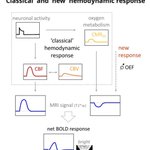
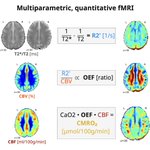
fMRI signals “up,” but neural metabolism might be going “down.”
In our @NatureNeuro paper, we show that about 40% of voxels with robust BOLD responses exhibit opposite oxygen metabolism, revealing two distinct hemodynamic modes.
rdcu.be/eUPO8
funding @ERC_Research
🧵:

ALT BOLD signal changes can oppose oxygen metabolism across the human cortex, Nature Neuroscience
Valentin Riedl retweeted

Our latest out now in @NatureNeuro led by @TrangCao2016 looking at the reproducibility of MRI morphometry phenotypes in psychiatric disorders.
We quantify the reproducibility of grey matter volume and cortical thickness differences in Schizophrenia, Depression, Bipolar Disorder, Autism, and Alzheimer's Disease.
AD findings are reproducible; results for the other disorders are not.
Bootstrapping suggests increased sample sizes can help for schizophrenia, but very large (i.e, N>1k) samples may be needed for other disorders.
Our findings are consistent with a low SNR disease phenotype.
Peep the thread and link for more details!

This work is out at @NatureNeuro. Thanks to the amazing team @AFornito @NSB_Lab @jchrispang @m_gajwani @AshleaSegal @DrAlexHolmes J Wiley @SidChop @HelenJuanZhou CChen FJi BHarrison @cgdavey @constable_toby @JegTiego BHartshorn JKwee @BellgroveMark
Out now in @PNASNews
We present a new metabolism-weighted brain connectome that incorporates each region’s energy expenditure into the mapping of brain connectivity.
pnas.org/doi/10.1073/pnas.25…
Using simultaneous PET-MRI in healthy volunteers, we show that energetically most active hubs anchor networks for complex cognition, exhibit molecular signatures of intense synaptic activity, and are disproportionately vulnerable to Alzheimer’s disease.

ALT Energetically active brain hubs are highly susceptible to neurodegeneration
These findings establish a unifying principle: brain regions most essential for cognition bear the greatest metabolic burden, and this cost may underlie their susceptibility to neurodegeneration.
funded by @ERC_Research
congrats @MahnazAshrafi @fraticelli_l @gabocas
it‘s hot again in Bordeaux 😎 and Wednesday is neuroenergetics day: find Mahnaz‘s oral presentation and Samira‘s poster dates below and drop by for discussions! #ohbm2026


Samira's work made the cover of @NatureNeuro this month 🎉
nature.com/neuro/volumes/29/…
I also want to highlight two recent comments that engage with our quantitative approach to interpreting the BOLD signal; both are worth reading (see below).

Chen, Rosen & Polimeni offer a thoughtful, balanced perspective on the future of brain imaging and raise valid questions about quantitative methods - highly recommended:
nature.com/articles/s41593-0…
Goltermann, Huth & Büchel take a more skeptical view, arguing via conservative statistical thresholding that standard BOLD remains sufficient. Interestingly, though, they also found discordant negative BOLD in ~90% of significant CMRO₂ voxels, Fig.3 🤔:
biorxiv.org/content/10.64898…
7:
Samira has collated all data and analysis code here:
data: openneuro.org/datasets/ds004…
code: github.com/NeuroenergeticsLa…
8:
Huge congrats to @Samira_Epp on her epic PhD-work!
And thanks to our colleagues @gabocas, Beija, Jessica, and Christine,
my hosting institutions FAU & TUM
and the support from @ERC_Research
Valentin Riedl retweeted

🧠 Just out in Nature: A human brain map of mitochondrial diversity. A powerful collaboration with Mosharov and @MitoPsychoBio. Big step toward bridging cell biology and neuroimaging!
🔗 nature.com/articles/s41586-0…
🧬 #MitoBrainMap #neuroscience
Valentin Riedl retweeted
Come join us on Bluesky! 🦋
bsky.app/profile/natureneuro…