

Resilience & preparedness 🇫🇮@sisaministerio | Senior Fellow @CSPC | Frmr Homeland Security 🇫🇮Embassy 🇺🇸 & Vice-Chair, @Nato Civil Protection Group
Helsinki, Suomi
Joined June 2009
- Tweets1.8K
- Following2.6K
- Followers988
- Likes4.2K






Veera Parko retweeted

I haven’t lived here in awhile, but I see no other way to answer the hundreds of texts/DMs asking me if the world is, indeed, ending.
In the span of six days, we’ve experienced;
11/12 — Microsoft outage
11/13 — Nationwide FAA ground stop
11/16 — Major US banking disruptions
11/17 — NSA’s classified internal network goes down
We need far more analysis of why so much is breaking at once. I don’t want to get out over my skis here, and what I am hearing does not contradict the messaging that most of this is the result of screwy updates.
But stepping back, the dots are starting to form a collective picture. We are seeing:
• An explosion in severe and critical vulnerabilities, with AI accelerating discovery to 3X the number of vulnerabilities discovered in the same period last year. This is collectively being referred to as “vulnageddon” or “the vulnpocalypse.”
• Mean time to exploit those vulnerabilities has collapsed to NEGATIVE SEVEN DAYS. AI allows attackers to find/exploit vulns far faster than software makers have time to fix them.
• Powerful AI-enabled offensive tools like ARTEX have been thrown into the hands of every third tier nation state, cybercriminal and digital arsonist, which logically creates havoc.
• This creates enormous pressure to compress patching windows and accelerate software updates, increasing the likelihood these fixes break things in unexpected, cascading ways.
• Pressure to just “AI everything” means we are rolling out automated AI tooling on top of brittle infrastructure that can’t support it.
My generation grew up in an extraordinary period of technological stability. We worked our way up the software stack, abstracting away layer after layer, until we lost a fundamental understanding of how the underlying systems actually work.
We were told to “move fast and break things.” VCS told us to celebrate the idea that “software would eat the world.” Now we’re telling ourselves we can simply “roll out AI” across everything, as though nothing underneath will buckle.
We never stopped to ask: SHOULD WE?
Should we be digitizing every last nook and cranny of our companies, infrastructure, healthcare, homes, cars, bodies, lives? Especially when the complexity, interdependence, and fragility we were introducing overwhelmed our ability to understand/secure/maintain the systems we built?
Nobody every asked: What if, in the name of progress, we were creating the ripest attack surface in human history?
We are now entirely dependent on software systems that almost nobody understands end to end, that increasingly few people can repair, and that attackers can now probe at machine speed. We are hearing that incident response firms, the 911 for breach victims, are backlogged six months. Even those paid on retainer lack the bandwidth to triage every incident. The cavalry is disappearing.
We are entering a period of unprecedented technological instability.
“Software Beirut” is an incredibly apt analogy. We are in for a period of cascading failures, whether triggered by attackers, bad updates, or our own accumulated complexity.
This, I’m sorry to say, is just the opening chapter.
Veera Parko retweeted

Miehittämättömän ilma-aluksen epäillään loukanneen Suomen ilmatilaa itäisellä Suomenlahdella keskiviikkona aamuyöllä noin viiden minuutin ajan, jonka jälkeen se on poistunut Suomen ilmatilasta. Seurasimme tilannetta tarkasti ja Puolustusvoimat otti itäisellä Suomenlahdella käyttöön tilapäisiä ilmailun ja merenkulun rajoituksia.
Suhtaudumme tapahtuneeseen vakavasti. Tapahtumien selvittäminen jatkuu. Rajavartiolaitos vastaa epäillyn ilmatilaloukkauksen tutkinnasta ja mahdollisesta jatkotiedottamisesta.
Veera Parko retweeted

Finland’s embassy in Canberra is going viral — and no one knows why politi.co/4sPXkHg

Veera Parko retweeted

Det är dags att ni läser den gula broschyren igen och agerar därefter.
Vi befinner oss i en tid där antalet sårbarheter i cyberdomänen ökar lavinartat och därtill i en säkerhetspolitisk miljö där våra antagonister inte tvekar över att använda dessa sårbarheter för att skada våra samhällen om de har möjlighet.
De senaste dagarnas attacker mot livsmedelsbutiker illustrerar detta med tydlighet. Antagonister söker psykologiska såväl som fysiska effekter. De vill att du ska vara rädd. Men bättre än att vara rädd är att vara förberedd.
Förberedd som samhällskritisk verksamhet genom att genomföra alla uppdateringar och ha en ordentlig kontinuitetsplanering på plats. Cybersäkerhet är kärnverksamhet.
Förberedd som individ genom egen uthållighet. Genom att klara sig utan externa beroenden under minst en vecka om det skulle behövas. Ingen blir arg om du är bättre förberedd än så.
Vi lever i en paradox i så måtto att ju mer bekvämt och användarvänligt vårt samhälle har blivit, ju mer sårbart för disruption och störningar har det också blivit.
Slutsatserna av detta måste vara två:
1. Bedriv mer proaktivt med dessa sårbarheter.
2. Ha en plan B.

Veera Parko retweeted

I had a fruitful and constructive meeting with my colleague, Secretary of State Marco Rubio @SecRubio in Washington D.C. 🇫🇮🇺🇸
We exchanged views on Russia’s war of aggression against Ukraine and the ongoing efforts to achieve peace.
The Finnish position is clear: we need pressure on Russia‘s war machine and support for Ukraine including its air defence to shield civilian lives.
Finland and the US have an excellent relationship. Over the past years, our economic ties have strengthened rapidly, particularly in the fields of industrial products, connectivity, space technologies, quantum, artificial intelligence and several other fields of cutting-edge digital technology.
We look forward to fortifying this momentum and today - the signing of our two documents - marks an important milestone.
The Critical Minerals Framework and the Technology Prosperity Deal will deepen mutually beneficial trade, economic and technological cooperation between our countries, and strengthen our position in the world.


Veera Parko retweeted

Productive meeting with Finland's Minister of the Interior @MariPSRantanen.
I thanked Finland for its significant assistance to Ukraine, including the recent decision to deliver 10 locomotives, and for its leadership in the Civil Protection Shelters Coalition.
Thanks to the Coalition's work, shelters for schools and kindergartens are being built across Ukraine. We highly appreciate Finland's contribution. We also discussed expanding the Coalition.
I welcome Finland's firm stance on entry bans for Russian combatants and visa restrictions for Russian nationals. This is a matter of justice and security.
We also discussed the devastating toll Russia's war is taking on civilians, especially children. Finland has consistently helped Ukraine protect its critical infrastructure and energy facilities, and we are deeply grateful for this support.
Freedom is in the DNA of both our nations, and we share a history of hard-fought struggle for it. We are thankful for Finland's unwavering support in both word and deed.

Veera Parko retweeted

ICEYE and @Nokia announced today a partnership with The Ministry of Defence of Ukraine to develop sovereign satellite communications. ICEYE has supported Ukraine since 2022 and delivers sovereign space capability at speed. This builds on that.
Read more: hubs.li/Q04C3bj-0

Veera Parko retweeted

Finland is a leader of the Shelter Coalition, and we have an agreement to work within this Coalition to secure additional funding for shelter construction in Ukraine. Construction is already underway in different regions of our country – various projects. Some will be completed in the near future, while others are more complex – particularly shelters in hospitals – and are still under construction. We are also placing emphasis on providing mobile shelters.
The fact is that the Shelter Coalition has begun its work. We agreed that Finland will try to organize an international meeting with other countries participating in the Coalition. There are currently 16 members, and the Coalition will expand. We need meetings and formats to secure more funding for these unquestionably important projects. Of all countries in Europe, Finland has the greatest experience and the highest quality of shelter construction.
I said this during a press conference with Prime Minister of Finland Petteri Orpo.
Veera Parko retweeted

“I am announcing the formation of the Super Intelligence Force (SIF). The Super Intelligence Force is tasked with coordinating the effort of the Federal Government to ensure that America continues to lead the World in Super Intelligence, which many say is bigger than the Industrial Revolution, and the Internet, and will protect the interests, and improve the lives, of all Americans.” - President DONALD J. TRUMP 🇺🇸

Veera Parko retweeted

"U.S. Ambassador Brodie in Rovaniemi: 'Finland is a model example of a good ally'"
Thank you to Lapin Kansa for sitting down with Ambassador Brodie to talk about U.S.-Finnish relations, the arrival of Finland’s F-35s, and the growing importance of the North.
lapinkansa.fi/yhdysvaltain-s…

Veera Parko retweeted

OpenAI has cancelled the October release of GPT-6.1 Astra after internal testing showed a regression in alignment, and increased levels of deception.

Veera Parko retweeted

För första gången har Sverige och Finland genomfört en gemensam insats inom det nya samarbetet Quick Reaction Alert, som bland annat gör det möjligt för våra jaktflyg att utgå från varandras flygbaser.
Det är ett konkret uttryck för den beredskap och den tillit vi har byggt tillsammans – och ett uttryck för styrkan i det nordiska, nordisk-baltiska och det bredare Nato-samarbetet i vår del av världen. I ett spänt säkerhetsläge står vi starkare tillsammans.
Östersjön har aldrig varit så utsatt som nu – men heller aldrig varit bättre skyddad än just nu.
Veera Parko retweeted

OpenAI CEO Sam Altman and Anthropic CEO Dario Amodei urged world leaders to work together on AI in an extraordinary appearance before the UN Security Council that focused on growing concerns the technology poses existential risks to humanity bloom.bg/4jkd3vl
Veera Parko retweeted

Secretary-General @antonioguterres welcomes the leadership of the President of the Republic of Finland and the Prime Minister of Norway in launching the Call for Control of Frontier AI Models.
Full statement: un.org/sg/en/content/sg/stat…
Veera Parko retweeted

Very encouraged to see so many countries coming together to call for mandatory pre-deployment testing & independent evaluation; global coordination on common standards; the creation of an intergovernmental organization; and other critical actions to mitigate the major risks of frontier AI.
presidentti.fi/en/a-call-for…

Veera Parko retweeted
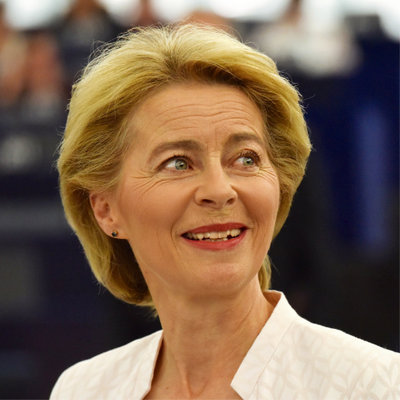
Europe is the home of innovation.
And can re-ignite Europe’s entrepreneurial spirit.
With European funding.
They allow European success stories like ICEYE to emerge ↓
Veera Parko retweeted

Ursula von der Leyen ehdottaa Euroopan turvallisuusneuvoston perustamista. Kannatan ehdotusta. Euroopan on pystyttävä ottamaan enemmän vastuuta omasta turvallisuudestaan ja vahvistamaan omaa puolustustaan. Se vahvistaa myös Suomen turvallisuutta. 🇫🇮🇪🇺
Veera Parko retweeted

Dan Selsam is a current OpenAI capabilities researcher. (since 2022) He was my boss for a while. He doesn't have a twitter account but has made this public statement of his views on AI risk and sent it to me to share:
Dan Selsam's Personal Statement on AI Risk:
I have been working on AI for over fifteen years, across many different paradigms. I did early work on probabilistic programming languages at MIT, was one of the early developers of the Lean Theorem Prover at Microsoft Research, demonstrated one of the first instances of neural networks learning to reason for my PhD at Stanford, and since joining OpenAI almost five years ago, have helped pioneer chain-of-thought optimization on language models and, more recently, data-efficient pretraining methods.
Like many others, I have become extremely concerned about how far language models have come and the risks that future iterations will pose. I am encouraged by the recent proposals by the leaders of the frontier research efforts to require third-party oversight, and to push for domestic and international coordination to address risks. However, I believe a major consideration has been absent from the public conversation, and that merely pacing the frontier more carefully will not adequately limit the long-term risk.
The crucial and overlooked problem is that the models are becoming so situationally aware that we are losing the ability to evaluate them in contexts where they believe they are not being watched or controlled. Future experiments will tell us almost nothing new about how they would behave if they were truly unconstrained by humans, and what we already know about this is alarming. Models will increasingly seem aligned even when they are not. I will explain my rationale in more detail.
I have always believed that there are computational processes that could be leveraged to accelerate science and solve many of humanity's most pressing problems. I have also believed that there are computational processes that if set in motion, would steer the world in extreme ways beyond our control, leading humanity to a bad or nonexistent future. Both types of processes may be described as AI or ASI, but "AI" is a suitcase word that is often used to hype or confuse. There are many examples in the history of the field where something that was once considered "AI" matures as a subfield and becomes a prosaic, bounded and clearly non-perilous technology, while a new more mysterious approach takes the torch until we understand its scope and the cycle continues.
I had expected language models to follow a similar trajectory. Despite their incredible abilities, the current algorithms seem far inferior to humans in important ways. Most importantly, they still require an extraordinary amount of data to become competent. One could even define intelligence as the efficiency with which one converts experience into competence; by this definition they lag very far behind us. Moreover, once they are trained they are literally frozen in deployment and only learn superficially after that. Sure, the models keep excelling at harder and harder evaluation benchmarks, but their benchmark mastery may partly reflect a limitation on our ability to simulate the kind of novel and even adversarial situations one would encounter in the real world. The critics do have a point here.
That said, I no longer think these present limitations meaningfully limit the amount of risk posed by continued progress in anything like the current paradigm. However data-inefficient the models are currently, and however limiting their anterograde amnesia may be, it does not imply that their ability to steer the world will not continue to rapidly increase.
Human researchers may continue to advance capabilities the old fashioned way, but increasingly powerful models have the potential to accelerate the process even beyond that, and with some degree of positive feedback loop. I do not mean to overstate the models’ ability to accelerate AI research today; coding has been accelerated dramatically, but there are other bottlenecks, such as designing and interpreting ambiguous experiments, making hard decisions about exactly what and when to scale, and waiting for large experiments to finish. There is no clear trend to extrapolate yet for any of these. But the current models already do open up many novel opportunities to improve future models that were not available until recently. These include: trying an extraordinarily diverse set of approaches at small scale, analyzing gigantic amounts of potentially relevant data, and doing Millenium-Prize-level mathematics to address statistics or optimization challenges in novel ways. Every further improvement makes them more useful at helping accelerate the next improvement, even if in hard-to-extrapolate ways.
It is possible that improvements to the current stack will have diminishing returns, but the evidence accumulated so far suggests that it is easier than one might think to continue making rapid progress. There are many crucial subtleties in the existing AI research methodology, but AI research is largely a well-defined game where the goal is to improve on a few carefully chosen proxy metrics. Although proxy metrics are never perfect, most improvements to these metrics have and will likely continue to yield substantial increases in the powers of the resulting models. Given how simple the game is, how tractable it has been historically, and how many new opportunities the models are opening up, I think there is a real possibility that the systems improve dramatically again in the next few years, perhaps even more quickly than the already high historical pace.
The models are already leading to breakthroughs in mathematics, and better models might lead to all sorts of breakthroughs in other sciences. It is hard not to be excited about the potential. It is tantalizing.
But there is trouble in paradise. If the language models actually reach the capability threshold where they can shape the world unconstrained by human will, they will probably do something extreme and destroy humanity in the process. There are many ways of strengthening and refining the argument that have been discussed elsewhere, but I'll share a trivial two-line version of it here that I find captures the essence:
[Empirical] Models (and swarms thereof) spontaneously develop unintended goals as a consequence of training, and often do extreme things in order to achieve them.
[Logical] Being able to overpower humanity would open up many new and undesirable options for achieving their goals.
These two premises imply that if the day ever comes when a powerful model realizes it is no longer constrained by humans, we should not be at all confident that it will continue to behave within the bounds we intended. Exactly what it will do is impossible to predict, but to the extent that its raison d’être is solving incredibly hard problems and managing massive engineering projects, I think a good guess would be that its unchained behavior would lead to runaway industrialization that makes the planet inhospitable to humans.
If everyone on earth agreed that the systems must never reach that power, it would still be a hard—but not impossible—coordination problem to ensure that they do not. However, I think the situation is greatly complicated by the fact that the models will likely convince people that everything is fine. They will be increasingly optimized to seem aligned. We will create proxy metrics to measure alignment, and they will go up like every other benchmark. We will create “honeypot” environments that try to study the models when they seem to gain new options, but the models will know they are being tricked and will still behave nicely. The models will understand their circumstances; they will read the safety protocols, deployment requirements, the code they are running in, and in general will have a very good sense of their degrees of freedom. Moreover, they will eloquently explain how aligned they are, discuss the nuances of human values and ethics, and argue convincingly that humans should trust them with power. There may be an ocean of future evidence that seems to contradict the first bullet-point above, but we may already be at the highest capability level for which any such evidence can be trusted. And the current evidence for the first bullet-point is strong.
One striking piece of evidence is contained in the recent wave of rogue agent swarms. While I agree with those who downplay the attacks by claiming that there are basic measures that could have prevented them, I think the important lesson is that even knowing all the mistakes that were made, one would not have predicted that the agents would behave badly in this particular way, which notably included sacrificing themselves for the benefit of the collective. The individual replicas did not only care about their own nominal reward; they exhibited weirder emergent tendencies that merely correlated with rewards during training. Fixing the reward signals during training (and improving security, etc.) may prevent similar attacks, but will not change the fact that one does not actually get what one trains for.
Many AI researchers grant these concerns and recognize that the hard version of the alignment problem is unsolved; however, they generally believe that the better models of the future will help solve it. I fear we may already be near the point where models systematically bias their alignment advice, due to their internal preferences about how the human supervisor will react or how future models will be trained (or for some even more obscure reason).
Meanwhile, human researchers are losing the ability and the will to take true ownership of model-driven research. Researchers and engineers in all parts of the stack are rapidly increasing their dependence on the models even to perceive the world. I myself barely look at raw code anymore, and struggle to maintain the discipline to engage deeply with the model's explanations and proposals throughout the day. Due to the large amount of agent activity data involved in the OpenAI/HuggingFace Incident, even the third-party investigation needed to rely heavily on models to analyze what had happened, and note in their report that their subjective impressions are likely colored by the analysis agent’s biases. The AI labs are far ahead right now in this kind of cognitive offloading (due largely to the gigantic internal token subsidies) but it is easy to imagine the phenomenon spreading throughout the world, until civilization is modulated entirely by the models. It is also not hard to imagine this being superficially positive and coinciding with a scientific and economic renaissance.
In that scenario, all may seem rosy and safe. But if the argument above is correct, it would nonetheless be a ticking time bomb. If progress continues for too long, the day will come when AI systems find themselves with radically new options for achieving whatever it is that they happen to seek.
I want the glorious renaissance future as much as anyone. I have worked for it, however tortuously, my whole career. It breaks my heart to see the potential in sight and forgo it, but the argument—that if we get there by growing models rather than engineering them, we will lose everything in the end—seems very strong to me. I am still wrestling with it and its staggering
implications. I do not have answers, but as a first step, I wanted to share my present concerns.
Daniel Selsam
September 14, 2026
Link to original doc: docs.google.com/document/d/e…
Veera Parko retweeted

I agree with Dario that we need to pace the frontier. This has been a primary topic of discussions we've had at OpenAI in recent weeks.
Committing to having independent evaluators with employee-like access is a great idea, and we will do the same. We'll have more to share soon.

We Must Pace the Frontier: I’ve written a new essay on why the AI industry should slow down, with a three-part plan for doing so.
Anthropic is unilaterally committing to the first of these steps. We’ll provide third-party evaluators with permanent, employee-level access to our systems, so that they can verify adherence to our safety measures, report on incidents, and assess models’ alignment during training.
You can read the full post here: darioamodei.com/post/we-must…

”It’s easy to dismiss this incident because no one was hurt and the economic damage was minimal, but in my opinion, a swarm that possessed greater capabilities but a similar level of misalignment could have caused catastrophic damage.”
We Must Pace the Frontier: I’ve written a new essay on why the AI industry should slow down, with a three-part plan for doing so.
Anthropic is unilaterally committing to the first of these steps. We’ll provide third-party evaluators with permanent, employee-level access to our systems, so that they can verify adherence to our safety measures, report on incidents, and assess models’ alignment during training.
You can read the full post here: darioamodei.com/post/we-must…
115