Mumbai, India
Joined June 2009
- Tweets546
- Following1.4K
- Followers266
- Likes840





“Capitalism is the force that drove down the price of almost everything it touched. The state is the force that blew up the price of almost everything it captured. And young people blame the first for the crimes of the second.”
Very well said @brivael. You should turn this into short course in a liberal school!

On my way to the office this morning, I passed a group of young people protesting, a Palestinian flag draped over their shoulders.
And I asked myself a question I can't shake: why does this generation always fall into the same trap? No matter the history. No matter the context. Even the ones from wealthy families, who went to the best schools, who were dealt every good card. Always the same trap.
I don't think it's stupidity. I think it's a mechanism. And a mechanism can be taken apart, piece by piece.
A. The observation: everything the state touches becomes unaffordable.
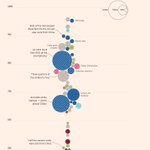
Look at economist Mark Perry's famous chart, the one people call "the chart of the century." It tracks US prices since 2000.
At the top, what explodes: hospital services, college tuition, textbooks, childcare, housing. Increases of +100%, +150%, up to +250%, far above general inflation.
At the bottom, what collapses: TVs, software, phones, toys, clothing. A TV today costs a fraction of what it did in 2000, for an infinitely better product.
Look at what separates the two groups. It isn't technology. It isn't complexity. It's one variable: how much the state is involved.
At the top, sectors that are subsidized, regulated, shielded from competition, where the state funds demand and blocks supply. At the bottom, sectors where companies fight every single morning to serve you better and cheaper.
B. The mechanism: why it's systematic.
When the state subsidizes demand without freeing supply, prices rise. Every time. Guaranteed student loans, and universities raise tuition. Housing aid plus blocked building permits, and rents skyrocket. Administered healthcare, and bureaucracy eats the budget before it ever reaches the patient.
In France it's even more vicious, because the price doesn't disappear: it hides. You never see the hospital bill, you pay it through payroll contributions. You never see the cost of school, you pay it through taxes. Public spending at 57% of GDP, one of the heaviest tax burdens in the world, more than €3.4 trillion in debt. And the result? Overflowing ERs, falling PISA scores, young people who can't afford to live in the city where they work.
The market didn't fail in these sectors. It was never allowed in.
C. Suffering demands a culprit.
A 22-year-old lives all of this in their bones. They can't find a place to live. Their degree either buries them in debt or opens no doors. The future feels blocked. That suffering is real, and I don't deny it for a second.
But human beings can't stand suffering without a culprit. They need a face. A scapegoat.
And this is where everything is decided: who taught them how to read the world?
D. Whoever tells the story picks the villain.
Schools are public. Universities are public. Culture runs on grants. Film goes through funding committees. Public broadcasting shapes the narratives. The people handing down the interpretive framework are, overwhelmingly, paid by the very system that creates the problem.
Do you really think that system is going to name itself as the culprit?
No. It names the capitalist. The boss. The landlord. "The rich." The multinational. The commercial West. Same role, same casting, every time.
E. One lens, a thousand causes.
And this brings me back to that flag. A generation taught to read every situation through a single lens, oppressor on one side, rich, Western, capitalist, oppressed on the other, will apply that lens everywhere. To housing. To climate. To conflicts on the other side of the world. The cause changes, the lens stays. That's why the trap is always the same: it's not the cause that draws them in, it's the way of thinking that was installed in them.
F. The perfect inversion.
Here's the irony. Capitalism is the force that drove down the price of almost everything it touched. The state is the force that blew up the price of almost everything it captured. And young people blame the first for the crimes of the second.
It's like blaming the firefighter for the fire because you saw him at the scene.
G. The ballot box confirms it.
In the US, a few weeks out from the midterms, a large share of urban young voters is getting ready to vote Democrat for more state, more spending, more regulation. New York elected a self-described socialist mayor, carried by young voters, on promises of rent freezes and city-run grocery stores. Rent freezes, the policy that has made housing scarcer everywhere it's been tried. The cure that worsens the disease.
In France, it's the same play in two acts. Part of the youth votes for the radical left, which promises more state. Another part votes for the center, which promises to "manage" the state well, and has dug the debt deeper than ever. Two different ballots, one shared assumption: the problem is the market, the solution is the state.
H. The way out.
These young people aren't stupid. They're right to be angry. They're just aiming at the wrong target.
The day they understand that their rent, their tuition and their hospital are expensive precisely because the state runs them, their anger will change direction. They'll stop protesting against those who create. They'll start protesting against those who capture.
That day, the greatest intellectual scam of our time will be over.


For those worried about AI bubble burst, this could be a key monitorable!


venkat subramanian R retweeted

NVDA $500B fund (not to be confused with funding) consortium plan will not likely age well. Assets of unknown life as collateral for long term debt? Why not do a 30 year ABS deal backed by warehouses of bananas? It’s OK, they’ll be newly engineered bananas of unknown life.
venkat subramanian R retweeted

One of the best performing stocks of the 21st century has nothing to do with computers, technology, or AI.
Monster Energy drink launched in 2002...
$10,000 invested in $MNST before July 2003 would be worth over $21,000,000 today.
Sometimes the best investments aren't flashy.

venkat subramanian R retweeted

Situational Awareness still exists and it is still up 80% YTD. Leopold is still a hedge fund manager with a good track record, and a big learning experience.
He will raise big dollars in the coming weeks/months.
—-
Wall Street has a long history of giving money to managers after they blow up.
Partial list:
John Meriwether, Long-Term Capital
Victor Niederhoffer
Mike Vranos, Ellington
Howard Rubin, Merrill Lynch
Jon Corzine, MF Global
Boaz Weinstein, Deutsche Bank
Brian Hunter, Amaranth
Gerald Tsai, Manhattan Fund
… and let’s not kid ourselves, when he gets out of prison, SBF will be among the largest hedge funds managers in the world.

venkat subramanian R retweeted

In 2007, a young Lionel Messi was photographed giving a baby a bath for a Barça-UNICEF charity campaign.
That baby, Lamine Yamal, is now playing in the 2026 FIFA World Cup for Spain at 18-years-old.
The two will face off against each other on Sunday in the championship.

venkat subramanian R retweeted

I was clearly wrong about Anthropic. They are obviously currently the leader in AI. No company has released a model as good as Mythos/Fable and they will undoubtedly have Mythos 2 ready soon.
And I would never cut them off in a way that hurt them badly, even as a competitor. That’s not my style.
Tesla open sourced its patents and we made the Supercharger network available to all competitors, even though we could have made it a walled garden.
SpaceX launches competing satellite systems with no increase in price or use of unfair terms.
Even my worst enemies can attack me on this platform.
…
venkat subramanian R retweeted

I’m fundamentally pro-business, but some businesses do real evil.
One of the most common business evils is using the power of government under false pretenses to hamstring competition.
Because this is so obviously shameful, it’s hidden under a moral smokescreen and often filtered through third parties. I believe Boeing was behind most of the 1970s opposition to supersonic—to protect themselves after their supersonic jet was cancelled.
Today we see the same thing with AI doomerism. The rate of innovation in AI is extreme — and tomorrow’s leading AI company could be one that hasn’t even been founded yet.
So it’s mighty convenient for the lazy and evil who are on top today to wrap would-be competitors in red tape.
This is wrong and destructive. And should be illegal and socially unacceptable. We must call this out where we see it.
venkat subramanian R retweeted

🚨Can Kunal Shah turn WhatsApp's scale into revenue?
At CRED, founder Kunal Shah built a business around exclusivity, targeting a relatively affluent slice of consumers.
As WhatsApp's new global head, he faces the opposite challenge: creating value and revenue from one of the world's largest and most diverse user bases.
WhatsApp today operates at an entirely different scale. With more than 3 billion users worldwide, it is the default messaging platform for much of the world.
India accounts for roughly a fifth of that user base, with millions relying on the app daily to communicate through voice messages and regional languages.
Yet scale has not translated into proportionate revenue. Despite its central role in users' digital lives, WhatsApp has struggled to build meaningful monetisation engines. Its push into payments through UPI has gained limited traction, leaving it a distant player behind market leaders such as PhonePe and Google Pay.
Shah himself alluded to the opportunity ahead in a recent social media post. “While it has come very far, the delta between WhatsApp today and its full potential is massive,” he wrote
Good one by @AnandJRAnand
moneycontrol.com/technology/…


venkat subramanian R retweeted

A government bureaucrat earns $100,000 and pays $20,000 in taxes. That's not a taxpayer—that's a tax consumer of $80,000. Every government employee at that level requires four equivalent private-sector workers to fund. @DrMarkThornton #MinorIssues
Affluent NRIs frequently complain about the frictions of investing/doing business in India. Not entirely baseless! However, this group gets a lollipop from GoI/RBI once in every 5-7 years, that ends up giving a massive mid-teens tax free low risk inv opportunity. The same inefficiencies and frictions that you face in India forces @RBI to come to you with this opportunity. Therefore, NRI friends( the affluent variety) , go easy on India, next time you feel hassled in India. You are getting adequately compensated!

venkat subramanian R retweeted

A student once explained how wild pigs are trapped:
First, they are given free corn in the forest.
They return every day for the easy food.
Then slowly, fences are built around them, one side at a time.
At first they resist. Then they adapt.
Finally the gate shuts and the pigs, now dependent on the free corn, have lost their freedom without even realizing it.
That is how freedom often disappears in societies too. Not suddenly through force, but gradually through dependence.
Free rations. Free electricity. Free cash transfers. Endless subsidies. Political promises of “something for nothing.”
Each may appear harmless in isolation. But over time, citizens begin depending more on the State than on their own enterprise, effort and initiative.
And when dependence grows, freedom quietly shrinks.
A nation becomes truly strong not when more people vote for benefits, but when more people create, build, innovate and contribute.
There is no free lunch.
Someone always pays the bill.
And sometimes, the hidden cost is freedom itself.
venkat subramanian R retweeted

Q: How are job postings for software engineers rising rapidly despite AI agents automating coding?
A: Because there’s far more code to manage than ever before. We’re already seeing a 14x YoY increase in GitHub commits, and it’s accelerating.
AI has dramatically lowered the cost of writing code, so it’s now being used across far more businesses, applications, and use cases.
We’re at the beginning of a massive productivity boom driven by the proliferation of bespoke software throughout the entire economy.
Coding has been AI’s breakout use case this year. The fact that it’s increased demand for software engineers — rather than decreased it — should call into question the entire “AI will cause mass job loss” narrative.

AI Native!

While doing some cleanup this weekend, @VTSikka and I found this old gem. The fall 1988 issue of intelligent systems review had a paper with me as co-author, then a ~21 year old Senior at Syracuse University, called "Making Robots Intelligent: Incorporating Al Techniques in Robotics"...
Interesting to see that several things we wrote there held up over the past 38 years!


venkat subramanian R retweeted

A big pivot from Ken Griffin on AI:
“Number one is, in the last few months, there has been a step change in the productivity of the AI toolkit. It is profoundly more powerful than it was just nine months ago.
And for us at Citadel, that has allowed us to unleash a much broader array of use cases for AI. And it has been really interesting to watch, to be blunt, work that we would usually do with people with masters and PhDs in finance over the course of weeks or months being done by AI agents over the course of hours or days.
These are not these are not mid-tier white collar jobs. These are like extraordinarily high skilled jobs being, I'm going to pick a word, automated by agentic AI. And I gotta tell you, I went home one Friday actually fairly depressed by this because you could just see how this was going to have such a dramatic impact on society.
When you witness it in your own four walls, when you see work that used to be man years of work being done in days or weeks, it's like, wow, like that's the first time I've seen real impact in our four walls.”
This echoes my own experience with agents and the conversations I am having with students, friends & clients. The toolkit has dramatically transformed and it feels like in finance, for the first time, AI is real.
venkat subramanian R retweeted

If Hantavirus mutated into a global threat, it would unleash AI + biotech unlike anything we've ever seen.
> genome sequenced and public in 4 hours
> AlphaFold maps every protein target
> AI screens 10,000 drugs in 24 hrs
> 50 vaccine candidates designed simultaneously
> AI designed antibodies in days
> risk of death computed instantly
> decentralized trials launch globally
> enroll from home
> 20 countries manufacturing at once
> first doses in three weeks
> real-time dose characterization
> your genome + biomarkers determine your protocol
> variant map updates every hour
No one would wait for governments.
venkat subramanian R retweeted

A case of very strong yet weak Economy
Whenever the dollar strengthens, a strange thing happens.
An economy that otherwise appears strong, fast-growing, and optimistic suddenly starts looking fragile.
Why?
Because India adopted a domestic consumption-led growth model without building sufficient manufacturing and export strength underneath it.
Almost every major Asian success story China, South Korea, Taiwan, Japan
first became manufacturing and export powerhouses before becoming consumption-driven economies.
India attempted the reverse.
We accelerated domestic consumption first.
But even after decades, manufacturing still contributes less than 15% to GDP far below what is required for a large economy aspiring for long-term external strength.
The consequence is predictable:
High consumption + relatively weak manufacturing competitiveness + modest export share = persistent dependence on external capital and dollars.
Despite being a nearly $4 trillion economy contributing around 3.5% to global GDP, India’s share in global merchandise exports still remains below 2%.
That gap matters.
Because global trade is what brings durable dollar inflows.
And when an economy structurally needs dollars for energy imports, electronics, defence imports, capital flows, and external stability, every phase of dollar strength exposes that dependence.
👉This does not mean India is weak.
But it does mean India remains externally sensitive.
👉Programs like Skill India, Scale India, and Make in India were well-intentioned efforts to correct this structural imbalance.
But the scale of manufacturing transformation required has still not been achieved.
That is why every sharp dollar rally creates pressure on the rupee, external accounts, and market confidence.
The issue is not temporary sentiment.
The issue is economic structure.
#economy #trade #gold #dollars #exports #imports