









Darknight retweeted

“Knowing your own darkness is the best method for dealing with the darknesses of other people.”


Voyager 1 carries the Voyager Golden Record, a 12-inch gold-plated copper phonograph record designed as a time capsule for any potential extraterrestrial life that might find it in deep space.
Instead of traditional text sentences, the record and its protective cover are etched and encoded with symbolic instructions, scientific diagrams, and audio-visual data:
• Cover Instructions & Diagrams: Etched symbols show how to play the record at 16-2/3 revolutions per minute, how to convert the audio signals into images, and a mathematical/binary definition of time and units.
• Cosmic Map (Pulsar Map): A diagram using the hyperfine transition of a hydrogen atom as a universal clock/scale and pointing to 14 pulsars (fast-spinning neutron stars) to show Earth's precise location in the galaxy.
• Spoken Greetings: Audio greetings recorded in 55 human languages, starting with ancient Akkadian and ending with modern Chinese dialects, along with a printed/spoken message from U.N. Secretary-General Kurt Waldheim and U.S. President Jimmy Carter.
• Sounds of Earth: Natural and human-made environmental sounds including wind, thunder, surf, bird calls, whale songs, laughter, footsteps, and a Saturn V rocket launch.
• Global Music: A 90-minute eclectic musical collection spanning classical works (Bach, Beethoven, Mozart) and traditional folk/ethnic pieces from around the world.
• Images: 116 analog-encoded photographs and diagrams depicting human anatomy, daily life, science, landscapes, animals, and architecture.


Something humans built is now flying where the Sun’s power finally gives out.
Voyager 1 has left the giant bubble our star blows around the solar system. It pushed through the heliosheath, slipped past the heliopause, and is now cruising through real interstellar space.
How far out is that? About 25.9 billion km from home.
No human-made object has ever been farther. And it was launched back in 1977.
Still going.


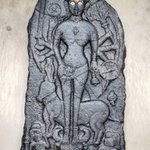
These are indigenous tribes ~100 years ago.
Now, imagine how people would have looked 1000+ of years ago.


This is how Rama would have looked if the Ramayana had been adapted with a realistic approach and genuine consideration for Western audiences. Instead, what we're getting is an absolute eyesore.
#Ramayana


Almost all words match Malayalam and Tamil too

Today I learnt.
Kannada ūru (town) — Sumerian uru (city)
Kannada amma (mother) — Sumerian ama (mother)
Kannada ayya (father/sir) — Sumerian aya (father)
Kannada aidu (five) — Sumerian ia / i (five)
Kannada āgu (become) — Sumerian ak (do/make)
Kannada tīru (end/finish) — Sumerian til (complete/finish)
Kannada ennu / annu (say) — Sumerian inim (word/statement)
Kannada kollu (kill) — Sumerian gul (destroy)
Kannada nekku (lick) — Sumerian nag (drink)
Kannada taṇi (cool/become calm) — Sumerian ten (cool/soothe)

In Tamil, கண்டிக்கணம் = to protest
In malayalam, കണ്ടിക്കണം = to cut
(Kandikkanam)
@naa_ganesan @arish_vr
Darknight retweeted
The game is not about becoming somebody, it's about becoming nobody.
When the faith is strong enough, it is sufficient just to be.
- Ram Dass
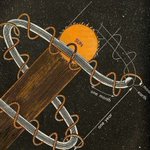
Path of the Sun is Spiral
Path of the Earth is Spiral
Path of the Moon is Spiral


The Sun has only 22 galactic orbits left.
Earth races around the Sun at ~67,000 mph (107,000 km/h), giving us our familiar 365.25-day year and changing seasons.
But the Sun is in motion too, hurtling through the Milky Way at ~514,000 mph (828,000 km/h) on a grand orbit around the galactic center. One complete lap, known as a cosmic year, takes roughly 225–230 million years.
When the Sun finished its most recent galactic orbit, the earliest dinosaurs were just beginning to roam Earth.
Since its birth ~4.6 billion years ago, our star has completed about 20 such orbits.
Stellar models predict the Sun will keep fusing hydrogen in its core for another ~5 billion years before it swells into a red giant and eventually fades into a white dwarf. At its current orbital speed, that leaves roughly 22 more laps around the Milky Way.
Each cosmic year sweeps the entire Solar System tens of thousands of light-years across the galaxy, through dense spiral arms rich with star-forming regions, past ancient globular clusters, and amid countless other stars.
Continents drift, mountains rise and erode, entire species evolve and vanish, all within a tiny fraction of one galactic circuit.
Human civilization, from the first cities to today’s digital age, has existed for less than 0.001% of a single cosmic year.
We are passengers on a star halfway through its ~10-billion-year galactic journey across a 100,000-light-year-wide disk, witnessing just the briefest sliver of one ongoing lap in an unimaginably vast cosmic dance.


