
Founder, Genmark AI | AI Search, Growth, and Agentic Marketing | Ex Microsoft (Search Ads), AI/HR Tech Startup | Building the next growth stack
Bellevue, WA
Joined February 2009
- Tweets612
- Following1.2K
- Followers222
- Likes16



Pinned Tweet
Buyers now ask ChatGPT, Gemini and Perplexity which vendors belong on their shortlist. Most B2B teams have never checked what those answers say about them.
Here's the full playbook to check it and fix it, in 7 steps. No tools needed.
Bookmark this. One step per post below.

2
1
214
Send qualified leads and closed deals back to Google Ads, so bidding learns which clicks became pipeline, not just form fills. Setup in 8 steps, from Google's own help pages:
1/ Turn on auto-tagging
-> Offline imports need the click ID (GCLID) that auto-tagging adds.
2/ Capture the GCLID on every form
-> Add a hidden GCLID field and store it on the lead in your CRM.
3/ Pick the stages to send
-> Good: "qualified lead" and "closed won". One conversion action each.
4/ Create the conversion action
-> Goals > Summary > "+ Create conversion action" > "Conversions offline".
5/ Consider enhanced conversions for leads
-> Google says that if you haven't adopted offline imports yet, start with this instead. It matches hashed email or phone numbers from your forms.
6/ Accept the customer data terms
-> Goals > Settings.
7/ Mind the clock
-> Google keeps the GCLID for only 90 days. If deals close later than that, send an earlier stage too.
8/ Choose the import method
-> A CRM integration (Salesforce, HubSpot) or a Data Manager source. Some sources need the click-to-conversion cycle under 14 days, others under 90.
If you see "Conversion date precedes click date", check the timestamps in your upload. The conversion can't come before the click.
2
42% of US adults say they use AI chatbots to search for information. That's the top use, ahead of work tasks (Pew Research Center, survey Feb 17-23, 2026).
Your buyers are in that group. I'd ask one chatbot your best customer's question before the weekend and read what comes back.
3
Thinking about a ChatGPT ads test? All 7 things from OpenAI's own Help Center are in the image. The 4 I'd plan around:
1. Ads appear below the answer, not inside it. Write the headline as the next step after the answer.
2. Context hints "are not exact-match keywords and do not guarantee delivery." Write them as buyer situations, not keyword lists.
3. Click-billed conversion campaigns charge for clicks, not conversions. Judge them on cost per opportunity from your CRM.
4. OpenAI says there are no performance benchmarks yet across advertisers. Your own search campaigns are the baseline.
It's a beta, so recheck the pages before you launch.

1
5
A review request email for B2B customers, plus the rules that keep it inside Google's review policy.
When to ask:
-> Ask every customer at the same point, for example 60 days after go-live. Not only the ones you expect to be happy.
The email (copy and edit):
"Hi [Name], it's been two months since you started using [Product]. Would you be open to writing a short, honest review on [site]? A useful review mentions:
- your role and team size
- what you used before
- the problem you needed solved
- one result you've seen, good or bad
Here's the link: [link]. Thanks, [You]"
Why those 4 prompts: a review that names a use case and a result helps the next buyer, and it gives AI answers specific text to draw on.
Rules from Google's contributed-content policy (for Google reviews):
1/ No incentives
-> No payment, discounts, or free goods or services in exchange for a review.
2/ No review gating
-> Don't ask only happy customers, and don't discourage negative reviews.
3/ No conflicts of interest
-> No reviews from current or former employees.
4/ Never write it for them
-> Their words, their account.
Other review sites have their own rules. Read them before you send.
1
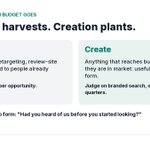
Most B2B marketing budgets only capture demand. Very little creates it.
Two quick ways to see which one you're funding:
Add "Had you heard of us before you started looking?" to the demo form. A high yes rate means earlier work is doing the heavy lifting.
Track branded search monthly. If capture spend rises while branded search stays flat, you're paying more to fight over the same buyers.

"Cost should only ever be a floor."
That's YC partner Tom Blomfield in his Startup School talk "How To Price For B2B." His method: work out with your champion the value you deliver (time saved, cost cut, revenue added), then price at roughly 25-50% of it.
What I'd take from it for marketing:
1. Put the value math on the pricing page. The CFO needs the math, not the feature list. Label examples as examples.
2. Write that same value metric into every pilot proposal.
3. Don't argue on price. He warns undercutting turns into a race to the bottom.
4. If a champion can't explain your plans to their boss in one sentence, simplify them.
4 B2B paid social mistakes, and the fix for each:
1. Targeting every job title that sounds right. Start with the accounts you'd sell to, then narrow by function.
2. Asking cold audiences for a demo in the first ad. Give them something useful first, then ask the people who engaged.
3. Optimizing for form fills. The platform finds whatever you reward, including junk. Send qualified pipeline back as the conversion.
4. Running the same three ads for a quarter. Narrow B2B audiences see them again and again, so fatigue comes fast.
3
The best question for a B2B case study call isn't about results.
It's: "What would you tell a peer who's looking now?"
The answer is usually the quote. Ask it last, after "What made you start looking?" and "What almost stopped you?", and get written approval on every number before you publish.
1
5
Google rewrites title links when it sees certain problems, and its documentation lists them. Check your top 20 pages against the list:
1/ Half-empty: the title is missing the page name ("| [Brand]")
2/ Obsolete: an old year left in the title
3/ Inaccurate: the title doesn't match the page
4/ Micro-boilerplate: many pages with nearly identical titles
5/ No clear main title: several headings look equally prominent
6/ Duplicated site name
Then write titles the way Google's guide asks:
-> Descriptive and concise. Never just "Home."
-> Distinct for every page.
-> No repeated keywords.
-> Brand once, at the start or end, after a hyphen, colon or pipe.
There's no character limit, but Google truncates title links to fit the device width. Put the words that matter first.
Quick check: search site:yourdomain.com [topic]. Where the titles shown differ from your <title> tags, Google is telling you which of the six you have.

4
AI Overviews now show on 96% of "best X for Y" searches.
Semrush tracked 400 commercial keywords (banking, software, ecommerce; US desktop) every month from September 2025 to August 2026. By August:
- "best X for Y": 96.12%
- "reviews": about 90%, up from 30.14% a year earlier
- all 400 keywords: 88%, up from 45.75%
Weighted by search volume, 97.08% of the commercial searches they tracked showed an AI Overview.
These are the searches a buyer runs right before a shortlist. On most of them, the first thing they now read is a summary built from other people's pages.
Two things to do this week:
1/ Search "best [your category] for [your buyer]" and "[your product] reviews." Read who the AI Overview names and which pages it cites.
2/ If you're missing, study those cited pages. That's where your next piece of proof needs to live: a comparison article, a review profile, a customer story.
Semrush's own read: ranking #1 under that summary likely won't bring as much traffic as it did a year ago.

1
2
9 prompts for competitor research with an AI assistant. Paste the competitor's public pages first (homepage, pricing, 3 customer stories), then run these. (1/5)
1
1
7/ "Write the 3 questions a skeptical buyer would ask their sales rep."
8/ "Here is our homepage copy: [paste]. Where does it overlap with theirs almost word for word?"
9/ "What would a buyer have to believe to pick them over us? And us over them?" (4/5)
1
The last click rarely caused the deal.
It's often a branded search by someone who had already decided. It records the door, not the reason. And the things that did the deciding, podcasts, peer chats, Slack communities, AI answers, mostly don't leave a click at all.
I'd keep the tracked data and add the cheapest second lens there is: a free-text "how did you hear about us?" on the demo form, read every month.
2
6
"Better to make a few users love you than a lot ambivalent."
Paul Graham wrote that in 2009 ("Startups in 13 Sentences"). Most B2B messaging still does the opposite and tries to speak to every segment at once.
How I'd apply it:
1. Sort customers by retention or expansion. The top group is your real ICP, whatever the plan says.
2. Write only for them for a quarter: homepage, case studies, ads, in their words.
3. Call five of your happiest customers and copy the phrases they repeat.
4. Add the next segment only after the first one starts referring others. Graham's point: it's easier to expand userwise than satisfactionwise.
4
I spent years building search and advertising products. If I inherited a Google Ads account nobody had audited in a while, this is what I'd check, saving the most important for last:
10. Account access. Remove former employees and old agencies.
9. "Limited by budget." Are the capped campaigns your best ones?
8. Final URLs. Click every ad. A broken landing page still bills.
7. Ad schedule vs sales hours. Do you want demo requests at 2 AM?
6. Broad match. If it's on, someone should have chosen it. Read the search terms it brings in.
5. Networks. Segment Search results by network.
4. Duplicate leads. One person submitting twice isn't two leads.
3. Location options. The default, "Presence or Interest," includes people who've only shown interest in your locations (Google Ads help).
2. Auto-applied recommendations. Google can add keywords, broad match or audiences for you. Check what you've opted into (Google Ads help).
1. What bidding optimizes for. If a newsletter signup counts as a conversion, you're teaching the system to buy newsletter signups.
3
How to write an honest "[You] vs [Competitor]" page. Buyers ask AI assistants this exact question, and a fair page is the kind that gets quoted.
1. Title that matches the question: "[You] vs [Competitor]: which fits [buyer type]?"
2. A 2-sentence verdict at the top: "Pick them if you need X. Pick us if you need Y."
3. Who each one is for: team size, use case, budget.
4. A table of checkable facts: pricing model, setup time, integrations, support, contract terms.
5. Where they're stronger. Name at least one real strength, or the page reads as an ad.
6. Where you're stronger, with proof.
7. What switching takes: data export, time, cost.
8. Both pricing pages linked, comparison dated.
9. 4-6 real questions from sales calls, answered briefly.
10. A "last checked" date and a named owner.
Two rules: no claim about them you can't link to, and when they point out an error, fix it that week.
2
AI answers are assembled from many sources. When those sources tell different stories about you, the model has to pick one, and it may not pick yours.
A claim-by-claim audit you can run without any tool:
1. Write down the 5-10 claims you most need to be known for. Not the tagline: your category, segment, 2-3 use cases, differentiators, and the constraints buyers screen on (compliance, integrations, regions).
2. Check each claim against each source type: your site, docs, customer stories, review sites, publications, communities, partner and marketplace pages, comparison articles. Search [brand] -site:yourdomain.com plus the claim's key terms, then ask the AI engines your buyers use the questions each claim should win.
3. Mark each claim:
Corroborated: two independent source types support it, nothing contradicts it.
Uncorroborated: only you say it.
Contradicted: an outside source, or one of your own old pages, says something different.
4. Fix contradicted first, then uncorroborated. Many contradictions are an afternoon's work: an old press release, a launch-day marketplace listing, a review profile in the wrong category.
Sometimes the claim is what's wrong. If every review says small business and your homepage says enterprise, change the homepage.
5. Re-run it every two quarters, and after any repositioning.
2
8