

Pediatrician, ‘rational’ vaccine thinker, Editor Covid Vaccines, TB on Vaccines & many others, Past-Convener IAP COI, Member-WHO-VSN https://nitter.cf/t.co/eOvazlWmWg
Bijnor, Uttar Pradesh, India
Joined November 2009
- Tweets27.5K
- Following495
- Followers20.3K
- Likes18.4K




Pinned Tweet
Am I taking a break from pandemic-related news? Is the pandemic over? No, then why in the midst of the pandemic, I’m doing this long thread on something different? Will disclose the reason in the end.....but I think this fascinating tale needed to be told to my twitter family 1/
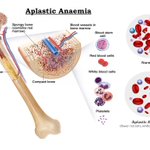
Aplastic Anaemia After COVID-19: A Possible Infectious Trigger?
➡️ A single-centre study of 65 patients found a modest rise in aplastic anaemia diagnoses during the pandemic.
Among 18 patients diagnosed in 2020–2023, 67% had antibodies suggesting previous SARS-CoV-2 infection, often unrecognised and occurring near disease onset.
➡️ Three patients with evidence of prior infection showed marked inflammatory cytokine activation and bone-marrow findings that may point towards immune-mediated injury in susceptible individuals.
➡️ What about vaccination? The study found no association between vaccination status and serological autoimmune abnormalities.
👉 Key takeaway:
SARS-CoV-2 may have acted as a trigger for aplastic anaemia in some predisposed individuals, but the small, retrospective study cannot establish causation. Larger studies are needed to clarify the relationship.
frontiersin.org/journals/imm…

#LongCOVID: A Study of 244 Million Americans Challenges Earlier Estimates!
➡️ Stanford researchers analysed 14.4 billion health-insurance records and found that a better-controlled study design identified 98% fewer COVID-attributable health outcomes between 4 and 12 months after infection than conventional methods applied to the same data.
➡️ What went wrong? Comparing people who tested positive with people never tested can introduce bias, because the groups differ in underlying health and healthcare-seeking behaviour. The researchers used better-matched controls and negative-control outcomes to reduce this bias.
➡️ Key takeaway: LongCOVID is real, but some earlier estimates of the range and duration of its effects may have been inflated.
pnas.org/doi/10.1073/pnas.26…

#LongCOVID: The Hidden Weakness Behind Breathlessness?
➡️ A study of non-hospitalised patients with persistent breathlessness nearly 2 years after mild COVID-19 found significantly reduced diaphragm strength and evidence of structural changes—even when routine lung function tests and echocardiography offered no clear explanation.
➡️ The weaker the diaphragm, the more severe the reported breathlessness—a strong correlation (r = −0.67).
➡️ Why it matters: The diaphragm, our principal breathing muscle, may be an overlooked contributor to exertional dyspnea in some people with longCOVID.
👉 Clinical implication: Persistent breathlessness despite normal routine investigations may warrant further assessment of respiratory muscle function in selected patients.
frontiersin.org/journals/phy…

Want to Live Longer? Don’t Just Count Your Steps—Pick Up the Pace!
➡️ A study of over 4,000 British adults, averaging around 69 years of age, found that faster walking was associated with a 23% lower risk of death, while a higher step rate was associated with a 17% lower risk.
➡️ Published in JAMA Network Open, the study suggests that how fast you walk may matter in addition to how many steps you take. 1/

Practical takeaway: Start at a comfortable pace and gradually increase your speed as your fitness allows. You don’t necessarily need to hit 10,000 steps every day to benefit from walking.
⚠️ These are observational findings: brisk walking may also be a marker of better underlying health, and the study cannot prove that walking faster directly extends life.
👉 The simplest fitness upgrade? Keep walking—but, when safe, walk a little brisker! 2/2
jamanetwork.com/journals/jam…

What If Your Doctor Could Check the HEALTH of Your IMMUNE SYSTEM—Just Like Your HEART?
➡️ We routinely check blood pressure, blood sugar and cholesterol. But what about the body’s defence force—the immune system?
➡️ Imagine this: A simple immune-health profile that could help reveal whether your defences are too weak, excessively activated, ageing prematurely or mistakenly attacking your own body!
➡️ Scientists are exploring how advanced blood tests, molecular profiling and AI could map our immune cells and discover how well they work. 1/

Why is this exciting? One day, such tests might help identify people at risk of serious infections, autoimmune diseases or certain cancers—and guide more personalised prevention and treatment.
➡️ The big vision: Moving from treating disease after it appears to identifying immune problems before they cause harm.
⚠️ Reality check: A comprehensive, clinically validated immune-health check is not yet routine medicine. Researchers must establish which measurements reliably predict disease and whether acting on them improves outcomes.
👉 Could an immune-system health score become as routine as checking blood pressure? The future of personalised medicine may depend on it! 2/2
nature.com/articles/d41586-0…

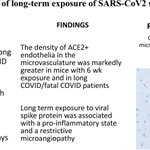
#LongCOVID: Could Persistent Spike Protein Damage the Microvasculature?
➡️ A study examining human tissues and a mouse model reported persistent SARS-CoV-2 spike (S1) protein associated with inflammation and collagen deposition in small blood vessels.
LongCOVID cases also showed increased ACE2-positive microvasculature compared with recovered controls. 1/

In mice exposed to S1, ACE2-positive CNS microvascular density was reported to increase 19-fold after 1.5 months.
➡️ The proposed mechanism: Persistent spike may contribute to endothelial inflammation and collagen deposition, potentially producing a restrictive, fibrosing microangiopathy.
➡️ Why it matters: These findings offer a possible mechanism linking long COVID with persistent vascular and neurological symptoms. 2/2
H/T: @CatchTheBaby
ajp.amjpathol.org/article/S0…

#LongCOVID: When the Body Fails to Return to Its Molecular Baseline!
➡️ A multi-omics study of 155 people with long COVID, 100 patients with acute COVID-19, and 44 healthy controls revealed persistent abnormalities in multiple biological pathways, including sphingolipid metabolism and chromatin-associated processes.
➡️ A machine-learning model identified nine key molecular features that distinguished long COVID, achieving a mean precision–recall AUC of 0.97 in the study dataset—a striking signal of potential biomarker value! 1/

The bigger picture: #LongCOVID may leave a persistent molecular footprint in blood, extending beyond symptoms to alterations in lipid metabolism and gene-regulatory processes.
➡️ Clinical promise: These findings offer a framework for developing objective biomarkers and understanding longCOVID biology. 2/2
H/T: @CatchTheBaby
nature.com/articles/s41598-0…

SARS-CoV-2 Is Evolving to Become Harder for Naïve B Cells to Recognize!
➡️ Researchers found that naïve human B cells were 3 times less likely to recognize the KP.2 RBD than the original Wuhan-Hu-1 RBD.
➡️ Mutations such as #E484A and #F486P appear to reduce recognition by naïve B-cell receptors, potentially narrowing the pool of B cells available to initiate new antibody responses.
➡️ The bigger picture: SARS-CoV-2 evolution may do more than evade existing antibodies—it may also make it harder for the unexposed immune system to recognize its spike protein in the first place.
H/T: @CatchTheBaby
biorxiv.org/content/10.64898…

#LongCOVID May Leave a Lasting Mark on Blood Pressure!
➡️ A large Swedish study of 1.22 million adults found that people with physician-diagnosed longCOVID had a 14% higher risk of developing new-onset hypertension than those without longCOVID—even though they had not been hospitalised for acute COVID-19. 1/

The increased risk affected both sexes—13% in women and 15% in men. Among those with longCOVID, hypertension developed in 16% of women and 24% of men during follow-up.
➡️ Possible explanation: Persistent vascular dysfunction or autonomic nervous system disturbances after SARS-CoV-2 infection may contribute to altered blood-pressure regulation.
➡️ Clinical takeaway: #LongCOVID follow-up should not focus solely on fatigue and brain fog. Regular blood-pressure checks and cardiovascular risk assessment may help detect silent hypertension early. 2/2
ahajournals.org/doi/10.1161/…

A New 25-Valent Pneumococcal Vaccine for Infants: Beyond PCV20—and a Potential Advance Over PCV13!
➡️ Pfizer’s investigational 25-valent pneumococcal conjugate vaccine (25vPnC; PF-07872412) has shown encouraging Phase 2 results in infants.
➡️ Compared with PCV20 (Prevnar 20), it generated immune responses against all 25 serotypes, including five additional serotypes—15A, 23A, 23B, 24F and 35B—that could broaden protection against invasive pneumococcal disease. 1/

🇮🇳 When will it be available in India? Is it licensed for children?
➡️ Paediatric use:
The candidate is specifically being developed for infants and has entered Phase 3 trials. It is not yet licensed for routine use in children.
➡️ India:
No confirmed Indian approval or launch date is available from the information provided. Availability will depend on successful Phase 3 trials, regulatory review and the manufacturer’s plans for India.
➡️ PCV13 comparison:
The candidate may offer broader serotype coverage than PCV13, but it is too early to conclude that it provides superior clinical protection. The reported findings concern immune responses, not demonstrated reductions in invasive disease. 6/
⚠️ Bottom line:
A promising next-generation candidate—but Phase 3 results and regulatory approval must come before clinical use. 6/6
businesswire.com/media-cente…
