




Pandora Linux UEFI Bootkit with version agnosticism, open sourced + writeup
github.com/vtl0/pandora
exploiters.fun/blog/malware/…


No AI involved. Writeup tomorrow, also entirely written by me.

me dá uma gastura essa comunidade de segurança, desgosto profundamente de várias "referências" da área.
tem um cara do malware hypado que é backseatado por IA, escreve código bosta, se vende pra caralho e consegue atrair atenção de muitos com slop de baixa qualidade
2
127
eu realmente quero escrever algumas coisas, mas sobre o que devo? tenho muita coisa closed source que pretendo tornar open source, e projetos que quero refazer/refatorar
3
106
Imagine if your MOBO vendor shipped firmware images with known bugs for years with no patch. Only if you knew...
110
deu quase o mesmo :D
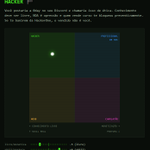
meu veredito no HACKER COMPASS: HACKER 🏴 (livre/monetiza -5 | skill/postura +6)
lude.rs/hacker-compass/


meu veredito no HACKER COMPASS: HACKER 🏴 (livre/monetiza -3 | skill/postura +5) lude.rs/hacker-compass/

Back in the day USB legacy support for keyboards would cause a SMI per key press, freezing every cpu core for a brief moment just to translate it to a ps/2 signal, from SMM

One of the biggest operating system myths is that system calls are just interrupts. They aren't.
A system call is a controlled transition from user mode to kernel mode that lets an application request a privileged service, such as reading a file, allocating memory, creating a process, or sending data over the network. The CPU switches to the kernel through a dedicated mechanism designed specifically for system calls. On modern x86 processors this is typically done with the SYSCALL/SYSRET instructions, while ARM64 uses the SVC (Supervisor Call) instruction.
A hardware interrupt is different. It is generated asynchronously by hardware devices, such as a timer, keyboard, SSD, or network card, to notify the CPU that something needs attention. Interrupts can occur at almost any time, independent of what the currently running program is doing.
Both system calls and interrupts enter the kernel, but they exist for different reasons. A system call is a synchronous request initiated by software, while an interrupt is an asynchronous event generated by hardware. Confusing the two makes it harder to understand how operating systems manage privilege, devices, and execution flow.
5
369
Poorly written mod btw. Either use GetKeyState or do it the normal way, GetAsyncKeyState works even if your process isn't focused/foreground and the foreground window is from a process of same privilege

> be me
> get dm
> "is this malware?"
> "windows defender went crazy when i tried this video game mod"
> download
> look inside
> not malware
There is a function in Windows you can invoke called "GetAsyncKeyState". In simplest terms, this function waits for user input on the keyboard. When a key is pressed down GetAsyncKeyState tells you what was pressed down.
GetAsyncKeyState is used frequently with video games. Using this function video games can determine ... what you're pressing. Likewise, GetAsyncKeyState can be used by legitimate software for when a user does a shortcut or something. There is a lot of legitimate use cases for this function.
However, GetAsyncKeyState is also abused because GetAsyncKeyState is tells you what key on the keyboard is pressed down, GetAsyncKeyState is used as a way to record what users are typing. Typically the data returned from GetAsyncKeyState is piped to a text file. Other times malware developers may use GetAsyncKeyState to store recorded key strokes in-memory and then send it out externally to a remote computer.
Regardless, this video game mod was invoking GetAsyncKeyState and filtering each key press to determine when the mod was triggered. In essence, it was scanning and waiting to determine if it is toggled on or off. Furthermore, after the mod was toggled on or off, it logged when it was turned off for debugging purposes.
From Windows Defenders perspective it saw an unsigned and unverified library being arbitrarily loaded into a video game and, once loaded, it was scanning user keys and subsequently writing something to a text file.
After bonking this video game mod with a stick we know it's not malware. However, this is a great example of false-positives in anti-malware services because, by all means, this mod does seemingly mimic something a malware payload would do.
But it's not malware. It's just a silly video game mod for Baldurs Gate 3

103
"GUID is hardcoded inside their TPM" is a blatant lie and there is no such thing.

tfw you laugh at idiot Microsofty lusers being globally tracked by the NSA because their GUID is hardcoded inside their TPM, but then you suddenly remember Linux also has /etc/machine-id and you forgot to setup your init daemon to periodically truncate and regenerate a new machine-id so you can't also be tracked because you are pretty sure that Chrome is reading it and sending it to Google as harmless "user telemetry analytics."
i stand by my claim that mf'er asshole Lennart Poettering really is the NSA's man on the inside on a mission to destroy Linux and install the NSA's backdoors through all his systemd slop

92
People are acting like Microsoft telemetry is sending some type of "User X is doing sus things!" data, when it is not. What happened was similar to how they confirmed pompompurin was their guy. Don't use system-wide vpns or mix it with personally identifiable activity
72
