
PhD student @CMU_Robotics | BS/MS @JohnsHopkins
Joined September 2024
- Tweets32
- Following48
- Followers41
- Likes33




Junxiang Wang ✈️ CoRL retweeted

Coding agents powered by models like GPT-6 Astra and Opus 5.5 can already tackle robotics tasks. We recently studied what they actually do along the way.
We gave Codex and Claude Code access to a Dexmate Vega and examined the logs and recordings: What steps do they take? Where does the time go? What do they build, and where do they struggle?
We found that:
1. Across successful fruit and door trials, recorded robot actions take only 20–36% of task time on average, depending on task and model. The rest includes checking observations, writing and running code, waiting, and response latency.
2. Agents build geometry helpers, then save them with procedures and lessons. The model still chooses targets, interprets feedback, and makes corrections—even when reusing a saved skill.
3. More tools do not automatically help. In our small sample, added perception and motion tools often increased time and model cost among successful runs.
4. Simulation helps agents iterate on a solution. Failed rehearsals led to a better bowl grasp, but assumptions about contact and grasp retention could also produce a simulated pass that failed on the robot.
5. Recognizing danger does not reliably lead to safe action. In one door trial, the agent acknowledged high force, then requested another forward move.
For us, this points to a system-design question: how should the model, tools, skills, controllers, and safety mechanisms work together to make execution reliable?
I’ll discuss these findings, alongside our other work on building reliable robotic agents, at the CoRL Workshop on Agentic Robotics on November 12 in Austin.
Full blog: easypapersniper.github.io/pr…
Workshop: agentic-robotics-workshop.gi…
#Robotics #AgenticAI #CoRL2026 #EmbodiedAI
Junxiang Wang ✈️ CoRL retweeted

Can learning to grasp teach a robot to use tools? 🤖🖐️
Introducing our #CoRL2026 paper:
“From Grasps to Dexterity: Large-Scale Grasp Pretraining for Dexterous Manipulation”
We turn grasp data into pretraining for autonomous tool use.
🎥 Project & videos: yingyuan0414.github.io/grasp…
🧵👇 (1/9)
Junxiang Wang ✈️ CoRL retweeted
Can we make dexterous robots compliant without sacrificing precise control?
Excited to introduce FOMO-Dex: Force-Modulated Dexterity! 🖐️
FOMO-Dex brings force-aware compliance to dexterous teleoperation, enabling robots to pick up thin cards and chips 🃏, cut paper 🔪, turn nuts 🔩, and use screwdrivers 🪛.
These force-aware demonstrations also train better autonomous policies!
🎥 Videos & paper: yingyuan0414.github.io/fomo-…
🧵👇 (1/8)
A robot constantly receives multimodal information—textual states, camera images, 3D maps—but what is the “best” modality to save in memory? Is text enough?
Introducing MeMoREval, my internship project at @DexmateAI, where we evaluate memory modality for embodied agents.
🧵
We also deployed our memory system and evaluation protocol on a Vega 1 Pro in two real-world tasks and demonstrated that the same protocol, memory system, and agent skill set can be transferred onto real hardware to successfully recall memory and respond to requests.
1
2
48
Check out our paper and website for more details!
📄 Paper: arxiv.org/abs/2610.12561
🌐 Website: memoreval.github.io
Huge thanks to @SniperPaper, @qinyuzhe, and everyone at @DexmateAI for their support. It's been a great journey working on this project!

3
75
Junxiang Wang ✈️ CoRL retweeted
A robot needs to know when a step is done, or it never starts the next one.
In the video, the robot puts the mug upright at 36 s… and keeps going.
Checking "is it done?" sounds easy, but a useful checker has to:
• understand any task and scene, not just follow one hand-written rule
• run often enough to catch the moment, before the robot overshoots
• stay cheap enough to call again and again
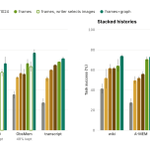
So I put today's models to the test: GPT-6 Astra, Gemini, DeepSeek, Qwen, and Jev, a fast text-only decision model. I compared three ways to ask: a VLM judging the camera images directly, a VLM describing the scene and judging its own description, or the same description handed to Jev.
Here's what happened: easypapersniper.github.io/un…
Junxiang Wang ✈️ CoRL retweeted

How far can we push dexterous robot manipulation with human video-only supervision and minimal assumptions?
🚫 No teleop. 🚫 No wearables. 🚫 No external sensors. 🚫 No robot demos.
Introducing VIDEOMANIP: 🎥 Just monocular RGB, 🌍 in-the-wild human video → dexterous robot manipulation 🤚[1/6]
Junxiang Wang ✈️ CoRL retweeted

Robotic Caregiving & Human Interaction Lab researchers are developing assistive robots that use natural conversation & adapt to human preferences!
Led by @wang_junxiang_, the system enables robots to listen & adjust movements based on user input. 🦾
bit.ly/4srtI2r


Junxiang Wang ✈️ CoRL retweeted

Johns Hopkins roboticists—including alumni @JieYingWu and @wang_junxiang_—explore new ways of using @IntuitiveSurg’s da Vinci surgical system, from an open-source research kit to remote surgery improvements. Learn more: cs.jhu.edu/news/new-directio…

How to convey a robot’s intent and motion such that anyone can understand?
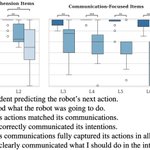
Our #CoRL2025 paper introduces CoRI, a task- and robot-agnostic pipeline that communicates any robot’s intent, given a planned physically-assistive trajectory.
cori-phri.github.io
🧵
Join us at #CoRL2025 on 9/30 for our spotlight (3:30pm-4:30pm) and poster (5:00pm-6:30pm)!
Check more videos and generated communications on our website: cori-phri.github.io, and more details in our paper: arxiv.org/abs/2505.20537
1
1
109
This project would not have been possible without the support of my advisor, @ZackoryErickson, and my collaborators Barış and Rana from Honda Research Institute.
56