
I'm a weatherman!
Joined April 2020
- Tweets8
- Following2
- Followers7
- Likes0




My latest book - "From Gods to Gigabytes - A Brief History of Weather Forecasting". Please enjoy...@AMOSupdates

An excellent review of the weather services available at the time of D-Day, June 1944. It was written in 1971 by RJ Ogden of the Royal Meteorological Society
rmets.org/sites/default/file…
@AMOSupdates

The 6th June 1944 was D-Day, when the allies launched their invasion of occupied France. The weather had to be right but the forecast was difficult. An intense low over the North Sea was a major issue. Image: Synoptic chart 9 am 6th June 1944 @AMOSupdates

On 5 September 1862 two British balloonists Henry Coxwell and James Glaisher ascended to the unheard of altitude of 11 km, taking meteorological readings along the way. Both nearly died during the ascent. Image: Wikipedia Commons. @AMOSupdates

2
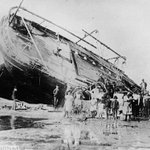
5th May 1898 was when the paddle steamer "Maitland" was wrecked. In what was likely an intense east coast low the "Maitland" was driven ashore on the NSW Central Coast with the loss of 27 lives. Image: The wreck site. (Central Coast Library) @AMOSupdates

1
In 1943 the Germans installed an automatic weather station called "Kurt" in a remote part of northern Canada. It was rediscovered in 1981. Image: "Kurt" is now located in the Canadian War Museum. Richard Whitaker
@AMOSupdates

1
ANZACweek: Radar was refined by the British during WW2 to detect incoming enemy aircraft. It also located rain and showers - a useful forecasting function. Image: Radar station at Poling, Sussex, early 1940’s. Source: R. Whitaker and metoffice.gov.uk@AMOSupdates
