

Official account for @worldnetwork's global affairs. Advancing global policy that protects privacy, digital trust, and economic opportunity.
Earth
Joined February 2025
- Tweets149
- Following10
- Followers1.7K
- Likes479


Pinned Tweet
AI is accelerating productivity and changing how value is created. One question that arises is how to ensure that value goes to real people.
Learn about how World ID can verify unique humanness in a privacy-preserving manner across industries here:
world.org/blog/world/the-eco…
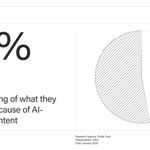
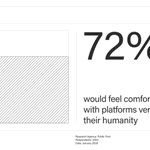
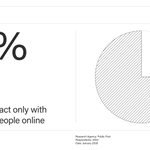
We commissioned Public First, the polling organization, to survey the British public on the topic of digital trust in the age of AI. The result is clear: the need for proof of human is growing.


As AI-generated content becomes more advanced, trust in the digital public square erodes. The data shows that people are asking for safeguards. Proof of human is emerging as essential digital infrastructure: it serves as a way to protect people and helps ensure the internet is a space for real people in the age of AI.
Ready the survey results: publicfirst.co.uk/wp-content…


World Policy & Global Affairs retweeted

While the dust settles on the #moltbook moment - the point where the activity of AI agents went mainstream? - there are some policy reflections that warrant discussion in fairly short order. As ever with technology, the first uses probably won’t be what we expect, some will be harmful, but the pace of adoption increases faster than the parallel policy conversations. Three immediate areas for investigation spring to mind.
1) Hostile actors don’t need proprietary military tech to disrupt the information ecosystem, businesses or Government - the cost of entry is now basically zero to access intelligent, autonomous, KYC-smart bots. Lots of them.
2) This technology will be used by citizens as part of their everyday life. How does a healthcare or social welfare system respond, in a way that does not disrupt citizens' ability to access basic services, without exposing the same services to new levels of fraud and exploitation?
3) Section 230 is not going to solve this - but nor does getting rid of 230. We can argue about whether Congress intended that “users” included autonomous, AI-enabled bots but it doesn’t seem too far a leap to say that content created and posted by an AI tool does not benefit from 230 protection. What that means for a service could be fairly significant - if human content has 230 protection and bot content does not, any online service being used by bots is now potentially liable for what they do. So yes, I think we’re going to need a s230 for the AI age.
In every case, the ability to distinguish between a bot and a real human is going to be a fundamental necessity for the continued ability of online services and Government to operate in a safe, secure and trustworthy way. The rapidly increasing availability of these tools makes it a security and economic imperative to start figuring these questions out, quickly.
World Policy & Global Affairs retweeted

EURC, the largest euro-stablecoin in circulation, is now available on @world_chain_ 🙌
+17M verified humans around the world using @worldmoney can now use EURC
• for euro-denominated payments across the globe
• as a global store of value
• for euro-denominated DeFi, e.g. 24/7 onchain trading and lending
..and much more!
Two recent stories point to one problem: bots. From ticket resales to driving test appointments, AI-driven bots are locking out real people from a variety of services.
Whether it's $4000 tickets or $500 driving test slots, automation is outpacing regulation. Capping costs won’t stop bots from contributing to the unregulated resale economy.
bbc.co.uk/news/articles/c33p…

It’s clear we need systems that can distinguish humans from machines without friction or privacy. Proof-of-human technologies offer a scalable way to make sure real people, get fair access to services, tickets, and appointments. It’s time to get ahead of the bots.
bbc.co.uk/news/articles/cn09…

2
3
504


AI-generated scam businesses are on the rise, using fabricated founder stories and life-like imagery to exploit human emotion and mislead consumers for the sale of imported goods. Recent cases in the UK show “family-run” brands using emotional backstories and AI created visuals to sell cheaply produced goods shipped overseas. The harm extends beyond financial loss: it erodes public trust as authenticity online decreases.
AI has evolved to the point where it can replicate the appearance of humanity and convince customers to purchase goods. Digital storefronts and marketing campaigns are easier than ever to execute and automate, and distinguishing real businesses from AI storefronts is a growing challenge.
World’s mission is to restore human authenticity to the digital economy. Proof of human provides individuals and their businesses with a privacy-preserving way to verify that they are real. This builds the infrastructure for trust, transparency, and fair competition in an AI-driven world.
bbc.com/news/articles/ced5wv…

"AI is going to impact everything, from commercial transactions to digital government. In an era where most online activity is going to be non-human, being able to securely and safely prove humanness online is essential to protecting trust in modern society and should be prioritized by both businesses and policymakers."
- World, North Capital Forum

Collaboration is key to building an open and human-centered digital future. We're grateful to Nicole Chen, Digital Trust Association Chair for supporting conversations on AI during @TaipeiWeek.

We recently met with technologists, government and other stakeholders for a thought-provoking discussion on how to strengthen the future of the internet in Taiwan collectively. Hosted at @tempoxspace.
An engaging evening in Munich brought collaborators together for thoughtful conversations on the opportunities and challenges of emerging technologies and AI.


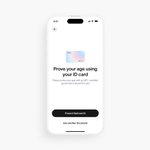
As policymakers work to strengthen online child safety laws and age-appropriate design standards, digital platforms face pressure to confirm users’ ages.
With World ID, it’s possible to do this privately, securely, and anonymously, without sharing personal information with service providers.


World launched in Taiwan, following meaningful dialogue on digital trust, identity, governance, and Taiwan's contributions to AI.
Engagements included meetings with @TAIWANmoda, a roundtable with parliament, and talks at @NTU_TW
Further discussions with @AppWorks, Science and Technology Law Institute, and additional civil society organizations reaffirmed that digital infrastructure must be built on privacy, human dignity, and local values.


