
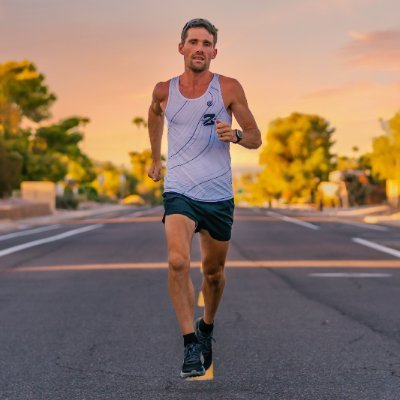
100 miles at 6:47/mi | 5x 100 mile under 12 hours Helping the everyday runner train smart, strong & get faster. READY TO TRAIN?
Austin, TX
Joined December 2009
- Tweets21.1K
- Following1.1K
- Followers19K
- Likes19.1K





Pinned Tweet
Episode 487: Rachel Entrekin | Cocodona 250 Course Record
Rachel Entrekin recently cemented her legacy in the growth of multiday trail ultramarathons with her outright course record and third win at the Cocodona 250. We talk about how her race played out, her life has changed since going pro earlier this year, and what her performance has taught us about the many variables to success at multiday ultramarathons.
For a full picture of Rachel’s transition into professional ultra runner, please check out my previous episode with her, Episode 477: Cocodona 250 Ultra Champ | Rachel Entrekin
Timestamps:
0:00:00 Highlight Reel
0:00:53 Podcast Intro and Sponsor Deals
0:02:27 Cocodona Recap and Fueling Upgrade
0:06:07 Race Nutrition Real Food vs Gels
0:08:43 Viral Finish
0:10:10 Radical Acceptance Mindset
0:11:23 Seven Hours Faster Why
0:15:53 Pro Life Balance and Bandwidth
0:22:18 Durability Beats Speed Debate
0:30:09 Spreadsheets vs Vibes Racing
0:34:52 Crew Communication and Efficiency
0:38:25 Stepping Back to Crew
0:39:29 Giving Back at Cocodona
0:42:53 Crew as Storytelling
0:45:26 Levity and Showmanship
0:48:24 Crews Versus Uncrewed
0:49:27 No Support Challenge
0:53:01 Kilian Chase Pressure
0:55:23 Sleep Strategy Discussion
01:00:55 Experimenting With Sleep
01:03:49 Six Day Curiosity
01:07:09 Where to Follow Rachel
01:08:50 Wrap Up

The problem is it isn’t just small GPS discrepancy. These clowns are stopping their watches while taking breaks and/or prior to crossing the finish line. Just start the watch at the start, don’t stop it until you cross the actual finish line, and post your strava file if you want the strava graphic.

From @TheAthletic: Is posting a faster marathon time on Strava rather than your official race result considered cheating?
An online watchdog group is exposing runners over discrepancies in their times, but some athletes say they've faced harassment. nyti.ms/4A1pxNQ

ALT “I think there is a major difference between cheating and posting the Strava time... I had achieved a huge personal feat after training hard all year. I won’t let the internet take it away from me.” - Charlie Winslade, a marathon runner, who said that his official chip time was over three hours, but his watch time had brought him in just under 2:58:28.


Backyard Ultramarathons may have been one of the fastest growing disciplines in the ultra space over the last few years. Why do people seem to gravitate towards these types of events?
Full video version of the podcast below!

Are Backyard Ultras The Face Of The Sport | Run The News youtu.be/ezWGcr206yw?si=8R8Q…

Run The News | Are Backyard Ultras The Face Of The Sport
Bigs Backyard and the Backyard World Team Championships occurred last week, featuring the best BYU athletes in the World. This ultramarathon format is growing rapidly, not just with ultra runners, but mainstream media. Is it just a matter of time before the BYU format becomes the face of ultramarathon? Brian Peterson joined me to discuss.
Timestamps:
0:00:00 Introduction
0:00:09 Welcome Brian
0:00:57 The Rise of Backyard Ultras
0:06:10 The Impact of Social Media on Ultra Running
0:12:06 The Appeal of Backyard Ultras
0:18:06 Media's Role in Ultra Running Coverage
0:23:04 The Evolution of Ultra Running Competitions
0:31:10 The Role of Crew Support in Backyard Ultras
0:38:25 Health Implications of Endurance Events
0:40:39 Technology's Impact on Ultra Running
Podcast Summary: Are Backyard Ultras Becoming the Face of Ultrarunning?
Context: Follow-up to a recent episode on Brian’s podcast about the professionalization of ultrarunning. Focus is on whether backyard ultras (especially the recent world team championships / Big’s) are overtaking traditional trail ultras as the public face of the sport.
Recent event reaction:
- Slow start / less polished production than Last Soul Ultra, but momentum built as it went deeper.
- Harvey’s Instagram lives and the US team competition drew people in.
- Still needs better education for new fans on how team worlds differs from classic backyard format.
How backyard ultras grew:
- Largely independent of traditional ultrarunning media (grew heavily on Instagram).
- Key ignition points: BPN’s viral event + YouTube documentary (Nick’s content machine), then Last Soul Ultra (Kim Gottwald’s self-financed production, strong commentary, night drones).
- Mark Dowdle emerged as a highly quotable, charismatic personality/ambassador.
- Theo Von’s interest and in-person appearance was a big external validation moment.
Why it’s appealing / growing fast:
- Extremely simple and accessible format (~4.166-mile loops). Easy for non-runners to understand (compared to football).
- Wide range of body types and athletic styles (classic lean runners vs. hybrid athletes like Mark) → more people can identify with it.
- Strong camaraderie: mid- and back-of-pack athletes can still run loops with elites (e.g., Mark) because pacing isn’t always aggressive.
- Trash talk and national rivalries add entertainment (Mark’s comments about flatter international courses vs. the hillier U.S. loop).
- It is building its own culture in real time rather than seeking approval from legacy trail ultra media.
Relationship with traditional ultra media:
- Early coverage was sparse or dismissive/negative.
- Some legacy outlets now cover it more opportunistically because of the eyeballs.
- Backyard doesn’t need them — Mark appearing on Theo Von is cited as proof it has already surpassed that dependency.
- Mark’s criticism: media only talks about backyard when they have a negative or hot take; if you’re going to cover it, do proper due diligence.
Debate: Would top 100-milers dominate backyards?
- Some (e.g., David Roche’s comments about Walmsley/Hans) suggest elite Western States/UTMB runners would crush backyard ultras.
- Zach disagrees: different demands + experience matter a lot (Phil Gore and Mark’s multi-year progression are examples). Early adopters laid the foundation that later athletes benefit from.
- Brian: these comparisons often come across as arrogant/elitist and ignore the work already done in the backyard space.
Format challenges and future:
- At the top end, extensive crew support is almost required → raises the resource barrier and makes events extremely long.
- Discussion of an “uncrewed” category (similar to Vol State) to shorten duration, equalize resources, and reduce some health risks.
- World-record attempts (especially solo projects like Phil Gore’s) can feel contrived and undermine the competitive record.
- Phil’s decision to prioritize a solo effort over the team championship raised questions about athlete priorities and national team strength.
- Long-term health/safety concerns: injury is often the true limiter after multiple days; extreme stress is more comparable to special operations than typical ultrarunning. Olympic-style status would likely require an uncrewed format to manage risk.
Phones on the loop:
- Brian is strongly in favor of banning them, mental aid that becomes an unfair advantage for popular athletes (live Instagram audiences are motivating).
- Alternatives suggested: static “smack-talk camera” or lining the course with fans for equal support.
Episode Sponsors:
LMNT: drinkLMNT.com/HPO (free sample pack with purchase)
deltaG: deltagketones.com Code: BITTER20 (25% Off)
TrainingPeaks: trainingpeaks.com (free account)

Lmao. I am over 100,000 lifetime miles and my knees are fine.

You jog 4 miles every morning and your waistline hasn't improved at all. You've destroyed your knees for nothing.
Of all the ways to exercise, the light jog is one of the worst. Your ancestors walked most of the day and ran all out when they had to go after prey, or run away from a threat, or toward a child in danger. They didn't jog.
Walk. Sprint. Skip the middle.
Zach Bitter retweeted

Good list. One race-week caveat: racing Sunday? This isn't the week to raise your g/h.
Gut training takes reps. In a small study of 25 endurance runners, two weeks of carb feeding during exercise cut GI symptoms vs placebo.
Race the intake you've already tolerated.

Digestive issues in endurance events have been around since fueling became a thing.
So why do people continue to take the risk, and why has carbohydrate intake seemingly gone up in the face of this?
It improves performance, we have learned how to train it better, and product/protocols have improved. People will always take risks if the payout of a better performance is on the table by assuming some risk.
With carbohydrate fueling, the performance payout goes up with increased intake to a degree. Sport is currently stress testing the ceiling. It is safe to assume some value up to 60-90 g/hr if it can be tolerated.
So, how do you extract this value without taking on too much risk?
1) Hydration. If you mess up hydration your nutrition plan will go with it. You can have a fully rehearsed nutrition plan stop working if your hydration is off.
2) Increase gradually. If you are currently only averaging 20-30 g/hr don't just jump up to 90 g/hr and assume this will go well. Increase gradually over a series of training sessions in increments of ~10-15 g/hr.
3) Practice event day. Focus on practicing your fueling targets during your event days specific training sessions. Think of this as part of the training. You are literally training your gut to tolerate what you are going to challenge it with on event day.
4) If your event is really long, like an ultramarathon lasting well beyond your longest training day, it is likely that your tolerance in training (grams per hour) will be slightly higher than it will be on event day. It is worth considering training your gut to tolerate a bit more (10-15 g/hr) in training than you plan to average on event day if the event is very long.
Episode 504: My 100 Mile PR - Why I Will Break It
I will be taking a big swing at Desert Solstice Track Invitational on December 19th where I plan to establish a new 100 mile personal best. In this episode, I highlight why I am confident I can do it, and share some details on my approach going into my 100 mile peaking phase.
Timestamps:
0:00:00 Introduction
0:00:42 100 Mile Race Announcement
0:03:28 Training and Preparation for the Race
0:06:46 Nutrition and Dietary Changes
0:09:39 Challenges Faced and Overcoming Setbacks
0:12:30 Mental Strategies and Visualization Techniques
0:15:51 Race Strategy and Goal Setting
0:18:35 Final Thoughts
Episode Summary:
Desert Solstice 100-Mile PR Announcement Announcement
- Targeting a 100-mile PR at the Desert Solstice Track Invitational in Phoenix on December 19.
- Confident that PR pace will be the conservative target (with a more aggressive target still to be set based on upcoming training).
- Event will be livestreamed.
Experience & History
- This will be his 9th time at Desert Solstice (first in 2013).
- Prior results there include world records, American records, personal bests, and DNFs.
- Very familiar with the short-loop track format and how to manage splits.
Last Year vs. This Year
- Last year had a strong summer training block and tested high-carb fueling + super shoes at the Equalizer 12-hour (ran 100 miles as a B-race stress test).
- Nutrition went well, but the extra 100-miler disrupted the timeline and contributed to an underperformance at Solstice.
- This year: no 100-miler before Solstice; focusing solely on peaking for it.
This Year’s Training Path
- Early year interrupted by a severe cedar oak pollen reaction in Austin (limited typical early-phase VO2max and lactate-threshold interval work).
- Built a lot of high-quality low-intensity volume from January–June.
- Planned race at the Pettit Center was canceled after developing a blood clot on the flight.
- Post-recovery: re-established top-end fitness starting with sprints, then short intervals, then longer intervals.
- Fitness returned faster than expected; managed ~4 weeks averaging close to 120 miles/week while still hitting quality interval sessions.
- Training approach: prioritize quality sessions (pace at specific intensities), then add as much low-intensity volume as possible without compromising those sessions.
Confidence Drivers
- Better experience with high-carb fueling and modern super shoes/foams.
- Shoe options narrowed but not finalized (will discuss closer to the race).
- Turned 40 in January; being more selective with non-training demands (podcasting backend, coaching roster) to protect recovery while still staying active online and coaching.
- Inspired by post-40 performances (e.g., Sorokin’s records, recent women’s 100-mile world records by 45-year-olds).
- Feeling physically strong and ready for race-specific work.
Race Strategy & Execution
- Conservative goal = 100-mile PR pace.
- Aggressive goal still to be determined from upcoming specific training.
- On the track, every loop crosses a timing mat with splits shown on a nearby TV; will calibrate early to stay between aggressive and conservative lap splits, then race more freely later.
- On strong days he often finishes faster than early splits, pulling the average toward the aggressive side.
Peak Training Plan (Next Phase)
- Shift to 100-mile specific work: consolidate volume into fewer runs, longer long runs, and more time at goal 100-mile pace.
- Typically likes 4–8 weeks of this phase (currently has closer to the higher end).
- Will use TrainingPeaks fatigue scores (his productive zone is roughly –10 to –30) to monitor load and insert deloads when needed.
- Visualization practice: treat long runs as segments of the race (e.g., imagining miles 70–100) to stay present and reduce mental energy drain on race day.
Nutrition Plan
- Race-day target: 90–100 g carbs per hour.
- Gut training: fuel interval sessions with small amounts of gels; fuel longer runs.
- In the peak phase: fuel most efforts over ~90 minutes or at 100-mile pace, starting around 50–60 g/hr and building to 90–100 g/hr on key sessions (including longer track efforts and back-to-backs).
More than one most likely. That is usually how bad days work. Here is the reality. Elite performance requires taking risks. Sometimes those calculations don't match up perfectly on race day. That is the beauty of elite competition. When you add more variables (the ones you are ignoring) like choppy water, lots of wind, humidity/heat the projections get more murky and failure rates higher. If you consider all the variables versus picking one that has been stress tested off the most competitive podiums in the world, this will make more sense.

But what mistakes did they make to “have a bad day”? Recall they are the experts. Experts should know how not to have a bad day. That’s my point.
In scientific experimentation measuring performance effects, it’s critical that performances must be highly reproducible. That’s why reproducible experiments are more valuable than accepting what the experts believe.
But the best is to take the experts’ beliefs and subject them to rigorous testing particularly in an attempt at disproof. That’s how science is meant to work.
It’s difficult but it’s why science evolved as a special human endeavour as recently as the last 500 years. Before that we only had beliefs.
@ProfTimNoakes @sweatscience @Brady_H
Digestive issues in endurance events have been around since fueling became a thing.
So why do people continue to take the risk, and why has carbohydrate intake seemingly gone up in the face of this?
It improves performance, we have learned how to train it better, and product/protocols have improved. People will always take risks if the payout of a better performance is on the table by assuming some risk.
With carbohydrate fueling, the performance payout goes up with increased intake to a degree. Sport is currently stress testing the ceiling. It is safe to assume some value up to 60-90 g/hr if it can be tolerated.
So, how do you extract this value without taking on too much risk?
1) Hydration. If you mess up hydration your nutrition plan will go with it. You can have a fully rehearsed nutrition plan stop working if your hydration is off.
2) Increase gradually. If you are currently only averaging 20-30 g/hr don't just jump up to 90 g/hr and assume this will go well. Increase gradually over a series of training sessions in increments of ~10-15 g/hr.
3) Practice event day. Focus on practicing your fueling targets during your event days specific training sessions. Think of this as part of the training. You are literally training your gut to tolerate what you are going to challenge it with on event day.
4) If your event is really long, like an ultramarathon lasting well beyond your longest training day, it is likely that your tolerance in training (grams per hour) will be slightly higher than it will be on event day. It is worth considering training your gut to tolerate a bit more (10-15 g/hr) in training than you plan to average on event day if the event is very long.
Professional triathletes are ~2x as likely to drop out of a competition if they are having a bad day. They are less likely to, "gut it out."
We're talking about not finishing the race, not about going slower. If conditions are bad, you slow down. You don't quit if you are a professional who trains all year round for this most important event. Something must have happened that can't simply be explained away as tough conditions. These are some of the toughest athletes on the planet. They know what to expect and how to adapt.
But if you are trying to stay in fluid balance when exercising in hot conditions whilst ingesting a high carbohydrate intake that is known to delay fluid absorption, maybe we should consider that as a possible contributor. Just a thought.
Which experts are drawing up guidlines in the 150g/hr range? My understanding is ACSM caps at 90g/hr and ISSN mentiones up to 90+ g/h (with specific delivery recommendations).
Zach Bitter retweeted

BACKYARD ULTRA WORLD TEAM CHAMPIONSHIP OFFICIAL LIVESTREAM / HOUR 1 - 10 youtube.com/live/K4M1QaL7L5E…

I think I probably would have cancelled before the event given the forecast, but I am also not a race director or a weather man, so what do I know. I am curious if there was a reroute considered before the event, or was it too hard to know where to safely reroute ahead of time?
Moab 240 Cancellation & Chicago Marathon | Run The News youtu.be/-3Rwvs2C0gA?si=e9ZU…

Run The News | Moab 240 Cancellation & Chicago Marathon
Allison Mercer joined the show to recap two very different running stories from the past week: the Moab 240 cancellation amid flash flooding, mudslides, and serious safety concerns in a remote area, and the Chicago Marathon with its mix of stories. We dig into the growing risks and responsibilities around 200+ mile events (experience levels, communication, support crews, and protocols), contrast that with Chicago’s high-profile narratives involving Emma Grace Hurley, Vinny Mari, Clayton Young, and Galen Rupp, and touch on treadmill training accuracy, super-shoe competition, and race overcrowding.
Timestamps:
0:00:00 Introduction and Overview of Upcoming Events
0:00:10 Moab 240: Challenges and Safety Concerns
0:10:09 The Role of Experience in Ultra Running
0:21:47 Chicago Marathon: Excitement and Expectations
0:28:46 Treadmill Training: Pros and Cons
0:35:55 Vinny's Journey: The Underdog Story
0:46:22 The Drama of Marathon Racing
0:50:53 Shoe Technology and Brand Rivalries
0:54:00 The Evolution of Running Shoes
0:57:59 Galen Rupp's Remarkable Comeback
01:01:06 The Impact of Experience in Racing
01:05:00 The Future of Major Marathons
01:08:54 The Challenges of Overcrowding in Races
Summary:
Moab 240 cancellation and safety in long-distance trail ultras
- Race canceled after mudslides, flash flooding, and severe weather tied to a hurricane; remote course with limited cell service created major problems for runners, crews, and volunteers.
- Discussion of preparedness and communication gaps; similar issues noted in prior wet years. Sheriff’s office involved in evacuations.
- Concerns about athletes (and their sleep-deprived support people) entering 200+ mile events without sufficient single-day ultra or backcountry experience.
- Debate on qualifiers, mandatory safety gear (e.g., bivy), EMT/medical presence at aid stations, and standardized protocols; references to past incidents (including a deadly race in China) and stronger setups at larger events like UTMB or Boston.
- Responsibility split between participants, race directors, volunteers, and first responders; risk of overusing rescue resources for preventable situations.
- Options once weather turns bad: cancel pre-race, push through, cancel mid-race, or reroute (permits and logistics make last-minute changes hard). Comparison to Cocodona’s frequent reroutes and UTMB course shortenings.
- Side note on a Bigfoot race pacer rule (time penalty for leaving a pacer on course for safety/tracking reasons) and Destination Trails’ earlier “poop buckets” PR issue.
Chicago Marathon storylines and performances
- Strong field and multiple narratives: Emma Grace Hurley (Atlanta connection, patient build-up through shorter distances and half-marathon success before her debut; went out aggressively), Vinny Mari (unconventional high-volume treadmill training at Planet Fitness, led early American men before stretching stops, still ran a strong debut), Clayton Young (hamstring issue that raised questions but he finished as top American), Charles Hicks, and others.
- Galen Rupp ran 2:06 at age 40 for the American masters record; praised for longevity, experience, and commentary potential.
- Weather warmer than recent fast years but not extreme; discussion of heat-training protocols, dew point, and pacing discipline (several athletes noted starting too fast).
- Treadmill training under scrutiny: calibration variance even on well-maintained machines, industrial gym units vs. home units, and whether heavy treadmill reliance (including Vinny’s ~45-mile day with large chunks at goal pace) fully prepares athletes for road racing. Vinny’s stop-start race mirrored some of his treadmill resets.
- Shoe conversation: Adidas athletes won both open races; Nike’s relative position questioned despite sponsorship and models like Alphafly/Apex. Strong results and third-party testing for Puma Fast-R 3 (Allison tested and liked them; Zach has raced long distances in them but notes they require adaptation). Brooks Hyperion Elite 6 seen as a big step forward, with some athletes in prototypes. Overall gap between top brands has narrowed; individual athlete response still varies.
Broader marathon and industry notes
- Overcrowding and logistics at major races (gel stops, tangents, later waves). Two-day formats (as discussed for London).
- Bib allocation breakdowns (charity, sponsors, infrastructure vs. pure increase availability for traditional signups) at big events.
- Other fall marathons (Philly, Detroit, CIM, Houston, etc.) selling out quickly, signaling broad demand beyond the World Marathon Majors.
- Brief personal note: Allison is entered and training for Tunnel Hill.
Episode Sponsors:
- LMNT: drinkLMNT.com/HPO (free sample pack with purchase)
- deltaG: deltagketones.com Code: BITTER20 (25% Off)
- TrainingPeaks: trainingpeaks.com (free account)