





走马 🇺🇦 retweeted

The religion of the malcontent:
Every single defender of communism is a parasite of freedom.
You wouldn't have the device in your hand, the electricity in your walls, or the food on your table if not for the free market innovation you spend all day whining about.
Try living in your own ideological utopia for one week without a capitalist lifeline.


走马 🇺🇦 retweeted

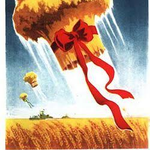
In December 1958 the Polish embassy in Beijing refused to let the sparrow killers onto its grounds, so the Chinese surrounded it with drummers and kept the drums going for two days until every bird sheltering in the garden had dropped dead from the air, and the diplomats cleared them up with shovels.
That is how thorough it was. The campaign had been running since the spring. Every village, school and factory was turned out with gongs, pans and firecrackers to keep the sparrows flying until their hearts gave out. Nests were torn from eaves, eggs smashed, chicks killed, and children went through the fields with slingshots and were paid by the bird. The dead came in by the basket, strung on wires, piled on carts, and the totals went up the chain as a harvest. Something close to two billion sparrows in two years. The embassy garden was the last place in the capital with birdsong in it, and the drums got that too.
A zoologist called Zhu Xi had told them before it started that a king had tried this and lost. Frederick the Great of Prussia had put a bounty on sparrows in the 1740s to save his grain and his cherries, and the sparrows went, and the caterpillars they had been eating stripped his orchards to the stalk, and the king cancelled the bounty and paid to have sparrows brought back from neighbouring states and let loose. The whole episode was in the library. The ministry had a figure for what a sparrow ate and no figure for what it did, and a man with the second figure was told to sit down.
The locusts arrived on schedule. Then the grain borers. A sparrow takes a few grains from a field in autumn and feeds its chicks nothing but insects all spring, and with the sparrows gone the insects had the rice and the wheat to themselves. The counties with the most sparrows to lose saw their grain fall the furthest, and the rice and wheat that had been holding the country up went down together.
That was 1959, and the state took its grain quota anyway, on the harvest that had been reported. What was left in the villages was not enough, and the famine that followed over the next three years is the largest in human history: tens of millions dead, the estimates running from fifteen million to forty-five, whole counties in Anhui and Sichuan where the living could not bury the dead. The sparrows were one cause among several and the economists who have gone back to the county records put the bird's share at something over two million people, with another four hundred thousand never born. Two million, from a campaign against a thing that weighs an ounce.
By 1960 the ornithologist Tso-hsin Cheng, who had been cutting open dead sparrows and counting the insects in their stomachs, got the bird struck off the list and bed bugs put in its place. There were almost no sparrows left in China to pardon. So the government did what Prussia had done two centuries before: it bought a quarter of a million sparrows from the Soviet Union and shipped them east in crates, to be released into a country that had drummed every one of their relatives out of the sky.
The animal that does the invisible job is always the one on the ledger as a cost. Take the sheep off a chalk down and the orchids are under scrub in twenty years. Fence the cattle off a Welsh hill and the bracken takes it. Empty a savannah of its herds and the grass goes to fire. All of it written down, all of it in the library, all of it available to the next committee with a figure for what a cow eats.
Beijing paid Moscow for the birds in hard currency. The men who had said so in 1958 were still not allowed to say so in 1960.

走马 🇺🇦 retweeted
The Khmer Rouge took communist central planning to its absolute logical extreme in Cambodia.
In 1975, they emptied entire cities in days, abolished currency, banned religion, and executed anyone labeled an "intellectual"… including citizens whose only crime was wearing glasses or speaking a foreign language.
In under four years, Year Zero wiped out nearly one-quarter of the country's population in the Killing Fields.

走马 🇺🇦 retweeted

#史庭福 死于新疆狱中,心梗!
#叶钟 死于福建警方羁押下,心梗!
#郭宏伟 死于吉林狱中,脑出血!
#董建彪 死于湖南狱中,全身有伤!
#王美余 死于湖南衡阳看守所,猝死!
八旬教授 #孙文广 死于济南警方秘密羁押,死因不知!
#彭明,死于湖北狱中,心脏病!
#曹顺利 死于北京看守所,因病不治!
#力虹,死于浙江狱中,因病不治!
#纪斯尊 肠癌!
#刘晓波 肝癌!
#杨天水 脑瘤!
#肉体消灭良心犯

走马 🇺🇦 retweeted

又来个拿选民证当选票的……可能是因为真实的选票比选民证还难看吧😂
实际上基层人大代表的选票就一张小纸条,上边写着三个人名,要你从里头勾两个。
这三个人你统统不认识,你不知道他们的政治观点(当然不许有),不知道他们的施政纲领(基层人大代表施个der的政啊),你甚至不知道他们长什么样,你最多能从姓名上猜出他们是男是女ಥ_ಥ


走马 🇺🇦 retweeted

She survived Auschwitz, raised a son alone in Queens, and never remarried. Her son would go on to become a rock star, but to him, she remained the strongest person he had ever known.
Flora Klein was born in Hungary in 1925. She was a Jewish girl growing up in a country that would eventually try to destroy her people. In 1944, when the Nazis finally invaded Hungary after years of an uneasy alliance, Flora was 19 years old. For a time, Hungarian Jews had been spared the fate that had already overtaken Jewish communities elsewhere in Europe. Then that protection disappeared almost overnight.
Flora and her family were rounded up, forced into cattle cars, and deported to Auschwitz-Birkenau, the extermination camp where more than 400,000 Hungarian Jews were murdered within a matter of months. Flora survived. One of her brothers, Larry, survived as well. Everyone else in her family, including her parents, siblings, aunts, uncles, and cousins, was killed in the gas chambers. Flora was only 19 when the world she knew was destroyed.
She would live another 74 years carrying the weight of what had happened.
After liberation in 1945, Flora spent years in displaced persons camps, places that became a kind of limbo for survivors who had nowhere to return to. Eventually, she married and became pregnant. In 1949, in Haifa, Israel, she gave birth to a son named Chaim Witz.
The marriage did not last. By 1958, Flora made the decision to leave for America. She went alone with her eight-year-old son. She spoke no English and had no money. All she had was her child and the same instinct to survive that had carried her through Auschwitz.
They first settled in Washington Heights and later moved to Queens. Flora found work in New York's garment factories, working long hours for little money and stitching clothes by the piece. She never remarried. Her son later explained that she had been deeply affected by the losses she had endured and had become fiercely protective of the small family she had left.
Flora rarely spoke about the camps. She didn't explain the nightmares, the silences, or why she saved every scrap of food and could never bring herself to throw things away. But she didn't have to explain everything. Her actions said enough.
From his mother, her son learned two lessons that would stay with him for the rest of his life: nothing is impossible, and survival means working harder than everyone else.
Those lessons helped build a rock star.
Chaim Witz would eventually become Gene Simmons, the bass player, co-founder, and fire-breathing face of KISS. The makeup, the outrageous performances, and eventually the global empire all grew alongside the work ethic Flora had instilled in him.
“Everything I am is because of my mother,” Gene has said. “She survived hell and still had the strength to raise me. Nothing I’ve done compares to what she survived.”
Flora lived long enough to see her son become famous and wealthy, but she never wanted the spotlight for herself. She had survived Auschwitz by learning how to remain unseen, and even after finding safety, she stayed private, quiet, and humble.
For decades, she refused to speak publicly about her past. But when she reached her 80s, she slowly began sharing her story. She gave testimony to Holocaust museums and allowed her experiences to be recorded for future generations. Gene said she did it because the survivors were growing older and dying, while Holocaust denial was becoming more common. She also wanted her grandchildren to understand where they came from.
After remaining silent for nearly sixty years, Flora Klein finally spoke because she didn't want the memory of her generation to disappear with it.
She died in December 2018 at the age of 93 in Los Angeles, surrounded by her family.
Her obituary identified her as Gene Simmons's mother. But that was only one part of her story.
Flora Klein was 19 when she entered Auschwitz. She should have died there. Instead, she survived.

走马 🇺🇦 retweeted
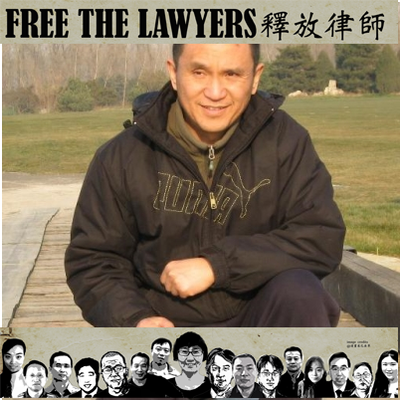
察省民众代表飞京报告崇礼血案
察哈尔省民众代表李竭忠,自察飞抵首都,以共军屠杀崇礼之惨况向全世界人士公布,并呼吁予此绝灭人性之刽子手以有效之制裁,为崇礼千余被残害之无辜民众雪仇。李氏称:政府颁布停战令后,察省前线国军遵令停止行动,共军见有机可乘,竟于十二月九日夜发动三个旅的兵力, 向崇礼县城偷袭。驻城国军一方面因恪遵停止冲突令,一方面寡众悬殊,不得已忍痛退出。
共军进入后,即大肆屠杀,参加保障城垣之七百余农民首被俘虏,以绳索串缚,驱之游街,随走随杀,街头巷尾,遍处均遗有死尸,最后剩余三百余人,被驱至东南城角,以机枪射死,集体大屠杀。零星之残杀随处发生,无论老弱,无论妇女,均为共军刀锋之对象。而妇女复多遭奸淫,并有被割去阴户、乳头而惨死者。天主教堂内积尸达三百余具,堂中修士贞女均被害,徐神父亦同时惨死。教堂内复有被火烧焦之尸体十余具。据目击者谈:此等被难者均赤身不挂,以草绳缚为为一束,置于浇有火油之柴堆上,引火烧燃,草绳烧断后,挣扎欲逃。共军围于四周以刺刀劈刺,最后终于在刀剑与火灼中惨毙。共军盘据崇礼三日,国军收复后,检获被害人民尸体千余具,共军退出时,复四处纵火,并将人民所有财产搜括捆载而去,甚至未完工之布鞋底亦成为共军之赃物。死难最惨者,有一家十二口尽被杀害。李君谓:劫后崇礼伤心惨目之情景,非目睹者殆难想像,而言语笔墨亦难传述此魔鬼的恐怖巨制于万一。李君携来照片多帧,令人惨不忍睹。察省旅京人士会同李君在国大会堂休息室招待中外记者报告崇礼血案情形。
---(京中央日报)(民国三十五年十二月)
(录自共军屠杀崇礼纪实,国防部新闻局印行)


走马 🇺🇦 retweeted

刘仲敬与海外反贼的区别
最大的区别,不是谁更反共,也不是谁骂中共更狠,而是:很多海外反贼主要在回答“中共为什么错”,刘仲敬却一直在追问“现实中的力量究竟是怎样形成的”。
很多海外反贼最擅长的是揭露、批判和谴责:专制为什么恶,民主为什么好,人权为什么重要,中共做过多少坏事。这些事情当然有价值,但主要解决的是是非问题和认知问题。一个人看完以后可以完全赞同,却依然只是一个孤立的个人。正确的观点,不会自动变成现实力量。
刘仲敬关注的是另一层问题:人为什么服从?“我们”是怎样产生的?共同身份怎样形成?一个政治共同体凭什么存在?中央秩序失效以后,谁能够填补真空?什么力量能够让人愿意投入时间、财富甚至承担风险?
所以他的观察单位不是单纯的个人和观点,而是共同体、利益、组织、资源、秩序和力量结构。
这也是为什么他连“中国人”这个通常被默认的政治主体都要重新拆解。他不是直接问“十四亿中国人怎样民主化”,而是先问:**十四亿人为什么天然必须属于同一个政治共同体?**于是才产生了“诸夏”“民族发明”“大洪水”等一整套极具争议的理论。
你完全可以不同意刘仲敬的答案,我也不认为他的答案都成立。特别是从“多元一体”走向“多元多体”以后,怎样避免地方割据、军阀化和新的专制,他的理论远没有他的解构部分那么完整。
但他至少看见了很多海外反贼长期没有认真解决的问题:拥有正义、勇气和正确观点是一回事,能不能把分散的人变成有共同身份、有持续关系、有现实能力的政治主体,是另一回事。
所以,两者真正的区别可以概括成:
普通海外反贼主要研究谁对谁错,刘仲敬更关心力量从哪里来;普通海外反贼主要告诉人们“应该怎样”,刘仲敬更喜欢追问“现实为什么会这样”;普通海外反贼主要生产观点,刘仲敬试图解释政治主体和现实力量怎样产生。
刘仲敬未必正确,但他的提问方式确实比单纯的道德批判深入了一层。
政治最难的,从来不是证明“我说得对”,而是解释:为什么一个分散的“我”,最后能够变成一个真实存在、有能力影响现实的“我们”。
基于现实 你本人 更接近哪一派呢? 你愿意 为你的理想 付出多少呢?
大胆的 问问自己吧!
魔岩三傑中的何勇走了,這首改編自《瑤族舞曲》的《幽靈》有觀點認為是對8964罹難者的隱晦的紀念,無論是否屬實,何勇也不會再向世人解釋了,在我看來,也不再需要解釋了,願那些美麗的幽靈歡樂地共舞吧!🕯️🕯️🕯️🕯️🕯️🕯️🕯️nitter.cf/zeomah/status/20957768…

youtu.be/9HZ840Rnc4U?si=gcQ8…
《垃圾場(麒麟日記)》從此不再。此時的心情,就像這首《幽靈》一般…… 祝何勇和他的那些生活中的許多已經不在了的很重要的人,在天堂愉快地共舞。🕯️🕯️🕯️🕯️🕯️🕯️🕯️

走马 🇺🇦 retweeted

中共在尼泊尔/西藏泥石流救灾这件事的外宣上,真是不惜血本!
好多真人蓝 V,连平时潜伏的都拿出来用了,都遵从同一套叙事,几句标准的回复反复使用。
如果把这个精力和资源拿一点来救灾,也不至于那么烂。


走马 🇺🇦 retweeted
翻墙违法?先问一句:筑墙合法吗?
很多人一谈到 VPN,就说一句:“翻墙违法。”
好,那么先不争这个。
就算按照中共自己制定的规则,使用未经允许的方式绕过网络封锁属于违法,我们也必须继续追问一个更根本的问题:
建立这堵墙,阻止十几亿人正常访问公开互联网,本身合法吗?
这才是真正的问题。
政府先把 Google、YouTube、Facebook、X 以及大量海外网站挡在外面,然后制定规则,不允许普通人绕过这堵墙,最后再告诉你:
“你看,翻墙违法。”
这个逻辑根本站不住。
因为政府自己制定了一条法律,并不能自动证明政府之前做的事情就是正当的。
如果一个人先把道路堵死,然后规定“任何人不得绕过障碍物”,你不能只讨论绕过去的人有没有违反他的规定,却完全不问:
他凭什么堵路?
互联网也是一样。
公开信息本来应该由人自己选择看还是不看、相信还是不相信。
一个成年人有没有权访问海外新闻?
有没有权看不同国家的政治观点?
有没有权使用 Google 搜索资料?
有没有权看 YouTube?
有没有权在 X 上听到政府不喜欢的声音?
正常情况下,这些事情根本不应该由政府替你决定。
真正危险的不是一堵技术上的墙。
真正危险的是这堵墙背后的逻辑:
政府认为,它有权决定你能看到什么,也有权决定你不能看到什么。
它先控制信息入口,再告诉你只有它允许的信息才是合法的信息。
然后,当你试图自己寻找信息时,它又把这种行为定义为违法。
这就形成了一个封闭循环:
我封锁你——我制定禁止突破封锁的法律——然后我用这部法律证明我的封锁是合法的。
这不是法治。
这只是权力给自己盖章。
所以,“翻墙违法”从来不应该是这个问题的终点。
真正应该问的是:
是谁建立了墙?
为什么要建立墙?
凭什么阻止普通人访问公开互联网?
不要以为一件事情写进了法律,就自动变成正确。
历史上从来不缺恶法。
法律可以规定人应该服从什么,但法律本身同样需要接受正义、权利和基本自由的检验。
如果一部法律的作用,就是帮助统治者封锁信息、限制人民了解世界,那么把它写得再正式、盖多少公章,也改变不了它限制自由的本质。
所以,与其不停问:
“翻墙违法吗?”
不如先问那个真正重要的问题:
筑墙,合法吗?
我的答案很明确:
为了阻止人民自由获取公开信息而建立网络高墙,本身就是对信息自由的侵犯。
不能因为筑墙的人同时掌握立法权,就把这件事变成正确。