
Ph.D. student at Tsinghua University
Joined May 2022
- Tweets44
- Following89
- Followers283
- Likes201





Honored to have participated in implementing the causal training algorithm and applying Causal-rCM to the Cosmos3 MoT architecture! Plenty of infrastructure challenges and fun here

Cosmos is a world foundation model for building your own world models. In this release, we show how to build real-time autoregressive world models for robots and autonomous vehicles. We also have a real-time transfer model to help boost realism and diversity of your favorite classical simulator outputs.
Check it out.
research.nvidia.com/labs/cos…

4
228
Kaiwen Zheng retweeted

🚀 Introducing DiffusionART: efficient & stable & Scalable diffusion RL.
Understanding forward-process RL first: 1. ❓Positive branch and negative branch provides the same ideal gradient direction, but why do reward collapses without any of them? 2. ❓Why does EMA off-policy strategy stablize training?
⚡ On HunyuanVideo-13B T2V: DiffusionART is 12.02× / 11.72× more efficient than DiffusionNFT and Flow-GRPO-Fast.
📄 Arxiv: arxiv.org/abs/2610.12572
💻 GitHub:github.com/vanzll/DiffusionA…
🤗 Hugging Face Papers:huggingface.co/papers/2610.1…
After nearly 800 wandb runs, we found some surprising answers. 🧵👇

Working on streaming video generation, diffusion distillation, or interactive video world models?
Two months ago, we released Causal-rCM — a leading open-source algorithm + infra recipe for autoregressive video diffusion.
Paper: arxiv.org/abs/2606.25473
Code: github.com/NVlabs/rcm
Highlights:
• Wan2.1-1.3B 1-step / 2-step generation with 84.63 VBench-T2V, no complex GAN losses
• custom-mask FlashAttention-2 JVP kernel
• first causal sCM / MeanFlow implementation for streaming video, with 10× faster convergence
• full infra: FSDP2 / CP / SAC, all compatible with causal training and JVP
• reproducible inference, benchmark, and evaluation scripts
For those who haven’t tried it yet, I believe the paper and codebase are good tutorials for:
• causal training paradigms: diffusion-forcing, teacher-forcing, self-forcing
• distillation algorithms: CM, MeanFlow, DMD
• practical tricks: replayed backprop and noisy context
• clean and scalable infra support
The Causal-rCM recipe is being applied to Cosmos 3, a family of unified omnimodal world models, to turn them into real-time interactive ones.
Stay tuned!


Kaiwen Zheng retweeted

TurboDiffusion: 100–205× faster video generation on a single RTX 5090 🚀
Only takes 1.8s to generate a high-quality 5-second video.
The key to both high speed and high quality?
😍SageAttention + Sparse-Linear Attention (SLA) + rCM
Github: github.com/thu-ml/TurboDiffu…
Technical Report: jt-zhang.github.io/files/Tur…
Integrating forward and reverse KL serves as a scalable and principled diffusion RL paradigm! GRPO applied to Cosmos video diffusion without reward hacking

🤔Want a principled way to RL your diffusion model?
Check Data-regularized Reinforcement Learning (DDRL)! Post-train @nvidia #Cosmos World Foundation models with a million GPU hours! 🤯
Novel formulation ➡️ Theoretically integrates SFT into RL ➡️ Robust to Reward Hacking 🛑
Details: research.nvidia.com/labs/dir…
#DDRL #Diffusion #RL #NVIDIA #Cosmos
🚀Try out rCM—the most advanced diffusion distillation!
✅First to scale up sCM/MeanFlow to 10B+ video models
✅Open-sourced FlashAttention-2 JVP kernel & FSDP/CP support
✅High quality & diversity videos in 2~4 steps
Paper: arxiv.org/abs/2510.08431
Code: github.com/NVlabs/rcm



1/ Excited to share the latest work with @chenhuay17!
We propose DiffusionNFT, a new online diffusion RL paradigm that optimizes directly on the forward diffusion process.
Paper: arxiv.org/abs/2509.16117
Code: github.com/NVlabs/DiffusionN…


2/ Compared to policy gradient methods like GRPO, which rely on the reverse sampling trajectory and specific SDE samplers, DiffusionNFT directly performs policy optimization through the flow matching objective, enabling data collection with any black-box solvers.

Kaiwen Zheng retweeted

Is self-improvement exclusive to RL?
Can we use supervised learning to match LLMs trained with SOTA RL algorithms?
In Negative-aware Fine-Tuning (NFT), we introduce a purely supervised learning method to enhance LLMs' math reasoning with no external teachers. NFT matches or even surpasses leading RL-based methods such as GRPO and DAPO on both 32B and 7B models.
arxiv.org/pdf/2505.18116
research.nvidia.com/labs/dir…


1/💡New paper from NVIDIA&Tsinghua @ICML2025 Spotlight!
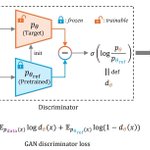
Direct Discriminative Optimization (DDO) enables GAN-style finetuning of diffusion/autoregressive models without extra networks. SOTA achieved on ImageNet-512!
Website: research.nvidia.com/labs/dir…
Code: github.com/NVlabs/DDO


3/ DDO parameterizes an implicit discriminator using the likelihood ratio, allowing for direct GAN discrimination to diffusion/AR. It effectively incorporates reverse KL and self-generated negative samples for post-training—similar in spirit to DPO/RL used in today's LLMs.

2
226
2/ Diffusion/autoregressive models are likelihood-based. Traditional maximum likelihood training (forward KL divergence) has mode-covering behavior, which hinders the performance under limited model capacity and requires guidance techniques like CFG to improve quality.


Kaiwen Zheng retweeted

Multimodal AI With New Emergence!
We're thrilled to launch Vidu-1.5 next week, the world’s first multimodal model to support Multi-Entity Consistency! Vidu-1.5 can seamlessly integrate people, objects, and environments to generate stunning videos, overturning traditional single-point fine-tuning methods like Lora. This release marks a leap in unified understanding and generation, setting a new standard in multimodal AI.
We’d love to see your ideas in action! Share your images and prompts here, and we’ll do a test run for you. Let’s explore the limitless potential of Vidu-1.5 together!


1/ Are discrete diffusion models challenging autoregressive models in text generation?
We say no in our recent study by uncovering a hidden numerical issue that leads to unfair evaluations in previous works.
For more details, please visit our blog: zhengkw18.github.io/blog/202…


4/ Our finding fundamentally challenges the necessity of discrete diffusion, suggesting that simpler masked models might suffice.
Our paper is out at arXiv: arxiv.org/pdf/2409.02908
3/ Another key finding of our study is to theoretically prove the equivalence of MDMs to masked models (like MaskGIT, @huiwen_chang), except for some loss weighting. We conduct a comprehensive investigation of training and sampling aspects of MDMs and propose improving techniques
4
557
2/ Discrete diffusion models are attracting significant attention since SEDD (@aaron_lou) won the ICML 2024 Best Paper Award. Among them, masked diffusion models (MDMs) are the best-performing variant.
3
810