

Policy Researcher @RANDCorporation, PhD in Health Policy and Management @johnshopkinssph. Opinions my own, RTs ≠ endorsements
Boston, MA
Joined January 2017
- Tweets48
- Following346
- Followers432
- Likes46
Pinned Tweet
Hi Twitter! I’m Zach, a health policy researcher at RAND. One of my New Year’s resolutions is to tweet, so I’m activating this account! I’ll be tweeting about health tech, improving value of health care delivery, and getting patients more involved in health care.
Zach Predmore retweeted

The idea of a regulated market for kidney donations may seem enticing—an easy win. But the real world of reforming the transplant system is more complicated, says RAND's @zspredmore. bit.ly/3Qk3f5f
Zach Predmore retweeted
The FDA has steadily increased the speed at which it approves new drugs over the last two decades. But insurers sometimes refuse to cover these breakthrough treatments.
@zspredmore breaks down the problem—and offers a potential solution: bit.ly/49UMDIi

Zach Predmore retweeted
"Instead of refusing to cover a new drug, CMS and other insurers could condition the price they pay for a certain drug on its ability to achieve specific outcomes, including outcomes that are important to patients." — @zspredmore bit.ly/3JvBItR
Building off of our work looking at patient preferences for treatments, I wrote this piece for the Boston Globe about the growing disconnect between the FDA and health insurers when it comes to getting patients access to new drugs.

The FDA is prioritizing listening to patients by approving treatments quickly — and in spite of the insurer backlash against accelerated approvals, writes Zachary Predmore. So why are health insurers standing in the way? trib.al/APEcU6p

1
2
336
The FDA is approving more drugs than ever through its accelerated pathways, but insurers are pushing back. Most drugs approved through these pathways do eventually get full approval, but patients still struggle to access them
1
1
97
Zach Predmore retweeted

In a new Methodology paper, @zspredmore et al. describe how patient goals can be collected and rated by online patient panels for inclusion in multicriteria decision analyses for #hta >>> becarispublishing.com/doi/10…
@RANDCorporation @IVI_health @tconcannon @LoriBethFrank

Zach Predmore retweeted

“I hope our results will encourage non-ACA insurers to keep PrEP at zero cost to those who need it. Ideally, injectable PrEP needs to be fast, free, and have minimal side effects, and ... that could really be said about all PrEP products,” says @DrLTDean. publichealth.jhu.edu/2023/st…

Excited to share results from our new study that could encourage the uptake of PrEP, a highly effective HIV prevention tool.
Our recommendations address the top reasons PrEP wasn't being used by nearly 700 gay and bisexual men we surveyed in New England.
link.springer.com/article/10…

The Affordable Care Act mandates that PrEP (and associated doctor’s office visits) be covered without a copay, but not all insurance plans do this (see @KHNews reporting below).
Enforcing this law would also likely contribute to increased PrEP uptake. khn.org/news/article/prep-hi…

1
1
121
Again, it’s exciting to play a role in research that could strengthen a critical weapon against the HIV/AIDS epidemic.
We are grateful to everyone surveyed, and to our great team including @DrLTDean, @JuliaRaifman, @alexskinnermph, Dr. Phil Chan, and Siena Napoleon.
1
108
Zach Predmore retweeted
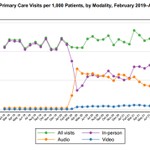
Americans' willingness to use video telehealth…
February 2019 - 51%
March 2021 - 62%
New study by RAND's @ShiraFischer, @zspredmore, and colleagues: https://nitter.cf/t.co/i01wmOzkzE
Zach Predmore retweeted

In their new paper, @RANDCorporation's @shirafischer + coauthors determine that the share of patients willing to engage in video #telehealth increased from 50.8% in Feb 2019 to 62.2% in Mar 2021 & “increases in willingness were especially pronounced among Black adults." #COVID19
In our research, we found that most patients prefer in-person care over telemedicine for routine care. Do these preferences extend to abortion care?

More Americans are becoming familiar with telemedicine, thanks to the pandemic.
RAND's @zspredmore and @Julia_Rollison explore issues that could complicate telemedicine use for abortion services, including privacy, data security, and equity of access. https://nitter.cf/t.co/s47TIBI9Vm
Use of telemedicine increased more than 20-fold during the pandemic, and now its use for abortion care is on the rise. @Julia_Rollison and I identify potential snags that providers may hit as it becomes more common—and recommendations that could help

Telemedicine abortion? It’s not as easy as it sounds https://nitter.cf/t.co/E1w3XPeBPD
Via @Randcorporation
Just out: Telemedicine has been touted as a way to increase access to abortion care. In our op-ed for The Hill today, @Julia_Rollison and I explore what could complicate access, including potential issues with privacy, internet access, and data security thehill.com/opinion/healthca…

Zach Predmore retweeted

Just published: Telemedicine for abortion care is promising, but not so simple.
@zspredmore and I highlight important privacy, data security, and equity concerns in The Hill: thehill.com/opinion/healthca…
An important, thorough, and long overdue piece. As digital health tools get better and better, how should we structure the payment system to facilitate their uptake?

There are over a dozen @US_FDA-cleared prescription digital therapeutics to date, but the sector has yet to see a coverage determination from @CMSgov. In @Health_Affairs, I dive into the mechanics of PDT payment contracts and a roadmap to nat'l coverage.
healthaffairs.org/content/fo…

1