
Postdoctoral fellow at #AITHYRA with @AlexanderTong7 | I also do volleyball/weightlifting
Vienna, Austria
Joined April 2026
- Tweets172
- Following154
- Followers267
- Likes467





Pinned Tweet
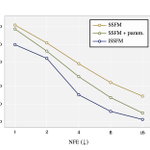
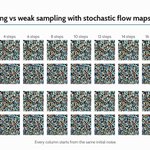
Excited to announce the follow-up to our NeurIPS 2026 Oral: Improved Training of Strong Stochastic Flow Maps!
We improve the training of SSFMs by unlocking derivative-based losses!
Joint work with @antoniofrancaib @rmincam @ChristianKoke @Niklas_TR and @AlexanderTong7
Zander Blasingame retweeted

Stellar lineup at the AITHYRA Next generation AI for Biomedical Science workshop -- next Monday 2 Nov at the IMBA lecture hall in Vienna Biocenter. No registration is required.

Zander Blasingame retweeted

Happy to share our new work: Distributional Functional Rewards (DFR)! 🎉
We improve diversity and fidelity in diffusion fine-tuning 🔧✨
Big thanks to my coauthors @JeongjaeLee0, Jong Chul Ye, @mmbronstein, @Yoshua_Bengio, @AlexanderTong7 and @danyalrehman17! 🙏 Thread below 👇

🚨 New paper alert!
Despite recent advances in reward fine-tuning for diffusion and flow models, achieving high rewards remains challenging without sacrificing sample diversity or substantially drifting away from the pretrained distribution.
We address this with DFR: Distributional Functional Rewards, a framework that balances reward optimization with preserving desirable properties of the generated distribution! 🧵
Zander Blasingame retweeted

I often hear that score/flow matching is "just regression"
It's not, and a lot of what we take for granted about generalization in deep learning doesn’t carry over to diffusion models:

Zander Blasingame retweeted

Generating proteins -> ??? -> Testing them in the lab
The missing piece is SELECTBENCH – evaluating your generations before sending them to the lab
- We design metrics to evaluate your model on the selectivity task
- We collect three datasets of ON/OFF targets from different sources and of different difficulty levels
- We study how modern generative models perform on these tasks (far from perfect)
- With SELECTBENCH, the question of generating proteins becomes the question of the throughput of your model!
- Check it out at #neurips2026 and benchmark your model using the code from github.com/lovetaro/selectbe…
This is one of the links in our long chain of works on generating selective proteins (see my slides for the synthesis docs.google.com/presentation…)


A molecule can bind the right protein and still be the wrong drug. Why? Because it might also bind proteins we don't want it to, potentially causing serious side effects.
📄 Paper: arxiv.org/abs/2610.24124
Zander Blasingame retweeted

Binding is good. Selective binding is better. 🧬
Super hyped to share SelectBench, evaluating selectivity in generative drug design, has been accepted to the NeurIPS 2026! 🎉
Huge shoutout to amazing @ERajaonson and all my collaborators who made this happen ❤️
A molecule can bind the right protein and still be the wrong drug. Why? Because it might also bind proteins we don't want it to, potentially causing serious side effects.
📄 Paper: arxiv.org/abs/2610.24124
We'll be presenting this work at the NeurIPS STODY workshop in Sydney. More details on how did everything is found below along with code and models!
Paper: arxiv.org/abs/2610.29605
Code: github.com/zblasingame/impro…
Models: huggingface.co/zblasingame/i…
Tagging some people that might be interested
@k_neklyudov @martoskreto @PatrickKidger @ZhengyangGeng @msalbergo @nmboffi @bose_joey @sedielem @DidiKieran @karsten_kreis @LucaEyring @ArnaudDoucet1 @MoleiTaoMath @RickyTQChen @mmbronstein @HannesStaerk @peholderrieth @jaschasd
Zander Blasingame retweeted

🚨Can we steer a generative model towards a gold reward we can't evaluate at inference time? Introducing 🍸 MARTINI — Steered Not Stirred🍸
We combine multiple imperfect reward surrogates from offline values OR preferences to steer without querying the oracle.
Huge shout out to our dream team, brilliantly led by @alec_sargood28, with stellar work from @olivgallup and Noam Ghenassia, plus key input from Georg Maierhofer and @pduckw. A true honour to co-supervise with @bose_joey.
📄 Paper: arxiv.org/abs/2610.25502
🌐 Blog: alecsargood.github.io/martin…
🧵1/10
Zander Blasingame retweeted

🚨 Do you always have multiple rewards but don't know how to steer towards an expensive true reward?
Don't fret, friends; we have the paper for you!
📣 Steered Not Stirred: Effective Reward Tilting using Surrogate Reward Mixing, led by the incredible @alec_sargood28 and team
The Martini Algorithm 🍸
From 007: everyone now has a license to tilt 🤵
📜 Paper: arxiv.org/abs/2610.25502
🔗 Blog: alecsargood.github.io/martin…


🚨Can we steer a generative model towards a gold reward we can't evaluate at inference time? Introducing 🍸 MARTINI — Steered Not Stirred🍸
We combine multiple imperfect reward surrogates from offline values OR preferences to steer without querying the oracle.
Huge shout out to our dream team, brilliantly led by @alec_sargood28, with stellar work from @olivgallup and Noam Ghenassia, plus key input from Georg Maierhofer and @pduckw. A true honour to co-supervise with @bose_joey.
📄 Paper: arxiv.org/abs/2610.25502
🌐 Blog: alecsargood.github.io/martin…
🧵1/10
Zander Blasingame retweeted

Adding my two cents on this (awesome) paper. I think the reason I (and many others) would intuitively expect this not to work is that we imagine minibatch OT “shattering” the latent space: some parts of the noise correspond to 3s, others to 4s, etc, etc. 1/n

Zander Blasingame retweeted

Very happy to share the first paper of my PhD: Normalizing Flow Maps! (NFM)⚡️
We make likelihood evaluation in flow maps fast and tractable by replacing the DiT backbone with a normalizing flow🔄.
A big thanks to @tim_hitge, @mmbronstein, @bose_joey and the rest of the team!

🚨 New Paper Alert, 🎤 Accepted for an oral presentation at the NeurIPS 2026 STODY workshop!
📣 Introducing: Normalizing Flow Maps (NFM): Combining few-step transport from Flow maps with tractable likelihoods from Normalizing Flows.
This is my first work with my first crop of new PhD students, @francescoshox and @tim_hitge, who genuinely knocked this project out of the park.
📄 Paper: arxiv.org/abs/2610.22711
📝 Blog: the-bose-lab.github.io/norma…
💻 Code: github.com/francescoshox/Nor…
🧵
1/8
Great work led by @francescoshox and @tim_hitge, glad I was able to help. Check out the details below:
🚨 New Paper Alert, 🎤 Accepted for an oral presentation at the NeurIPS 2026 STODY workshop!
📣 Introducing: Normalizing Flow Maps (NFM): Combining few-step transport from Flow maps with tractable likelihoods from Normalizing Flows.
This is my first work with my first crop of new PhD students, @francescoshox and @tim_hitge, who genuinely knocked this project out of the park.
📄 Paper: arxiv.org/abs/2610.22711
📝 Blog: the-bose-lab.github.io/norma…
💻 Code: github.com/francescoshox/Nor…
🧵
1/8
Zander Blasingame retweeted

The "accidental discovery 🧑🔬" is one of my favourite kinds of research projects/papers!
It's right up there with "we kept tuning the baseline and eventually got SoTA, so we published that instead 🤷" 😁
How this came about: we were working on a completely different project and discovered this by pure accident. We launched the experiment late one night, not expecting it to work at all, because theoretically and intuitively it shouldn't have. We were very surprised when we saw the results and got excited to see that this observation held generally!
Zander Blasingame retweeted

Thanks for the shoutout @sedielem!
The mechanism behind why label-free matching inproves performance is still unclear to us too. Some insights in the paper but not conclusive. Add it to the list where minibatch OT seems to outperform both independent and exact OT couplings.
