




Thursday, I will be presenting my open-source LLM tooling work at the London Clojurians online event. I'll go over the components needed to build LLM apps and discuss whether or not these components are already a part of LLM models and APIs.
meetup.com/london-clojurians…

4
214
A demo of my latest work on Bosquet - an LLM tooling to work with Gen AI
github.com/zmedelis/bosquet
youtu.be/ywlNGiD9gCg
2
194
An exploration into LLM Red Teaming:
1. How is LLM jailbreaking defined?
2. What are the motivations and goals of those seeking ways to make LLMs misbehave?
3. What strategies are used to red team?
arxiv.org/abs/2311.06237

2
172
Want to know if a phrase is present in one of the big data sets used for AI training? AllenAI (now making the news with OLMo) has 'What's In My Big Data?' WIMBD toolset that can search for phrases or domains in those datasets. wimbd.apps.allenai.org

1
1
129
My talk on implementing 'Large Language Models as Optimizers' paper. It covers dealing with embeddings, Qdrant as a vector store, large documents, content splitting, evaluation, and setting up complex LLM flows.
youtube.com/watch?v=2JGQt9iW…
Done with Clojure LLM tooling available at github.com/zmedelis/bosquet
Sunday tinkering to help with HuggingFace 🤗 dataset access from Clojure github.com/zmedelis/hfds-clj

Following the CoVe implementation another chain this time on text summarization task. Chain of Density is a neat technique to produce good summaries. It is interesting to track how summarization density increases as the LLM produces versions of summaries. zmedelis.github.io/bosquet/n…

Chain of Verification is a multi-step prompting technique addressing the issue of LLM hallucinations. CoVe can be declared and executed in Bosquet without custom coding and piping zmedelis.github.io/bosquet/n…

1
1
189
Chain of Verification is a multi-step prompting technique addressing the issue of LLM hallucinations. CoVe can be declared and executed in Bosquet without custom coding and piping zmedelis.github.io/bosquet/n…
LLMs are not great at generating complex structured data. They will often be a lot or a bit off. Even having 50.0% instead of 50 in a financial doc might be misleading. But finetuned smaller models like Llama-7B will outperform big ones in this task. arxiv.org/pdf/2309.08963.pdf

3
96
Clojure LLM meetup #5 is tomorrow 📅 Join us to hear about and discuss the LLM tools we are building 💪 clojureverse.org/t/scicloj-l…
I'll present Bosquet's approach to LLM memory 🧠 handling github.com/zmedelis/bosquet

1
100
LLM hallucinates when it adds fabricated info. This is not always bad. Precision parsing or completing contracts with LLM is useful but not that spectacular. Going with hallucinated what-ifs in the world of the contract is more interesting. arxiv.org/abs/2309.05922
🧠Generative Agents paper has a nice LLM memory approach, showing how memory handling should be added to an LLM-reliant app. It does not focus on how large content is stored. VectorDB, or whatnot. Instead, it defines how memory is produced and consumed arxiv.org/pdf/2304.03442.pdf

1
126
Bosquet - a Clojure LLM Ops lib. Supports multiple LLM API providers, agents, and prompt chaining github.com/zmedelis/bosquet
1
9
175
I am delighted to receive Clojurists Together support to continue my work on Bosquet - a Clojure LLM lib for building AI apps. Will be expanding agents and adding memory support.
github.com/zmedelis/bosquet

Clojurists Together is excited to announce our next round of funding for Q3 202 projects. Congratulations all! clojuriststogether.org/news/…

3
150
This Sat. will be presenting LLM libs in general and Bosquet - a Clojure LLM lib - in particular at the Scicloj meetup. Join in!
github.com/zmedelis/bosquet

See you at our #Clojure LLM meetups these Fri. & Sat.
#promptengineering by Irfan Nurhadi Satria & @daslu_:
clojureverse.org/t/scicloj-l…
#llmops with Bosquet by @zzgmm:
clojureverse.org/t/scicloj-l…
meetups page:
scicloj.github.io/docs/commu…

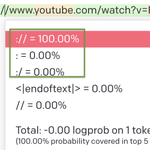
MS Guidance LLM control language has an interesting "Token Healing" feature that fixes bad generations:
❌ Completing "http:" will result in first the space or new line, and then "//www..."
✅ Completing "http" will correctly do "://www..." - no junk
🧵1/3

1
114

Major LLM libs are grabbing all the attention but there are other great projects in this space. github.com/HazyResearch/mani… provides nice LLM tooling:
* Cache prompt-response pairs
* Model pools to execute prompts on (async if needed)
* Running local models 🤗 via the same API
62
Finished 2 courses on prompt engineering 📚
1️⃣ ChatGPT Prompt Engineering for Devs / @DeepLearningAI_
2️⃣ Next-Level Prompt Engineering / @thatroblennon
The first gives a great dev process perspective on prompting, and the second introduces powerful meta-prompting techniques💡
4
62
@dair_ai publishes "🥇Top ML Papers of the Week" - always an amazing collection of research papers and a great way to keep up with LLM developments.
20
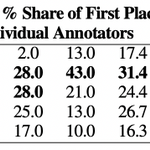
cGPT is great at many tasks, but its quality is way lower than the dedicated state-of-the-art model. SOTA average is 74%, while cGPT only gets to 57%. Lack of stability is also an issue - cGPT performance deviation is 23% against 18% for SOTA.
arxiv.org/abs/2304.01852
2
81