

New York, USA
Joined August 2015
- Tweets1.7K
- Following2.4K
- Followers807
- Likes4.7K


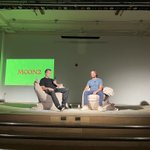
When I came to the US in 2006, what I missed most as a Korean was belonging.
Korea's people and culture are too good to stay inside Korea. This week, we're hosting KOOM Week in NYC. KOOM means "dream" in Korean.
Stage + Live at Terminal 5 this Friday.
koom.nyc


Tickets
Stage $37: axs.com/events/1579134/koom-…
Live: axs.com/events/1579135/koom-…
Trouble on AXS: luma.com/koomstage2026
Haus free RSVP: luma.com/wmo9zjre

2006년 처음 미국에 왔을 때 가장 아쉬웠던 건 한국인으로서의 소속감이었습니다.
좋은 사람과 문화가 한국 안에만 머물기엔 너무 아까워서, 10/12-18 뉴욕에서 KOOM Week를 엽니다. KOOM은 '꿈'이에요.
10/24까지 뉴욕에 있으니 편하게 연락 주세요.
koom.nyc


1
214
티켓
Stage $37: axs.com/events/1579134/koom-…
Live: axs.com/events/1579135/koom-…
한국에서 결제가 안 되면: luma.com/koomstage2026
Haus 무료 RSVP: luma.com/wmo9zjre
145
Eric Kim 📍NYC, Seoul retweeted

If you're working on something cool, GStack does actually tell you to apply to YC :-)

Damn! @garrytan, I was not aware of your game.
This is so cool.
Codex was invoking gstack skills and somewhere in trenches, I get this message in my stream.

Eric Kim 📍NYC, Seoul retweeted

#DreamStory
집을 소개하던 영상이 브랜드가 되기까지
Anthony Park가 일과 일상을 나누며 신뢰를 쌓고 비즈니스 기회를 만든 이야기,
KOOM Stage에서 들어보세요!
🗓️ 2026년 10월 16일
📍 TERMINAL 5 · NYC
🎟️ 티켓링크: axs.com/events/1579134/koom-…

2017년 웹툰: 개발자가 모든 자동화하고 죽었는데
로봇청소기가 냄새 없애주고
월급은 자동이체로 계속 돌고
회사엔 자동응답 메일 나가서
아무도 몰랐다는 이야기
"오늘도 즐거운 하루 되세요!"
2017년엔 SF였는데
이게 현실이 될 날이 멀지 않았다
comic.naver.com/webtoon/deta…

108
Eric Kim 📍NYC, Seoul retweeted
여러분의 시행착오가 누군가의 다음 도전에 힘이 됩니다 🎤
도전하며 배운 것, 직접 부딪히며 찾은 방법을 KOOM STAGE에서 나눠 주세요.
“나도 연사가 될 수 있을까?”
지원 자격·세션 형식·지원 방법은 첨부한 FAQ에서 👇
luma.com/snxsi1s5?utm_campai…


Eric Kim 📍NYC, Seoul retweeted

I'd always thought AI was terrible at design, but after reading today's 🤯 post by @anshuc, I realized I was just doing it wrong.
"AI models are capable of amazing creativity, but that creativity gets stifled. LLMs are trained to be next-token predictors: they look at a sequence of text and predict what typically comes next. Great design is exactly the opposite of this. Great design bends the rules and delights users with memorable, unexpected choices."
@anshuc led design and engineering teams at Apple for 12 years. In his words: "Most people only see 1% of AI's creative potential. I want to show you how to tap into the other 99%."
His 8 techniques for breaking out of the 1%:
1. Use seed strings to inject variety
2. Be much more ambitious with your prompts
3. Create positive feedback loops with subagents
4. Use image generation to enrich designs
5. Use video generation
6. Cut out elements that don’t add value
7. Remove AI tells
8. Rewrite copy by hand
Read the post here: lennysnewsletter.com/p/how-t…
P.S. This design was made by AI 👇
Eric Kim 📍NYC, Seoul retweeted

Today, we're officially rolling out real-time, live video clipping in @Overlap_AI.
The best creators, brands, and media companies stream for hours every day. Some run live programming around the clock.
With Overlap, you can now build an agent that has the speed (and taste) to identify viral moments as they happen, edit them in real time, and distribute them across socials within minutes.
Using it feels like hiring an army of video editors who can edit and post 20 clips before you finish a livestream.
Shout out to @caseytraina and @chinmaykhamkar9 for pushing this live 🙌
Eric Kim 📍NYC, Seoul retweeted

Introducing Honen
Turn your company context into interactive courses that self-improve over time
We partnered with NVIDIA to bring AI literacy to 250,000 learners
We're ensuring no person or company gets left behind
Get started at honen.com/contact
Eric Kim 📍NYC, Seoul retweeted

An initial startup idea can't usually be both grand and precise. In practice they're usually either grand and vague or precise and small. Precise and small is better. You know who your initial users are, and you expand outward. With grand and vague you can't even get started.
Eric Kim 📍NYC, Seoul retweeted

when the dream becomes the job
i used to think the dream was to make my hobby my work.
to spend my life close to the things i loved: computers, tools, interfaces, systems, tiny details, the feeling of making something from nothing. the things i used to do at night, after school, after work, in the margins of life, somehow became the center of my life.
and it is a dream. i don’t want to pretend otherwise.
there is a very specific happiness in getting paid to care. in meeting other people who care. in building a language around your obsession. in seeing something that lived only in your head become real enough for other people to touch.
but there is also a quiet pain in it.
because the thing that once belonged only to you no longer belongs only to you.
it becomes attached to deadlines, teams, customers, strategy, money, reputation, momentum... curiosity becomes roadmap. taste becomes decision-making. play becomes output. the thing you once used to escape the world becomes the thing through which the world reaches you.
and now there is another strange layer: the machines are getting good at the work too.
not just the boring parts. the parts that used to feel close to the heart. writing, coding, designing, reasoning, making taste-like decisions, turning vague ideas into something real. the things we once used as proof that we had something special inside us are becoming things a model can approximate, remix, and sometimes do faster.
that can feel scary in a very specific way.
not only because of jobs or competition, but because it touches the myth you built around yourself. if the thing i became good at can be done by a machine, then what part of it was really me?
i think that question is painful because it arrives at the same place.
the original love.
before the title, before the company, before the taste became a role, before the work became useful to other people, there was a small fire inside. curiosity. obsession. the feeling that the world became more alive when you understood a little more of it, or made a tiny piece of it bend to your will.
AI can make the output faster. it can even raise the floor of the craft. but it cannot want on your behalf. it cannot decide what is worth loving. it cannot protect the strange private thread that made you care in the first place.
maybe that is what becomes more important now.
not whether you can still produce the artifact by hand. not whether you can outperform the machine at every task. that game is already changing.
the real question is whether you still have a relationship with the source.
the part with no audience. no roadmap. no deadline. the part that can wander, collect strange references, make useless things. follow beauty, be wrong, be slow, be you, be true.
because that part is not separate from the work. it is the source of the work.
if you lose it, you can still operate. you can still manage the machine. you can still prompt, review, decide, ship, and keep things moving.
but the work becomes thinner. safer. more explainable. less alive.
so maybe the real discipline is not to work harder, rest more, or care less.
maybe it is to keep returning to the place where the love began – before it became useful, before it became legible, before anyone needed anything from it, before even the machine could mirror it back to you.
not to escape the work.
to make sure the fire inside is still alive.
Eric Kim 📍NYC, Seoul retweeted

Elon Musk literally sat down for a 45-minute talk with Y Combinator that explains how to build world-changing companies better than any business school on earth. This is the advice he gave a room full of young founders:
1. Don't try to build something great. Try to build something useful.
Everyone obsesses over greatness. Musk says that's the wrong target. "I didn't originally think I would build something great. I wanted to try to build something useful. I didn't think I would build anything particularly great. Seemed unlikely, but I wanted to at least try." Aim for useful first. Greatness, if it comes, is a byproduct.
2. When you can't get in the front door, build your own door.
Before Musk started his first company, he tried to get a job at Netscape. "I sent my resume into Netscape and nobody responded. I tried hanging out in the lobby to see if I could bump into someone, but I was too shy to talk to anyone. So I'm like, this is ridiculous, I'll just write software myself." He didn't set out to be a founder. He became one because no one would hire him.
3. He slept in the office and showered at the YMCA.
The origin of his first company was not glamorous. "We couldn't even afford a place to stay. The office was 500 bucks a month, so we just slept in the office and showered at the YMCA." He couldn't afford proper internet either, so he drilled a hole through the office floor and ran a cable to the internet provider downstairs. That was the founder of the future richest man on earth.
4. Keep the chips on the table.
When Musk sold his first company, he received a $20 million cheque. His bank balance went from $10,000 to $20 million overnight. Most people would have stopped. He put almost all of it straight back into his next company. "I kept the chips on the table." He did the same thing decades later, over and over. He hates money sitting idle. Money is fuel for the next mission.
5. Start with the mission, then work backwards to make it a business.
Musk didn't start SpaceX to make money. He went on the NASA website to find out when humans were going to Mars, and there was no plan. So he decided to build one. "There had been no prior example of a rocket startup succeeding. A small chance of success is better than no chance of success." The mission came first. The business model came later.
6. He started SpaceX expecting to fail.
He is brutally honest about the odds. "SpaceX started in mid-2002 expecting to fail. Probably 90% chance of failing. When recruiting people, I said, we're probably going to die, but small chance we might not die." The first three launches failed. The fourth one worked with no money left. "If the fourth launch hadn't worked, it would have been curtains. We made it by the skin of our teeth."
7. Break every problem down to physics.
This is the core of how Musk thinks. "First principles means break things down to the fundamental elements that are most likely to be true, then reason up from there, as opposed to reasoning by analogy." His example is rockets. Everyone priced them based on what old rockets cost. Musk asked what a rocket is actually made of, priced the raw metals, and found the materials were only 1-2% of the historical price. The rest was inefficiency he could attack.
8. When told something takes 24 months, break it down and do it in six.
Last year xAI needed a giant computer to train its AI. Suppliers said it would take 18 to 24 months. "It's like, well, we need to get that done in six months or we won't be competitive." So he broke it into parts. Needed a building, so he found an old factory. Needed power, so he rented generators. Needed cooling, so he rented a quarter of America's mobile cooling capacity. He slept in the data centre and ran cabling himself. It got done.
9. Watch your ego-to-ability ratio.
Musk's single sharpest piece of advice for young founders is about staying honest with yourself. "A major failure mode is when your ego-to-ability ratio gets too high. Then you break the feedback loop to reality." Keep the ego small, internalise responsibility for everything, and stay ruthlessly connected to what's actually true. "You want to close the loop on reality hard. That's a super big deal."
10. Chase work, not glory.
His closing philosophy ties it all together. "It's so hard to be useful. The area under the curve of total utility is how useful you've been to your fellow human beings times how many people. If you aspire to do true work, your probability of success is much higher. Don't aspire to glory, aspire to work."
He was ridiculed for years. The press called him "internet guy attempting to build a rocket company." He agreed it sounded absurd. He did it anyway, because a small chance of doing something useful beat no chance at all.
Here's the thing though....
Musk became the most followed founder alive because everything he does happens in public. The launches, the failures, the talks like this one. The companies made him powerful. The personal brand made his every word travel around the world before he finishes saying it.
We build massive distribution and grow personal brands on X and beyond without our clients lifting a finger.
If you're a founder or VC looking for that kind of exposure, book a call below.
We average 1.5M views a week.
calendly.com/lewis-underdog-…

Eric Kim 📍NYC, Seoul retweeted

We're excited to join forces with @SpaceX to advance the frontier of useful AI. Expect significant improvements to Cursor soon.

SpaceX has exercised the option to acquire @cursor_ai in an all-stock transaction with the goal of building the world’s most useful AI models.
For the past few months, SpaceXAI has been jointly training a model with Cursor, which will be released in Cursor and Grok Build soon.
We look forward to working closely with the Cursor team to advance our frontier AI capabilities
Eric Kim 📍NYC, Seoul retweeted

Today I'm publishing a new essay, Policy on the AI Exponential. AI is progressing extremely fast—much faster than the policy process was built to handle. The essay lays out where I think the technology is now, and the action needed to close the gap: darioamodei.com/post/policy-…


Eric Kim 📍NYC, Seoul retweeted

new YC-funded decacorn

Congrats to @kiwicopple, @AntWilson, and the @supabase team on their $500M Series F at a $10B valuation!
Database launches on Supabase have grown 600% in the past year, with more than 60% of new databases launched by AI tools. Nearly 10 million developers build on Supabase today, more than doubling in the past eight months.
supabase.com/blog/supabase-s…

Eric Kim 📍NYC, Seoul retweeted

We've raised $65 billion in Series H funding at a $965 billion post-money valuation, led by @AltimeterCap, Dragoneer, @Greenoaks, and @sequoia.
This investment will help us advance our research and expand our capacity to meet growing demand for Claude.