






Andrew Janusz retweeted

Most candidates lose. Some come back, some do not. In a new paper with @Ajanusz in @PRQjournal , we ask whether Afro Brazilian candidates are more likely than white candidates to step away from politics after a close loss in Brazil.

Andrew Janusz retweeted

📢 New Issue! Legislative Studies Quarterly, Vol. 50, Issue 2: Congress Speaks: Survey Insights in the Study of Latin American Legislators 🧵
This special issue uses survey data to explore how Latin American legislators think, act, and respond to shifting political institutions
New Publication! We know money matters in elections and that women raise less than men. What we do not know is who donates. In this paper out in PRQ, I examine donor behavior in Brazil and explore who donates to women candidates. journals.sagepub.com/doi/10.…

Role models are widely believed to increase ambition and spur members of underrepresented groups to stand for office. In the article, link.springer.com/article/10…
@pcunhasilva @a___junqueira and I test this argument in Brazil at the local level.

Andrew Janusz retweeted

#Job opportunity at the #GIGA: We seek to appoint a Postdoctoral Research Fellow (m/f/d) to work on political, social, or development issues in #LatinAmerica, e.g. #security & #violence, #ClimateChange, #development or #inequality.
➡️ Find our offer here: giga-hamburg.de/en/career/po…
Andrew Janusz retweeted

Check out our virtual #APSA2023 panel Saturday 4pm, "Multidimensionality in Measurement and the Study of Racial and Ethnic Boundaries," featuring a great group of presenters, chair, & discussants! @asdurso @GregoryJLeslie @amber_spry @nicole_yadon @Mara_PhD @EfrenPoliPsy @AJanusz


Andrew Janusz retweeted

When it comes time to vote, you may think having more candidate options is better. But that’s not necessarily the case according to new research from @AJanusz of @UF_CLAS. 🗳️
news.ufl.edu/2023/06/longer-…

New paper with Saul Cunow, @desposato, and @SellsCameron: "Too much of a good thing? Longer ballots reduce voter participation," online at @journalEPOP. We argue that when many candidates run for office voters are likely to sit out rather than turnout.
tandfonline.com/eprint/S46NP…

We test this argument with data from Brazilian elections and a voting experiment. We find that voter participation declines as ballot length increases. Importantly, our findings hold even when we provide information on the party of candidates.
Andrew Janusz retweeted

Breaking! new issue of @apsa_cp available here w/ great contributions from @linds_goldberg @MilliLake @marieeberry @gsorayaz @sindujaraja18 @robertsreport @VolodymyrKulyk4 @EricaMarat @BotakozKassymb1 @senerakturk @GulnazSharaf comparativepoliticsnewslette…
Andrew Janusz retweeted

A wonderful position is open at @Int_IDEA - Regional Director for #LatinAmerica
& the #Caribbean. If you care about the fate of #democracy in LAC, this is a great opportunity to make a difference. Deadline for applications: April 30, 2023. ⬇️
careers.idea.int/jobs/261332…
Andrew Janusz retweeted

📢We are delighted to advertise 4 Postdoc positions sponsored by the @AgencyFAPESP, associated with the project "Electoral Strategies and Public Policies: How Important are Brazilian Municipalities?"
🗓️The application deadline is March 17.
Details are at:
cepesp.io/uploads/2023/02/Po…
Andrew Janusz retweeted
Delighted to announce the publication of the fall 2022 issue of APSA-CP here: comparativepoliticsnewslette…
Including a fantastic symposium on gender quotas and comparative democracy research!
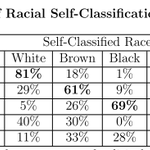
Does candidate skin color affect electoral opportunities and outcomes? In an article coauthored with a few awesome @UF undergraduates now published at @ElectoralStdies, we argue that party elites provide lighter-skinned candidates electoral advantages. authors.elsevier.com/a/1gAeq…
In list proportional representation systems, party elites control the order of candidates on party lists. We contend that they reinforce inequalities by placing darker-skinned candidates in lower, less advantageous list positions than their lighter-skinned counterparts.