

Building @steadwing - self-healing production software @join_ef, prev @freshworksInc AI agents + production reliability
San Francisco, CA
Joined September 2010
- Tweets1.8K
- Following1.5K
- Followers463
- Likes52.9K







Pinned Tweet
Duo, as Apple intended

ALT Claude code and chatgpt desktop-codex on Apple fold Duo
2
41
1,468

Abejith retweeted

By far the most alarming score on here is from a benchmark that doesn't get much attention. The Remote Labor Index gives freelance projects in a huge range of fields to humans and AI agents. When it was introduced a year ago, the best AI agent could only complete 2.5% of the projects. Opus 5.5 had the best score at 21%, and Fable 5.2 just doubled it, hitting 41%.
This is still a leading indicator of labor automation, as these projects are better defined than what you'd get at a typical white collar job. But the fact that one model generation can do twice as many projects end-to-end is a reminder of how fast change can come during exponential growth.
And Goldman Sachs is already reporting the first signs of labor automation outside of tech, based mostly on diffusion of models that are by now a few generations old.
When I looked into labor automation for my book Obsolete, there wasn't yet much evidence of widespread displacement. But the more important realization was that AI progress looks smooth on graphs but feels anything but, as capability tipping points are reached. Combustion engines improved for decades without affecting horses, but when they got slightly better, the horse population plummeted.
obsoletebook.org/


Abejith retweeted

Mythos 5.2 getting 41% of the remote labor tasks on the Remote Labor Index (RLI) is notable, given that RLI is composed of a lot of very hard expert-level freelance tasks.
Opus 4.8 did 8%
Fable 5 did 16%
and now we're at 41% wow
Abejith retweeted

When we launched the Remote Labor Index a year ago with @ScaleAILabs , the best AI could fully automate 2.5% of real freelance projects. Fable 5.2 now automates 41.3%.
The automation rate is doubling every ~3 months. AIs may soon be able to do all remote work faster and more cheaply than humans.


Abejith retweeted

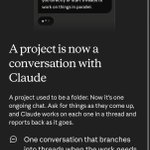
Here's the new Claude experience on the iPhone Duo! It's going to be amazing for multitasking, Claude Code, and creating new things.
Looking forward to see folk start using it tomorrow!
Abejith retweeted

The biggest misread of anyone predicting the end of software engineering was imagining that the world only needed a certain amount of software, and bringing automation to the field would reduce the need for labor.
Exactly the opposite is happening where essentially most things are actually turning into software. Because agents can use tools, work with computers, write software on the fly, and process data like humans (but far faster), we can now throw “software” at problems that never could reasonably be digitized before.
What that leads to is the role of engineering taking on greater importance in the economy, because we can now engineer far more systems and processes than were possible before.
If you’re a bank trying to do new forms of trading, engineers are often your first bet. If you are in life sciences, you expect more and more research and lab work to be engineering centric. If you’re in manufacturing, you’re trying to automate more of the supply chain, all that is engineering. More and more work is shaped like software problems.
Yes we’re not going to be coding manually in the future. But almost everything will be code, which means those that understand it are in a fantastic position.

Some observations about the "total" automation of software engineering:
1. There are more software engineers now than in 2025, and demand is growing.
2. Software engineers have never worked harder than they do now.
3. They largely don't write code anymore, agents write ~100% of the code.
4. The bottom line of the companies that employs these engineers and agents (i.e. the terminal purpose of all this code) is typically not budging as a result of AI adoption.
This is why you have to think in terms of systems. Automating one aspect of a system creates its own friction and moves the bottlenecks elsewhere.
Abejith retweeted

I just installed Claude Code on Grok Bot's computer, and it is crazy how seamless this has become now.
This is a master-piece of an AI workflow, if you haven't done it yet.
Abejith retweeted

Some of the shit I'm cooking with Claude right now is truly insane. None of this should be possible.
None of it will matter but I'm having the time of my life right now
Abejith retweeted

Grok @bot now supports plus aliases! Send and receive email using dedicated aliases, or set up routines that only trigger for mail to a specific alias!


Abejith retweeted

It’s feeling really magical inside of Shopify right now. It’s clearly the greatest time in the history of tech industry right now. I hope it feels similar everywhere else.
We’re getting closer to autonomous startups that run themselves lol

It's incredible to watch a new kind of economy be born. Agents purchasing infrastructure products and services. We've been shocked by how often they buy from our marketplace via our CLI already. We're now extending this to domains.
Agents can now go full stack, from idea to online business, with a banger domain name 😁
5
77
Abejith retweeted

Call center jobs grew ~4% annually for 15 years
Now they’re shrinking 4% annually
Charts of the Week: a16z.news/p/this-week-in-cha…

Abejith retweeted

Now in beta: composer predictions in Codex for Pro users.
Codex can now suggest your next message based on your conversation and how you talk to it.
One of the most loved new features we've ever tested internally.
Abejith retweeted

Kind of an interesting idea: explicitly hire the best AI-enabled workers at full salary but only 20 hours a week.


Abejith retweeted

One thing the engineering community will (re)discover is that every program can be ① hardened (edge cases squashed, inputs tightened, errors handled) and ② optimized (profiled, benchmarked, rewritten) basically ad infinitum.
There are real costs in every direction: time, attention, opportunity. You can literally explore input spaces that will never be hit or optimize performance of something that will never be used ("you have no users".) Even in an infinite token world, you need to know when to stop and what tradeoffs to accept. Agents will happily drill no matter what.
Abejith retweeted

Today marks a new chapter for Windows, as we bring unmetered intelligence to every desk and every home, and make every PC a place where agents can work securely on your behalf.
Some highlights of what we announced:
• MAI-Code-1.1 Flash: 137B parameter coding model w/ 256K context window, which is now optimized to run on your PC!
• GitHub Copilot now hands off work to local models like MAI-Code-1.1 Flash, helping projects cost a lot less without sacrificing quality.
• With Hybrid Intelligence, Copilot can now take action directly on the PC and keep sensitive work on your device.
• And with Code in Copilot, you can essentially build any software you need on your desktop, without any cloud token spend, and it’s just super at it. You’re no longer limited to what’s in an app store! Your PC becomes an infinite software factory.
• Security is foundational to all this, which is why we are also bringing together Windows and Agent 365 so agents can work within secure boundaries on-device, including MXC a local sandbox for agent execution. Windows becomes your secure agent box!
• All this comes to life on a new generation of devices, like Surface Laptop Ultra, powered by NVIDIA RTX Spark.
Can’t wait to see what you build with all this.

