

📲 Free catholic app. Web version too 🙏 to contact priests & and consecrated religious 24h. https://nitter.cf/t.co/RnkqSmjVCx enseña los riesgos y desafíos del 🌎 digital
Joined January 2018
- Tweets1.4K
- Following718
- Followers241
- Likes858





¿La IA, las redes sociales y la hiperconexión nos hacen más libres o más dependientes?
📅 21-22 Nov 2026
💻 100% virtual
III Congreso Católico Internacional sobre el Ambiente Digital. 🎯 "Libres en la Era Digital"
Inscripciones: congresodigital.com
#CongresoDigital #IA

7
Amen App retweeted

Hay quienes quieren tratar Halloween como una fiesta infantil o como un hecho cultural neutro. La realidad muestra otra cosa. Por ejemplo: es la época del año con mayor número de profanaciones, sacrilegios y robo de copones con formas consagradas. Conoce y divulga un poco más de las raíces y realidades de Halloween:
youtu.be/TXd1qMNOLlE

Amen App retweeted

Algunos subrayan el vertiginoso cambio de época que vivimos... Pero quizá convenga recordar que el problema de fondo sigue siendo el mismo, y lo será hasta el final de los tiempos: el combate espiritual frente a la acción del Maligno.
De hecho, me ha llegado este vídeo de imágenes simbólicas e inquietantes, y no he podido por menos de recordar esta cita de Evagrio Póntico, autor del siglo IV:
«No depende de nosotros que estos pensamientos turben el alma; pero sí depende de nosotros que permanezcan en ella y que generen o no las pasiones». (Tratado práctico, 6).

Amen App retweeted
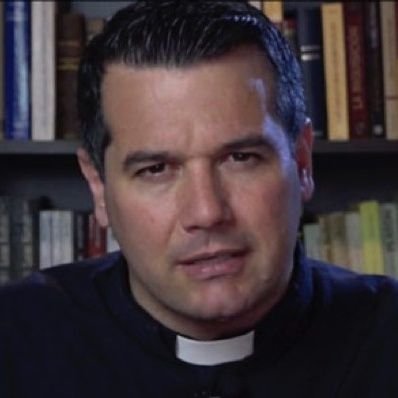
Holy Communion: In the Hand or on the Tongue?
Homily, September 20, 2026
Last Sunday, in our homily, we reflected on the need to strengthen our catechesis concerning the Real Presence of Jesus Christ in the Eucharist. Today, continuing with that theme, we would like to conclude these reflections by considering the manner in which we receive Our Lord in Holy Communion.
Few liturgical questions have generated as much discussion in recent decades as the manner of receiving Holy Communion. To understand the issue properly, we need to set ideological positions aside and consider both what happened historically and what the Church has actually taught.
What Happened in 1969?
In 1969, under Pope St. Paul VI, the Instruction Memoriale Domini was issued. Its historical context is important. In a number of places, the practice of receiving Holy Communion in the hand had been introduced without authorization, contrary to the discipline then in force. At the same time, the Church was deeply concerned about errors and confusion regarding the Real Presence of Christ in the Eucharist.
Faced with this situation, the Holy See consulted the bishops of the world. The majority favored retaining the traditional discipline—that is, receiving Holy Communion on the tongue.
Pope Paul VI therefore confirmed the traditional manner of receiving Communion and warned that changing the practice could lead to diminished reverence toward the Blessed Sacrament, the danger of profanation, and the adulteration of true doctrine. Nevertheless, in places where the contrary practice had already become established—particularly in countries with a Protestant heritage—episcopal conferences could request an indult—that is, an exceptional permission—from the Holy See for Communion to be distributed in the hand.
“But Didn’t the Early Christians Receive Communion in the Hand?” someone might ask
There is evidence that Christians in the early centuries of the Church received Holy Communion in the hand. But using this historical fact in isolation can be misleading.
St. Basil the Great, in the fourth century, speaks explicitly about receiving Communion in one’s own hand in circumstances such as times of persecution, when a priest or deacon was not available. St. Cyril of Jerusalem, also in the fourth century, describes the communicant making the left hand a “throne” for the right in order to receive the King. He also insists upon the greatest care that nothing of the Eucharist be lost.
Other early Christian writers likewise testify to the extraordinary care with which the Eucharist was treated and to concern that nothing consecrated should be lost or profaned.
Thus, even when Communion in the hand existed in the ancient Church, we should not simply assume that it was identical in manner, discipline, or surrounding ritual to the modern practice. What is unmistakable in the ancient sources is the profound reverence with which Christians approached and handled the Holy Eucharist.
In any event, the antiquity of a practice does not by itself prove its superiority. If our criterion were simply, “The early Christians did it,” then, for example, all women would have to cover their heads at Mass, none of them could proclaim the readings, and men and women would have to sit separately. Pope Pius XII already warned in his encyclical Mediator Dei that an ancient practice, merely because it is ancient, should not necessarily be considered better.
Over the course of the centuries, the Church’s Eucharistic discipline gradually developed, and increasingly precise measures were adopted to safeguard the Blessed Sacrament.
Why Did This Development Take Place?
Memoriale Domini itself gives us an important explanation. As the Church’s understanding and reverence for the Eucharistic mystery deepened, the custom developed whereby the minister placed the consecrated Host directly upon the tongue of the communicant.
Three elements therefore appear closely related: a deeper understanding of the Eucharistic mystery, greater reverence toward the Blessed Sacrament, and an attitude of humility in receiving Our Lord.
What, Then, Is the Best Way to Receive?
Receiving Holy Communion in the hand, where it is legitimately permitted, is not per se a sacrilege. Nor can we automatically judge a person’s interior devotion on the basis of whether he receives Communion on the tongue or in the hand. But this does not mean that the two manners of receiving must necessarily be regarded as pastorally identical.
The Instruction Memoriale Domini expressly points to the advantages of the traditional manner of receiving Holy Communion on the tongue. Speaking of this traditional practice, it states that:
“This method of distributing holy communion must be retained, taking the present situation of the Church in the entire world into account, not merely because it has many centuries of tradition behind it, but especially because it expresses the faithful’s reverence for the Eucharist.”
The document goes on to explain that this traditional manner more effectively safeguards the reverence, decorum, and dignity due to Holy Communion, protects against the danger of profanation of the Eucharistic species, and safeguards the careful attention that the Church has always required regarding the fragments of the consecrated Bread.
This is not about turning the manner of receiving Communion into an ideological banner, nor is it about claiming that a person who receives on the tongue is necessarily holier than someone who receives in the hand. Rather, it is about asking ourselves which outward signs most clearly express what we truly believe.
If the consecrated Host is truly the Body, Blood, Soul, and Divinity of Our Lord Jesus Christ, then our bodily attitude should manifest that faith. The history of the Church shows a progressive development of signs of adoration, humility, and reverence before the Eucharistic mystery.
Therefore, beyond controversies and personal preferences, perhaps the fundamental question is much simpler:
How can we receive Our Lord with the greatest possible reverence?
Blessed and praised be the Most Holy Sacrament of the Altar. Now and forever, blessed and praised.
Fr. Javier Olivera Ravasi
Saint Monica / St Thomas the Apostle Parish
Archdiocese of San Francisco

📢 ¡Atención jóvenes, padres de familia con hijos menores e interesados en #IA ! 🙌 Ya están habilitadas las inscripciones al III Congreso Católico Internacional sobre el Ambiente digital - Libres en la Era Digital - en congresodigital.com
10

📲 III Congreso Católico sobre el presente digital y la Inteligencia Artificial, sus riesgos, peligros, desafíos, amenazas y enfermedades asociadas.
📅 Se llevará a cabo los días 21 y 22 de Noviembre, en hora de la mañana, previa inscripción en congresodigital.com
Amen App retweeted

Me encantó la decisión de Francia de prohibir las redes sociales a menores de 15 años. El Centro Democrático ya radicó el proyecto en Colombia, porque los estudios son claros: las redes dañan la atención y la autoestima de los niños.
Que los niños jueguen, estudien y hagan deporte. 🥰🇨🇴
RT @PJavierOR: Recién ahora pude leer todos los documentos sobre la FSSPX (2/7/26)
Aunque parecen muy claros, podrían haber sido técnicamen…
Amen App retweeted

El Papa León XIV lo dijo claro en el Congreso: la vida vale desde la concepción hasta la muerte natural.
No hay sociedad justa que abandone al no nacido, al anciano o al enfermo. Esa es nuestra convicción. 🙏🏻
Amen App retweeted

Let us #PrayTogether that everyone, from large producers to small consumers, be committed to avoid wasting food, and to ensure that everyone has access to quality food. #PrayerIntention @clicktopray_en popesprayer.va/praywiththepo…
Amen App retweeted
He aquí el salmo que cantaron las 16 carmelitas de Compiègne (Francia) mientras eran guillotinadas el 7 de julio de 1794:
"Alabad al Señor, todas las naciones,
aclamadlo, todos los pueblos.
Firme es su misericordia con nosotros,
su fidelidad dura por siempre." (SALMO 116)
El Papa a los sacerdotes sobre los jóvenes: Se trata de comprender e interpretar el profundo malestar existencial que los habita, su confusión, sus múltiples dificultades, así como los fenómenos que implicados en el mundo virtual y los síntomas de una preocupante agresividad.
4